Tag Archives: Russia

Al-Qaeda and Global Terror

This article was originally published at European Eye on Radicalisation

By Kyle Orton (@KyleWOrton) on 16 April 2019

Ahmad al-Shara (Abu Muhammad al-Jolani) [image source]

Several years ago, Al-Qaeda made a strategic decision to refrain from foreign terrorist operations, refocusing away from these global spectaculars towards integrating more closely into local conflicts. The 2014 rampage across Iraq and Syria by Al-Qaeda’s rebellious former Iraqi branch, the Islamic State (ISIS), provided both the opportunity and additional incentive for a long-mediated rebranding effort. However, there have recently been signs of a shift back towards external terror operations, just as ISIS undergoes a setback and Al-Qaeda has a chance to reassert its dominance over the jihadi scene. Continue reading

Israel’s Policy in Syria Has Let Iran and Russia Entrench

By Kyle Orton (@KyleWOrton) on 9 April 2019

As the regime of Bashar Assad appears to be consolidating in Syria, many Israelis have concluded that their government’s handling of the crisis was generally laudable.

The most comprehensive statement of this view was given recently in Haaretz by Anshel Pfeffer (Netanyahu Outfoxed Russia, Iran and ISIS With His Cynical, Ruthless Syria Policy.) Every aspect of this is open to question. Continue reading

Stick or Twist: Israel’s Referendum on Netanyahu

Published at The Arab Weekly

By Kyle Orton (@KyleWOrton) on 31 March 2019

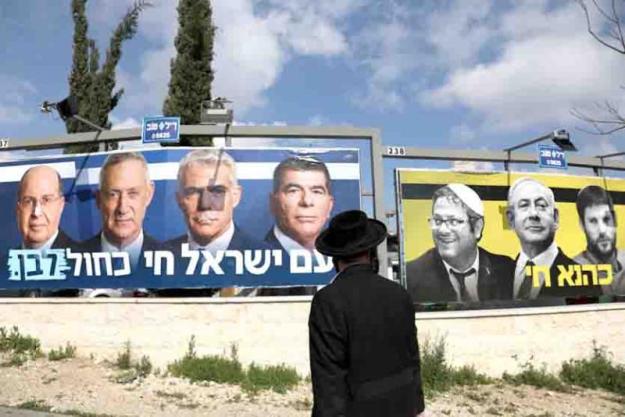
An Orthodox Jewish man looking at Israeli election campaign posters in Jerusalem, 27 March 2019 // Reuters

Israeli Prime Minister Benjamin Netanyahu was in attendance on 25 March when President Donald Trump signed the order recognising Israeli sovereignty over the Golan Heights, but had to leave soon after a rocket from Gaza hit a house north of Tel Aviv. These events—and other regional developments—are taking place less than two weeks from Israeli elections, where Netanyahu is neck-and-neck with his challenger. Continue reading

The Shah, the Cold War, and the Islamists

By Kyle Orton (@KyleWOrton) on 20 March 2019

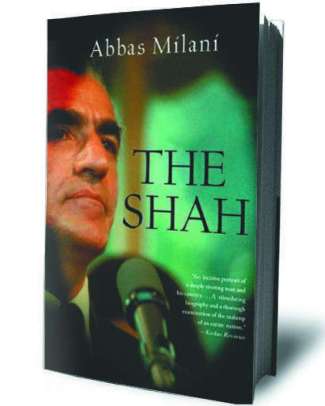
Abbas Milani’s The Shah gives a portrait of Iran’s last monarch, Muhammad Reza Pahlavi, and the impact that his downfall forty years ago continues to have in the Middle East, notably the emboldening of the Islamist movement. Continue reading

If America is to Stay in Syria, What For?

This article was published at Ahval

By Kyle Orton (@KyleWOrton) on 12 March 2019

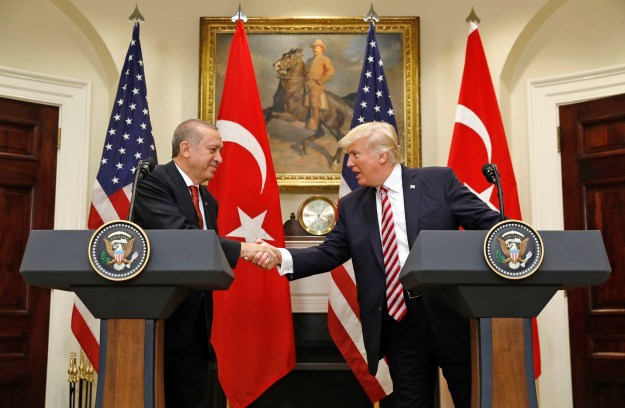
The wheel turns again. After U.S. President Donald Trump announced the withdrawal of U.S. forces from Syria in December, it seemed rapprochement with Turkey was on the cards. Now that looks less likely. Continue reading

What is Turkey Doing in Syria?

By Kyle Orton (@KyleWOrton) on 10 March 2019

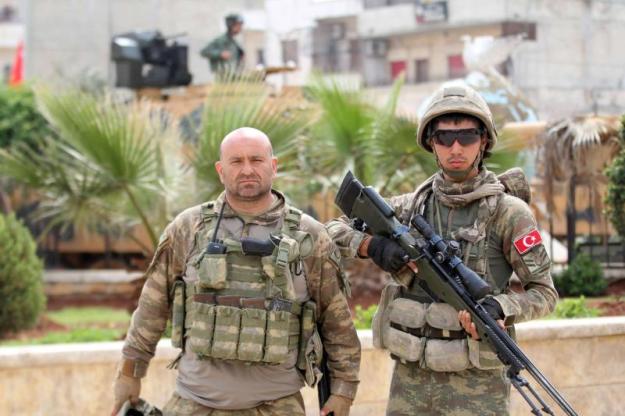
Turkish soldiers in Efrin, Syria, March 2018. (AFP)

Eight years ago, peaceful protests began against Syrian President Bashar Assad. Since then, outside powers — the Iran-Russia axis, the United States and Turkey — have become dominant in Syria.

The Iranians and Russians keeping Assad’s regime alive are clearly going nowhere. The Americans’ indecision on the point is apparently final. So, what of Turkey, which is the custodian of the remnants of the armed opposition? Continue reading

Islamic State Urges Defiance as the Caliphate Collapses, Attacks Other Islamists

By Kyle Orton (@KyleWOrton) on 9 March 2019

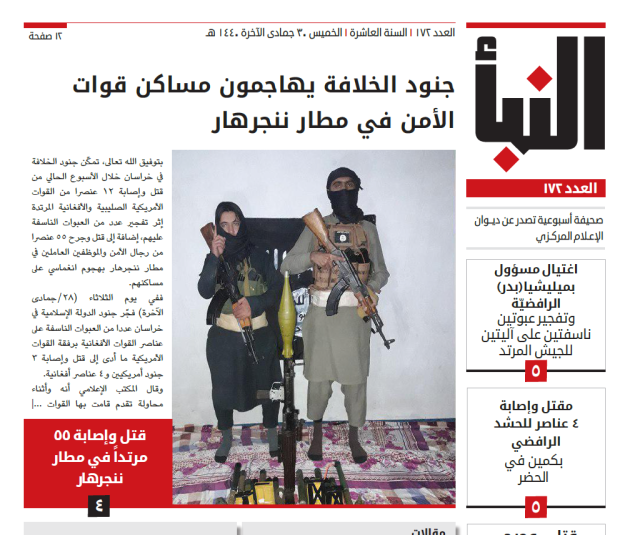
Al-Naba 172 front page

The Islamic State (IS) released the 172nd edition of Al-Naba, its newsletter, on 7 March 2019. Continue reading

The Establishment of the Qajar Dynasty in Iran

By Kyle Orton (@KyleWOrton) on 28 February 2019
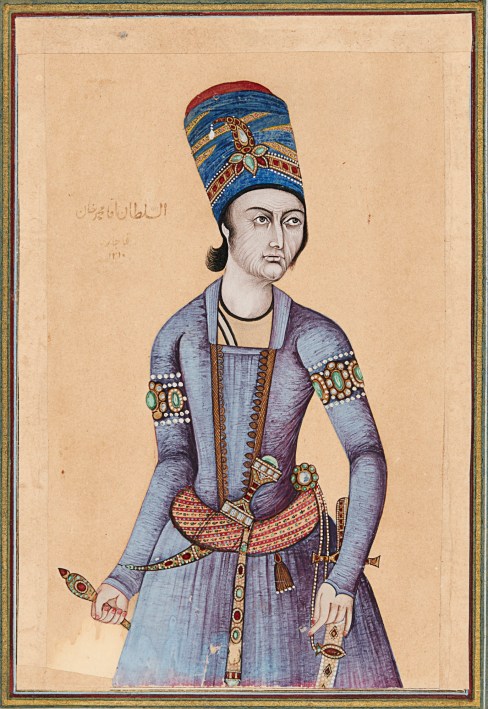
Agha Mohammad Khan Qajar, founder of the Qajar dynasty (1794-1925) in Iran [source]

Gavin R.G. Hambly, a Middle East scholar and historian, wrote a paper in 1963 about the establishment of the Qajar dynasty, the second-to-last ruling House in Iran, and particularly about its first monarch, Agha Mohammad Khan. The paper is slightly revisionist about Agha Mohammad, countering the long-standing reputation of him as solely a ruthless despot. The Qajars, for all their faults, prevented the outright colonisation of Iran in the nineteenth century, and imposed an order that held the country together, albeit while losing tracts of territory on the periphery—the Caucasus and Turkmenistan to the Russians in the north, and areas in the east to the British, notably Herat, which was annexed to Afghanistan, and parts of Baluchistan and Sistan to what would later become Pakistan. This resilience of the Iranian state is largely ascribable to Agha Mohammad, argues Hambly, who showed a sense of public spirit he is rarely credited with in consciously making the lives of ordinary Iranians better. Continue reading

The Unravelling of a Guided Islamic State Plot in Russia

By Kyle Orton (@KyleWOrton) on 26 February 2019

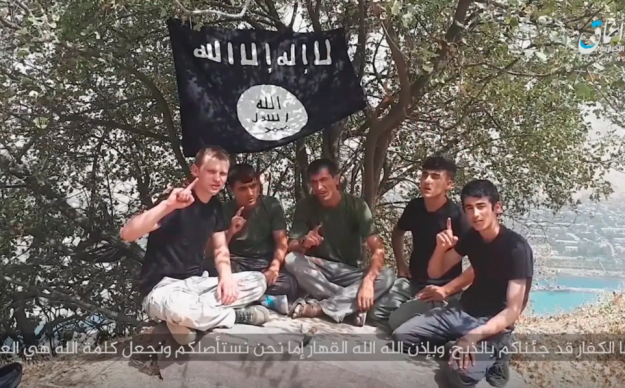
Islamic State terrorists responsible for the Danghara attack in Tajikistan, July 2018 [source]

Kommersant reports on the FSB foiling a series of guided plots by the Islamic State (IS) in late 2016. The IS guide in these cases was a Tajik, Tojiddin Nazarov (Abu Usama Noraki). Had IS’s operations been successful, they would have blown up the headquarters of Russian military intelligence (GRU) on the Khoroshevskoye Highway, as well as railway passengers. Continue reading

Islamic State Newsletter Celebrates Guerrilla Campaign, Attacks Saudi Arabia as ‘Stalinist’

By Kyle Orton (@KyleWOrton) on 16 February 2019

Front page Al-Naba 169

The Islamic State (IS) released the 169th edition of its newsletter, Al-Naba, on 14 February 2019. Al-Naba 169 leads with the attack on the governor of Borno in Nigeria by IS’s branch in that country. In terms of volume, much of the focus remains on the guerrilla campaign in Iraq and Syria, though there is an item on the last stand of the caliphate in Baghuz, the final village in eastern Syria. IS highlights its clashes with al-Qaeda in Yemen. There is a profile of a Russian-speaking atheist-turned-jihadist who was killed in Egypt. And perhaps most notable is an essay on Saudi Arabia, where IS has a terrorist infrastructure that is instructed to be patient. It is a question that likely is unanswerable until it is too late how strong IS is in Saudi Arabia. Continue reading