Tag Archives: Russia

The United Nations Ceasefire for East Ghouta is a Farce

By Kyle Orton (@KyleWOrton) on 2 March 2018

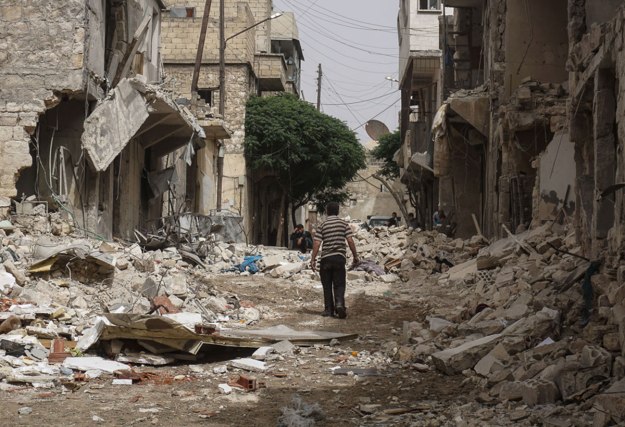
Aftermath of an Assad regime bombardment in Hamouriyah, Eastern Ghouta, 9 January 9, 2018. Samir Tatin/Anadolu Agency/Getty Images

The international community tried to impose a ceasefire in Syria on 24 February, passing resolution 2401 through the United Nations Security Council. The ceasefire never took hold and it is now clear it will not. This was inevitable.

Bashar al Assad’s regime, and the governments that support him in Iran and Russia, have repeatedly made use of ceasefires to sequence their war, taking advantage of the calm on some fronts to concentrate firepower on other areas. The only question is why Western diplomats gambled that this time would be any different. Continue reading

Syria Continues to Unravel as External Powers Dominate

By Kyle Orton (@KyleWOrton) on 1 March 2018

Aftermath of a pro-Asad coalition bombing in Hamouria, in besieged Eastern Ghuta, near Damascus, 22 February 2018. (AFP)

In the summer and autumn of 2017, it was claimed Syria’s civil war was winding down, but the nearly seven-year conflict is nowhere near to finished, and recent events suggest it could even escalate. Continue reading

Al-Qaeda’s Leader Tells Syrian Insurgents To Avoid State Allies, Focus on Guerrilla Tactics

By Kyle Orton (@KyleWOrton) on 21 February 2018

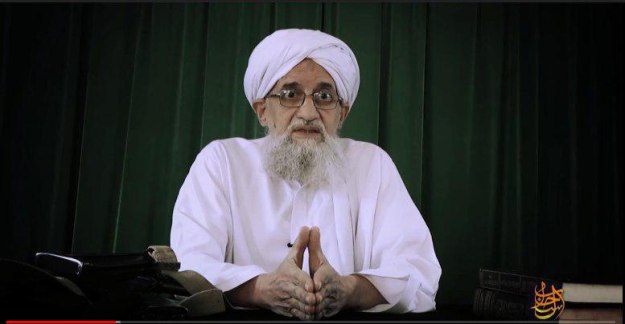
Al-Qaeda’s leader, Ayman al-Zawahiri, released a video statement on 20 February 2018, entitled, “Oh Our Brothers in Syria, Reconcile Amongst Yourselves”. The speech continued themes Dr. al-Zawahiri has hit on many times before, notably encouraging the Syrian insurgency to avoid allying with the West or other foreign states, to unite behind al-Qaeda since all outside actors are conspiring against the Syrian opposition, and to refuse all compromise in imposing the shari’a. Simultaneously, al-Zawahiri suggests that his adherents avoid trying for quick results and “cling[ing] to ground”, an echo of the advice given in the summer of 2016 that al-Qaeda’s operatives and the Syrian insurgents they can co-opt should prepare for a long war focused on guerrilla tactics, rather than holding territory. An English translation of al-Zawahiri’s speech was made by As-Sahab Media, disseminated by pro-al-Qaeda Telegram channels, and is reproduced below with some editions for syntax and transliteration. Continue reading

Coping With America’s Syria Policy, Israel Tries To Draw its Own Red Line

Published at TRT World

By Kyle Orton (@KyleWOrton) on 13 February 2018

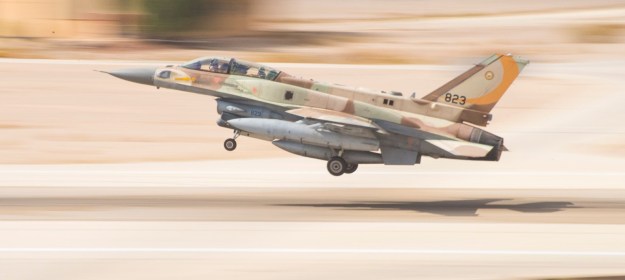
There was a serious escalation between Israel and Iran in Syria last week. This has been a long-time coming, an inevitable part of the contest for regional order that was obscured, and fuelled, by the narrow focus on the Islamic State (Daesh) and the war against its “caliphate”, particularly over the last year. Continue reading

America’s Kurdish Allies in Syria Can’t Counter Iran

Published at The Arab Weekly

By Kyle Orton (@KyleWOrton) on 11 February 2018

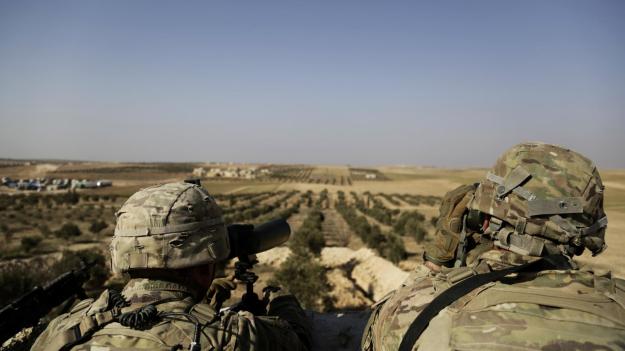
US Secretary of State Rex Tillerson laid out the Trump administration’s vision for Syria, making clear that, contrary to the expectations of many, the United States will stay in Syria beyond the collapse of the Islamic State’s (ISIS) self-proclaimed caliphate, holding the jihadists at bay and establishing an order compatible with US interests.

Crucially, Tillerson—in a sharp break with US President Donald Trump’s predecessor—specified that countering Iranian influence within Syria was a central US objective. The problem with the strategy is that it seems to rely on repurposing the United States’ anti-ISIS Kurdish militia allies against the Iranian revolution. Continue reading

Why The Obama Doctrine Failed

Film review of The Final Year (2018)

By Kyle Orton (@KyleWOrton) on 31 January 2018

The Final Year, a new documentary film directed by Greg Barker, tracks the closing stages of the administration of President Barack Obama in 2016. Senior officials are followed and interviewed, and the White House is watched as it tries to react to daily events. Much of the substance contained in the film was knowable in real time, but it is very useful to have these officials on record—on video, no less—explaining the assumptions and thought processes they were operating with as they made decisions that led to a series of such intense disasters around the world. This is especially interesting since the ripple effects from these catastrophes ultimately set the conditions for the election of Donald Trump and dismantling of much of the Obama legacy. Continue reading

American Intelligence Acknowledges Anti-ISIS Coalition’s Kurdish Partner is a Terrorist Group

By Kyle Orton (@KyleWOrton) on 27 January 2018

YPG/YPJ fighters raise the banner of the PKK leader Abdullah Ocalan in Raqqa city on 19 October 2017 (YPG Press Office)

The Central Intelligence Agency has publicly recognized that the Kurdish partner force the United States-led Coalition against the Islamic State (IS) has been working with in Syria is a subsidiary of the terrorist-designated Kurdistan Workers’ Party (PKK). Continue reading

Turkey’s Afrin Offensive and Russia’s Policy in Syria

Originally published at Ahval

By Kyle Orton (@KyleWOrton) on 21 January 2018

Turkey’s president, Recep Tayyip Erdoğan, threatened on Jan. 13 to begin a military operation “in about a week” to evict Kurdish militants from Afrin in northwestern Syria. Erdoğan has repeatedly threatened to “cleanse” Afrin of the fighters over the last two years. It turned out he really meant it this time: on Jan. 20 Turkey commenced Operation Olive Branch against Afrin.

Kurdish forces, affiliated with the Kurdistan Workers’ Party (PKK), have constituted an important element of the Coalition’s ground force in Syria against the Islamic State (ISIS) since late 2014, expanding their “Rojava” statelet by capturing vast swathes of territory from ISIS in northern and eastern Syria that is connected to Afrin under a deal with the pro-regime coalition—Bashar al-Assad, Iran, and Russia.

Any Turkish government would see this situation as a threat, and be angry at the United States for supporting the Kurds. The PKK regards Rojava and the ruling Democratic Union Party (PYD) as strategic elements in its long war against the Turkish state. Indeed, Kurds in Rojava have already provided at least logistical support for PKK attacks inside Turkey.

Continue reading

Former Al-Qaeda Group Continues Its Efforts To Annex The Syrian Revolution

By Kyle Orton (@KyleWOrton) on 17 January 2018

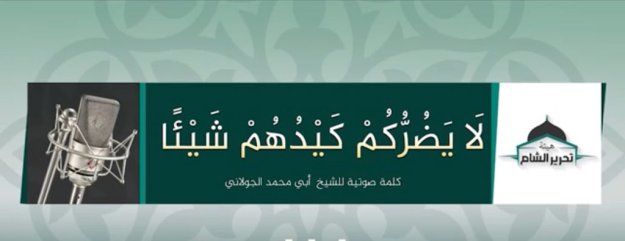
Ahmad al-Shara (Abu Muhammad al-Jolani), the leader of the Syrian jihadi group, Hay’at Tahrir al-Sham (HTS), released an audio speech, entitled, “Their Plot Will Not Harm You At All” or “Not The Least Harm Will Their Cunning Do To You” [Ali Imran (3): 120], on 16 January 2018. The speech is a continuation of themes HTS—even under its previous names, Jabhat al-Nusra and Jabhat Fatah al-Sham—has used, namely that it saw through the “peace processes” from the beginning as a conspiracy against the revolution, and that only it has the will and capacity to fulfil the desires of those Syrians who want to be free of Bashar al-Asad’s tyrannical regime. The recent insurgent counter-offensive in Idlib is taken by HTS as vindication, and as an opportunity to draw what’s left of the northern rebellion out of Turkey’s orbit and under its influence. A pro-HTS Telegram channel put out a transcript of the speech, which is reproduced below with some syntactical edits.
Continue reading

Russia’s Plans in Syria Falter, Opening Chance for the West

By Kyle Orton (@KyleWOrton) on 29 December 2017

The Astana track of Syrian “peace” negotiations began on 23 January 2017, under Russian guidance in the Kazakh capital, with Iran and Turkey also invited as “guarantor countries” of the various sides in Syria. The process, initiated in the shadow of the savage conquest of Aleppo city in December 2016 that signalled the total strategic defeat of the insurrection against the Bashar al-Asad regime, was an attempt by Moscow to convert the military gains it had enabled by Asad and Iran on the ground into political facts that could then be imported into the internationally-recognized Geneva process. This “Astana-isation of Geneva” was Russia’s bid to take control of the political process and redefine it: rather than having Asad’s removal as its end-goal, it would set the terms of reintegration into the Asad state. Abetted by a purblind Western campaign against the Islamic State (IS) and a strategic reorientation in Turkey, the pro-Asad coalition has more or less had its way for the last year. But there are now signs that this approach is beginning to unravel. Continue reading