Tag Archives: Russia

Litvinenko Verdict: What Happens Now?

By Kyle Orton (@KyleWOrton) on January 25, 2016

Published at Left Foot Forward.

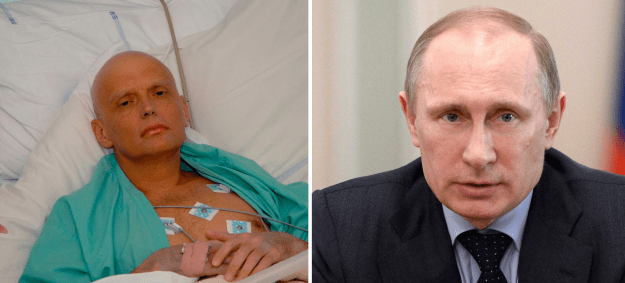
The British inquiry into the death of Alexander Litvinenko concluded on Thursday, making official what everyone already knew: the Russian intelligence services, “probably” at the direct order of Russian President Vladimir Putin, murdered Litvinenko in London in November 2006.

Welcome as it is to have this on the record and to have Litvinenko’s killers named for all the world to see, it now leaves questions, primarily:

Will similar forensic scrutiny be brought to bear on several other odd instances of political and other crime in Russia?

And what does the British government intend to do now that the Kremlin is carrying out assassinations on its territory again? Continue reading

The Iranian Nuclear Deal and North Korea

By Kyle Orton (@KyleWOrton) on January 18, 2016

1

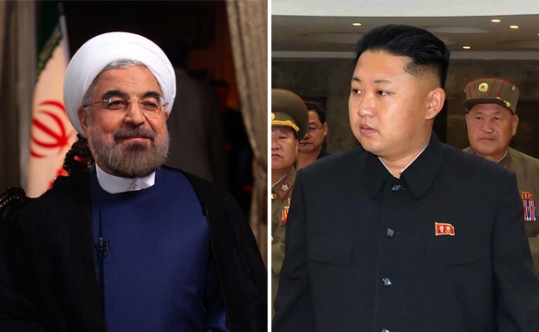
In the last few days, the international sanctions against the Islamic Republic of Iran’s nuclear program were lifted, which will allow Tehran access to $30 billion immediately and more than $100 billion will become available in short order. There are many fears about the uses Iran will put this money to, whether on the nuclear program itself, in aiding Iran’s imperial policy in the region, now proceeding with assistance from Russia, or perhaps exporting terrorism further abroad. An under-examined potential use of this money, highlighted by new sanctions the United States applied to Iran over its ballistic missile program, is to purchase weapons from North Korea. Pyongyang has already conducted what it claims is a hydrogen bomb test this year; fuelled by Iranian money the Hermit Kingdom might yet make more trouble for its neighbours and beyond. Continue reading

Al-Qaeda Leader Focuses on Main Enemies: Saudi Arabia and the Islamic State

By Kyle Orton (@KyleWOrton) on January 13, 2016

1

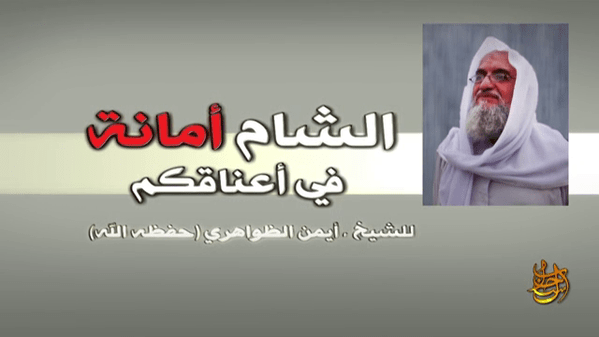
As-Sahab Foundation for Islamic Media Publication, al-Qaeda’s media outlet, produced an English translation of a speech by the organization’s leader, Ayman al-Zawahiri, on 13 January 2016. The speech was entitled, “Syria Is Entrusted Upon Your Necks”. The speech does focus on the West, particularly its de facto alliance with the pro-Assad coalition—namely Russia and Iran—and calls for the Syrian rebellion to unite with al-Qaeda to resist this conspiracy. What is more noticeable, however, is the two enemies on whom Dr. al-Zawahiri really focuses: Saudi Arabia and the Islamic State. The Saudis are accused—not without reason—of having been allied closely to the West and thwarting the jihadist projects at every turn. And al-Zawahiri makes a fierce ideological assault on the Islamic State, comparing them with the Khawarij and the Armed Islamic Group (GIA), whose conduct in Algeria in the 1990s and their justifications for it took Islamist extremism to new depths. The speech is reproduced below with some minor editions, to transliteration and punctuation, and some interesting and important sections highlighted in bold.
Continue reading

Propaganda and the War Against Independent Media in Syria

By Kyle Orton (@KyleWOrton) on December 29, 2015

In the last month, the Islamic State (IS) has been waging a concerted campaign to shut down all independent sources of information emanating from its statelet. IS’s focus has been on Raqqa is Being Slaughtered Silently (RBSS), an activist group that began in April 2014 in IS’s de facto capital in northern Syria. RBSS has published information—including pictures and videos, much of it via Twitter—on the crimes of the “caliphate”. IS has now murdered at least five RBSS journalists and activists, two of them on foreign soil in Turkey, plus the father of one of RBSS’s founders. (The sixth case, also in Turkey, is more murky.) The suppression of independent media by IS is necessary to allow the group to maintain social control of the areas it rules and to sustain the narrative that it is building utopia on earth, which attracts in the foreign fighters that help IS maintain and expand its territory.
Continue reading

Is Turkey Responsible for the Islamic State?

By Kyle Orton (@KyleWOrton) on December 20, 2015

1

Turkey concluded its biggest investigation to date into Islamic State (IS) operatives on its territory on Friday, and blacklisted sixty-seven people. This provides a good moment to review what Turkey’s role has been in the rise of IS, especially amid the escalating accusations from Russia that Turkey is significantly responsible for financing IS. The reality is that while Turkish policy has, by commission and omission, made IS stronger than it would otherwise have been, so has Russia’s policy—and Russia’s policy was far more cynical than Turkey’s, deliberately intended empower extremists to discredit the rebellion against Bashar al-Assad. Turkey’s focus on bringing down Assad and Ankara’s fear of Kurdish autonomy led it into these policies and now—having seemingly found the will to act to uproot IS’s infrastructure on Turkish territory—there is the problem of actually doing so, when IS can (and has) struck inside Turkey. The concerns about these external funding mechanisms for IS, while doubtless important, obscure the larger problem: IS’s revenue is overwhelmingly drawn from the areas it controls and only removing those areas of control can deny IS its funds. Continue reading

In View of Vienna

By Kyle Orton (@KyleWOrton) on December 15, 2015

Published at NOW Lebanon.

1

So the Syrian opposition can unite. Foreign powers have been the major cause of rebel discord. Previous rebel unity initiatives like the Joint Command were pulled apart by the competition between the insurgency’s sponsors—Saudi Arabia and Qatar primarily—and the last rebel umbrella group, the Supreme Military Council, which was identified with Western power, collapsed after President Barack Obama decided not to punish Bashar al-Assad for the massive chemical weapons attack on the population of Ghouta. But under Saudi auspices, an opposition “team” was announced on December 10 after a three-day conference in Riyadh, which includes the political and military opposition and groups with varying ideologies and patrons. This is an achievement. Unfortunately, this team’s task is an impossible one: intended to partake in the Vienna process begun in October, ostensibly to negotiate an end to the war, Syria is not, at present, in a condition where a political agreement can be made and implemented, not least because the Assad regime and its supporters in Iran and Russia have doubled down, and the opposition continues to receive insufficient support to pressure the regime enough to force an agreement. Continue reading

As Syria’s Opposition Tries To Unite, Prospects For Peace Recede

By Kyle Orton (@KyleWOrton) on December 9, 2015

A version of this article was published at Middle East Eye.

A rebel fighter from the Free Syrian Army's

A rebel fighter from the Free Syrian Army’s “First Battalion” takes part in military training on May 4, 2015, in rebel-held northern Rif Aleppo. (AFP, Baraa al-Halabi)

The Syrian opposition is meeting in Saudi Arabia between December 8 and 10 in an attempt to create a unified structure that can credibly sit across the table from the Bashar al-Assad regime in the internationally-organised peace talks in Vienna, and make a binding commitment on the path forward for Syria. Continue reading

If Assad Is Not Forced Out, ISIS Never Will Be

By Kyle Orton (@KyleWOrton) on December 3, 2015

A version of this article was published at The Independent.

1

Yesterday, the British House of Commons voted 397 to 223 to extend airstrikes against the Islamic State (ISIS) into Syria from Iraq. After the vote in August 2013 against military action to punish Syrian dictator Bashar al-Assad for the massive poison gas attack outside Damascus that killed 1,500 people in a few hours, this is undoubtedly a sign of a recovery in confidence of Britain’s international role, but it is only the beginning. Continue reading

How Assad Funds the Islamic State

By Kyle Orton (@KyleWOrton) on November 29, 2015

George Haswani (AP Photo)

George Haswani (AP Photo)

The United States Treasury Department’s Office of Foreign Assets Control (OFAC) sanctioned four individuals and six entities connected to the regime of Bashar al-Assad on November 25 for helping to transfer Syrian government funds to the Islamic State (IS), and for assisting in Russia-connected schemes to help the Assad regime evade the international sanctions imposed on it. While the sanctions freeze all assets of the individuals and entities that are under U.S. control and ban Americans from transactions with them, the most significant effect of these sanctions is political: the revelation of details about how Assad strengthens the Islamist terrorists he claims to oppose to discredit and destroy the rebellion against his regime. Continue reading

Destroying Islamic State, Defeating Assad: A Strategy for Syria

By Kyle Orton (@KyleWOrton) on November 25, 2015

1

Today, my first report with The Henry Jackson Society was published: “Destroying Islamic State, Defeating Assad: A Strategy for Syria“. Continue reading