Tag Archives: Russia

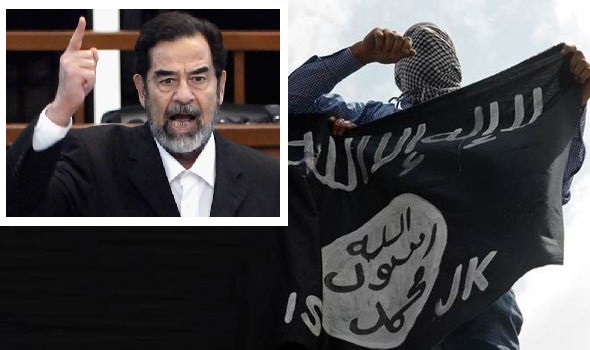
Saddam Hussein’s Regime Produced The Islamic State

By Kyle Orton (@KyleWOrton) on April 21, 2015

1

Having presented the evidence that Saddam Hussein Islamized his foreign policy and then Islamized his regime, above all with the Islamic Faith Campaign, beginning in June 1993 that tried to fuse Ba’athism with Salafism, encouraging (and keeping under surveillance) a religious revival in Iraq that redounded to the benefit of the regime’s legitimacy and support, I wanted to look at what this history means for Iraq and the wider region now.

I pointed out in October that the “military strength” of the Islamic State (ISIS) “comes from the remnants of Saddam Hussein’s military-intelligence apparatus and the Caucasus’ Salafi-jihadists.”

Continue reading →

Why I Can’t Bring Myself To Vote On May 7

By Kyle Orton (@KyleWOrton) on April 20, 2015
1

There are few people in British public life more destructive, especially among the young, than Russell Brand, not least because of his poisonous advice that people should not vote. When I first saw him proffer this advice on Newsnight—where I could not believe he had been invited and then taken seriously—it seemed to me a form of vandalism, using his prominent and comfortable position to urge those less comfortable to throw away one of the few levers they had to make their lot better.

But now I find the only way I could cast a ballot in the upcoming Election is if there was an option for “None of the Above”. I can only differentiate myself by noting both the very considerable gulf in our audiences, and thus responsibilities, and that I do not seek to advise anybody, only explain my own personal decision. Continue reading →

How Saddam Hussein Islamized Iraq

By Kyle Orton (@KyleWOrton) on April 20, 2015

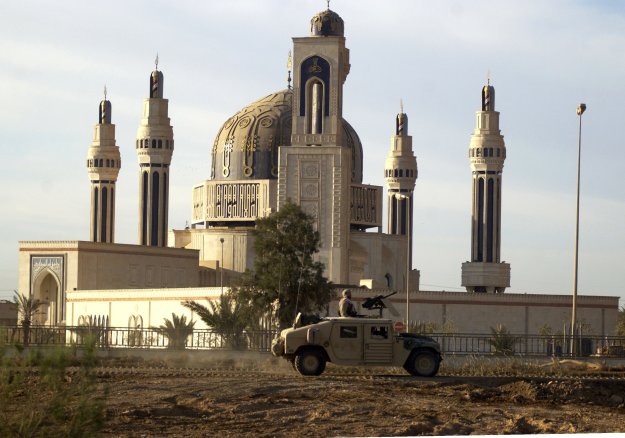
Umm al-Qura (Mother of All Cities) Mosque, built by Saddam to commemorate his

Umm al-Qura (Mother of All Cities) Mosque, built by Saddam to commemorate his “victory” in the 1991 Gulf War

In December, I wrote a post, “Iraq Is Still Suffering The Effects Of Saddam Hussein’s Islamist Regime,” which was a review/analysis of an academic paper by Samuel Helfont that pointed out that the Saddam Hussein regime had, since the 1980s, used Islamists, including al-Qaeda, as part of its foreign policy. I critiqued the paper a little for having said it would not comment on Saddam’s internal policy with the Islamists, while in fact the paper hinted that Saddam remained hostile to mixing religion and politics. I noted that the evidence does not support this: Saddam’s regime adopted overt theocratic trappings before the end.

There were two kinds of pushback to the idea that Saddam’s regime was Islamist. Predictably, one critique was related to the controversy over the way the Gulf War that Saddam started in 1990 was ended; opponents of the 2003 invasion of Iraq are heavily invested in the Saddam-as-secularist narrative, often coupled with the “Bush lied” hysteria—in this case about a connection between the Saddam regime and al-Qaeda—to say that the invasion empowered a previously, officially-repressed Islamism in Iraq. This simply is not borne out by the evidence. There was also pushback from some Iraqis. But this too was predictable: as I outlined in that post, drawing on Ali Allawi’s book on post-Saddam Iraq, one of the reasons so many people with no agenda get the Islamist aspect of the Saddam regime wrong is that when they turn to what they believe is the best primary source—namely the Iraqis in the West—they encounter a source that for various reasons is actually several decades out-of-date.

Buttressing my initial argument is a 2011 paper, “From Militant Secularism to Islamism: The Iraqi Ba’th Regime 1968-2003,” in which Amatzia Baram provides evidence from Iraqi internal documents and tapes of Cabinet meetings captured after the fall of Baghdad to show that Saddam’s regime had formed an alliance with Islamists in the mid-1980s for use in its foreign policy, and from a bit later in the 1980s had begun steps toward Islamizing Iraq internally. Continue reading →
An Update On The Anti-Assad Imam Killed In London

By Kyle Orton (@KyleWOrton) on April 13, 2015

Abdul Hadi Arwani

Abdul Hadi Arwani

In Brent, northwest London, in the evening of April 12, a 46-year-old man was arrested as part of the ongoing investigation into the April 7 murder of the Syrian-born imam, Abdul Hadi Arwani, a long-time opponent of the Syrian regime of Bashar al-Assad.

Writing about the murder of Arwani last week, I noted that the available evidence suggested the motivations of the murderer(s) could be:

  • Financial: related to Arwani’s business dealings as the owner of his construction company
  • Other local or personal
  • Far-Right anti-Muslim
  • Intra-Islamist: Arwani had been the director at the Salafist An-Noor Mosque and was himself clearly an Islamist, but Arwani was against the Islamic State (ISIS), for example, which might have made him enemies among some congregants
  • Agents of the Assad regime, conceivably with the complicity of Iran and Russia

Those options still stand, but some important updates over the weekend have helped alter the relative likelihood of each. Continue reading →

Who Killed The Anti-Assad Imam In London?

By Kyle Orton (@KyleWOrton) on April 9, 2015

Abdul Hadi Arwani

Abdul Hadi Arwani

Abdul Hadi Arwani, a Syrian-born imam, was found shot dead in his car on Tuesday in Wembley, northwest London. The British police are still refusing to officially name Arwani, but his friends and supporters have done so. Arwani leaves behind six children.

There are many possibilities for who killed Arwani. As the manager of a construction firm, it could be a deal gone wrong. The involvement of anti-terrorism police in the investigation into Arwani’s murder could indicate a far-Right anti-Muslim assailant. However, a source close to the investigation said that Arwani was struck down in an operation that had all the hallmarks of a “State-sponsored assassination“. To find that the long arm of Bashar al-Assad’s mukhabarat had caught up with Arwani would hardly be a surprise. Continue reading →

The Local And Regional Implications From The Fall Of Idlib

By Kyle Orton (@KyleWOrton) on March 31, 2015

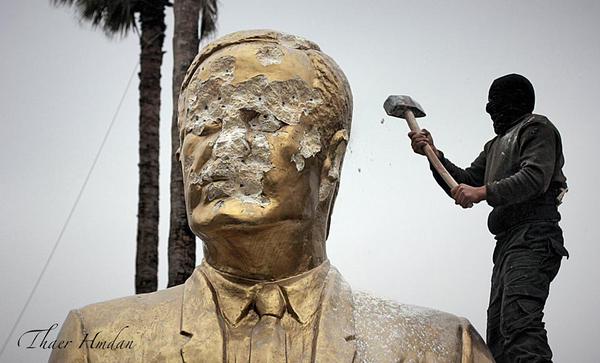
Statue of Hafez al-Assad defaced after Idlib City falls, March 29, 2015

Statue of Hafez al-Assad defaced after Idlib City falls, March 29, 2015

After an insurgent offensive began on March 24, Idlib City fell on March 29, making it only the second—of Syria’s fourteen—provincial capitals to slip from the control of Bashar al-Assad’s regime, the last one being Raqqa City on March 4, 2013. The regime has been on borrowed time in Idlib City since Wadi al-Deif to the south, near Maarat an-Numan, fell in mid-December.

In a scene reminiscent of Raqqa—and indeed the fall of Baghdad—a statue of Hafez al-Assad was destroyed. The insurgents broke open some secret prisons, while finding that in a final act of needless cruelty the regime had murdered other prisoners in the cells before retreating.

An operations room, Jaysh al-Fatah (Army of Conquest), organised this offensive, and is composed of: Faylaq a-Sham (Sham Legion), Liwa al-Haq, Ajnad a-Sham, Jaysh al-Sunna, Ahrar a-Sham, Jund al-Aqsa (JAA), and al-Qaeda’s Syrian branch, Jabhat an-Nusra. Continue reading →

Defeat Jihadists in Syria by Being a Better Ally to the Opposition

By Kyle Orton (@KyleWOrton) on March 25, 2015

A still  from the video announcing the Ahrar a-Sham-Suqour a-Sham merger

A still from the video announcing the Ahrar a-Sham-Suqour a-Sham merger

Ahrar a-Sham “merged with“—in reality annexed—Suqour a-Sham on March 22. Ahrar’s leader, Hashem al-Sheikh (a.k.a. Abu Jabbar), is the leader of the Ahrar-Suqour formation, and Suqour’s leader, Ahmed Issa al-Sheikh (a.k.a. Abu Issa) is his deputy. Ahrar is the largest and most hardline Syrian insurgent group in Syria, and Suqour has a fairly stern Salafi-nationalist ideology—at least at its leadership level—and was once the largest rebel group in Idlib Province.

The first thing this brought to mind was Sam Heller’s witticism late last year: “the most successful, lasting approach to rebel unification so far has basically been ‘Ahrar al-Sham absorbs you’.” Continue reading →

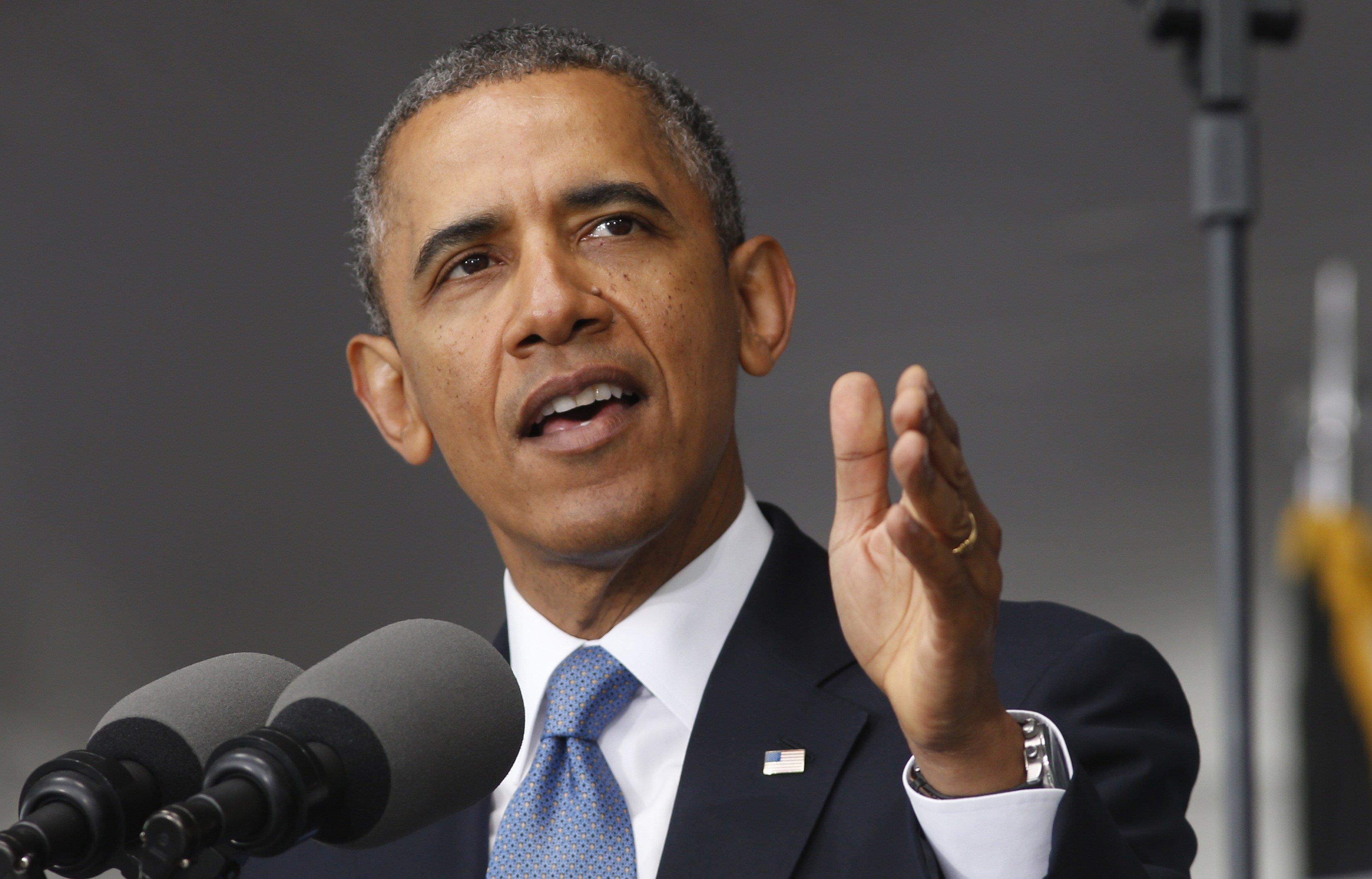
Obama’s National Security Strategy

By Kyle Orton (@KyleWOrton) on February 14, 2015

1

The National Security Strategy is never a riveting read, and the NSS put out by the Obama administration on Feb. 6, only their second (the last in May 2010), was no exception. “Strategic patience” was the mantra with which this NSS was launched, to fairly wide derision as a rationalisation of the last six years of hesitancy and retrenchment. It was a criticism with some basis in fact. Continue reading →

Film Review: Citizenfour (2014) by Laura Poitras

By Kyle Orton (@KyleWOrton) on February 6, 2015

1

Produced and directed by Laura Poitras, a Berlin-based, American-born producer and director, who has made numerous films attacking America’s foreign policy, Citizenfour rounds out a trilogy that started in 2006 with My Country, My Country about the U.S. regency in Iraq, and had its last instalment in 2010 with The Oath, a film that apparently follows two al-Qaeda members in Yemen and concludes they’re not such bad chaps.

The target this time for Poitras is the National Security Agency (NSA). Continue reading →

A Debate On America’s Role In Syria’s Future

By Kyle Orton (@KyleWOrton) on January 21, 2015

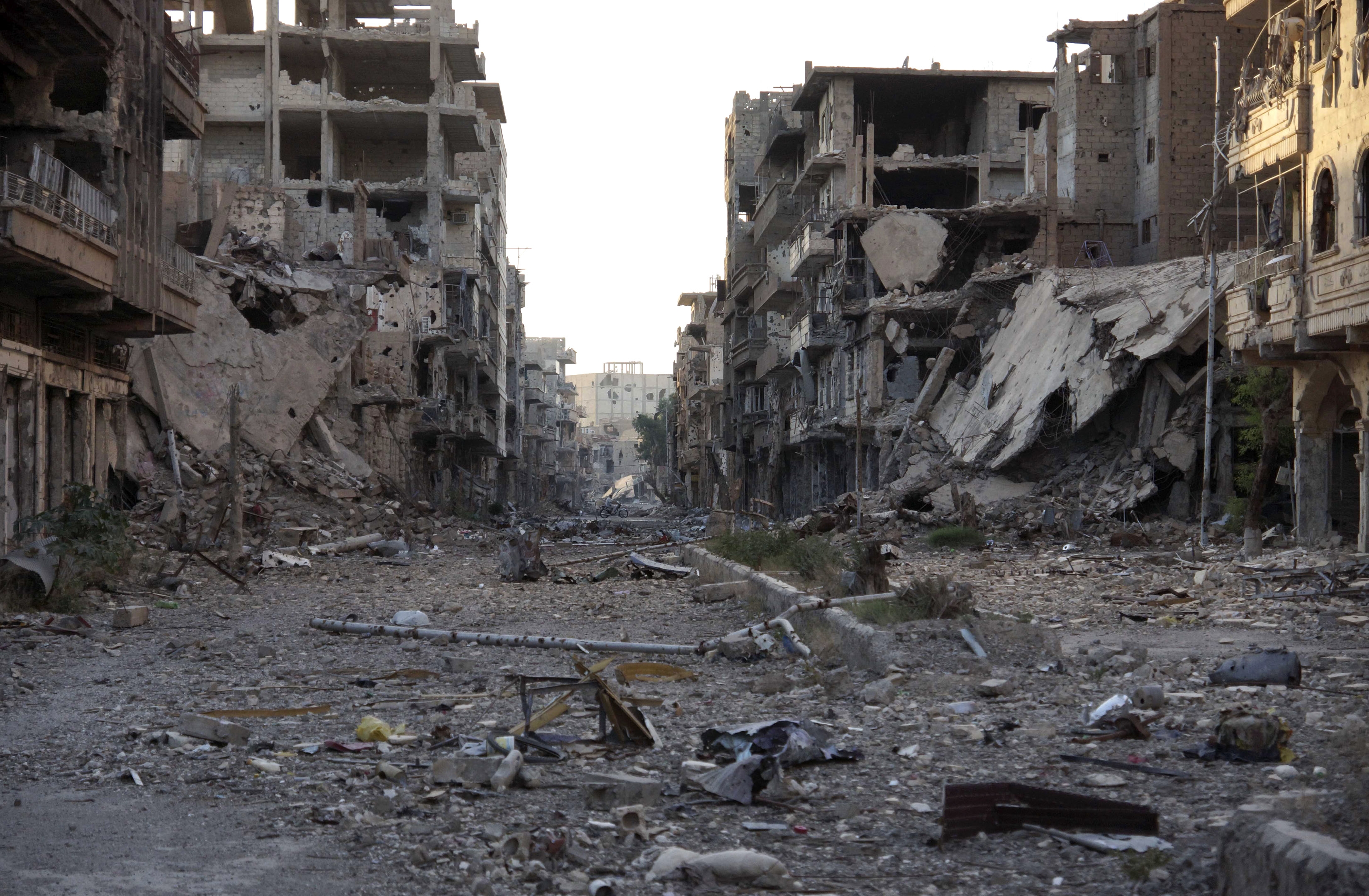
Devastation in Deir Ezzor, June 2013

Devastation in Deir Ezzor, June 2013

The McCain Institute hosted a debate last Thursday on the question, “Syria: Should the United States Do More?” Arguing in favour of the motion that the United States should do more was Michael Doran and Andrew Tabler. Arguing against were Joshua Landis and Aaron David Miller. Continue reading →