Tag Archives: Salafi-jihadists

There Have Been Real Achievements In Afghanistan, But Leaving Puts Them At Risk

By Kyle Orton (@KyleWOrton) on November 22, 2014

1

Since President Obama’s 2009 announcement of a ‘surge’ in Afghanistan that simultaneously announced the date of withdrawal, the western focus in Afghanistan has shifted to the exits.

The steady drizzle of bad news since then has reinforced this sense that it’s over, we’ve had enough and we’re leaving.

American and British troops quit Helmand in late October, basically ceding it to Taliban control. On Tuesday John Sopko, the head of the American auditor mechanism (SIGAR) said that efforts to promote economic growth in Afghanistan have ‘accomplished nothing.’ Continue reading

Are Syria’s Rebels Being Sacrificed To Al-Qaeda For Obama’s Détente With Iran?

By Kyle Orton (@KyleWOrton) on November 6, 2014

SRF leader Jamal Marouf

SRF leader Jamal Marouf

What a disaster. With American and coalition jets in the air overhead, ostensibly to do battle with Salafi-jihadists, al-Qaeda has been allowed to push rebel brigades the United States purports to support out of almost all of Idlib Province. Continue reading

The Nuclear Negotiations Are Only Part Of Iran’s Regional Ambitions—And Obama’s

By Kyle Orton (@KyleWOrton) on October 27, 2014

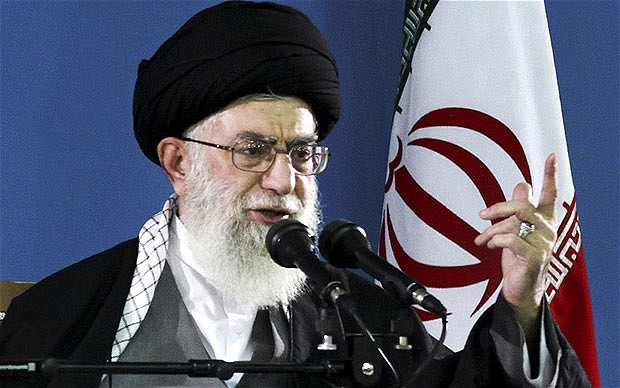
Ali Khamenei

Ali Khamenei

When the next—and supposedly final—round of negotiations over Iran’s nuclear program end next month, there are three possible outcomes:

  1. The “interim” deal, the Joint Plan of Action (JPA), will be rolled over for another six months after it was rolled over in July, and will, like so much else in the Middle East billed as temporary, begin to look permanent.
  2. A final deal is signed that is an Iranian victory in all-but name, putting them on the threshold of a nuclear weapon with only the regime’s goodwill stopping them crossing the finishing line to a bomb.
  3. Iran’s dictator, Ali Khamenei, refuses President Obama both of the above fig leaves and breaks off negotiations.

How did we get here? Continue reading

Russian Intelligence and the War In Syria

By Kyle Orton (@KyleWOrton) on October 21, 2014

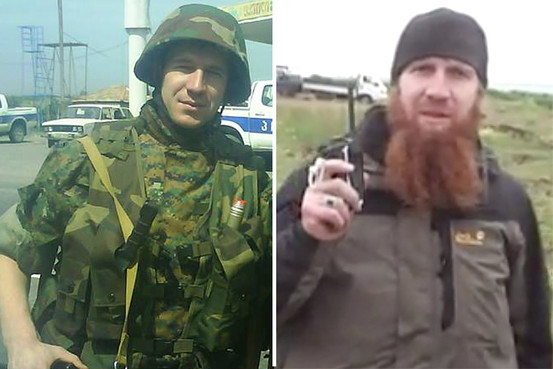
Abu Omar a-Shishani, while in Georgian military, now as I.S. leader in Syria/Iraq

Abu Omar a-Shishani, while in Georgian military, now as I.S. leader in Syria/Iraq

The Syrian rebellion, on Oct. 5, took over areas of Tel al-Hara, near Nawa, a major town twenty miles north of Deraa City, which is a strategic gateway to the road networks that keep the Assad regime alive in Deraa Province. The videos (1/2/3) showed FSA-branded rebels like Liwa al-Furqan and Jabhat Thuwar as-Suriya (the Syrian Revolutionaries’ Front) in control. Jabhat an-Nusra, the Syrian branch of al-Qaeda, had an important presence, but it was not dominant. So this seemed like good news on its own terms.

Two days later the plot thickened when a further video was uploaded to YouTube, showing the rebels touring a captured regime intelligence station in Tel al-Hara: Continue reading

The Balkan Front of the Jihad in the Fertile Crescent

By Kyle Orton (@KyleWOrton) on October 14, 2014

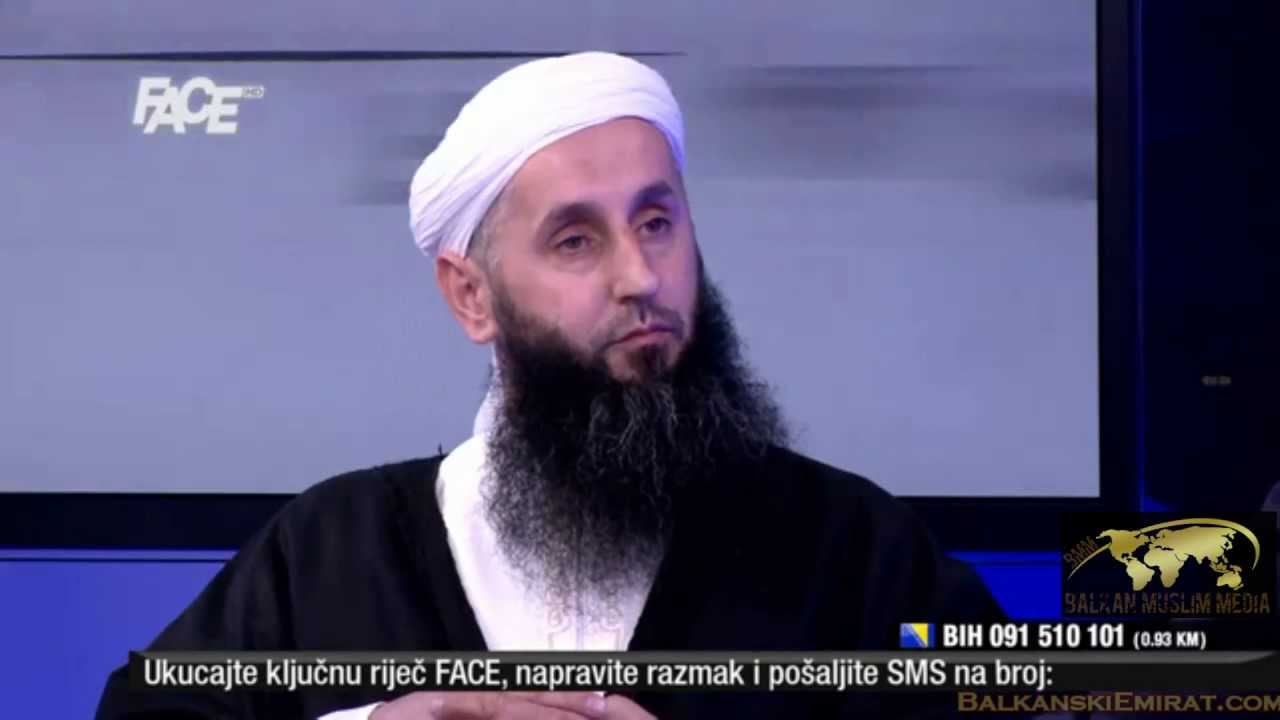
Bilal Bosnić, I.S.'s recruiter in Bosnia

Bilal Bosnić, the Islamic State’s lead recruiter in Bosnia

A week after the American-led airstrikes inside Syria began, it was reported that two women from the Balkans, Dora Bilic and Fatima Mahmutović, had been hit in ar-Raqqa, and that Ms. Mahmutović had been killed. Ms. Bilic, born in Croatia, converted to Islam two years ago and moved to Gornja Maoca, north-east Bosnia, which is in effect a Wahhabi commune, where she met her husband with whom she travelled to Syria for jihad. Ms. Mahmutović is from a village in Bosnia not far from the infamous Srebrenica, and she moved herself and her young son to Syria late last year. As is so often the case, it seems that the Croatian intelligence services were aware of Ms. Bilic but had done little about it. Even less surprising was the follow-up report that Ms. Bilic had been radicalised in London. Continue reading

The Jihadists’ Information War in Syria and Iraq

By Kyle Orton (@KyleWOrton) on July 22, 2014

In April, the International Centre for the Study of Radicalisation produced a report, ‘Measuring Importance and Influence in Syrian Foreign Fighter Networks,’ which examined the use of social media in recruiting people to the jihadist groups, referring almost solely to Syria at that time, but which applies equally to Iraq. I have now gotten around to reading it and its findings are extremely interesting.  Continue reading

Nouri al-Maliki Is Pushing Iraq Into The Abyss

By Kyle Orton (@KyleWOrton) on June 10, 2014

Iraqi Prime Minister Nouri al-Maliki

Whatever one thinks about the decision in 2003 to finish the war Saddam Hussein started by annexing Kuwait, serious people should be able to agree that the way the country was abandoned by the United States—first politically after 2009 and then militarily—was deeply irresponsible, not least because of the motives of this decision. Continue reading

Are There Any Good Guys Left In Syria?

By Kyle Orton (@KyleWOrton) on May 30, 2014

3

The short answer is “yes”. The longer answer is, “It depends on how good you want,” and discovering the answer to that relies on having a strategic vision of what you want from Syria. Continue reading

Obama Doubles-Down On His Foreign Policy At West Point

By Kyle Orton (@KyleWOrton) on May 28, 2014

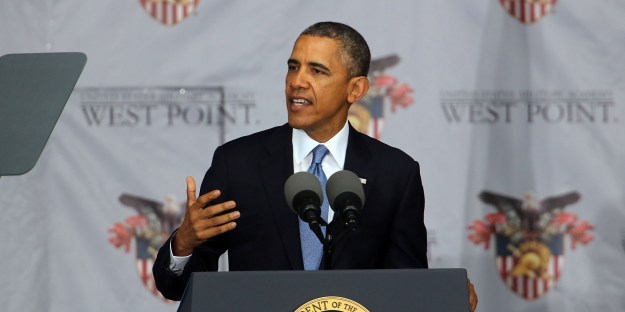
President Obama Delivers Commencement Address At West Point

It was to be expected that this would be a bad speech. Attacked from all sides President Barack Obama was going to have to push back and that was always going to make the speech defensive. As usual, the President ploughed bravely into a battalion of straw men: positing extremes then selecting a cool middle way. But it was so much worse than that. The tone was not the problem; the content was. Continue reading

Book Review: Cruelty and Silence (1993) by Kanan Makiya

By Kyle Orton (@KyleWOrton) on April 7, 2014


Kanan Makiya, an Arab author who writes of the decline of the Arab world as a story where Arabs have the primary agency, can be disorienting to read in the modern context. The first part of Cruelty and Silence deals with the cruelty of the Arab world in general and the Saddam Hussein regime in particular, Continue reading