Tag Archives: Salafism

What Questions Remain About 9/11?

By Kyle Orton (@KyleWOrton) on 5 September 2018

In less than a week, it will be the seventeenth anniversary of al-Qaeda’s “Plane’s Operation”, the assault on the United States. It is a vertiginous enough reflection that many of us have been alive more years since 11 September 2001 than before it, and positively alarming that many of those who will soon move into the government, media, and other leading societal institutions will have been born after an event that still shapes so much of the international scene. As Anthony Summers and Robbyn Swan put it in The Eleventh Day: The Ultimate Account of 9/11 (2011), we are left with “the brief name ‘9/11’,” the context and meaning stripped away all this time later. The book is a useful overview of an event that should always be to some degree fresh in mind, though it is not without its problems in its analytical sections. Continue reading
Reviewing the Iraqi Surge and Awakening

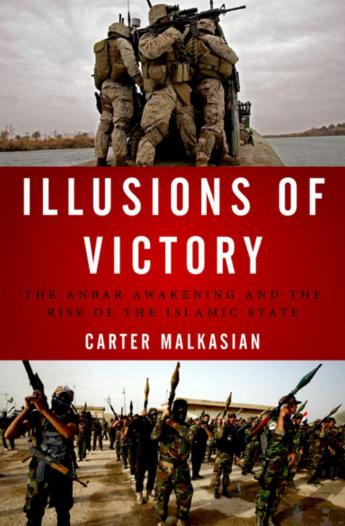
Book Review: Carter Malkasian, ‘Illusions of Victory’, Oxford University Press, 2017. pp. 280.

By Kyle Orton (@KyleWOrton) on 4 July 2018

Carter Malkasian sets out in Illusions of Victory: The Anbar Awakening and the Rise of the Islamic State to upend the conventional understanding of the campaign against the Islamic State (IS) movement, known at the time as al-Qaeda in Iraq (AQI), in Anbar province of western Iraq. Continue reading

Islamic State Threatens Democrats and Democracy

By Kyle Orton (@KyleWOrton) on 6 May 2018

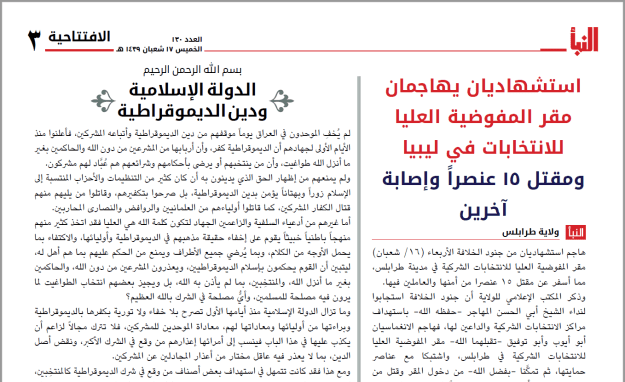
Al-Naba 130, page 3

The 130th edition of Al-Naba, the Islamic State’s (IS) newsletter, was published on 4 May 2018. On page 3, there was an article about IS’s position on democracy, which is reproduced below. Continue reading

The Islamic State Spokesman Directs His Fury At Regional Governments

By Kyle Orton (@KyleWOrton) on 22 April 2018

An audio statement by the official spokesman of the Islamic State (IS), Abu Hassan al-Muhajir,[1] was released today. The speech was entitled, “By their example, be guided” or “So From Their Guidance Take An Example”—drawn from Qur’an 6:30. Abu Hassan continued the themes that have been cropping up in IS messaging and propaganda for the last few months that have more firmly reoriented IS away from its foreign attacks campaign toward a more local focus in the Middle East. IS has been stressing its post-caliphate insurgency—concentrated at the present time in Iraq, but with notable operations in Syria—and its war for influence with regional rivals for Muslim loyalty, whether governments such as Egypt and particularly Saudi Arabia, or other Islamist movements like Harakat al-Muqawama al-Islamiyya (HAMAS) in Gaza. Continue reading

The Announcement of the Mujahideen Shura Council in Iraq

By Kyle Orton (@KyleWOrton) on 17 March 2018

A statement attributed to Abu Maysara al-Iraqi, the official spokesman of Al-Qaeda in Mesopotamia (AQM), was released on 15 January 2006 that announced AQM was being merged with five other Salafi insurgent groups to create the Mujahideen Shura Council (al-Majlis Shura al-Mujahideen). A translation of the statement is produced below.

Continue reading

Profile: First Spokesman of the Islamic State Movement

By Kyle Orton (@KyleWOrton) on 16 March 2018

The predecessor organization to the Islamic State (IS), the Islamic State in Iraq (ISI), used to run a “Prominent Martyrs” or “Distinguished Martyrs” series: essentially obituaries for important members of the IS movement. In the forty-sixth edition, on 18 August 2010, ISI profiled Abu Maysara al-Iraqi, the first official spokesman and the deputy of the Media Department until he was killed in 2006. A translation of Abu Maysara’s biography was issued by Ansar al-Mujahideen forum and is reproduced below with some minor editions for transliteration and some interesting points highlighted in bold. Continue reading

Islamic State Recommends More Gentleness in Dealing With Sinners

By Kyle Orton (@KyleWOrton) on 10 March 2018

1

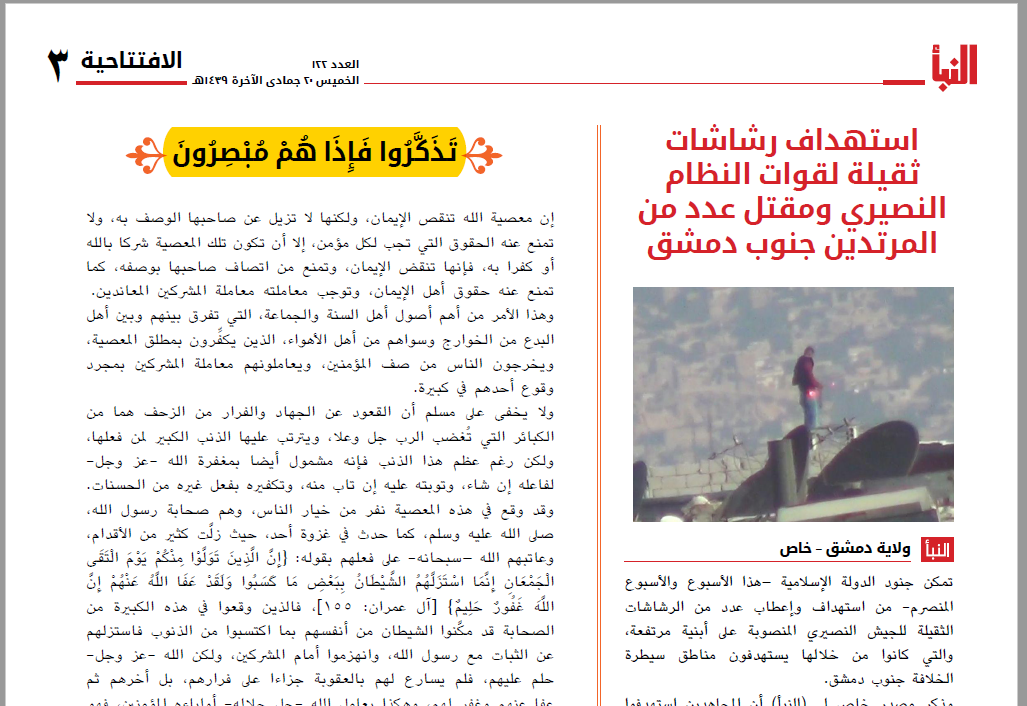
The 122nd edition of Al-Naba, the Islamic State’s weekly newsletter, was released on 9 March 2018 and contained an article, on page 3, suggesting that the use of takfir (excommunication) should be circumscribed. A rough translation is reproduced below. Continue reading

Al-Qaeda Leader Profiles the Founder of the Islamic State

By Kyle Orton (@KyleWOrton) on 28 February 2018

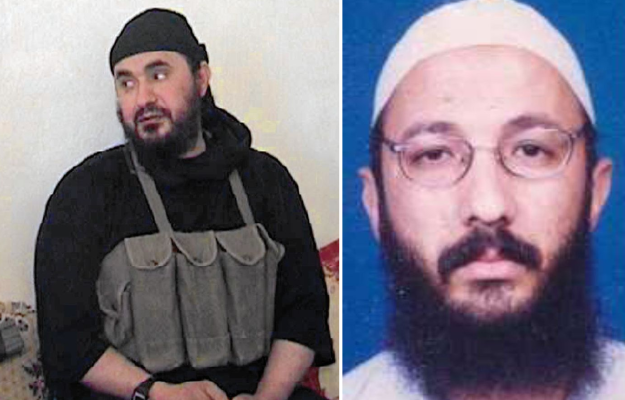
Ahmad al-Khalayleh (Abu Musab al-Zarqawi) [picture via Getty], Muhammad Zaydan (Sayf al-Adel) [picture via Kronos Advisory LLC]

The military leader of al-Qaeda, Muhammad Saladin Zaydan (Sayf al-Adel), wrote a biography for Ahmad al-Khalayleh (Abu Musab al-Zarqawi), the Jordanian jihadist who founded what is now the Islamic State in Taliban Afghanistan in 1999. Zaydan wrote the biography in 2005 while in Iran, under the protection of the Islamic Republic, where he still is. The biography is reproduced below with some interesting and important sections highlighted in bold. Continue reading

Al-Qaeda Gives its Verdict on the “Arab Spring” Seven Years On

By Kyle Orton (@KyleWOrton) on 28 January 2018

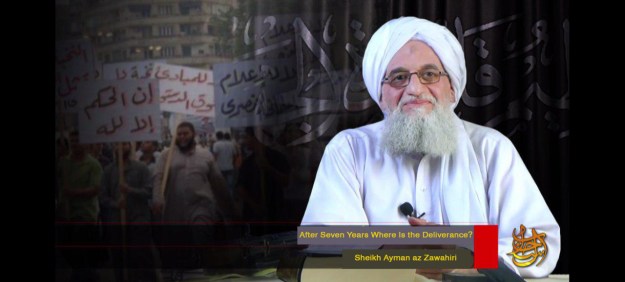
Al-Qaeda’s leader, Ayman al-Zawahiri, made a speech on 26 January 2018, entitled, “After Seven Years Where Is the Deliverance?” The speech built the case that the “Arab spring” uprisings failed because they tried to make changes within the framework of the nation-state, to be incremental, and to make accommodations with the fallen regimes, rather than radical “purification” by launching coordinated jihadist revolutions that respected no frontier, violently uprooted the old order, and implemented the shari’a. An English transcript of the speech was released by al-Qaeda’s As-Sahab Media station and is reproduced below. Continue reading

The Official Declaration that Made Abu Bakr al-Baghdadi Leader of the Islamic State

By Kyle Orton (@KyleWOrton) on 30 December 2017

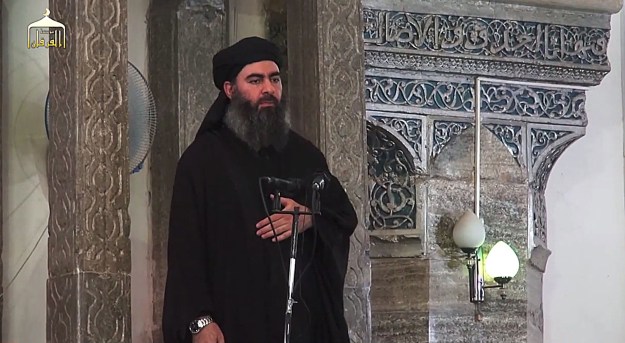
The leader of the Islamic State, Ibrahim al-Badri (Abu Bakr al-Baghdadi), speaking at the Zengi Mosque in Mosul, 4 July 2014 // AP Images

The current leader of the Islamic State (IS), Ibrahim al-Badri (Abu Bakr al-Baghdadi), was appointed as al-amir al-mu’mineen (the commander of the faithful or prince of the believers) on 16 May 2010, after his predecessor, Hamid al-Zawi (Abu Umar al-Baghdadi), was killed on 18 April 2010 in the company of his deputy and “war minister”, Abdul Munim al-Badawi (Abu Hamza al-Muhajir). The official statement appointing al-Badri is reproduced below. Continue reading