A new report by me for the Henry Jackson Society (accessible here) is out today. It looks at those governing the statelet held by the Islamic State in parts of Syria and Iraq, and those who are orchestrating IS’s foreign terrorist attacks, including in Europe. The wave of attacks over Ramadan has been described as a “lone wolf” epidemic by many, but IS is coordinating this mayhem through its Amn al-Kharji, foreign intelligence service, and the report looks at who staffs this institution and the dangers of writing-off these attacks as the work of lone radicals with no connection to each other or IS. Continue reading →
This essay, written to tie together my work on the relationship between the Saddam Hussein regime and the Islamic State, was completed last summer and submitted to an outlet, where it entered a form of development hell. After giving up on that option late last year, the opportunity arose to get a shorter version published in The New York Times in December. But I procrastinated too long over what to do with the full essay and a recent change in my work situation means I no longer have the bandwidth to go through the process of finding it a new home, so here it is.
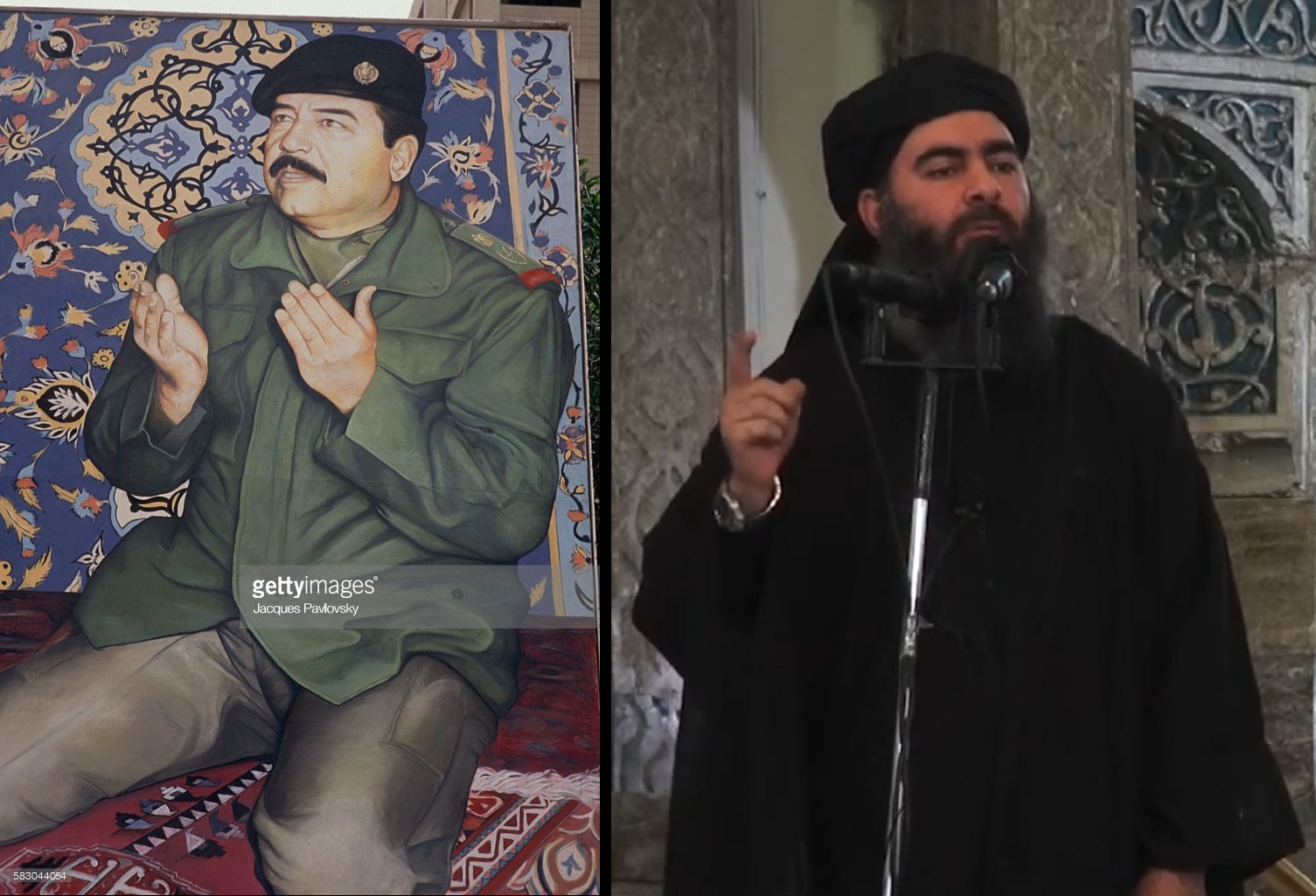
“Abu-Bakr al Baghdadi is a product of the last decade of Saddam’s reign,” argues Amatzia Baram, a scholar of Iraq. He is correct in at least three ways. First, in its last decade in power, the Iraqi Ba’ath regime transformed into an Islamist government, cultivating a more religious, sectarian population on which the Islamic State (ISIS) could draw. Part of Saddam Hussein’s “Faith Campaign” also involved outreach to Islamist terrorists, including al-Qaeda, which meant that the synthesis of Ba’athism and Salafism that fused into the Iraqi insurgency after the fall of Saddam was already well advanced by the time the Anglo-American forces arrived in Baghdad in 2003. Second, the ISIS leadership and military planning and logistics is substantially reliant on the intellectual capital grown in the military and intelligence services of the Saddam regime. And finally, the smuggling networks on which ISIS relies, among the tribes and across the borders of Iraq’s neighbours, for the movement of men and materiel, are directly inherited from the networks erected by the Saddam regime in its closing decade to evade the sanctions. The advantages of being the successor to the Saddam regime make ISIS a more formidable challenge than previous Salafi-jihadist groups, and one that is likely to be with us for some time.
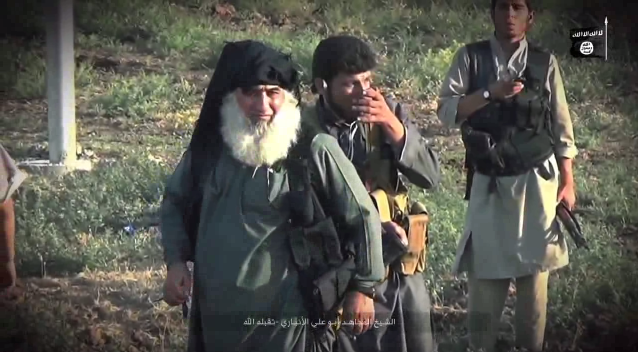
Abd al-Rahman al-Qaduli (Abu Ali al-Anbari) in an Islamic State video in May 2016
United States Secretary of Defense Ashton Carter announced this morning that he believed Abd al-Rahman Mustafa al-Qaduli, a senior leader of the Islamic State (IS), had been killed in a U.S. raid into Syria earlier this week. Al-Qaduli was “serving as a finance minister” and had been “responsible for some external affairs and plots,” said Carter. America is “systematically eliminating ISIL’s cabinet,” Carter went on, noting the alleged killing of Tarkhan Batirashvili (Abu Umar al-Shishani) two weeks ago, adding that al-Qaduli’s removal will “hamper” IS in conducting operations inside and outside its caliphate. Continue reading →
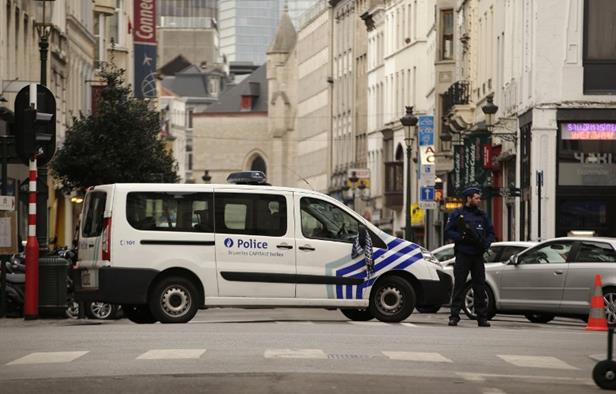
The long arm of the Islamic State (ISIS) has struck again. Tuesday morning, Zaventem airport in Brussels was hit by two suicide bombers and soon after a third man detonated at Maelbeek metro station, not far from the headquarters of the European Union. At least 31 people were slaughtered and around 270 were injured. Belgium has a long history as a hub of global jihadism and some of its citizens were key in forming ISIS’s statelet. In the wake of the attack, as Western governments look for ways to hasten the demise of ISIS, it will likely be said—again—that the quickest way to do that is by striking a devil’s bargain with the regime of Bashar al-Assad in Syria. From Assad’s role in helping ISIS lay its groundwork in Iraq even before the U.S. invasion to Assad’s help, by omission and commission, in nurturing ISIS in the years since the uprising against him began as a means of defeating the opposition to Assad’s deliberate incitement of a sectarian war, there is nothing that could be further from the truth. While Assad remains in power, ISIS will remain alive. Continue reading →
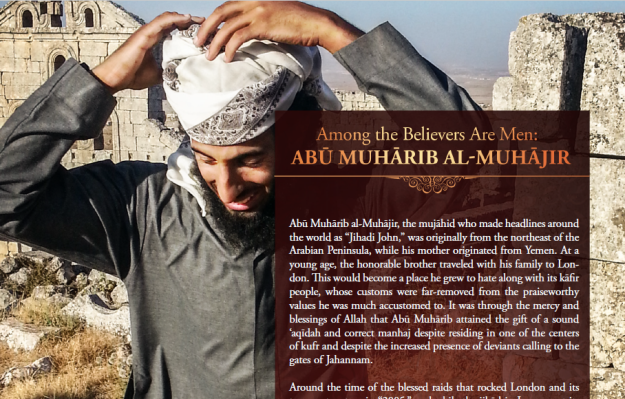
Yesterday, the Islamic State (IS) released their thirteenth issue of Dabiq. Among many things, it contained an admission of death for Mohammed Emwazi (“Jihadi John”). Referred to by his kunya, Abu Muharib al-Muhajir, Dabiqsaid (pp. 22-23) Emwazi had been hit by an “unmanned drone in the city of ar-Raqqah” on November 12, “destroying the car and killing him instantly.” The biography that Dabiq offered gave some intriguing details, confirming some surmises I had made about Emwazi when his identity was revealed last spring, including his early involvement in an al-Qaeda network in London sending fighters to al-Shabab in Somalia—the thing that brought him to the attention of the security services, confirming that the truth was the inverse of CAGE’s infamous claim that harassment by the MI5 had radicalized Emwazi—and that Emwazi had left Britain to do jihad in Syria in the company of another British citizen. Emwazi was also in the thick of it when IS broke from al-Qaeda and offers an interesting and rare example of a European IS fighter entrusted with an internal security role for the caliphate. Continue reading →
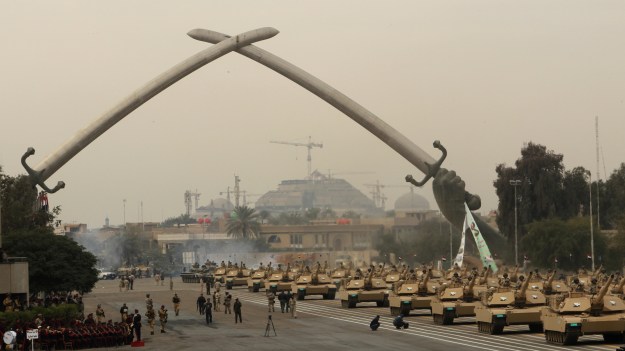
The “Victory Arch,” which Saddam built after the war with Iran. (January 2012)
About three weeks ago I wrote a piece for The New York Times explaining the evolution of Saddam Hussein’s regime away from the hard-secularism of its Ba’athist origins, and how this had prepared the ground for the Islamic State (IS). I received much positive feedback, but the social media reaction was inevitable: little thought and much anger, particularly from people who view Iraqi history through a political prism and felt I was trying to exculpate George W. Bush. With rare exceptions, the critique could hardly be called thoughtful. So it is nice to finally have such a critique to deal with, from Samuel Helfont and Michael Brill in today’s Foreign Affairs. Continue reading →
Last night, Steve Warren, the American colonel who is the spokesman for the international campaign against the Islamic State (IS), the U.S.-led Operation INHERENT RESOLVE, announced that between December 7 and December 27, ten IS “leaders” had been killed. Col. Warren adumbrated the positions of the IS leaders, allowing the conclusion that five had been part of IS’s external operations wing, which conducts international terrorism, and five were part of IS’s internal operations, i.e. part of the military operations and security infrastructure that helps IS maintain and expand its statelet in Syria and Iraq. Col. Warren presented this as an important blow to IS that had assisted in inflicting the recent territorial losses on IS. There is reason for scepticism on these points. Continue reading →
In the last month, the Islamic State (IS) has been waging a concerted campaign to shut down all independent sources of information emanating from its statelet. IS’s focus has been on Raqqa is Being Slaughtered Silently (RBSS), an activist group that began in April 2014 in IS’s de facto capital in northern Syria. RBSS has published information—including pictures and videos, much of it via Twitter—on the crimes of the “caliphate”. IS has now murdered at least five RBSS journalists and activists, two of them on foreign soil in Turkey, plus the father of one of RBSS’s founders. (The sixth case, also in Turkey, is more murky.) The suppression of independent media by IS is necessary to allow the group to maintain social control of the areas it rules and to sustain the narrative that it is building utopia on earth, which attracts in the foreign fighters that help IS maintain and expand its territory. Continue reading →
Whom should we blame for the Islamic State? In the debate about its origins, many have concluded that it arose from the American-led coalition’s errors after the 2003 invasion of Iraq. In fact, the groundwork for the emergence of the militant jihadist group was laid many years earlier by the government of Saddam Hussein.
The Arab nationalist Baath Party, which seized power in 1968 in a coup in which Mr. Hussein played a key role, had a firmly secular outlook. This held through the 1970s, even as religiosity rose among the Iraqi people. But soon after Mr. Hussein invaded Iran in 1980, it began to change.
From top left clockwise: Fadel al-Hiyali, Ibrahim al-Badri (Abu Bakr al-Baghdadi), Adnan al-Bilawi, Samir al-Khlifawi (Haji Bakr), Adnan as-Suwaydawi (Abu Ayman al-Iraqi), Hamid az-Zawi (Abu Omar al-Baghdadi), Abu Hajr as-Sufi
Yesterday, Reuters had an article by Isabel Coles and Ned Parker entitled, “How Saddam’s men help Islamic State rule“. The article had a number of interesting points, but in its presentation of the movement of former (Saddam) regime elements (FREs) into the leadership structure of the Islamic State (IS) as a phenomenon of the last few years, it was a step backward: the press had seemed to be recognizing that the Salafization of the FREs within IS dates back to the Islamization of Saddam Hussein’s regime in its last fifteen years, notably in the 1990s after the onset of the Faith Campaign. Continue reading →



 Kyle Orton's Blog