Tag Archives: sectarianism

Saudi Newspaper: Make Peace with Israel, Confront Iran

By Kyle Orton (@KyleWOrton) on 14 April 2018

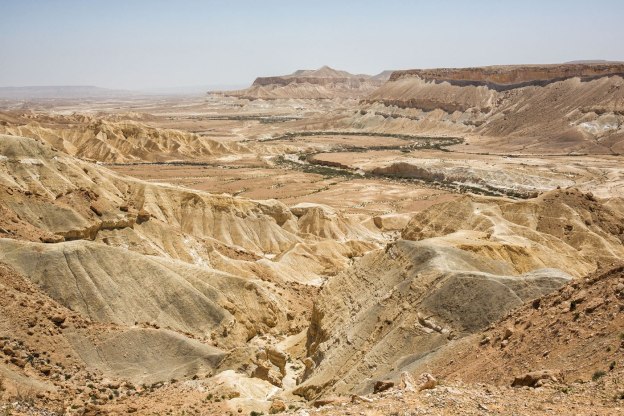
Negev Desert, Israel (image source)

Al-Riyadh is the leading daily newspaper in Saudi Arabia. While Al-Riyadh’s exact status is contested, there is little doubt it is close to the Saudi government and some identify it as a “semi-official” in the Kingdom. It was therefore very interesting that the paper hosted an opinion editorial by Dr. Ahmad al-Jamiya on 14 April, republished below, which made the case for the House of Saud to make peace with the State of Israel as part of a policy to halt and reverse the Iranian revolution in the Middle East. Continue reading

Al-Qaeda Denounces Saudi Arabia for its Closeness to America

By Kyle Orton (@KyleWOrton) on 31 March 2018

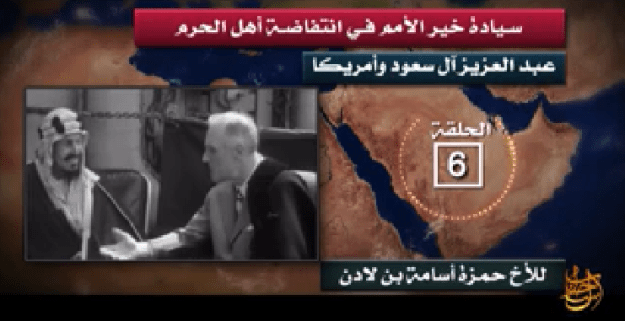
Hamza bin Ladin, son of Usama and one of al-Qaeda’s rising media stars, released an audio speech on 31 March, labelled as the sixth edition of his “Sovereignty of the Best of Nations Is In the Uprising of the People of the Haram” series. Oddly, the last speech in the series, released on 18 January, was labelled as the fourth instalment. This speech also focused on delegitimising the Saudi government, in this case by laying out the history of its close relations with the United States and the work the Saudis have done to suppress jihadism. An English-language transcript was released by al-Qaeda’s As-Sahab Media and is reproduced below with some editions in transliteration. Continue reading

The Islamic State’s First Leader Explains How to Deal With Enemies

By Kyle Orton (@KyleWOrton) on 22 March 2018

The first leader of the Islamic State (IS) after it was declared in 2006, Hamid al-Zawi (Abu Umar al-Baghdadi), gave a series of twenty-three speeches until he was killed in April 2010. Al-Zawi’s speeches laid out the strategic and ideological vision of the movement. The fifth speech, “And If You Cease, It Will Be Better for You” or “Should You Desist [in attacking the Islamic State], Then That Is Better for You”, was given as an audio statement on 8 July 2007. An English transcript of the speech was released by IS’s Al-Furqan Media and is reproduced below with some important and interesting sections highlighted in bold. Continue reading

The Second Speech of the Islamic State

By Kyle Orton (@KyleWOrton) on 19 March 2018

The first leader of the Zarqawi’ist branch of the jihadi movement in Iraq after the declaration of the Islamic State of Iraq (ISI), Hamid al-Zawi (Abu Umar al-Baghdadi), gave his second speech on 3 February 2007, an audio statement entitled, “A Conquest From Allah and an Imminent Victory”. The speech attacks those Sunni Islamist insurgents who would be drawn into the American-backed, Shi’a-led Iraqi government and declares the Karama (Dignity) operation against such organisations and all other foes. Al-Zawi frames much of the speech in starkly sectarian terms and believes that ISI has annexed the anti-American cause. Al-Zawi also claims to believe that the U.S. is on the path to defeat; there is an admission that ISI is struggling, but a reassurance that it is worse for the Americans. An English-language version of the speech was released by Al-Furqan Media and is reproduced below. Continue reading
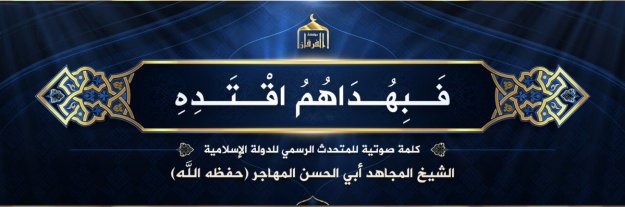
Profile: First Spokesman of the Islamic State Movement

By Kyle Orton (@KyleWOrton) on 16 March 2018

The predecessor organization to the Islamic State (IS), the Islamic State in Iraq (ISI), used to run a “Prominent Martyrs” or “Distinguished Martyrs” series: essentially obituaries for important members of the IS movement. In the forty-sixth edition, on 18 August 2010, ISI profiled Abu Maysara al-Iraqi, the first official spokesman and the deputy of the Media Department until he was killed in 2006. A translation of Abu Maysara’s biography was issued by Ansar al-Mujahideen forum and is reproduced below with some minor editions for transliteration and some interesting points highlighted in bold. Continue reading

Syria’s Revolution Has Been Overtaken By Outside Powers

By Kyle Orton (@KyleWOrton) on 16 March 2018

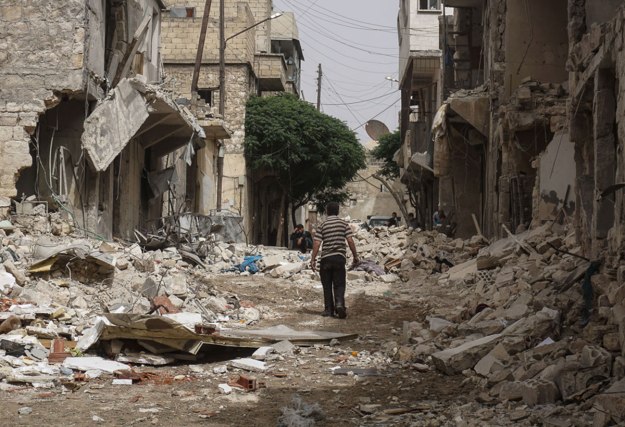
Devastation in Aleppo (image source)

This week marks the seventh anniversary of the Syrian revolution. A movement that began with peaceful street protests calling for reform and—after the government responded with lethal violence—the downfall of the dictator, descended into war that has to this point cost the lives of at least 500,000 people and displaced nearly twelve million others—more than half of Syria’s pre-war population.

In any strategic sense the rebellion has been defeated—it is not able to overthrow Bashar al-Assad by force on its own—and its political cause is increasingly strained as the remnants of the armed opposition are increasingly co-opted by external actors, state and non-state. Continue reading

Islamic State Recommends More Gentleness in Dealing With Sinners

By Kyle Orton (@KyleWOrton) on 10 March 2018

1

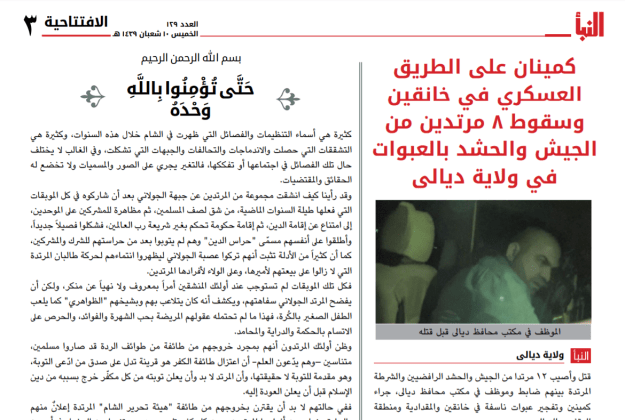
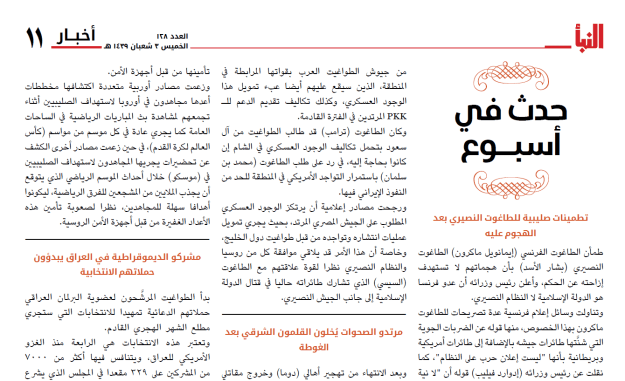
The 122nd edition of Al-Naba, the Islamic State’s weekly newsletter, was released on 9 March 2018 and contained an article, on page 3, suggesting that the use of takfir (excommunication) should be circumscribed. A rough translation is reproduced below. Continue reading
Trump Completes Obama’s Syria Policy

By Kyle Orton (@KyleWOrton) on 4 February 2018

Syrian rebels in eastern Aleppo, November 2016 (image source)

Operation TIMBER SYCAMORE, the formally-covert program run by the Central Intelligence Agency (CIA), has, since approximately 2012, ostensibly provided support to vetted Syrian rebel units fighting against Bashar al-Asad’s regime. This program, begun by President Barack Obama, was never raised to a level that could alter the course of Syria’s conflict in favour of the opposition, and indeed one of its most concrete effects was denying certain categories of heavy weapons to the rebellion. While providing subsistence to some rebels, the program was mostly a political instrument, shielding Obama from criticism as he tilted U.S. policy in Asad’s favour by empowering his patron, Iran. President Donald Trump abandoned even this fig-leaf of opposition to Asad in July 2017, announcing the end of the program, a termination that went into effect last month. Continue reading

The Islamic State Was Engaged in Insurgency Long Before the Caliphate Collapsed

By Kyle Orton (@KyleWOrton) on 11 January 2018

Al-Naba 43, page 3

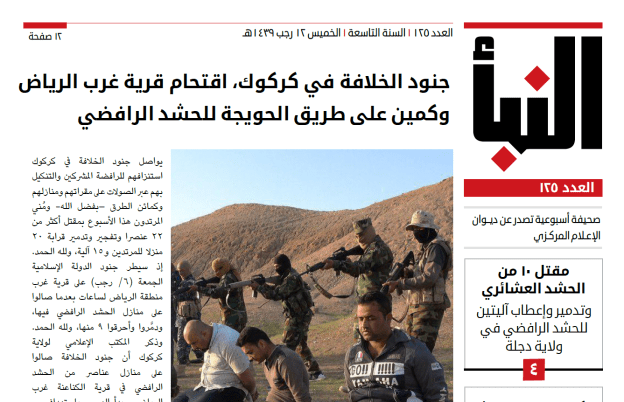
The Islamic State (IS) brought out the forty-third edition of Al-Naba, its newsletter, on 16 August 2016. On page 3 was an article that made reference to IS’s insurgent activities, which had already begun in areas it had lost. A rough copy is reproduced below.

At that time this article was published, IS was on the verge of losing Minbij, and had issued statements in May 2016 and June saying that the loss of the caliphate would not be the end of the group. By early 2017, IS’s insurgent operations were visibly mature, long before the formal declaration in October 2017 that IS was giving up its statelet and recommencing all-out insurgency. Continue reading

Islamic State’s First Leader Denies He Has Been Captured, West Wonders If He Exists

By Kyle Orton (@KyleWOrton) on 6 January 2018

Iraqi soldiers from the 1st Iraqi Army Division and U.S. Soldiers board a U.S. Marine Corps CH-53 Super Stallion helicopter at Camp Ramadi, 15 Nov. 2015 (DoD photo by Staff Sgt. Daniel St. Pierre, U.S. Air Force)

The leader of the Islamic State (IS) when it was declared in October 2006 was Hamid al-Zawi (Abu Umar al-Baghdadi). Al-Zawi was killed in April 2010 and replaced in May 2010 by the current leader of the IS movement, Ibrahim al-Badri (Abu Bakr al-Baghdadi), who more explicitly embraced the title of “caliph”. On 12 May 2009, al-Zawi gave his seventeenth speech, entitled Umala Kadhabun (عملاء كذابون), which translates to something like “Lying Agents” or “Deceitful Spies”. The speech was released by IS’s Al-Furqan Media Productions and a translation was made by a pro-IS online outlet, The Jihadist Media Elite. The transcript is reproduced below. Continue reading