Tag Archives: Shi’a militias

America Pushes Back Against Iranian Subversion on the Gulf

Originally posted at The Henry Jackson Society

By Kyle Orton (@KyleWOrton) on 17 March 2017
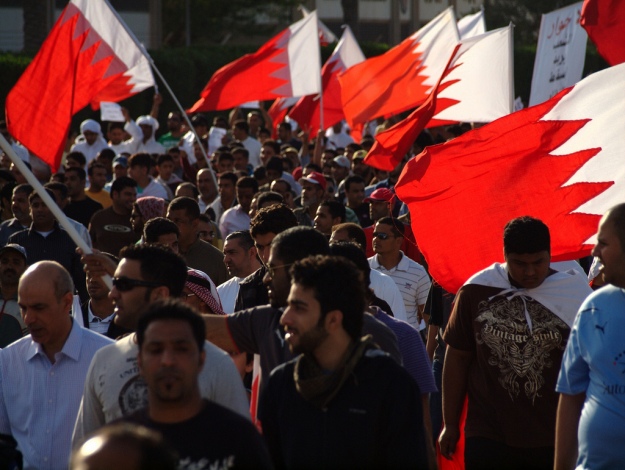
Protesters march through Manama, Bahrain in March 2011 (Photo from Al-Jazeera)

The U.S. State Department today imposed sanctions on two men, Ahmad Hasan Yusuf (Abu Maryam, Sajjad Hassan Nasir al-Zubaydi) and Alsayed Murtadha Majeed Ramadhan Alawi (Murtadha Majeed Ramadan al-Sindi), labelling them Specially Designated Global Terrorists (SDGT). Both men are members of a group, Saraya al-Ashtar or al-Ashtar Brigades (AAB) that has conducted terrorism in Bahrain and is part of the Iranian revolution’s long reach in the region. Continue reading

Repression Increases in the Syrian Kurdish Areas

By Kyle Orton (@KyleWOrton) on March 16, 2017

Kurds protesting against the PYD in Hasaka, 16 August 2016

The Democratic Union Party (PYD), the Syrian front of the Turkey-based Kurdistan Workers’ Party (PKK), is the leading group in the administration of the Kurdish areas in north-eastern Syria. The PYD and its armed wing, the People’s Protection Units (YPG), have become the preferred instrument of the U.S.-led Coalition against the Islamic State (IS) and as a by-product have been assisted in conquering some Arab-majority zones of northern Syria—and perhaps soon of eastern Syria. The PYD/PKK has always treated all dissent harshly and the Kurdish opposition in recent days has reported an escalation in repression by the PYD, which the West—as has become a habit in cases of PYD misbehaviour—has made no public protest about. Continue reading

Islamic State Has Been Defeated in Al-Bab, But America Needs a New Direction in Syria

Published at The International Business Times and subsequently discussed on the IBTimes podcast

By Kyle Orton (@KyleWOrton) on February 27, 2017

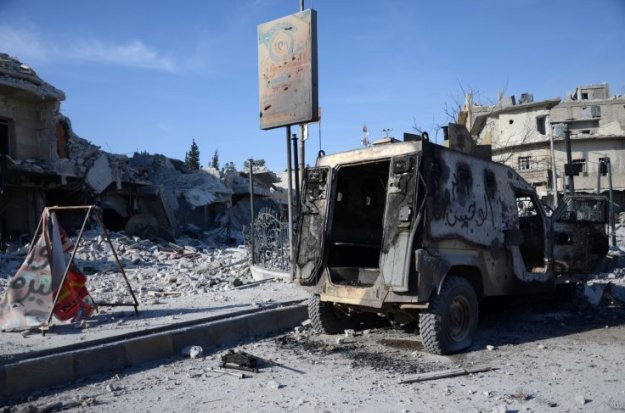
A burnt-out vehicle on a destroyed street in al-Bab on 23 February 2017 (Nazeer al-Khatib/AFP/Getty Images)

Turkey intervened in Syria in August 2016 with Operation Euphrates Shield (OES), which involved special forces, some regular troops, and the mobilisation of Syrian rebels to clear its border of terrorist threats by pushing ISIS (the Islamic State) away from the frontier and preventing the Syrian branch of the Kurdistan Workers’ Party (PKK) creating a state-let on its border that could be used as a harbour and launch-pad for attacks inside Turkey.

To secure this mission, on 13 November 2016 OES began an assault on al-Bab in the eastern countryside of Aleppo Province, just 15 miles from Turkey’s border and ISIS’ last major urban centre in Syria outside its capital, Raqqa. Some 102 days of combat later, on 23 February, al-Bab fell. What happens next could determine the course of the war as Turkey competes with the PKK to be the U.S.-led Coalition’s partner in clearing ISIS from Raqqa. Continue reading

What to Expect in Syria in 2017

By Kyle Orton (@KyleWOrton) on January 25, 2017

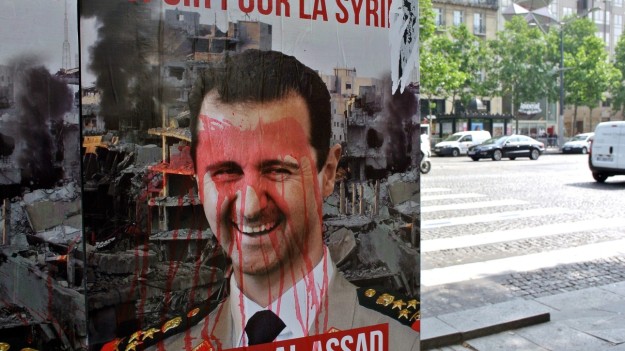
Syria has broken down as a functioning entity. There were some who saw in the takeover of Aleppo City last month by the coalition of states and militias that supports Bashar al-Assad’s regime the beginning of the end of the war. The pro-Assad coalition will make further territorial gains in 2017, but peace—even the peace of the graveyard—is still a long way off, and unlikely to ever arrive while Assad remains in power. The West, unwilling and apparently unable to remove him, nonetheless has vital interests in Syria that cannot be outsourced and must be secured by navigating a fragmented state. Continue reading

International Taboo on Chemical Weapons Frays As U.S. Steps Back

By Kyle Orton (@KyleWOrton) on January 13, 2017

Yesterday, the United States Treasury Department imposed sanctions on eighteen senior officials in the regime of Bashar al-Assad. The sanctions come in response to reports in August and October 2016 by the Organization for the Prohibition of Chemical Weapons (OPCW), the United Nations investigative body, which found that found “the Syrian government, specifically the Syrian Arab Air Force, was responsible for three chlorine gas attacks in Talmenes on April 21, 2014, and in Qmenas and Sarmin on March 16, 2015.” This is three years after the Assad regime was spared punitive military strikes for its use of chemical weapons under a Russian-orchestrated “deal” that ostensibly disarmed Assad of such weapons. Continue reading

Insurgent Leader Explains Why Aleppo Fell to Assad

By Kyle Orton (@KyleWOrton) on December 31, 2016

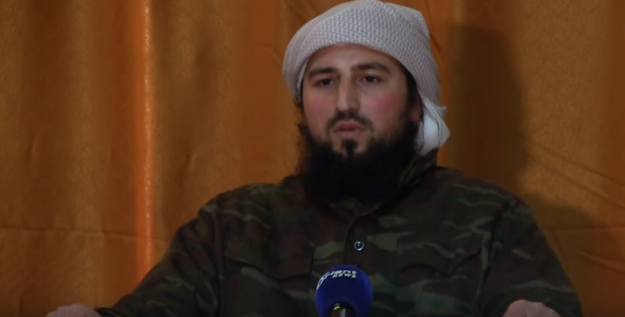
Abu al-Abed Ashidaa

Abu al-Abed Ashidaa

Abu al-Abed Ashidaa was, on 1 December 2016, appointed to lead all insurgent forces, under the banner of al-Jaysh al-Halab (The Army of Aleppo), in the besieged enclave of eastern Aleppo City. The city’s defences collapsed to the coalition of forces—namely Russia and Iran—supporting the regime of Bashar al-Assad on 12 December, and on 22 December the deportation of 40,000 people from the enclave to Idlib was completed. On 29 December, Abu al-Abed gave a speech explaining the reasons as he saw them for the fall of Aleppo City. Today, insurgent channels in Syria circulated an English summary, which is reproduced below with some editions in transliterations and some interesting sections highlighted in bold. Continue reading

Assad and Russia Losing Palmyra is No Surprise: They Cannot Defeat Jihadism in Syria

Published at The International Business Times

By Kyle Orton (@KyleWOrton) on December 12, 2016

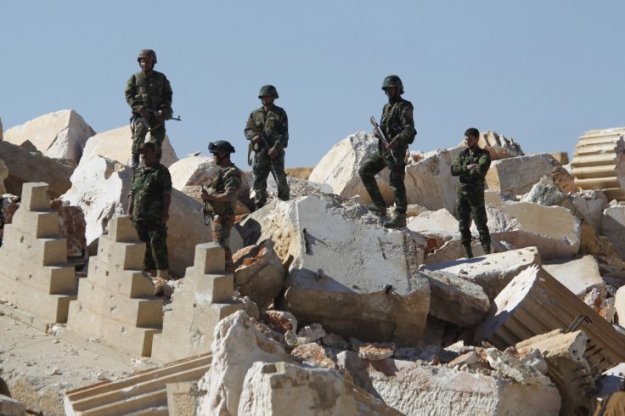
Syrian regime army soldiers stands on the ruins of the Temple of Bel in Palmyra, 1 April 2016 (REUTERS/Omar Sanadiki)

The Islamic State (IS) is supposed to be on its way to defeat. IS is under assault in Mosul and the operation to evict it from Raqqa began a month ago. Just this morning, Turkish-backed rebel forces in Syria have reportedly pierced IS’s defences in al-Bab, IS’s most important city outside of its twin capitals. But on Sunday, after a four-day offensive, IS seized Palmyra. How to explain this? Continue reading

The Inaugural Address of the Islamic State’s New Spokesman

By Kyle Orton (@KyleWOrton) on December 9, 2016

1

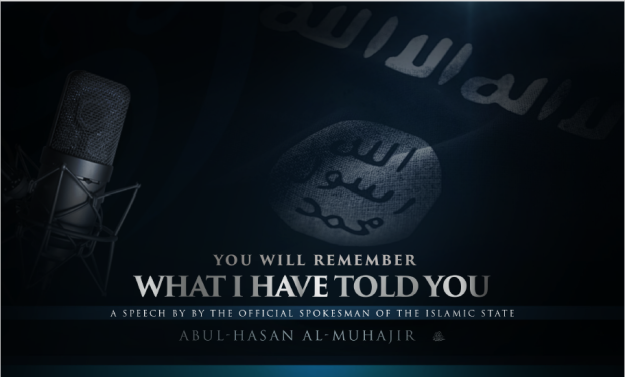
Taha Subhi Falaha (Abu Muhammad al-Adnani) was killed near al-Bab in northern Syria on 30 August in an airstrike by the U.S.-led Coalition. One of Falaha’s roles was the Islamic State’s official spokesman. On 5 December, IS announced that it has a new spokesman, Abu Hassan al-Muhajir, and he gave an inaugural speech. That speech, entitled, “You Will Remember What I Have Told You,” was printed in the fourth issue of Rumiyah on 7 December. Rumiyah seems to have replaced the English-language Dabiq magazine—probably because the village of Dabiq has been lost. The speech is reproduced below with some editions for spelling, some additions for explanation, and some especially notable sections highlighted in bold.
Continue reading

What To Expect After the Fall of Aleppo

Published at TRT World

By Kyle Orton (@KyleWOrton) on November 29, 2016

The pro-Assad coalition in Syria has conquered more than a third of the rebel-held enclave in eastern Aleppo City, the last urban stronghold of the mainstream armed opposition. Without significant external assistance, it is difficult to imagine the rebels can hold off, and in the coming days or weeks will likely be forced out entirely. This will not end the war, nor will it suppress the opposition, but it will end the rebellion as a strategic threat to the regime of Bashar al-Assad and push the insurgency into a greater reliance on extremists, creating more space for international terrorists and protracting the war. Continue reading

Trump Might Continue Obama’s Dangerous Syria Policy

Originally published at The Henry Jackson Society

By Kyle Orton (@KyleWOrton) on November 24, 2016

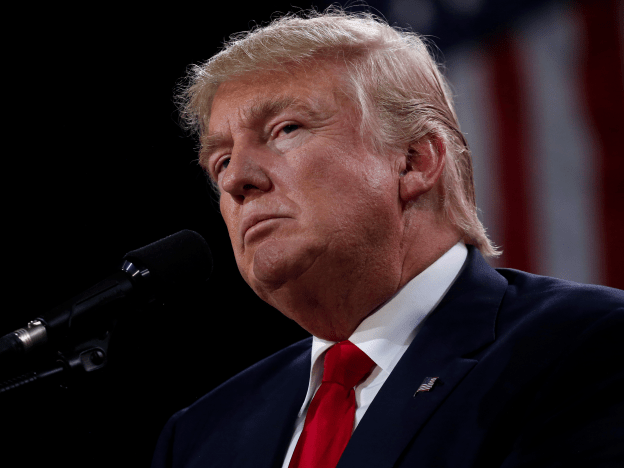
There is not yet any clarity with regard what Donald Trump would do about Syria once he becomes President. Virtually everything about the incoming administration is in the “wait and see” phase. Still, on the current evidence, Trump’s Syria policy would appear to be a continuation of President Barack Obama’s policy of prioritizing the threat of the Islamic State (IS) and other non-state Sunni jihadist groups, while effectively aligning with the pro-regime coalition, made up of Russian air power and a ground force led by the Islamic Republic of Iran, stitched together out of the battered remnants of Bashar al-Assad’s army and his sectarian militias, Iranian paramilitary and regular forces, and foreign Shi’a jihadist groups under Iran’s control. The only potential difference is that Trump may formally repudiate the anti-Assad forces. The effect of this would be to destroy the mainstream Syrian opposition and empower al-Qaeda, but it would not bring stability to Syria. There are hints, however, that Trump is recruiting senior officials who will alter this policy. Continue reading