Tag Archives: Shiite jihad

Abandoning Syria to Assad Helps Al-Qaeda

By Kyle Orton (@KyleWOrton) on September 23, 2016
2

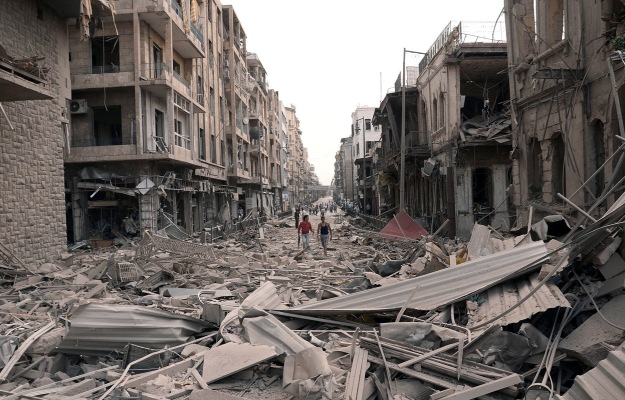
The deeply problematic attempted Syrian ceasefire agreement between the United States and Russia last week never really took hold and was finally torn asunder on Monday by Russia and the regime of Bashar al-Assad blitzing an aid convoy and launching massive, indiscriminate aerial attacks on rebel-held areas in Aleppo. Last night, the pro-Assad coalition commenced a renewed assault on Aleppo actually as the parties met to discuss putting the ceasefire back online.

It had been surreal that it was the U.S. insisting that “The ceasefire is not dead”. What it exposed was the lack of Western will to restrain the Assad regime, which al-Qaeda, especially, is exploiting, offering its services in the fight against Assad, and building a sustainable presence in Syria that will threaten the West for many years to come. Continue reading
Destroying Islamic State, Defeating Assad: A Strategy for Syria

By Kyle Orton (@KyleWOrton) on November 25, 2015

1

Today, my first report with The Henry Jackson Society was published: “Destroying Islamic State, Defeating Assad: A Strategy for Syria“. Continue reading

Russia’s War For Assad

By Kyle Orton (@KyleWOrton) on September 30, 2015

1

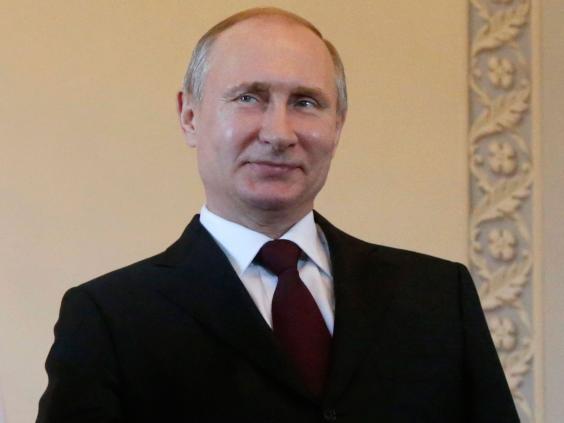
Russia began airstrikes in Syria today, ostensibly to combat the Islamic State (I.S.). In reality the strikes first hit U.S.-supported moderate rebels and the campaign is intended to buttress the dictatorship of Bashar al-Assad. Continue reading

Leaving Afghanistan to Iran Won’t Bring Stability—nor Keep ISIS Out

By Kyle Orton (@KyleWOrton) on August 26, 2015

Published at National Review

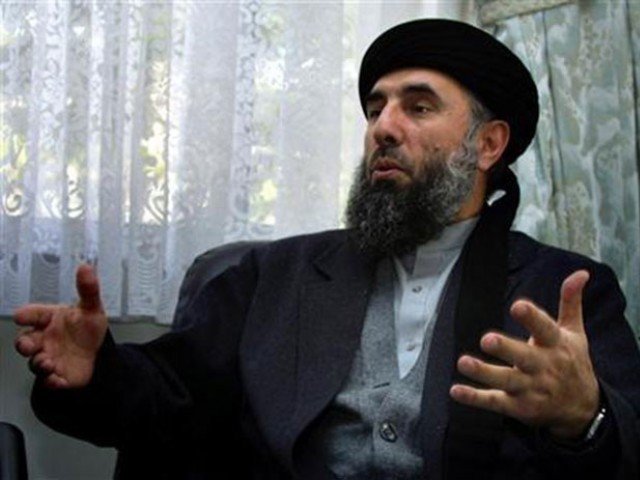
Gulbuddin Hekmatyar, one of the three major insurgent leaders in Afghanistan, a close ally of Iran

Gulbuddin Hekmatyar, one of the three major insurgent leaders in Afghanistan, a close ally of Iran

The admission by the Taliban on July 30 that its leader, Mullah Muhammad Omar, had died was widely seen as good news for the Islamic State (ISIS) against its jihadist competitors. But while ISIS’s growing power in Afghanistan over the last year has garnered significant attention, the rise of Iran’s influence in the country has been less noted. Worse, in the light of the nuclear agreement with the U.S., Iran’s expanded influence is held by some observers to be a stability-promoting development. This is a dangerous fantasy that has already been falsified in the Fertile Crescent, where the synergetic growth of Iran and ISIS promotes chaos and radicalism—to the advantage of both and the disadvantage of the forces of moderation and order. Continue reading

America Not Training Syria’s Rebels Isn’t “Failure”; It’s Policy

By Kyle Orton (@KyleWOrton) July 13, 2015

Syrian rebels

President Obama gave a speech on Monday about the progress of the United States-led military campaign against the Islamic State (ISIS) in which he said that America would “do more to train and equip the moderate opposition in Syria.” This is a promise that has been made repeatedly made and repeatedly broken. The President’s strategy of détente with Clerical Iran has given Syria to Tehran as a sphere of influence—which precludes the U.S. building up a viable alternative to both ISIS and the murderous Assad regime, which has been effectively under Iran’s control since late 2012. Continue reading

The Dangerous Idea That Iran is a Force for Stability in the Middle East

By Kyle Orton (@KyleWOrton) on June 5, 2015 1 In the Guardian this morning, Jonathan Steele has written an article defending President Barack Obama’s Iran policy. Steele allows others to make his points for him, but he contributes to a narrative in which rapprochement with Iran is a worthy policy—even as the President formally denies that the Iran negotiations are about anything other than the nuclear-weapons program. Steele writes:

In Iraq, [Iranian officials] insist, Iran is a force for stability, helping [Iraqi prime minister] Haider al-Abadi’s government militarily while urging it to be more attentive to Sunni concerns—just as Washington is.

This is nonsense. In 2008, after the US ‘surge’, violence in Iraq was down 90 per cent, and the political process had begun to work. This was achieved by separating the Sunni Arab tribes of western Iraq from al-Qaeda in Mesopotamia (AQM), the forerunner to the Islamic State (ISIS).

Continue reading

Does Iran Support The Islamic State?

By Kyle Orton (@KyleWOrton) on May 26, 2015

Qassem Suleimani, Iran's spymaster, believed in some MidEast conspiracy theories to control ISIS

Qassem Suleimani, Iran’s spymaster, believed in some Mid-East conspiracy theories to control ISIS

In 2010, Farzad Farhangian, an Iranian diplomat based in Belgium, defected to Norway. Farhangian has now emerged with the extraordinary accusation that the Islamic Republic of Iran is controlling the Islamic State (ISIS) and using it as part of Tehran’s war against the Gulf States, especially Saudi Arabia. Farhangian’s accusations are lurid and (literally) incredible, but the question of Iran’s role in ISIS’ creation and growth, and Iran’s manipulation of ISIS to further its own ends, is one well worth asking. Continue reading

How Many Alawis Have Been Killed In Syria?

By Kyle Orton (@KyleWOrton) on May 20, 2015

1

In a report on the internal divisions in the Assad regime and the passing of Syria’s sovereignty to Iran by Ruth Sherlock in The Sunday Telegraph on May 17, there was this stunning sentence: “Perhaps a third of all Alawite males of military age have been killed in the civil war.” This is a startling thought.

To determine if this figure for the proportion of Alawis killed is plausible it is necessary to know how many Alawis there were in Syria at the outset of the war, and how many people have been killed during the war. Continue reading

Raids in Syria Can’t Defeat the Islamic State If Obama Continues Alignment with Iran

By Kyle Orton (@KyleWOrton) on May 16, 2015

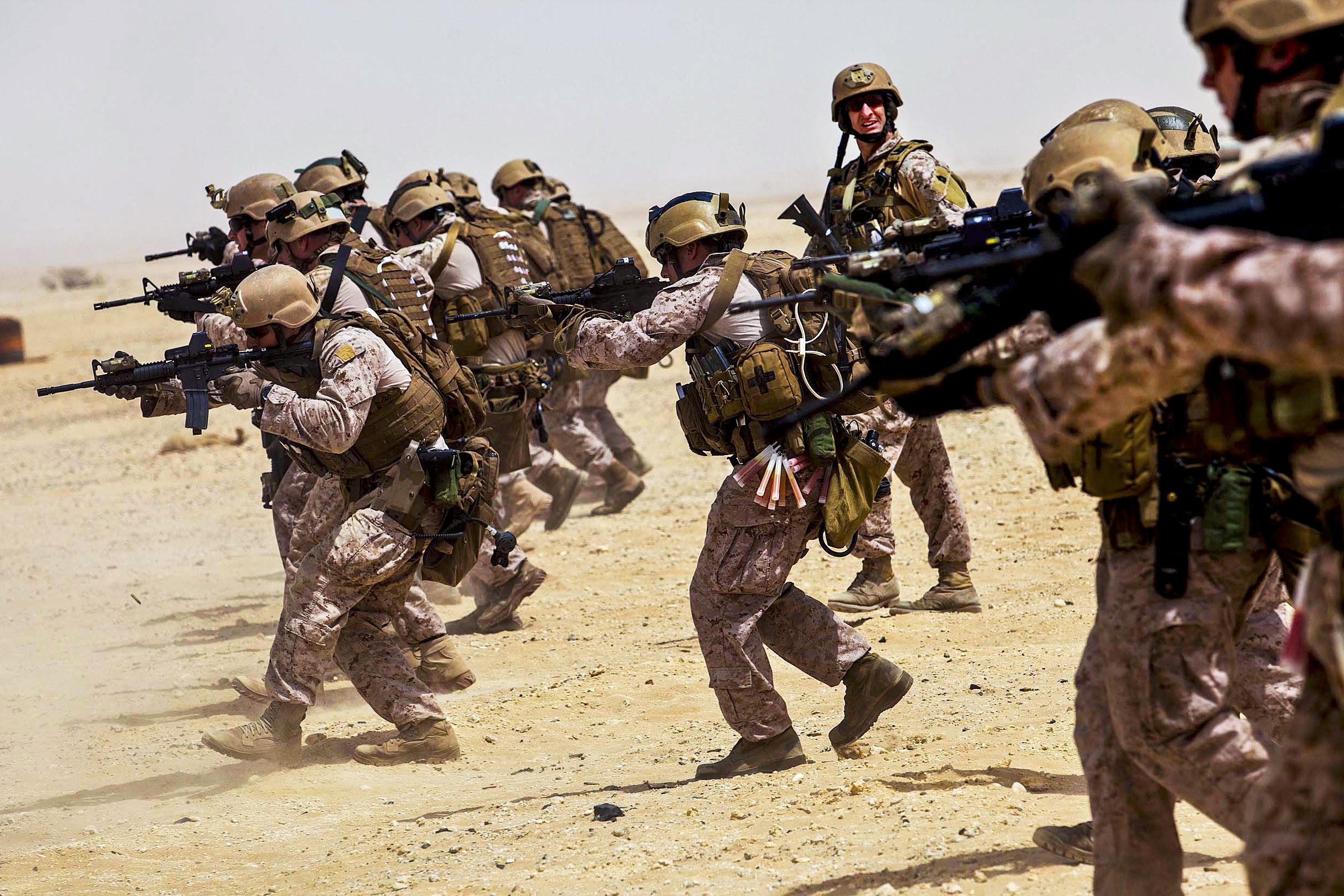
26th Marine Expeditionary Unit (MEU) Maritime Raid Force Marines fire M4 Carbines while conducting a marksmanship training exercise at a range in Qatar, April 22, 2013. Eagle Resolve is an annual multilateral exercise designed to enhance regional cooperative defense efforts of the Gulf Cooperation Council nations and U.S. Central Command. The 26th MEU is deployed to the 5th Fleet area of operations aboard the Kearsarge Amphibious Ready Group. The 26th MEU operates continuously across the globe, providing the president and unified combatant commanders with a forward-deployed, sea-based quick reaction force. The MEU is a Marine Air-Ground Task Force capable of conducting amphibious operations, crisis response and limited contingency operations. (U.S. Marine Corps photo by Cpl. Christopher Q. Stone, 26th MEU Combat Camera/Released)

Last night the United States launched a commando raid into al-Amr in Deir Ezzor in eastern Syria. According to the White House statement, Abu Sayyaf (real name: Fathi ben Awn ben Jildi Murad al-Tunisi), a senior Islamic State (ISIS) commander “overseeing … illicit oil and gas operations,” was killed, and his wife, Umm Sayyaf, was taken into American custody and is being held in Iraq. The Sayyaf couple had been holding a young Yazidi woman as a slave and she has now been freed.

Unfortunately, this American raid is a tactical success amid a strategic failure—and a tactical success likely to be used to obscure the strategic failure of the U.S. anti-ISIS campaign. Even in the narrowest humanitarian terms: if the freedom of this one Yazidi girl is used to perpetuate a policy that leaves many more Yazidi girls in bondage then it is a failure. Continue reading

The Gulf States Push Back Against Obama’s Iran Policy

By Kyle Orton (@KyleWOrton) on May 12, 2015

1

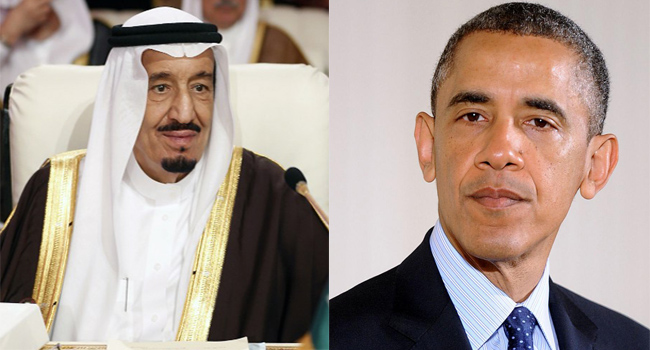
President Obama invited the leaders of the Gulf Cooperation Council (GCC) to a meeting at Camp David on Thursday to clear the air as the President looks to finalize his nuclear deal with Iran. But on Sunday, Saudi King Salman said he was not attending, and soon after the Bahraini monarch followed. The only Gulf leaders in attendance will be the Emirs of Qatar and Kuwait. Since leaders do not just have other things to do when they are scheduled for a private meeting with the President of the United States, this can be taken as a pointed snub to President Obama, and no amount of administration spin about Salman’s absence having nothing to do with political substance will change that. Continue reading