By Kyle Orton (@KyleWOrton) on 3 July 2022

An IRA parade in Belfast || Image source
By Kyle Orton (@KyleWOrton) on 3 July 2022

An IRA parade in Belfast || Image source
By Kyle Orton (@KyleWOrton) on 28 June 2022
By Kyle Orton (@KyleWOrton) on 5 April 2022
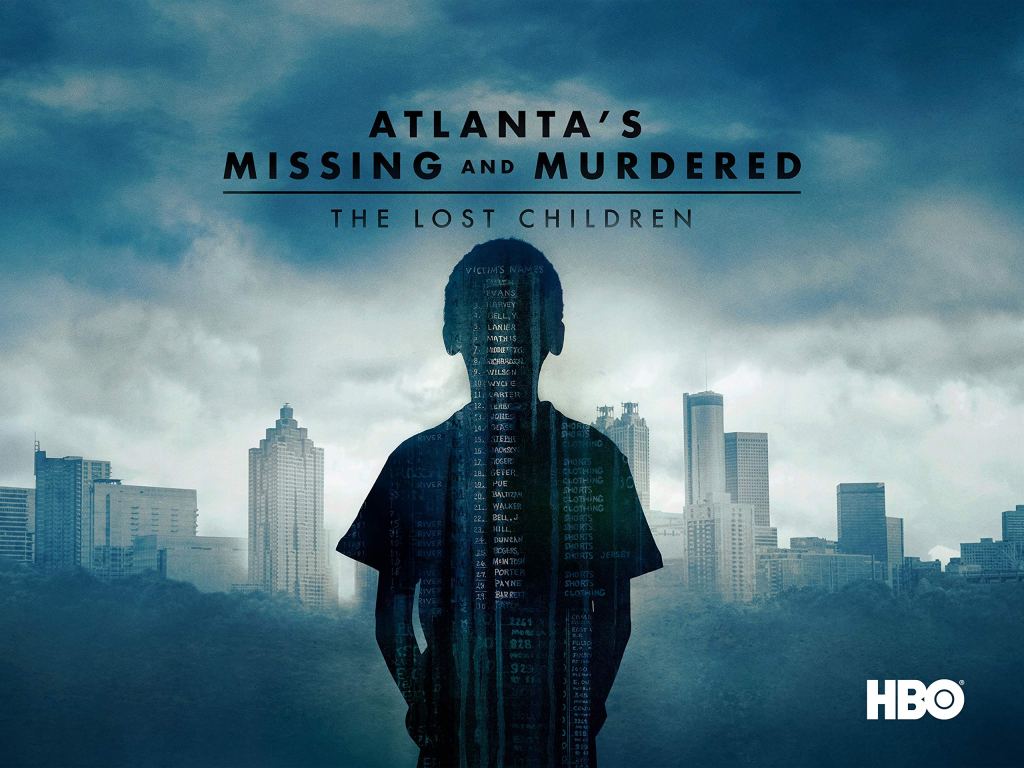
In 2020, HBO produced a miniseries, “Atlanta’s Missing and Murdered: The Lost Children”, about the killing of more than two-dozen black people, most of them male and most of them children, between the summer of 1979 and the summer of 1981, in Atlanta, Georgia. The series has its own themes and slant, which one can take or leave, but it makes a convincing case the legal process that “resolved” the issue was grievously flawed. Continue reading
By Kyle Orton (@KyleWOrton) on 19 December 2021
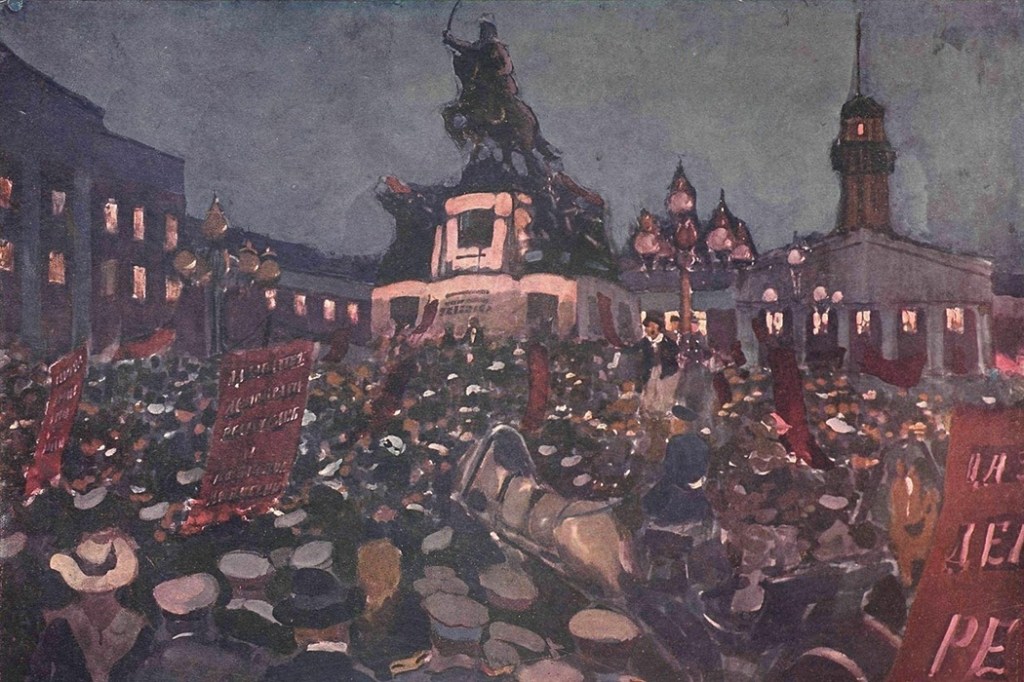
Skobelev Square during the February Revolution, painting by Aleksandr Gerasimov, 1917
The “February Revolution” is so-called because Russia at the time was on the Julian (Old Style (O.S.)) calendar. By the Gregorian (New Style (N.S.)) calendar, which Russia adopted in February 1918, these events take place in March 1917. And momentous events they were, leading to the abdication of the last Tsar, the end of a monarchy and an entire system of power and authority that dated back more than 350 years. For eight months in 1917, Russia struggled to extend the constitutionalist reforms that had begun under the Tsardom within a more liberal framework. The liberals never did gain the upper hand over the radicals, not even after the September 1917 de facto return to autocracy. In November 1917, a coup by the most extreme Leftist faction, the Bolsheviks, terminated the experiment, burying for seven decades even the aspirations in Russia for liberalism and democracy. Continue reading
By Kyle Orton (@KyleWOrton) on 7 September 2021

Anti-Taliban fighters watch U.S. airstrikes at Tora Bora, 16 December 2001 || REUTERS/Erik de Castro
The State Department spokesman Ned Price said, on 27 August, “The Taliban and the Haqqani Network are separate entities”. The next day, the Pentagon Press Secretary John Kirby slightly modulated this, having first tried to dismiss the question, by conceding there was “a certain amount of … commingling … there’s a marbling … of Taliban and Haqqani”, before saying he was “pushing back … [on] the relevance of that discussion”.
What these officials were trying to do was two-fold: (1) to refute press reports that U.S. officials in Kabul had shared “a list of names of American citizens, green card holders, and Afghan allies” with the Taliban, amounting to having “put all those Afghans on a kill list”, as one “defense official” put it; and (2) to deny that the U.S. coordination with the Taliban to evacuate people the jihadists wanted to kill—a surreal enough situation—had involved the additional political and legal problems of coordinating with a formally registered Foreign Terrorist Organization (FTO), as the Haqqani Network is. Continue reading
By Kyle Orton (@KyleWOrton) on 20 August 2021

Khalil Haqqani, a senior Taliban leader and simultaneously a leader of Al-Qaeda’s Haqqani Network, leads Friday prayers at the Pul-i-Khishti, the largest mosque in Kabul, 20 August 2021
When the Taliban swept into the capital of Afghanistan on Sunday, little of the coverage focused on Pakistan and yet that was where this victory was made. This is a pattern that has persisted throughout the war. Continue reading
By Kyle Orton (@KyleWOrton) on 17 August 2021

Afghan government forces guarding Taloqan, Takhar province, Afghanistan // July 2021 // AFP photo
Kabul fell to the Taliban on 15 August. There is so much more to be said about the disastrous decisions the United States that precipitated this calamity, not least the so-called peace process whose only concrete effects were to weaken and demoralise the Afghan government, while bolstering the ranks of the Taliban by forcing the release of thousands of jihadists. The chaotic Saigon scenes have testified to the incompetence of Joe Biden’s administration, even at administrative tasks, and the horrors are only just beginning.
This post has a slightly different focus, namely the role of Pakistan, specifically its military and Inter-Services Intelligence (ISI), as the author and operator of the Taliban and allied jihadists. This factor—absolutely fundamental to the conflict—has been, for twenty years, bizarrely absent in much of the coverage, and suggestions recur to this day that the Taliban is actually a problem for Pakistan. When the Pakistan dimension does come up, it will either be to note that Pakistan has some kind of role in funding or otherwise “supporting” the Taliban, and at its strongest the Taliban will be called a “proxy” of the ISI.
Even the word “proxy”, however, underplays the extent to which the Taliban is Pakistan, a wing of its (deep) state power. Continue reading
By Kyle Orton (@KyleWOrton) on 9 August 2021

After the post looking at the relationship of Reuben Falber and the Communist Party of Great Britain (CPGB) to the Soviet Union—namely the total subservience of the former to the latter—a follow-up was intended on the broader issue of the how the KGB and its predecessors interacted with the “fraternal” Parties around the world. Eighteen months later, this is that post. Let’s blame COVID.
The accusation that the Communist Parties around the world were fronts for the KGB was often derided as “McCarthyism” while the Cold War was going on. Arguments about that term in general to one side,[1] it certainly did not apply in this case. The accusations as stated were entirely factual. Continue reading
By Kyle Orton (@KyleWOrton) on 25 June 2021

Writing recently about the first meeting between Adolf Hitler and Francisco Franco at Hendaye on 23 October 1940, where the Führer tried to enlist Spain into the Axis, I concluded, drawing on Franco: The Man and His Nation by George Hills, a former BBC journalist and Fellow of the Royal Historical Society:
By Kyle Orton (@KyleWOrton) on 17 June 2021

By the autumn of 1940, the entirety of Western Europe except Spain and Portugal lay under Nazi control, as did much of the Centre and parts of the East: Austria, Czechoslovakia, Poland, Denmark, Norway, the Netherlands, Belgium, Luxembourg, and France had all fallen without serious resistance, and Britain’s refusal to take the German offer of leaving the Continent to the Nazis and the Nazis would leave the British with India had incurred the wrath of the Luftwaffe with night after night of air-raids.
It was in this context that a meeting was held, on 23 October 1940, between Adolf Hitler and Spain’s ruler, Francisco Franco. The meeting, taking place at the railway station in Hendaye, within conquered France, on the western-most point of the Franco-Spanish border, was also attended by the foreign ministers, Ramón Serrano Súñer (Spain) and Joachim von Ribbentrop (Germany). The Germans arranged the meeting to try to get Spain into the war, and General Franco attended the meeting intent on refusing—politely. Continue reading