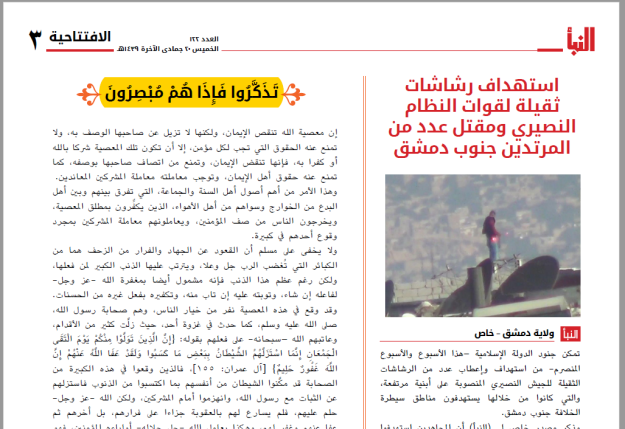
The 122nd edition of Al-Naba, the Islamic State’s weekly newsletter, was released on 9 March 2018 and contained an article, on page 3, suggesting that the use of takfir (excommunication) should be circumscribed. A rough translation is reproduced below. Continue reading →
Within the next month, the Islamic State (IS) will likely lose its grip on its Iraqi capital, Mosul, and the operation to drive it from its Syrian capital, Raqqa, will begin. The destruction of IS’s caliphate, however, is not even close to the end of the road for the movement, not least because of the manner in which it is being accomplished.
At its core the IS movement is waging a revolutionary war, and as Craig Whiteside, a fellow with The International Centre for Counter-Terrorism has explained, this means that the focus is on legitimacy. Military victories come and go but if IS is, over the long-term, gaining acceptance—whether from support, resignation, or fear—among the population it hopes to govern (the Sunni Arabs), then it is winning. It is for this reason that IS tries to embed political victories within its military defeats. Continue reading →
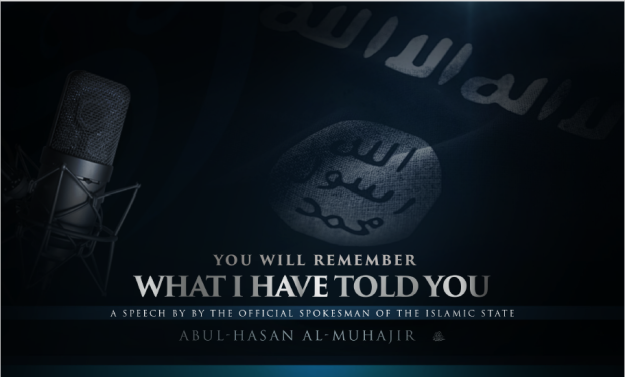
Taha Subhi Falaha (Abu Muhammad al-Adnani) was killed near al-Bab in northern Syria on 30 August in an airstrike by the U.S.-led Coalition. One of Falaha’s roles was the Islamic State’s official spokesman. On 5 December, IS announced that it has a new spokesman, Abu Hassan al-Muhajir, and he gave an inaugural speech. That speech, entitled, “You Will Remember What I Have Told You,” was printed in the fourth issue of Rumiyah on 7 December. Rumiyah seems to have replaced the English-language Dabiq magazine—probably because the village of Dabiq has been lost. The speech is reproduced below with some editions for spelling, some additions for explanation, and some especially notable sections highlighted in bold. Continue reading →
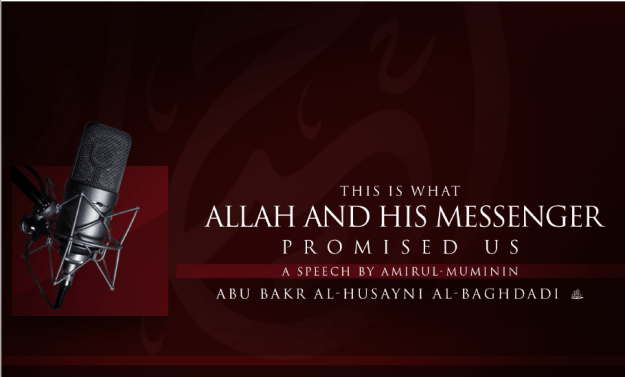
On 2 November 2016, a speech by the leader of the Islamic State, Ibrahim al-Badri (Abu Bakr al-Baghdadi), was released, entitled, “This Is What Allah and His Messenger Promised Us”. On 11 November, the third edition of IS’s English-language magazine, Rumiya, printed a transcript of the speech, which is reproduced below with some editions in transliteration, explanations added in square brackets, and notable or important sections shown in bold.Continue reading →
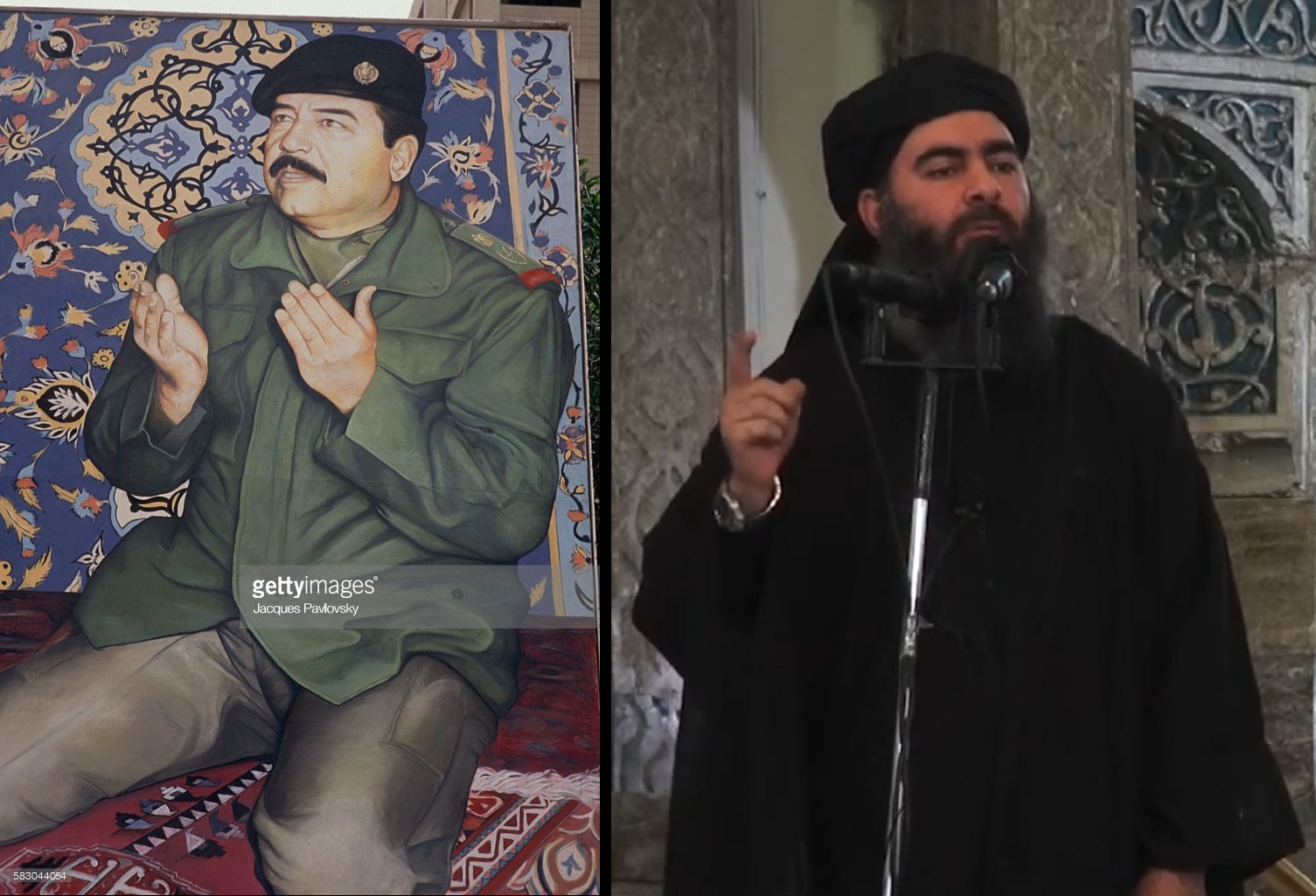
This essay, written to tie together my work on the relationship between the Saddam Hussein regime and the Islamic State, was completed last summer and submitted to an outlet, where it entered a form of development hell. After giving up on that option late last year, the opportunity arose to get a shorter version published in The New York Times in December. But I procrastinated too long over what to do with the full essay and a recent change in my work situation means I no longer have the bandwidth to go through the process of finding it a new home, so here it is.
“Abu-Bakr al Baghdadi is a product of the last decade of Saddam’s reign,” argues Amatzia Baram, a scholar of Iraq. He is correct in at least three ways. First, in its last decade in power, the Iraqi Ba’ath regime transformed into an Islamist government, cultivating a more religious, sectarian population on which the Islamic State (ISIS) could draw. Part of Saddam Hussein’s “Faith Campaign” also involved outreach to Islamist terrorists, including al-Qaeda, which meant that the synthesis of Ba’athism and Salafism that fused into the Iraqi insurgency after the fall of Saddam was already well advanced by the time the Anglo-American forces arrived in Baghdad in 2003. Second, the ISIS leadership and military planning and logistics is substantially reliant on the intellectual capital grown in the military and intelligence services of the Saddam regime. And finally, the smuggling networks on which ISIS relies, among the tribes and across the borders of Iraq’s neighbours, for the movement of men and materiel, are directly inherited from the networks erected by the Saddam regime in its closing decade to evade the sanctions. The advantages of being the successor to the Saddam regime make ISIS a more formidable challenge than previous Salafi-jihadist groups, and one that is likely to be with us for some time.
 Kyle Orton's Blog