Tag Archives: Syria

Defeating the Islamic State for Good

Originally published at The Henry Jackson Society

By Kyle Orton (@KyleWOrton) on December 2, 2016

Islamic State fortifications in Deir Ezzor (from an IS video, 11 July 2016)

The Islamic State (IS) is nominally under attack now in its twin capitals, Mosul in Iraq and Raqqa in Syria. This is necessary task, of course, but, as I’ve written repeatedly over the last few months, clearing IS from its urban centres is not sufficient. IS lost its overt urban holdings once before and nonetheless rebuilt in the deserts between 2008 and 2013, rising again to seize increasingly-large tracts of territory that were eventually declared a caliphate. IS was able to do this because of the success of its long-term method of war-making, and political changes in Baghdad—toward greater sectarianism and authoritarianism—that gave it more space to manoeuvre. The flaws in the strategy and partners the U.S.-led international Coalition have chosen to eliminate IS are creating a situation in which what will be called “victory” is really the resetting of the cycle. More evidence of this has recently come to the fore. Continue reading →
What To Expect After the Fall of Aleppo

Published at TRT World

By Kyle Orton (@KyleWOrton) on November 29, 2016

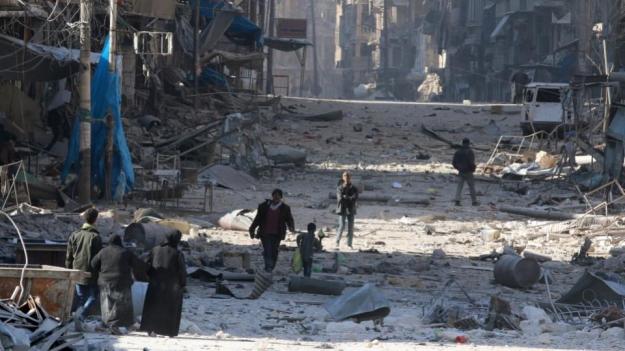
The pro-Assad coalition in Syria has conquered more than a third of the rebel-held enclave in eastern Aleppo City, the last urban stronghold of the mainstream armed opposition. Without significant external assistance, it is difficult to imagine the rebels can hold off, and in the coming days or weeks will likely be forced out entirely. This will not end the war, nor will it suppress the opposition, but it will end the rebellion as a strategic threat to the regime of Bashar al-Assad and push the insurgency into a greater reliance on extremists, creating more space for international terrorists and protracting the war. Continue reading →

The Islamic State’s Terrorism Guides

By Kyle Orton (@KyleWOrton) on November 27, 2016

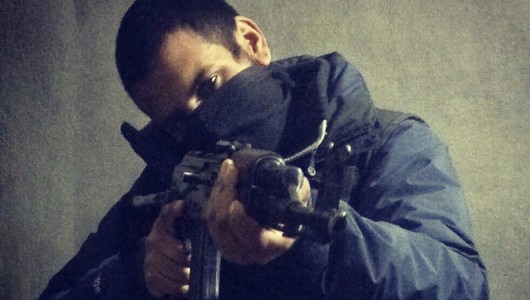
Junaid Hussain

Junaid Hussain

The Islamic State (IS) has been putting a lot of effort recently, especially over the summer, into directing attacks outside its caliphate, particularly in Europe. While many of these attacks are initially reported as “lone wolf” incidents, it has become increasingly clear by IS’s method of claiming these attacks that IS’s Amn al-Kharji, or foreign intelligence service, is guiding these attacks—walking the would-be murderers through the attacks emotionally, ideologically, and logistically. Continue reading →

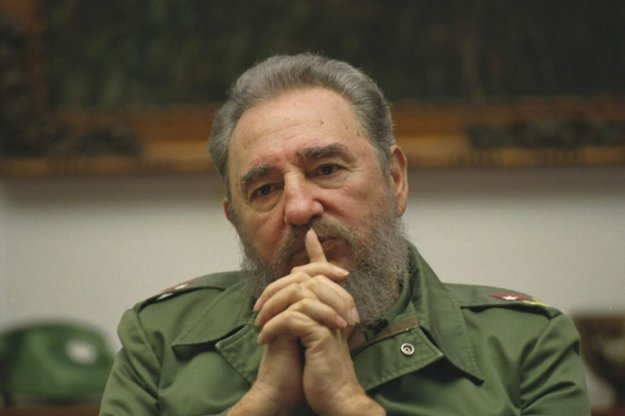
Fidel Castro: A Life Spent in the Service of Tyranny

By Kyle Orton (@KyleWOrton) on November 26, 2016

It is difficult to think of a dictator that has had more popular support in the West than Fidel Castro. The president of the European Commission Jean-Claude Juncker, Canadian Prime Minister Justin Trudeau, former U.S. President Jimmy Carter, and the Leader of the Labour Party Jeremy Corbyn have all today expressed their admiration in one way or another for Castro. This support was never just personal: any number of “revolutionary” governments could vicariously earn themselves similar leniency for their practices via some kind of identification with Castro. This was especially useful for the Soviet Union and its clients during the Cold War, but continued long after. That all of these “experiments” ended in bloodshed and disaster never seemed to matter, so long as the flame of anti-Americanism remained lit. Now, finally, Castro is at an end, even if his ruinous legacy is not.

Continue reading →

Trump Might Continue Obama’s Dangerous Syria Policy

Originally published at The Henry Jackson Society

By Kyle Orton (@KyleWOrton) on November 24, 2016

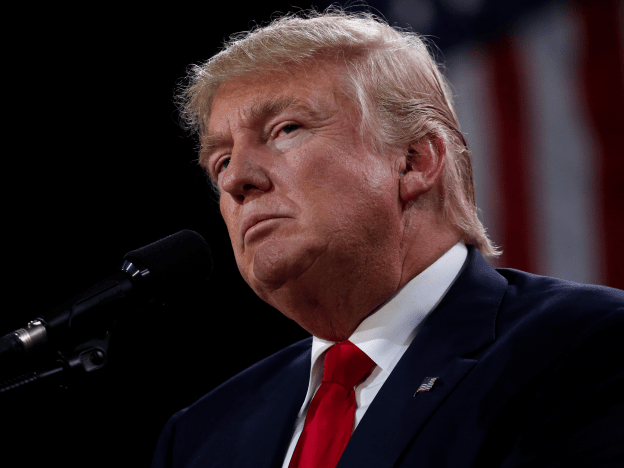
There is not yet any clarity with regard what Donald Trump would do about Syria once he becomes President. Virtually everything about the incoming administration is in the “wait and see” phase. Still, on the current evidence, Trump’s Syria policy would appear to be a continuation of President Barack Obama’s policy of prioritizing the threat of the Islamic State (IS) and other non-state Sunni jihadist groups, while effectively aligning with the pro-regime coalition, made up of Russian air power and a ground force led by the Islamic Republic of Iran, stitched together out of the battered remnants of Bashar al-Assad’s army and his sectarian militias, Iranian paramilitary and regular forces, and foreign Shi’a jihadist groups under Iran’s control. The only potential difference is that Trump may formally repudiate the anti-Assad forces. The effect of this would be to destroy the mainstream Syrian opposition and empower al-Qaeda, but it would not bring stability to Syria. There are hints, however, that Trump is recruiting senior officials who will alter this policy. Continue reading →

Turkey Continues to Protest the Coalition’s Syrian Kurdish Allies

By Kyle Orton (@KyleWOrton) on November 22, 2016

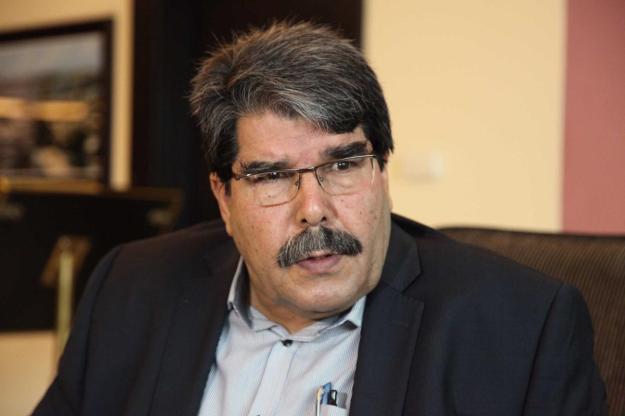
Saleh Muslim Muhammad

This morning, Turkey issued arrest warrants for forty-eight members of the Kurdistan Workers’ Party (PKK), which has fought a forty-year war against the Turkish state. The PKK is listed as terrorist by Ankara, Britain, the European Union, NATO, and the United States. Among those being sought is Saleh Muslim Muhammad, the leader of the Syrian branch of the PKK, known as the Democratic Union Party (PYD), whose armed wing—the People’s Protection Units (YPG)—happens to be the favoured Western instrument in combatting the Islamic State (IS) in Syria. The West has long denied or obfuscated the fact it is working with an organization that a NATO partner considers its nemesis and a long-standing threat to its national security. The Turks, it seems, are not content to let this ambiguity stand, and there are good reasons of Western self-interest why the alliance with the PKK deserves another look. Continue reading →

America Escalates the War Against Al-Qaeda in Syria

By Kyle Orton (@KyleWOrton) on November 11, 2016

On the right: Abdullah al-Muhaysini (source)

The United States and therefore the international Coalition is about to step up its operations against Jabhat Fatah al-Sham (JFS), al-Qaeda’s recently rebranded Syrian branch. This is a necessary policy, but pursued in isolation—without replacing the capacities that JFS provides to the insurgency—this action will strengthen the coalition supporting the regime of Bashar al-Assad, the actors chiefly responsible for the humanitarian abomination in Syria that has deliberately given rise to the security menace of the Islamic State (IS) and the flow of refugees into Europe that has destabilized Western security. Assad’s coalition also includes the Islamic Republic of Iran, a more significant global terrorism threat than IS which has repeatedly attacked the West. Continue reading →

Al-Qaeda Signals A Return to Iraq, Incites Against An American-Iranian Conspiracy

By Kyle Orton (@KyleWOrton) on November 4, 2016

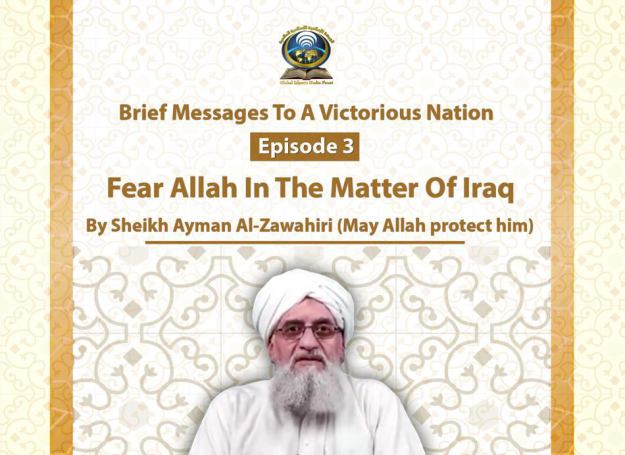
Al-Qaeda’s leader, Ayman al-Zawahiri, gave a speech on August 25, 2016, entitled, “Fear Allah in the Matter of Iraq” (or “Fear Allah in Iraq”). Released by al-Qaeda’s As-Sahab Media Foundation, the speech is the third installment of the “Brief Messages To A Victorious Nation” (or “Brief Messages To A Victorious Umma”) series. A translation of the speech was released by Al-Muwahideen Media, a pro-Qaeda channel, last month and is reproduced below with some editions in transliteration and important sections highlighted in bold. Continue reading →

The Mosul Operation and Saddam’s Long Shadow

Originally published at The Henry Jackson Society

By Kyle Orton (@KyleWOrton) on October 28, 2016

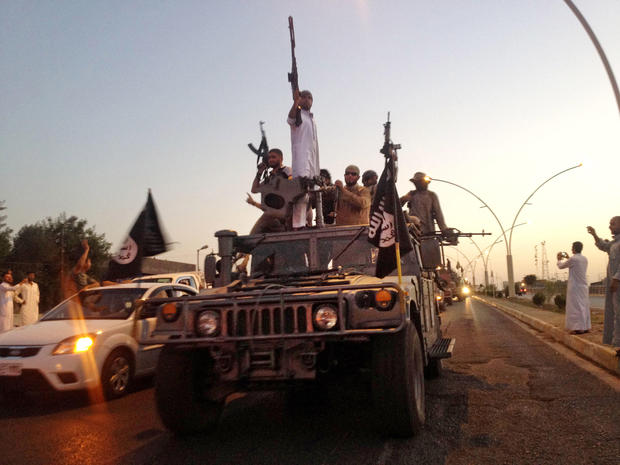
Islamic State parade with captured equipment in Mosul, 23 June 2014 . (AP Photo, File)

The offensive to wrest the Iraqi capital of the Islamic State’s (IS) caliphate, Mosul, from the terror organization began on 17 October, led on the ground by Iraqi and Kurdish forces and supported from the air by the U.S.-led Coalition. While progress has been generally steady, IS has been able to mount a series of diversionary attacks, the most significant in Kirkuk City. Among those subsequently arrested for a role in planning the terrorism in Kirkuk is a cousin of Saddam Husayn, a micro-example of the influence of the fallen regime on the current situation in Iraq. Continue reading →

The Price of the Iran Deal

Originally published at The Henry Jackson Society

By Kyle Orton (@KyleWOrton) on October 26, 2016

Maj. Gen. Qassem Suleimani, with Supreme Leader Ali Khamenei at a mosque in Tehran, Iran, (March 2015)

Earlier this week, The New York Times reported on the “free fall” of President Barack Obama’s Middle East policy. While the President had “inherited a messy situation in the region with the war in Iraq … by the time he took office, [President George W.] Bush’s troop surge and Gen. David H. Petraeus’s strategy change had helped turn the war around”. This relative stability has given way:

Today there is no single overarching issue but multiple ones. Syria, Iraq and Yemen are caught up in war. Turkey and Jordan are inundated by refugees. Russia has reasserted itself as a major player in the region. Libya is searching for stability after the fall of its longtime dictator. The Kurds are on the march. Egypt is fighting off a terrorist threat at home. And Saudi Arabia and Iran are waging a profound struggle for the future of the region.

Many of America’s allies disagreed with Bush’s focus on Iraq, considering Iran to be the larger threat, but if they had considered Bush too assertive, they find Obama too timorous, stepping back as the situation spins out of control. Continue reading →