Tag Archives: Turkey

The End of the Line for “The Beatles” of the Islamic State

By Kyle Orton (@KyleWOrton) on 9 February 2018
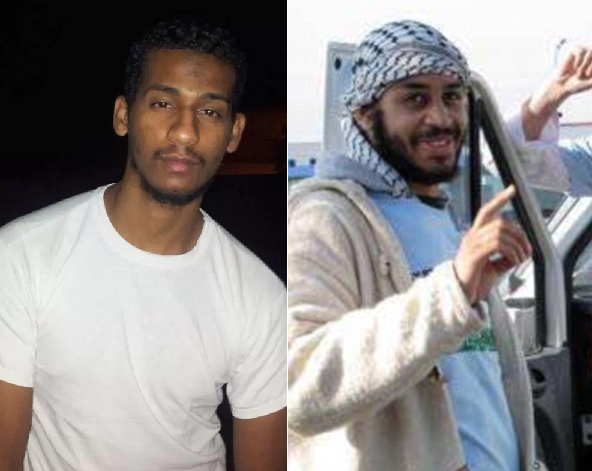
El Shafee Elsheikh (image source) and Alexanda Kotey (image source)

Last night, The New York Times reported and Reuters confirmed that two British Islamic State (IS) jihadists, El Shafee Elsheikh and Alexanda Kotey, both of them designated terrorists by the United States, have been arrested in Syria. Kotey and Elsheikh, along with the late Mohammed Emwazi (Abu Muharib al-Muhajir) and Aine Davis, formed a four-man cell that has become known as “The Beatles”—hence Emwazi being near-universally known as “Jihadi John”—that guarded, abused, and murdered hostages for IS from before the “caliphate” was founded in 2014. Continue reading
Trump Completes Obama’s Syria Policy

By Kyle Orton (@KyleWOrton) on 4 February 2018

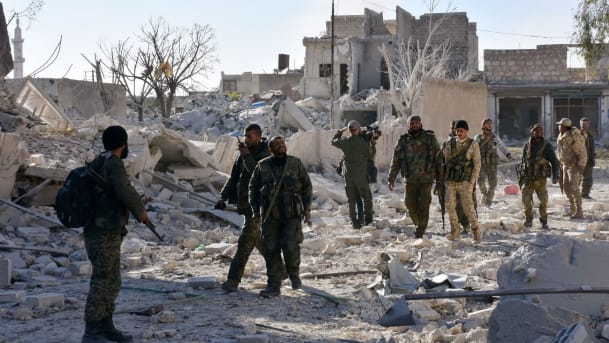
Syrian rebels in eastern Aleppo, November 2016 (image source)

Operation TIMBER SYCAMORE, the formally-covert program run by the Central Intelligence Agency (CIA), has, since approximately 2012, ostensibly provided support to vetted Syrian rebel units fighting against Bashar al-Asad’s regime. This program, begun by President Barack Obama, was never raised to a level that could alter the course of Syria’s conflict in favour of the opposition, and indeed one of its most concrete effects was denying certain categories of heavy weapons to the rebellion. While providing subsistence to some rebels, the program was mostly a political instrument, shielding Obama from criticism as he tilted U.S. policy in Asad’s favour by empowering his patron, Iran. President Donald Trump abandoned even this fig-leaf of opposition to Asad in July 2017, announcing the end of the program, a termination that went into effect last month. Continue reading

Why The Obama Doctrine Failed

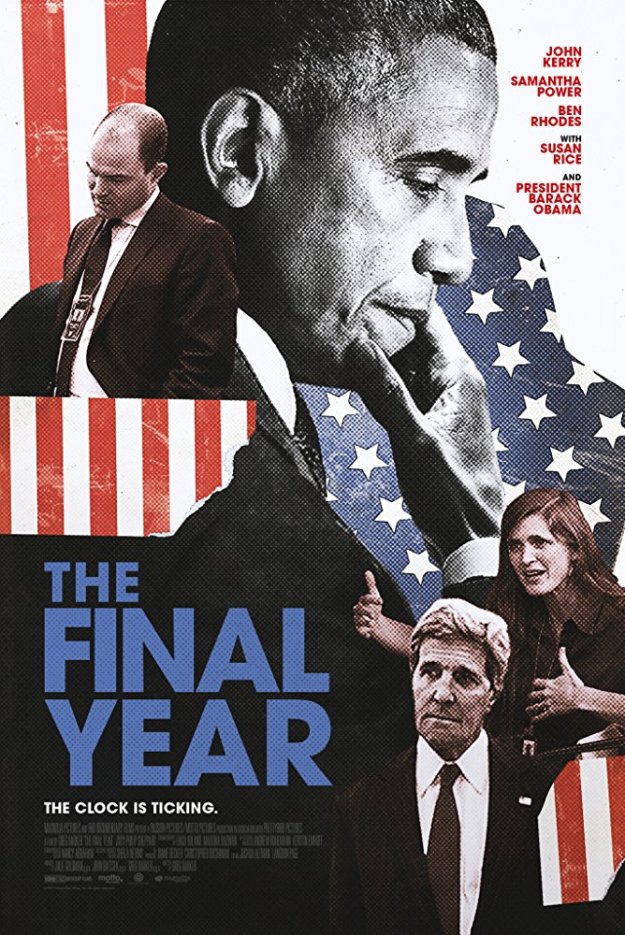
Film review of The Final Year (2018)

By Kyle Orton (@KyleWOrton) on 31 January 2018

The Final Year, a new documentary film directed by Greg Barker, tracks the closing stages of the administration of President Barack Obama in 2016. Senior officials are followed and interviewed, and the White House is watched as it tries to react to daily events. Much of the substance contained in the film was knowable in real time, but it is very useful to have these officials on record—on video, no less—explaining the assumptions and thought processes they were operating with as they made decisions that led to a series of such intense disasters around the world. This is especially interesting since the ripple effects from these catastrophes ultimately set the conditions for the election of Donald Trump and dismantling of much of the Obama legacy. Continue reading

American Intelligence Acknowledges Anti-ISIS Coalition’s Kurdish Partner is a Terrorist Group

By Kyle Orton (@KyleWOrton) on 27 January 2018

YPG/YPJ fighters raise the banner of the PKK leader Abdullah Ocalan in Raqqa city on 19 October 2017 (YPG Press Office)

The Central Intelligence Agency has publicly recognized that the Kurdish partner force the United States-led Coalition against the Islamic State (IS) has been working with in Syria is a subsidiary of the terrorist-designated Kurdistan Workers’ Party (PKK). Continue reading

Turkey’s Afrin Offensive and Russia’s Policy in Syria

Originally published at Ahval

By Kyle Orton (@KyleWOrton) on 21 January 2018

Turkey’s president, Recep Tayyip Erdoğan, threatened on Jan. 13 to begin a military operation “in about a week” to evict Kurdish militants from Afrin in northwestern Syria. Erdoğan has repeatedly threatened to “cleanse” Afrin of the fighters over the last two years. It turned out he really meant it this time: on Jan. 20 Turkey commenced Operation Olive Branch against Afrin.

Kurdish forces, affiliated with the Kurdistan Workers’ Party (PKK), have constituted an important element of the Coalition’s ground force in Syria against the Islamic State (ISIS) since late 2014, expanding their “Rojava” statelet by capturing vast swathes of territory from ISIS in northern and eastern Syria that is connected to Afrin under a deal with the pro-regime coalition—Bashar al-Assad, Iran, and Russia.

Any Turkish government would see this situation as a threat, and be angry at the United States for supporting the Kurds. The PKK regards Rojava and the ruling Democratic Union Party (PYD) as strategic elements in its long war against the Turkish state. Indeed, Kurds in Rojava have already provided at least logistical support for PKK attacks inside Turkey.

Continue reading

Russia’s Plans in Syria Falter, Opening Chance for the West

By Kyle Orton (@KyleWOrton) on 29 December 2017

The Astana track of Syrian “peace” negotiations began on 23 January 2017, under Russian guidance in the Kazakh capital, with Iran and Turkey also invited as “guarantor countries” of the various sides in Syria. The process, initiated in the shadow of the savage conquest of Aleppo city in December 2016 that signalled the total strategic defeat of the insurrection against the Bashar al-Asad regime, was an attempt by Moscow to convert the military gains it had enabled by Asad and Iran on the ground into political facts that could then be imported into the internationally-recognized Geneva process. This “Astana-isation of Geneva” was Russia’s bid to take control of the political process and redefine it: rather than having Asad’s removal as its end-goal, it would set the terms of reintegration into the Asad state. Abetted by a purblind Western campaign against the Islamic State (IS) and a strategic reorientation in Turkey, the pro-Asad coalition has more or less had its way for the last year. But there are now signs that this approach is beginning to unravel. Continue reading

A Year In, Trump’s Syria Policy Looks A Lot Like Obama’s

Originally published at Ahval

By Kyle Orton (@KyleWOrton) on 18 December 2017

Nearly a year into Donald Trump’s administration, the president has followed the track laid down by his predecessors in Syria, accelerating it in some cases, and reinforcing the negative trends of Barack Obama’s defective policy that will undo even apparent successes, like the destruction of the Islamic State’s (ISIS) “caliphate”. Continue reading

Is Britain Cracking Down on PKK Terrorist Activity?

Originally published at The Henry Jackson Society

By Kyle Orton (@KyleWOrton) on 16 December 2017

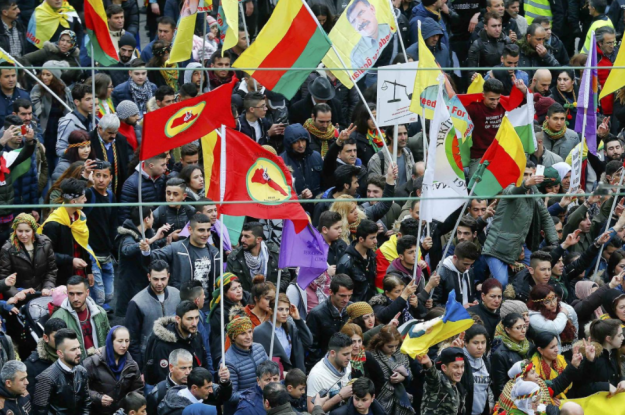
Pro-PKK demonstrators in Frankfurt, Germany, 18 March 2017, REUTERS / Ralph Orlowski

The BBC reported yesterday that on 7 December the Metropolitan Police Service arrested four people—two 17-year-old boys, a 38-year-old woman, and a 50-year-old woman—were arrested in the Haringey area of north London as part of a probe into terrorist fundraising, through money laundering and fraud. The terrorist group at issue is the Kurdistan Workers’ Party (PKK), and those arrested are believed to have contributed to the PKK’s finances through sale and distribution of one of the PKK’s most important propaganda instruments, the Yeni Ozgur Politika (New Free Politics) newspaper. Time will tell if this is a one-off or the beginning of a serious and long-overdue attempt to curtail the PKK’s propaganda-recruitment activity and fundraising in the West. Continue reading

America’s Kurdish Allies in Syria Drift Toward the Regime, Russia, and Iran

By Kyle Orton (@KyleWOrton) on 10 December 2017

Russian soldiers in Efrin, Syria, 1 May 2017 (source)

The American-led Coalition against the Islamic State (IS) partnered with the “Syrian Democratic Forces” (SDF), a political façade for the proscribed Kurdistan Workers’ Party (PKK), as the ground force in Syria. The most ventilated problems with this partnership so far have been the strain it has put on relations with NATO ally Turkey, against which the PKK has run a terrorist-insurgency for more than thirty years, and the deep local suspicion of the PKK’s governing program that might yet reverse the gains against IS and open political space for other jihadists like al-Qaeda. Another of the problems is now gaining salience: the PKK’s long-term alliance with Bashar al-Asad’s regime and the states—Russia and Iran—that keep it alive. Continue reading

Ayman al-Zawahiri Finally Addresses the Problems with Al-Qaeda’s Syrian Branch

By Kyle Orton (@KyleWOrton) on 4 December 2017

The leader of al-Qaeda, Ayman al-Zawahiri, gave a thirty-five-minute speech on 28 November 2017, entitled: “Let Us Fight Them As A Solid Structure” (or “Let Us Fight Them As One Body” or “Let Us Fight Them With Solid Foundations”), dealing with the vexed question of al-Qaeda’s relationship with the Syrian jihadi group, Hay’at Tahrir al-Sham, a situation that escalated again in recent days. The mention of an impending Turkish intervention into Idlib—which began on 7 October—suggests that al-Zawahiri recorded this speech in the last days of September or the first few days of October. An English transcript of the speech was released by As-Sahab Media, and is reproduced below with some edits for syntax and transliteration. Continue reading