Tag Archives: Umar Abdel-Rahman

Inducement and Terror: How the Islamic State Deals With Sunni Social Leaders

By Kyle Orton (@KyleWOrton) on 14 March 2021

Abdul Munim al-Badawi (Abu Hamza al-Muhajir), the then-leader of Al-Qaeda in Mesopotamia (AQM), released his fourth audio statement on 28 September 2006. The speech was entitled, “Ta’alaw ila Kalimatin Sawa” (تعالوا إلى كلمة سواء): “Come to a Just Word”.[1] An English transcript was released by the jihadists and is reproduced below. Continue reading

IHH, Al-Qaeda, and Turkey

By Kyle Orton (@KyleWOrton) on 26 January 2019

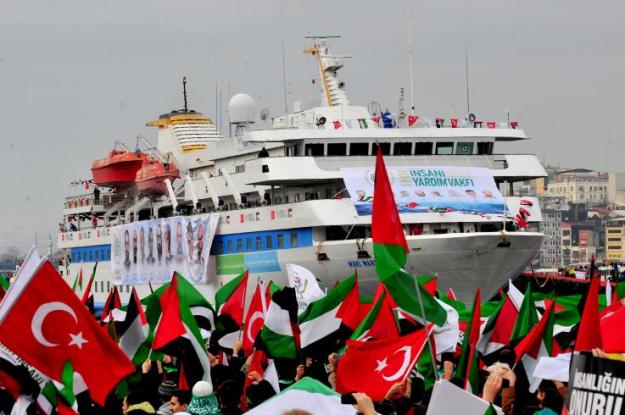
Mavi Marmara arrives at Sarayburnu port as people wave Turkish and Palestinian flags, 26 December 2010 [source]

An article posted on the website of IHH Humanitarian Relief Foundation on 14 July 2006 told of a massive funeral ceremony in Istanbul for Shamil Basayev, an al-Qaeda-linked Chechen jihadist. The original article has been removed, though a cached version is currently available. To avoid this being lost, the article is reproduced below. Before that is a brief outline of the context. Continue reading

Examining Iran’s Long Relationship with Al-Qaeda

This article was originally published at The Brief

By Kyle Orton (@KyleWOrton) on 26 October 2018

At the beginning of September, New America published a paper, based on recovered al-Qaeda documents, which concluded that there was “no evidence of cooperation” between the terrorist group and the Islamic Republic of Iran. New America’s study lauds itself for taking an approach that “avoids much of the challenge of politicization” in the discussion of Iran’s relationship with al-Qaeda. This is, to put it mildly, questionable.

A narrative gained currency in certain parts of the foreign policy community during the days of the Iraq war, and gained traction since the rise of the Islamic State (IS) in 2014, that Iran can be a partner in the region, at least against (Sunni) terrorism, since Tehran shares this goal with the West. Under President Barack Obama, this notion became policy: the US moved to bring Iran’s revolutionary government in from the cold, to integrate it into the international system. Continue reading

What Questions Remain About 9/11?

By Kyle Orton (@KyleWOrton) on 5 September 2018

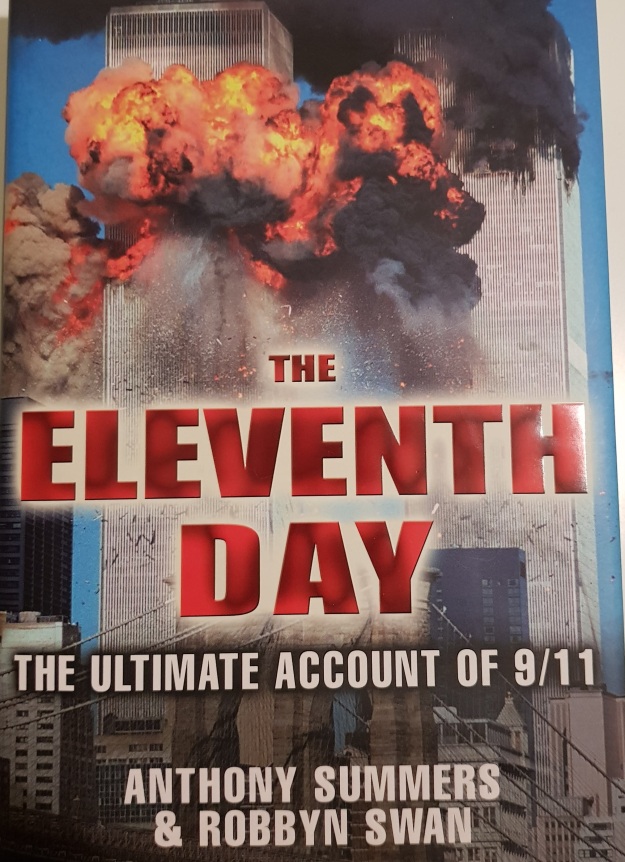
In less than a week, it will be the seventeenth anniversary of al-Qaeda’s “Plane’s Operation”, the assault on the United States. It is a vertiginous enough reflection that many of us have been alive more years since 11 September 2001 than before it, and positively alarming that many of those who will soon move into the government, media, and other leading societal institutions will have been born after an event that still shapes so much of the international scene. As Anthony Summers and Robbyn Swan put it in The Eleventh Day: The Ultimate Account of 9/11 (2011), we are left with “the brief name ‘9/11’,” the context and meaning stripped away all this time later. The book is a useful overview of an event that should always be to some degree fresh in mind, though it is not without its problems in its analytical sections. Continue reading

Profile of a 9/11 Planner: Muhammad Atef

By Kyle Orton (@KyleWOrton) on 5 February 2018

Al-Qaeda’s military leader Muhammad Atef at a press conference in Afghanistan, 26 May 1998 (image source: CNN)

Muhammad Atef, best-known as Abu Hafs al-Masri, but who also went by the names Taseer Abdullah or Taysir Abdullah and Subhi Abu Sitta, was al-Qaeda’s military leader between 1996 and 2001, and one of the three people most responsible for the terrorist attack in the United States on 11 September 2001. Continue reading

Another Product of “Londonistan”: Abdullah Ibrahim al-Faisal

By Kyle Orton (@KyleWOrton) on 8 December 2017

Abdullah al-Faisal

The U.S. Treasury Department sanctioned Abdullah Ibrahim al-Faisal (born: Trevor William Forrest), a Jamaican cleric who supports the Islamic State (IS) on 5 December. This was long overdue. Al-Faisal’s record of disseminating jihadist ideology, and influencing and/or interacting with terrorists, goes back several decades. And since 2014, al-Faisal has been one of IS’s influential English-language propagandist-recruiters. Continue reading

Ayman al-Zawahiri Finally Addresses the Problems with Al-Qaeda’s Syrian Branch

By Kyle Orton (@KyleWOrton) on 4 December 2017

The leader of al-Qaeda, Ayman al-Zawahiri, gave a thirty-five-minute speech on 28 November 2017, entitled: “Let Us Fight Them As A Solid Structure” (or “Let Us Fight Them As One Body” or “Let Us Fight Them With Solid Foundations”), dealing with the vexed question of al-Qaeda’s relationship with the Syrian jihadi group, Hay’at Tahrir al-Sham, a situation that escalated again in recent days. The mention of an impending Turkish intervention into Idlib—which began on 7 October—suggests that al-Zawahiri recorded this speech in the last days of September or the first few days of October. An English transcript of the speech was released by As-Sahab Media, and is reproduced below with some edits for syntax and transliteration. Continue reading

The Demise of Ahmad Mabruk: Al-Qaeda in Syria and American Policy

By Kyle Orton (@KyleWOrton) on October 4, 2016

Ahmad Mabruk in Jabhat al-Nusra's "Heirs of Glory" video, March 2016. (Source: The Long War Journal)

Ahmad Mabruk in Jabhat al-Nusra’s “Heirs of Glory” video, March 2016. (Source: The Long War Journal)

Ahmad Salama Mabruk (Abu Faraj al-Masri) was an al-Qaeda veteran, close to the organization’s leadership. The United States killed Mabruk in Syria on 3 October 2016 in a drone strike near Jisr al-Shughour in northern Syria. This is the second time in a month the U.S. has killed off a senior al-Qaeda jihadist, and sheds some light on the strength of the U.S. policy in Syria. Continue reading