Tag Archives: WMD

Why Was There Ever An American Occupation of Iraq?

By Kyle Orton (@KyleWOrton) on 22 December 2019

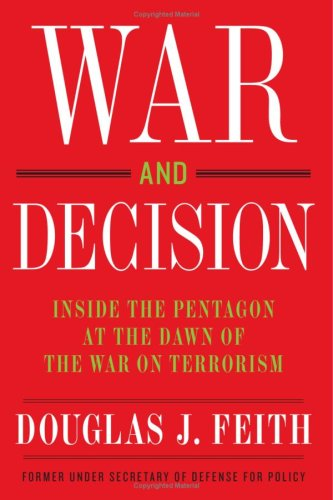
Douglas Feith was the U.S. Under Secretary of Defense for Policy from 2001 to 2005, one of the most senior positions at the Pentagon during one of the most consequential periods in recent history, covering the 11 September 2001 atrocities and early phase of the U.S.-led response. Feith later wrote a highly illuminating memoir, War and Decision: Inside the Pentagon at the Dawn of the War on Terrorism, which tried to drain some of the hysteria out of the public “debate” about the Iraq dimension of the U.S. policy in particular by explaining the internal arguments in the Bush administration leading up to the decision to finish with Saddam Husayn in 2003, and trying to set those arguments in their proper historical context, both in relation to Iraq—where “the war” had begun twelve years earlier—and the altered American threat perceptions in the shadow of 9/11. Unlike a lot of the gossipy tomes that emerged from former officials, Feith’s book is notably light on opinion and contains reams of declassified documents so readers can check his analysis against the source material. One of Feith’s key judgments is that “the chief mistake was maintaining an occupation government in Iraq for over a year”.[1] As Feith explains in great detail in the book, this was never supposed to happen. So how did it?

Continue reading

The Strikes in Syria and America’s Path Forward

A version of this article was published in CapX

By Kyle Orton (@KyleWOrton) and James Snell on 8 May 2018

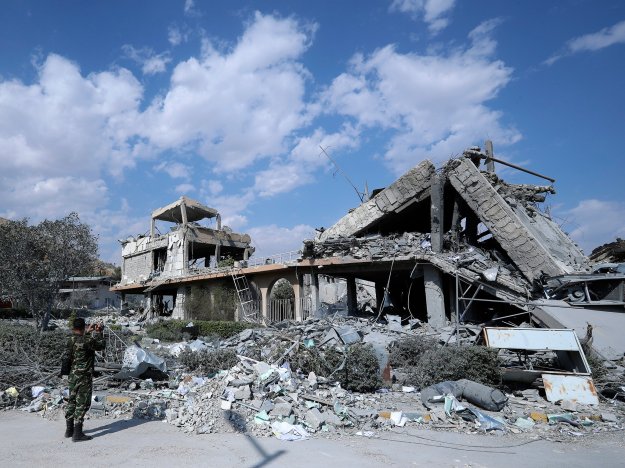
The Barzeh chemical weapons facility in Damascus, Syria, demolished by U.S. cruise missiles on 14 April 2018 (image source)

The United States and its allies, Britain and France, launched over 100 missiles at the Syrian regime of Bashar al-Assad in the early hours of 14 April. This was retaliation for the regime’s use of poison gas in the town of Douma, east of the capital, Damascus, exactly a week earlier, which massacred at least 43 people and wounded 500 more. The military strikes were an important signal and will likely be some deterrent against the future use of chemical weapons in Syria, but ultimately this was another missed opportunity by the West to meaningfully affect the course of the war. Continue reading

Further Details Emerge of Obama’s Failed Iran Policy

Published at The New Arab.

By Kyle Orton (@KyleWOrton) on 21 December 2017

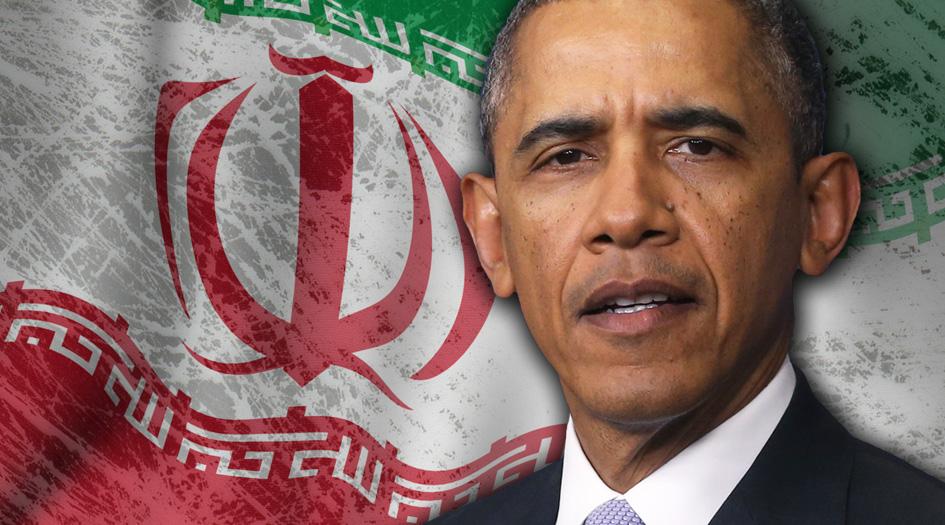
A widely reported, 15,000-word article by Josh Meyer in Politico on Sunday moves us another step closer to finding out the actual terms of President Barack Obama’s nuclear deal with the Islamic Republic of Iran.

Though the Obama administration sold the Iran deal on the narrowest possible terms as an arms control agreement, the reality was that this agreement was intended to facilitate a strategic tilt in Iran’s favour—against traditional allies—that left a regional balance requiring less American commitment.

Because the administration wanted the paper agreement, Iran had the leverage to threaten to walk away, and was therefore appeased on multiple fronts ostensibly unrelated to the nuclear issue.

Continue reading

America Sanctions Operatives of the Islamic State’s Chemical Weapons Department

By Kyle Orton (@KyleWOrton) on 13 June 2017

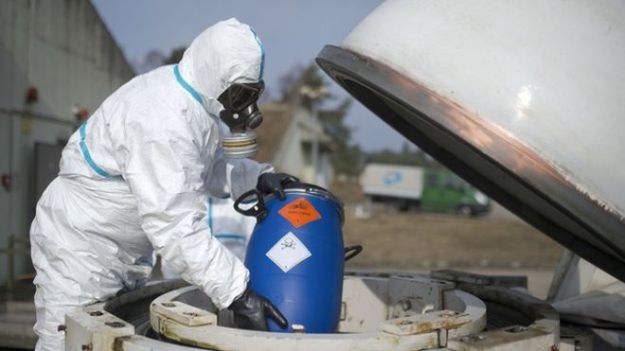
The U.S. Treasury Department’s Office of Foreign Assets Control (OFAC) announced financial sanctions against an individual involved in the “development” of chemical weapons of mass destruction (CWMD) for the Islamic State (IS) on 12 June. Simultaneously, the State Department labelled another individual involved in the development of CWMD for IS as a Specially Designated Global Terrorist (SDGT). These are the first sanctions of their kind. Continue reading

America Officially Blames Assad for the Chemical Attack in Khan Shaykhun

By Kyle Orton (@KyleWOrton) on 12 April 2017

Aftermath of the Khan Shaykhun chemical attack (source)

The United States’ cruise missile strikes in Syria in the early hours of 7 April devastated the Shayrat airbase from which, U.S. intelligence assesses, the regime of Bashar al-Assad launched the nerve agent attack on Khan Shaykhun on 4 April. The U.S. has now released its fuller assessment of the chemical attack, which includes a record of Assad’s routine use of chemical munitions since 2013. This comes amid ongoing gridlock at the United Nations Security Council, where, during a volatile session yesterday, Russia’s deputy representative, Vladimir Safronkov, accused Britain supporting the Islamic State—before vetoing the proposed resolution to have an international investigation into this latest chemical attack, a fairly strong indication that Moscow knows its client regime in Syria would be found guilty. This is the eighth time Russia has used its veto to shield Assad, though this time it was notable that China abstained, rather than join Russia in a double-veto.
Continue reading

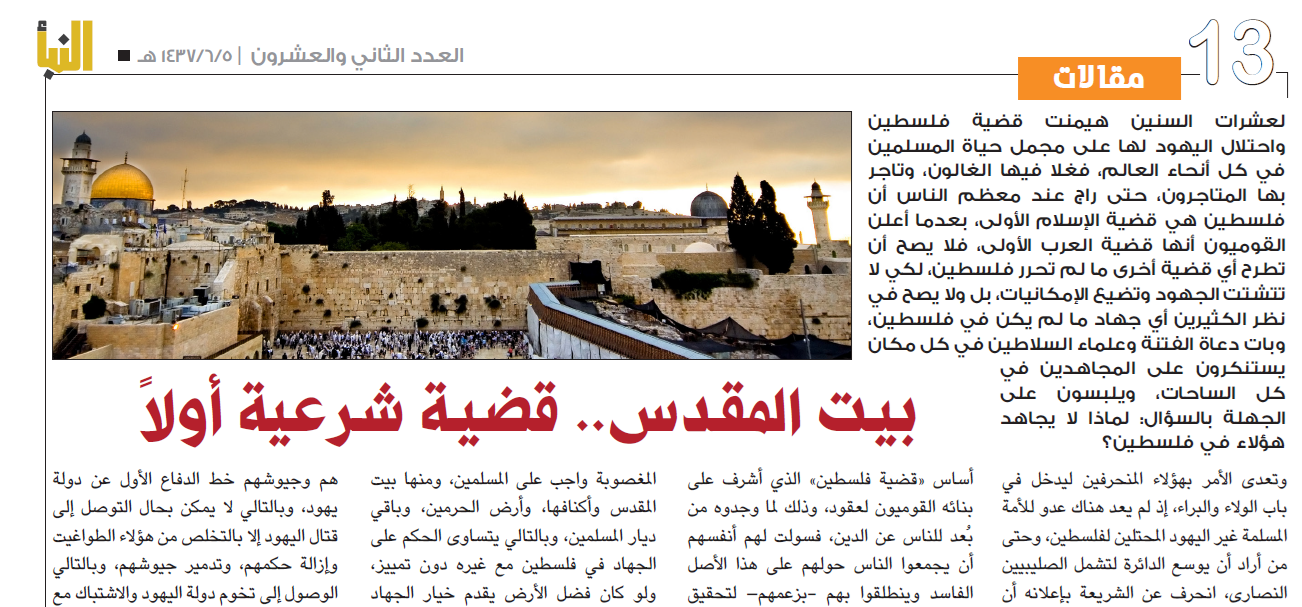
Islamic State Denounces Those Who Make Palestine the Foremost Muslim Cause

By Kyle Orton (@KyleWOrton) on April 2, 2016

An article in the twenty-second edition of al-Naba, the Islamic State’s (IS) newsletter, released on 15 March 2016, explained why the group has not made fighting Israel a priority.

Continue reading

A Myth Revisited: “Saddam Hussein Had No Connection To Al-Qaeda”

Book Review: The Connection: How al-Qaeda’s Collaboration With Saddam Hussein Has Endangered America (2004) by Stephen Hayes

By Kyle Orton(@KyleWOrton) on June 21, 2015


More than twelve years after the fall of Saddam Hussein, the conventional wisdom is that Saddam’s regime had no connection with al-Qaeda, and such “evidence” as was adduced was tortured out of Ibn al-Shaykh al-Libi in the Bush administration’s desperation to cobble together a casus belli. But if one puts ideology on hold, and considers the evidence of Stephen Hayes’ The Connection, a rather different picture emerges. Continue reading