By Kyle Orton (@KyleWOrton) on 6 October 2024
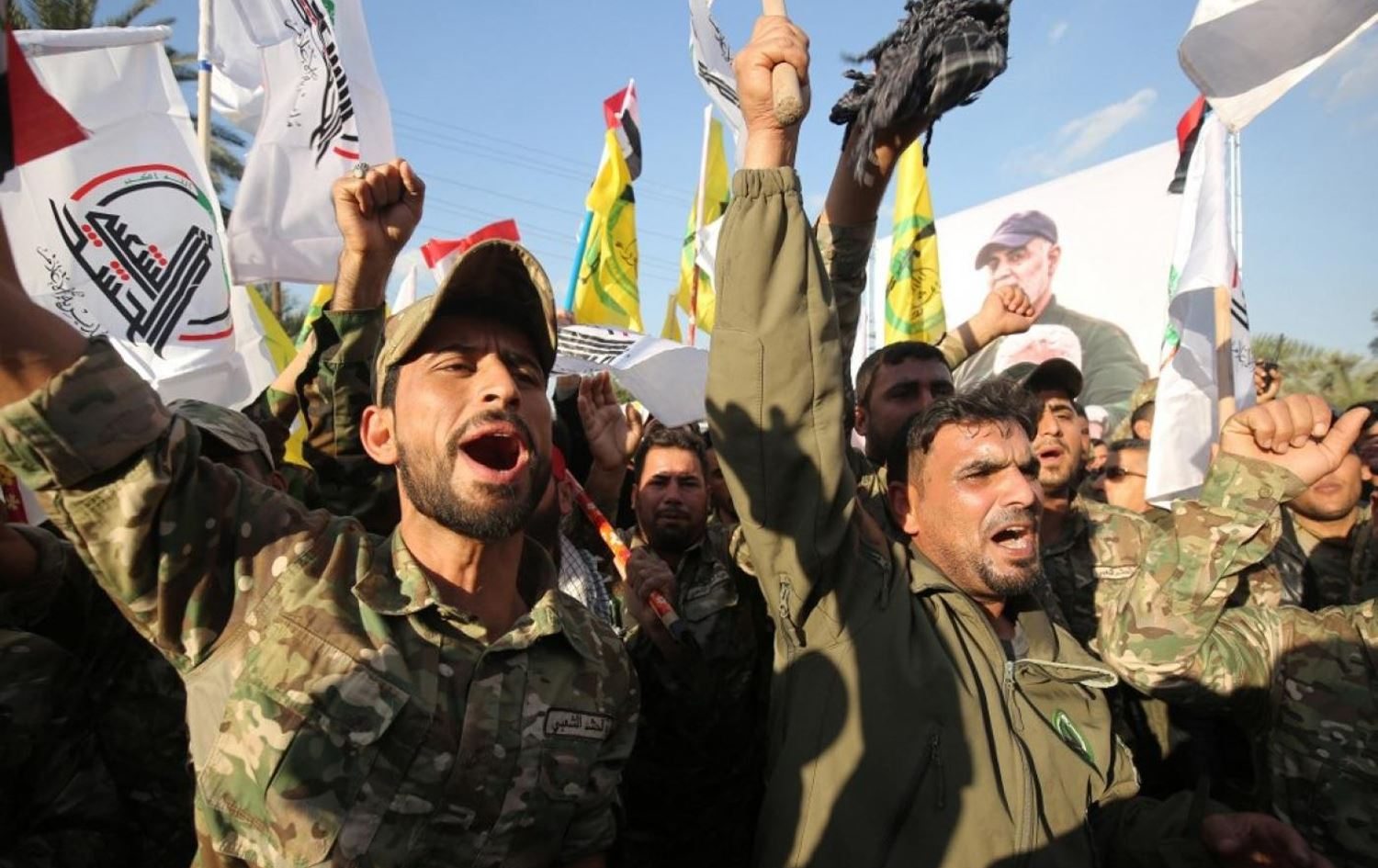
A debate has been ongoing since the emergence of al-Hashd al-Shabi in Iraq in 2014 about the extent of Iran’s control over the militia conglomerate. In truth, there was never really much doubt.
THE HASHD’S ORIGIN STORY
The “official narrative” is that the Hashd was created after Grand Ayatollah Ali al-Sistani’s fatwa on 13 June 2014 calling for Iraqis to sign-up with the government to resist the Islamic State (IS), which had just taken over Mosul, a day earlier slaughtered over 1,000 Shi’a cadets at Camp Speicher, and seemed to be careening towards Baghdad. A Hashd Commission was created to oversee the various militias created from the volunteers, headed by Faleh al-Fayyadh, the national security adviser to then-Iraqi Prime Minister Haider al-Abadi (r. 2014-18). Thus, the Hashd was a popular reaction—its name translates as “Popular Mobilisation”—in a time of crisis, an expression of Iraqi national feeling, drawn from every sect in the country (majority-Shi’a, but with a sizeable Sunni tribal component, plus Christian and Yazidi units), and it was controlled, in principle according to the wording of the marja’s fatwa and in practice through Al-Fayyadh, by the Iraqi Prime Minister.
The problem is that none of this is true.
The Hashd project was in the works months before Sistani’s fatwa, and its architect was Iran’s Qassem Sulaymani, the Islamic Revolutionary Guards Corps (IRGC) officer in command of the Quds Force that is charged with exporting the Islamic Revolution. By April 2014, the IRGC had got so far as “branding” the Hashd: the planned logo looked, not coincidentally, like that of Hizballah, the IRGC “external army” in Lebanon. But the roots of the Hashd are much older than that.
The IRGC had been advancing the Islamic Revolution model in Iraq from the moment Saddam fell, infiltrating the formal State structures and pressuring them from the outside by building up an overlapping shadow State. Under the noses of an American regency that believed it was managing a transition to democracy, the IRGC took over the Iraqi Interior Ministry, thus the domestic security sector, and simultaneously fostered an ostensibly separate network of anti-government “Shi’a militias” or “Special Groups”, many of whom had day jobs in the police, which killed hundreds of American soldiers and thousands of Iraqi Sunni civilians.
It should be noted that Iran was not starting from scratch in Iraq in 2003. The Special Groups appeared so quickly because they effectively already existed. During the war with Saddam in the 1980s, Iraqi Shi’is loyal to the doctrines of Ayatollah Ruhollah Khomeini had defected and been formed into the Badr Corps, which waged a covert insurgency against Saddam in the 1990s and was the seedbed after 2003 for the IRGC to create a lattice of interlinked militias like Kataib Hizballah, Asaib Ahl al-Haq, and by now so many others.
As in the security realm of the “New” Iraq, so it was with politics. Shi’a Islamists loyal to Iran swiftly dominated the Iraqi political class and the IRGC had long-standing friends among the Kurds as well. Iraqi MPs of all sects were willing to be suborned and the Special Groups could bully or eliminate those who were not.
The collapse of the Iraqi army in the face of the IS onslaught in 2014 allowed the IRGC to accelerate the amalgamation of these streams and move Iraq into the final phase of Islamic Revolution. In Lebanon, where the Islamic Revolution model was first applied outside Iran, the IRGC had secured Hizballah’s primacy by having it pretend to a form of nationalism, or at least localism, and to position itself as the vanguard of the Shi’is against an external foe (Israel). The IRGC would pull the same trick in Iraq. With IS bearing down on Iraqi Shi’is, in the shadow of the genocidal massacre at Speicher, major nationalist legitimacy attached to the Hashd vessel, and the IRGC filled it with the Special Groups. The IRGC militias always controlled the Hashd’s “institutions” and formed the bulk of its force. The volunteers were augmenting the Special Groups, not vice versa, and the IRGC took full advantage to convert as many as possible to Khomeinism.
As to the Hashd’s command structure, not even analysts who downplay Iran’s role deny that Al-Fayyadh was a figurehead: power in the Hashd Commission lay with Jamal al-Ibrahimi (Abu Mahdi al-Muhandis), Sulaymani’s longtime deputy who perished with him in January 2020, the leader of the IRGC’s Kataib Hizballah unit, and in the field the Hashd was led by the head of the IRGC’s Badr Corps unit, Hadi al-Ameri—that is, when Sulaymani was not personally leading the troops.
THE RISE OF THE HASHD
The Special Groups are viciously sectarian Shi’a jihadists, steeped in the blood of Iraqi civilians and Western soldiers, who had been sent to Syria after 2011 by the IRGC for the jihad to save Bashar al-Asad. Even from under the Hashd banner, the Special Group commanders were quite open about their commitment to absolute wilayat al-faqih, the proper name of the ideology of the Islamic Revolution, which regards the Rahbar-e Moazzam (Supreme Leader) in Iran as God’s temporal representative to whom they owe obedience. As Hashd-led operations against IS began, they were accompanied by grisly sectarian atrocities against Sunni civilians in captured areas.
It might be thought all this would induce qualms among Iraqi Shi’is, but the IRGC’s strategic vision was sound. This was a time of panic for Iraq’s Shi’is—and resentment.
The Iraqi Sunni Arab minority had always rejected and fought the Shi’a-led post-Saddam order—Sunnis still reject the very premise they are a minority in that order—and, with the sectarian carnage of the mid-2000s still in memory, Sunni Arabs as a whole were perceived to have incubated and unleashed IS as their latest and worst weapon against the Shi’is. There was little opposition among Iraqi Shi’is to the Hashd’s abuses against Sunni civilians after taking towns from IS, and some saw it as rough justice.
The Hashd gained immense prestige for spearheading the counter-IS operations, and, rather than the clear fact of Iran’s control of the Hashd tarnishing it or creating tensions with patriotic Shi’is, the trendline went the other way. Iran acquired deep reservoirs of support among Iraqi Shi’is as a “saviour” and Sulaymani became a folk hero.
Iraq’s Shi’is have the excuse of an existential threat on their doorstep clouding their judgment. The United States decision to provide the air support for the conquests by the IRGC/Hashd, the people who had been murdering their countrymen only a few years before, is much less defensible. Sulaymani’s men could not have succeeded without the U.S.-led coalition’s close-air support, but there was no gratitude for this. The U.S. helped create the facts-on-the-ground and political dynamics that would make Iraq into an extension of a hostile regime, and even as the U.S. was doing so, these forces could not even do the bare minimum of feigning adherence to a common cause by discontinuing public threats against the Americans.
ENTRENCHING AND EXPANDING
In November 2016, riding a wave of popular support, the Hashd was legally incorporated into the Iraqi State as a parallel military entity to the regular army. This was an arrangement that Al-Fayyadh himself compared to the configuration of the IRGC within Iran, and there was further official economic and political integration of the Hashd into the Iraqi State in 2018 and 2019.
These steps, and similar actions in 2020, tended to be billed as “reforms” intended to “regularise” the Hashd by “depoliticising” it (i.e., making the Hashd into normal military units, rather than ideological militias loyal to a foreign ruler), curbing the domination of its “economic offices” over large sectors of commercial life, and bringing it under the control of the civilian government by, for example, dismantling the independent bases and checkpoints that the Hashd maintains, some of them right in the heart of Baghdad, a standing threat to the Prime Minister and MPs.
Those contending such reforms were possible, indeed were working, relied on a shoddy, apologetic analysis of the nature of the Hashd, dismissing as “simplistic” the idea it was a component of the transnational Islamic Revolution headquartered in Tehran, and presented it instead as a “diverse” and “local” coalition, where even the “hardline, pro-Iranian” factions were caught up in a surging Iraqi nationalism and had material and political interests within Iraq as their primary focus. Nobody who understood the Islamic Revolution or the situation within Iraq could ever have believed this.
The Hashd set up a political party, the Fatah Alliance, in 2018, and translated its popularity from the anti-IS war into a significant chunk of the seats in parliament, entitling undisguised IRGC operatives to take several key cabinet positions. The already-virtually-powerless Prime Minister’s Office became publicly hostage to the IRGC/Hashd, which now had control of important parts of the national budget to back up its capacity for extra-legal violence as it waged a concerted campaign of subversion to purge anti-IRGC officials from the military, intelligence services, bureaucracy, and judiciary. (This is just the State. At a societal level, the IRGC was not shy about its inroads into the tribes, the media, universities, the remnants of civil society, and the professions like doctors.)
As such, the Hashd has been able to dictate the terms of its formal standing in Iraq and the presentation of these evolutions as “reforms” is mostly messaging to mollify the U.S., which inexplicably continues to fund the IRGC system in Baghdad. Unsurprisingly, therefore, to the extent there is a practical effect from these reforms, it has been to normalise the Hashd’s status as a shadow authority, more powerful than the civilian government and regular army and security forces.
The Hashd now has legal cover for its physical control of the streets and the borders, and its vast economic holdings in national and local industries, inducing dependency from swathes of the Iraqi population and exploiting opportunities for revenue-generating corruption. In the most important sector of all, the oil industry, the Hashd plays the traditional Islamic Revolution game: syphoning off revenue “legally” from its governmental positions at the centre and from outside the government “illegally” seizing oil resources around the country that are then smuggled, as happens with other contraband, through the IRGC’s global criminal networks.
If there was a major change from the “reforms”, it was this access the Hashd gained to tranches of official money, meaning the IRGC has not even had to pay full-price to consolidate its grip over Iraq.
IRAN TRIUMPHANT
Tens of thousands of Iraqis have been recruited and indoctrinated by the IRGC since 2017 to staff an ever-expanding web of Hashd-branded militias. This process is sometimes mistaken for fragmentation, but it is more like cell division in an aggressive cancer, and the “new” Hashd formations are if anything more tightly controlled by the IRGC than the older, lock-step Tehran-loyal “Special Groups”.
The result was demonstrated most clearly in 2021, when the Hashd bloc was defeated in the Iraqi election and picked the Prime Minister anyway. Iraq is by now a terrorist State “hiding behind the façade of a sovereign country”, an Iranian colony that provides manpower and money to underwrite the onward march of the Islamic Revolution.
 Kyle Orton's Blog
(1) “Under the noses of an American regency…” I would gladly and literally crucify Paul Bremer high up on Mount Rushmore, letting him die there screaming for mercy. I’m a supporter of the historical GW Bush Administration, but still, the mistake of appointing Bremer, then letting him run, was colossal. He and the USA have blood on our hands for it.
(2) In the West, the root of the problem wasn’t political. It was the Fourth Estate. 22 years ago, Western news-reporting journalism was clueless about something then publicly known as “Shi’a Crescent”. Also, there was an entire section of the old francestinks blog on the movement of Saddam’s WMD resources into Ba’athist Syria, but everyone was screaming “Bliar” and other things, depending upon which side of the pond one was on. Back in November 2001, the London Times had published a vivid graphic titled “Bin Laden’s Mountain Fortress”–a massive 10-story underground fortress in Tora Bora, Afghanistan, complete with power plant, corridor lights, ventilation duct-work and hospital. (Coming forward) a few years ago from today, one of the Watergate fellows described today’s journalists as ill-educated, knowing nothing of history, and emotionally fixated on “breaking the next big one.”
(3) Two weeks ago in a used-book store, I stumbled onto a 2021-published book, “The Daughters of Kobani” (by a Gayle Tzemach Lemmon.) Yes, that Kobani and those women. It grabbed and dragged me to the cash register. (I’ve not had time to get into it yet.)
LikeLike