Category Archives: Foreign Policy

The Islamic State Can’t Be Defeated Without Fighting it in Syria

By Kyle Orton (@KyleWOrton) on November 3, 2015

Published at Left Foot Forward.

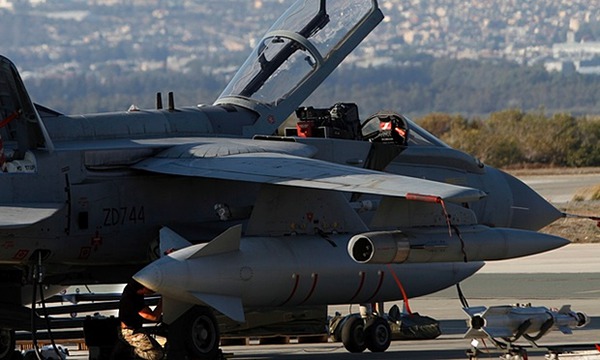
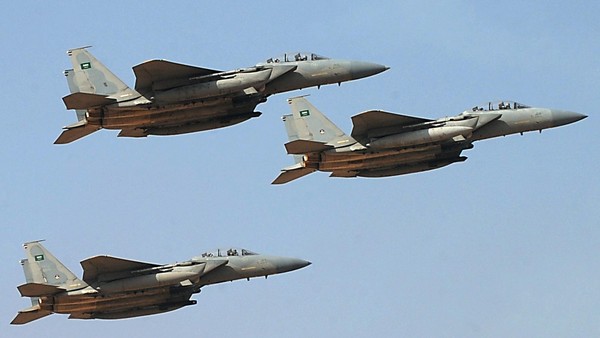
An RAF Tornado fighter jet in Cyprus

An RAF Tornado fighter jet in Cyprus

This morning the House of Commons Foreign Affairs Committee published a report recommending that the British government should not extend its airstrikes campaign against the Islamic State (ISIS) from Iraq to Syria.

The report makes little legal or military sense, but its political objection—that the government’s attempt to defeat ISIS independently of a resolution to the Syrian war is untenable—is exactly right. Unfortunately the report, while very vague, hints that a resolution involves cooperation with the Bashar al-Assad regime and Iran, which cannot work, and actually helps ISIS. Continue reading

Why The West Should Support The Saudi-Led Intervention In Yemen

By Kyle Orton (@KyleWOrton) on April 11, 2015

1

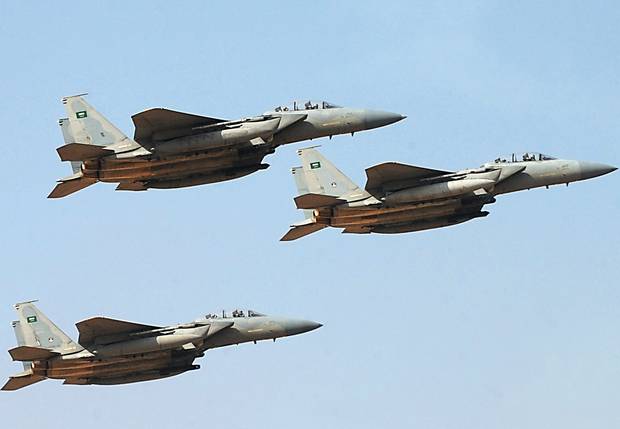
In The Independent of April 10, Daniel Wickham wrote in opposition to the campaign of airstrikes, led by Saudi Arabia, against the Iran-backed Houthi militia in Yemen, which has overthrown the government in that country and is now marching on the port city of Aden where the remnants of the fallen regime reside. Wickham notes that the Houthis have behaved abominably since they took the capital, Sanaa, including the “use of torture and extreme violence to suppress dissent,” still “two wrongs do not make a right” and the Saudi-led Operation DECISIVE STORM is “very clearly wrong.” I think this is mistaken. Continue reading

A Red Line For Iran’s Imperialism In Yemen

By Kyle Orton (@KyleWOrton) on March 27, 2015

1

Late in the day on March 25, a Saudi-led coalition intervened in Yemen with airstrikes against the Houthis.

The Iranian-backed Houthis (a.k.a. Ansar Allah) took over Yemen’s capital, Sanaa, in September, and forced the resignation of the Saudi-backed Yemeni ruler, Abed Rabbo Mansour Hadi, in January. Hadi escaped house arrested in Sanaa and retreated to Aden with the remnants of his regime. On March 21, the Houthis had called for a “general mobilisation” and by the next day had pushed south toward Aden. The Houthis said they were combatting “terrorist forces”. As in Syria, Iran’s allied forces cast a narrative where there were no Sunni moderates, nobody with whom a deal might be struck.

Hadi’s predecessor, Ali Abdullah Saleh, whose resignation was compelled in early 2012 after the “Arab Spring,” stands accused not only by Hadi but by the United States of supporting the Houthis. Continue reading

Further Evidence of Mohammed Emwazi’s Radical Ties—And CAGE’s Meltdown

By Kyle Orton (@KyleWOrton) on March 7, 2015

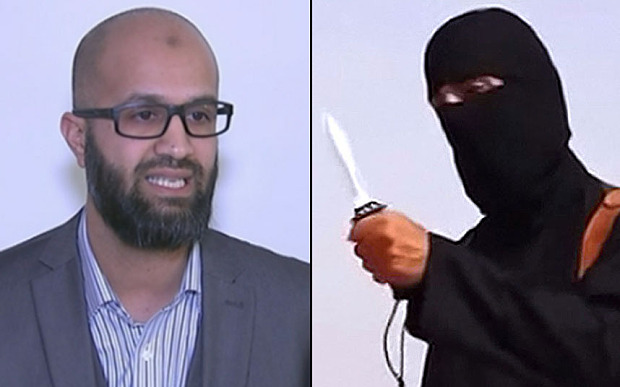
Asim Qureshi; Mohammed Emwazi (

Asim Qureshi; Mohammed Emwazi (“Jihadi John”)

Earlier this week I wrote of the unmasking of “Jihadi John,” the Islamic State’s (ISIS) video-beheader, as 26-year-old British citizen Mohammed Emwazi. I had two purposes. One was to gloat over the implosion of CAGE (formerly Cageprisoners), an Islamist terrorist-advocacy group that had gotten itself called a “human rights organisation”. And the second was to point out that the narrative peddled by CAGE and other apologists, that Emwazi had been radicalised by heavy-handed British security methods, was plainly absurd.

Emwazi had been associating with al-Qaeda agents and sympathisers and was part of a London-based network that dispatched fighters to al-Qaeda’s Somali branch al-Shabab years before he came into contact with the security services—indeed the security services had only taken an interest in Emwazi because he was already radicalised. In the last few days both of these trends have continued: CAGE’s total collapse moves closer and Emwazi’s known nefarious associations are multiplying. Continue reading

Iran and Global Terror: From Argentina to the Fertile Crescent

By Kyle Orton (@KyleWOrton) on February 27, 2015

Khobar Towers, which Iran jointly bombed with al-Qaeda

Khobar Towers, which Iran jointly bombed with al-Qaeda

Argentina’s government yesterday announced it was dissolving the Secretariat of Intelligence (S.I.), an intelligence agency tainted by the “Dirty War” regimes (1974-83), and more recent abuses as President Cristina Kirchner has taken Argentina back toward autocracy, and replacing it with a Federal agency. Just two days before, charges of corruption were levelled against Antonio Stiusso, S.I.’s director until Kirchner fired him in December. At the beginning of this month, Stiusso went missing. It now seems Stiusso has taken shelter in a neighbouring State.

These events are the latest twist in an extraordinary saga that has followed the discovery of the body of Alberto Nisman on Jan. 18 in his apartment in Buenos Aires, shot in the head in an apparent suicide. Nisman was a prosecutor investigating the July 18, 1994, bombing of the Argentine Israelite Mutual Association (AMIA) building in Argentina’s capital. All the evidence that Nisman had gathered pointed to Iran as the perpetrator. Few believe Nisman committed suicide, and—the history of Argentines being “suicided” considered—most fingers are pointing at Iran. Continue reading

The Islamic State, Libya, and Interventionism

By Kyle Orton (@KyleWOrton) on February 19, 2015

Rebels with Qaddafi's

Rebels with Qaddafi’s “golden gun”

Yesterday morning in Libya, it was announced that militias from Misrata were moving into Sirte to combat the Islamic State (I.S.). The militias preparing to fight I.S. are drawn from Libya Dawn, the Islamist coalition that ousted the internationally-recognised government in August 2014. Continue reading

Obama’s National Security Strategy

By Kyle Orton (@KyleWOrton) on February 14, 2015

1

The National Security Strategy is never a riveting read, and the NSS put out by the Obama administration on Feb. 6, only their second (the last in May 2010), was no exception. “Strategic patience” was the mantra with which this NSS was launched, to fairly wide derision as a rationalisation of the last six years of hesitancy and retrenchment. It was a criticism with some basis in fact. Continue reading

America’s Silent Partnership With Iran And The Contest For Middle Eastern Order: Part Four

By Kyle Orton (@KyleWOrton) on February 10, 2015

1

This is the fourth of a four-part series looking at the United States’ increasingly-evident de facto alliance with Iran in the region. The first part looked at the way this policy has developed since President Obama took office and how it has been applied in Iraq; the second part looked at the policy’s application in Syria; the third part looked at its application in Lebanon, Afghanistan, and Yemen; and this part is a conclusion. Continue reading

Surrendering To North Korea Over ‘The Interview’ Sets (Another) Bad Precedent

By Kyle Orton (@KyleWOrton) on December 18, 2014

1

Last night, Sony Pictures pulled its planned release of The Interview. The film, a satire starring Seth Rogen and James Franco, had been based around a plot to kill the North Korean tyrant. About a month ago, Sony was hacked, and there is every indication that the North Korean regime was behind it. Under threats of further hacks, Sony backed down, apparently prepared to liquidate a forty-million dollar investment. Continue reading

The Other Side of the “Torture” Debate

By Kyle Orton (@KyleWOrton) on December 11, 2014

As a final act while the Democrats hold their majorities in Congress, the United States Senate Select Committee on Intelligence (SSCI) released a report on December 9, the “Committee Study of the Central Intelligence Agency’s Detention and Interrogation Program”, known to the Twitterverse as the “Torture Report”. This has reignited the debate about America’s use of harsh interrogation methods, the so-called “enhanced interrogation techniques” (EITs), against al-Qaeda operatives in the shadow of the 9/11 massacre. The politics surrounding this matter—even on basic questions, such as whether discomfort works to induce cooperation in detainees—are poisonous, and the publication of this partisan Committee Study has done nothing to assist this environment. One means of trying to get at the truth is to examine a counterpoint, the 2012 book, Hard Measures: How Aggressive CIA Actions After 9/11 Saved American Lives, a memoir by Jose Rodriguez, the man who oversaw the Central Intelligence Agency’s Counterterrorism Centre from 2001 to 2004. Continue reading