Category Archives: Iraq

Russia and Iran Use Terrorism Against Western Interests

By Kyle Orton (@KyleWOrton) on 25 April 2017

The evidence is mounting that Vladimir Putin’s government supports the Taliban as a means of thwarting NATO interests in Afghanistan. Russia has long manipulated terrorists, internally and abroad, to suit its policy aims, but as Moscow solidifies its relationship with the Iranian revolution the Russian policy, particularly in Syria, has become something more like a conventional alliance—not least because those who run Tehran’s foreign policy and the clerical regime’s most powerful assets are themselves terrorists. Continue reading

Signs of Recovery for the Islamic State

By Kyle Orton (@KyleWOrton) on April 22, 2017

The operation to clear the Islamic State (IS) from its Iraqi capital, Mosul, began on 17 October and is now 188 days old. IS was announced cleared from east Mosul on 25 January, and the offensive that began on 19 February to clear the more densely-populated and difficult west Mosul has ostensibly swept IS from sixty percent of that area. Official sources claim IS now controls less than seven percent of Iraqi territory, down from forty percent in 2014. But yesterday, a car bomb struck Zuhur, the first attack of this kind in east Mosul since February, murdering at least four people. This is part of a pattern of attacks that suggests the Mosul operation itself was rushed and more importantly that IS is already recovering in liberated areas. Continue reading

Islamic State Expands its Foreign Attacks Capacity As the Caliphate Collapses

Published at The International Business Times

By Kyle Orton (@KyleWOrton) on 23 March 2017
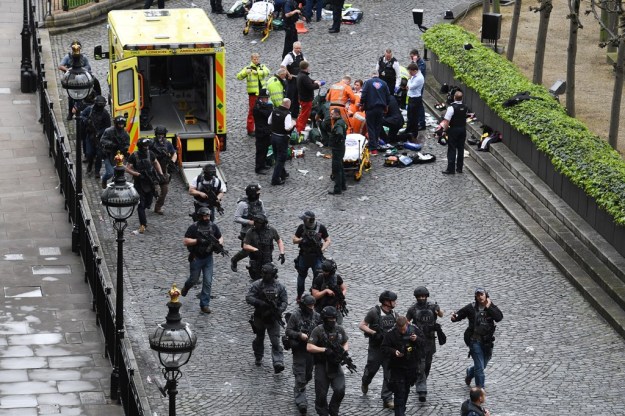
Aftermath of the Islamic State terrorist attack in Westminster, March 2017 (image source)

Just after 2:30pm yesterday afternoon, a terrorist mowed down pedestrians with a car on Westminster Bridge before jumping out near Parliament and stabbing a police officer to death. Three people were murdered, forty were injured, and the attacker was shot dead. The Islamic State (ISIS) has now claimed the attack.

The most important question is whether the terrorist had co-conspirators. Prime Minister Theresa May told Parliament this morning that it is “believed that this attacker acted alone”. It is crucial that this is not misread as saying that the attacker was a ‘lone wolf’. The arrests in Birmingham overnight suggest that this killer could have been part of a broader network, which would be consistent with the pattern of ISIS behaviour.

In a new report for the Henry Jackson Society, documents 152 foreign ISIS attacks in 34 countries since 2002, the vast majority in the past two years. In nearly three-quarters of the cases the attacks have a direct link to the organisation, and those without often have accomplices who assist in the atrocities in some way. Just 15% of the attacks have been by inspired individuals, who had no demonstrated connection to ISIS or anyone else in planning or executing their attack. Continue reading

A Turncoat Still Loved By the Islamic State: Manaf al-Rawi

By Kyle Orton (@KyleWOrton) on January 29, 2017

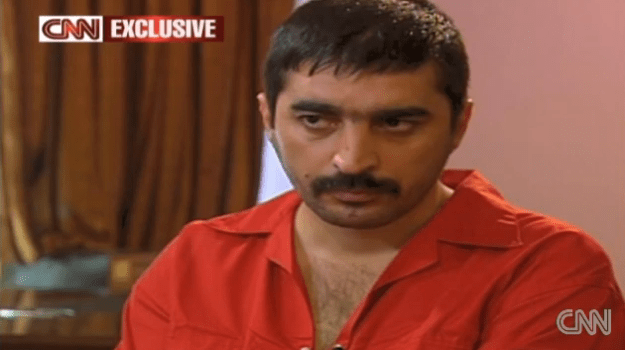
Manaf al-Rawi

Manaf al-Rawi

Manaf Abdul Rahim al-Rawi was the leader of operations in Baghdad for the Islamic State of Iraq (ISI), the predecessor to the Islamic State (IS), between 2008 and his arrest in 2010. Al-Rawi had been with IS from its earliest days and his arrest in 2004 only advanced him through the ranks as he networked in prison. Upon release and assumption of the post of wali (governor) of Baghdad, al-Rawi was responsible for some of the worst atrocities in 2009 and 2010 in that city. Al-Rawi was executed in prison in 2013. Continue reading

Abdallah Najem al-Jawari: A Key Early Leader of the Islamic State

By Kyle Orton (@KyleWOrton) on January 28, 2017

1

Abdallah Najem al-Jawari (Abu Azzam al-Iraqi) was something like the Islamic State (IS) movement’s first Finance Minister and a senior regional official, first in his native Anbar—he was from Fallujah—and later in Baghdad. Joining the group quickly after the collapse of the Saddam Husayn regime, al-Jawari was killed in 2005. Al-Jawari remains among those commemorated by IS as founders who set the stage for the current rise of “the State”.
Continue reading

The Islamic State’s Official Biography of the Caliph’s Deputy

By Kyle Orton (@KyleWOrton) on December 18, 2016

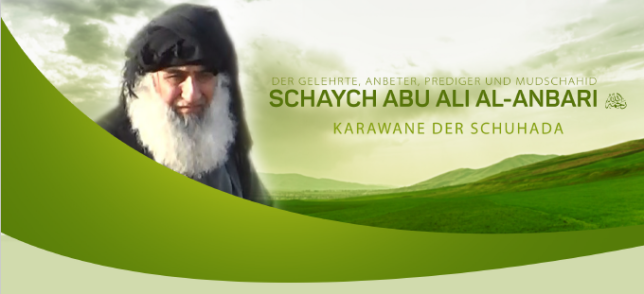
Obituary for Abdurrahman al-Qaduli in the German version of Rumiya, 11 November 2016

Obituary for Abdurrahman al-Qaduli in the German version of Rumiya, 11 November 2016

The forty-first edition of the Islamic State’s newsletter, al-Naba, released within the territory of the caliphate on 30 July 2016 and released online on 2 August, and the forty-third edition (released 13 and 16 August), contained a two-part obituary for Abd al-Rahman al-Qaduli (Abu Ali al-Anbari), the caliph’s deputy when he was killed on 24 March. The obituaries, entitled, “The Devout Scholar and Mujahid Preacher: Shaykh Abu Ali al-Anbari”,[1] make clear that al-Qaduli was one of the most consequential jihadists in the history of the Islamic State movement. Below is a translation, with some interesting and/or important sections highlighted in bold. The biography resolves some long-standing mysteries, and some of the claims are dubious in light of other evidence we have: these issues, and other points of context and explanation, are in the footnotes. The subheadings are mine, added to signpost the narrative and break it up into more manageable chunks.
Continue reading

Defeating the Islamic State for Good

Originally published at The Henry Jackson Society

By Kyle Orton (@KyleWOrton) on December 2, 2016

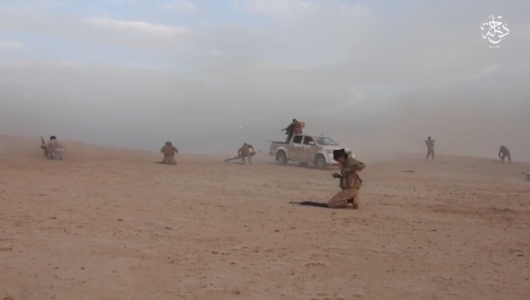
Islamic State fortifications in Deir Ezzor (from an IS video, 11 July 2016)

The Islamic State (IS) is nominally under attack now in its twin capitals, Mosul in Iraq and Raqqa in Syria. This is necessary task, of course, but, as I’ve written repeatedly over the last few months, clearing IS from its urban centres is not sufficient. IS lost its overt urban holdings once before and nonetheless rebuilt in the deserts between 2008 and 2013, rising again to seize increasingly-large tracts of territory that were eventually declared a caliphate. IS was able to do this because of the success of its long-term method of war-making, and political changes in Baghdad—toward greater sectarianism and authoritarianism—that gave it more space to manoeuvre. The flaws in the strategy and partners the U.S.-led international Coalition have chosen to eliminate IS are creating a situation in which what will be called “victory” is really the resetting of the cycle. More evidence of this has recently come to the fore. Continue reading

Abu Bakr al-Baghdadi Calls for the Islamic State to Stand Firm in Mosul

By Kyle Orton (@KyleWOrton) on November 11, 2016

1

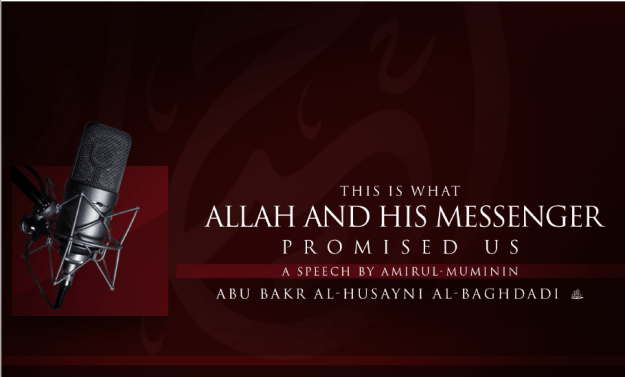
On 2 November 2016, a speech by the leader of the Islamic State, Ibrahim al-Badri (Abu Bakr al-Baghdadi), was released, entitled, “This Is What Allah and His Messenger Promised Us”. On 11 November, the third edition of IS’s English-language magazine, Rumiya, printed a transcript of the speech, which is reproduced below with some editions in transliteration, explanations added in square brackets, and notable or important sections shown in bold. Continue reading

The Coalition’s Flawed Endgame Strategy for the Islamic State

By Kyle Orton (@KyleWOrton) on November 6, 2016

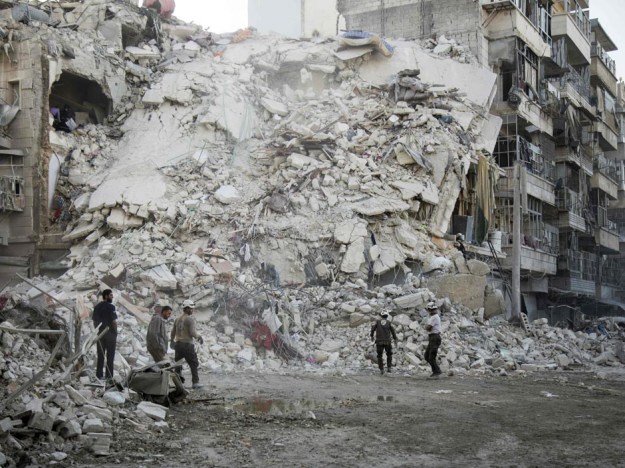
After some (perhaps wilful) confusion over the timing, the operation to expel the Islamic State (IS) from Raqqa City, its Syrian capital, got underway this morning, running concurrent with the effort to evict IS from its Iraqi capital, Mosul. There are deep concerns about the methods adopted in both cases. The ground forces the U.S.-led Coalition has chosen to support in Raqqa cannot lead to sustainable stability in Syria, something that is essential to defeat IS. While the Mosul operation has proceeded generally to plan, there are increasing signs of trouble within the operation itself and the most troubling aspect—the aftermath—still appears to be unplanned. Beyond this is the continued assault on Aleppo City by Bashar al-Assad’s regime and its Russian and Iranian patrons that is systematically destroying the forces needed if there is to be any settlement to Syria’s war that ends the space given to international terrorists. Continue reading

The Mosul Operation and Saddam’s Long Shadow

Originally published at The Henry Jackson Society

By Kyle Orton (@KyleWOrton) on October 28, 2016

Islamic State parade with captured equipment in Mosul, 23 June 2014 . (AP Photo, File)

The offensive to wrest the Iraqi capital of the Islamic State’s (IS) caliphate, Mosul, from the terror organization began on 17 October, led on the ground by Iraqi and Kurdish forces and supported from the air by the U.S.-led Coalition. While progress has been generally steady, IS has been able to mount a series of diversionary attacks, the most significant in Kirkuk City. Among those subsequently arrested for a role in planning the terrorism in Kirkuk is a cousin of Saddam Husayn, a micro-example of the influence of the fallen regime on the current situation in Iraq. Continue reading