Category Archives: Islamic Militancy

To Defeat The Islamic State, Get Rid Of Assad First

By Kyle Orton (@KyleWOrton) on July 3, 2015

1

The British government is considering beginning airstrikes into Syria against the Islamic State (ISIS). London is currently engaged in airstrikes against ISIS in Iraq and has troops in the Kurdish areas of northern Iraq training and advising the Peshmerga.

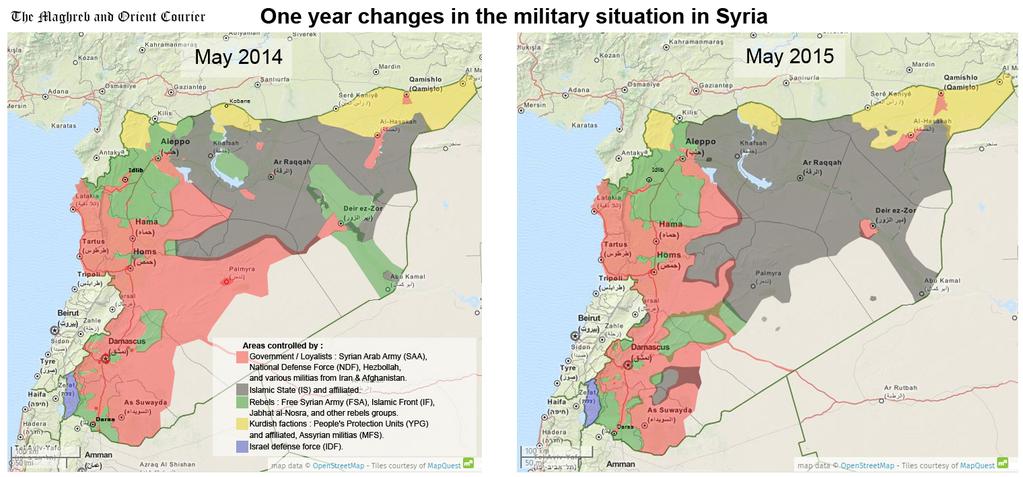
Since ISIS’ territory in Syria is its “most valuable and sustainable,” the case for ignoring a border that ISIS has erased would seem to be a good one.

But no less a figure than the Conservative chair of the defence select committee, Julian Lewis, thinks otherwise:

In 2010 the government wanted to remove Assad without helping al-Qaeda or similar groups that subsequently became Daesh. Now we apparently want to remove Daesh but without helping Assad. These two things are incompatible. It is a choice of evils.

The view that Syria is divided between the Assad dictatorship and ISIS has become commonplace. It is mistaken. Continue reading

A Postscript on the Relationship Between Saddam Hussein and Al-Qaeda

By Kyle Orton (@KyleWOrton) on June 26, 2015

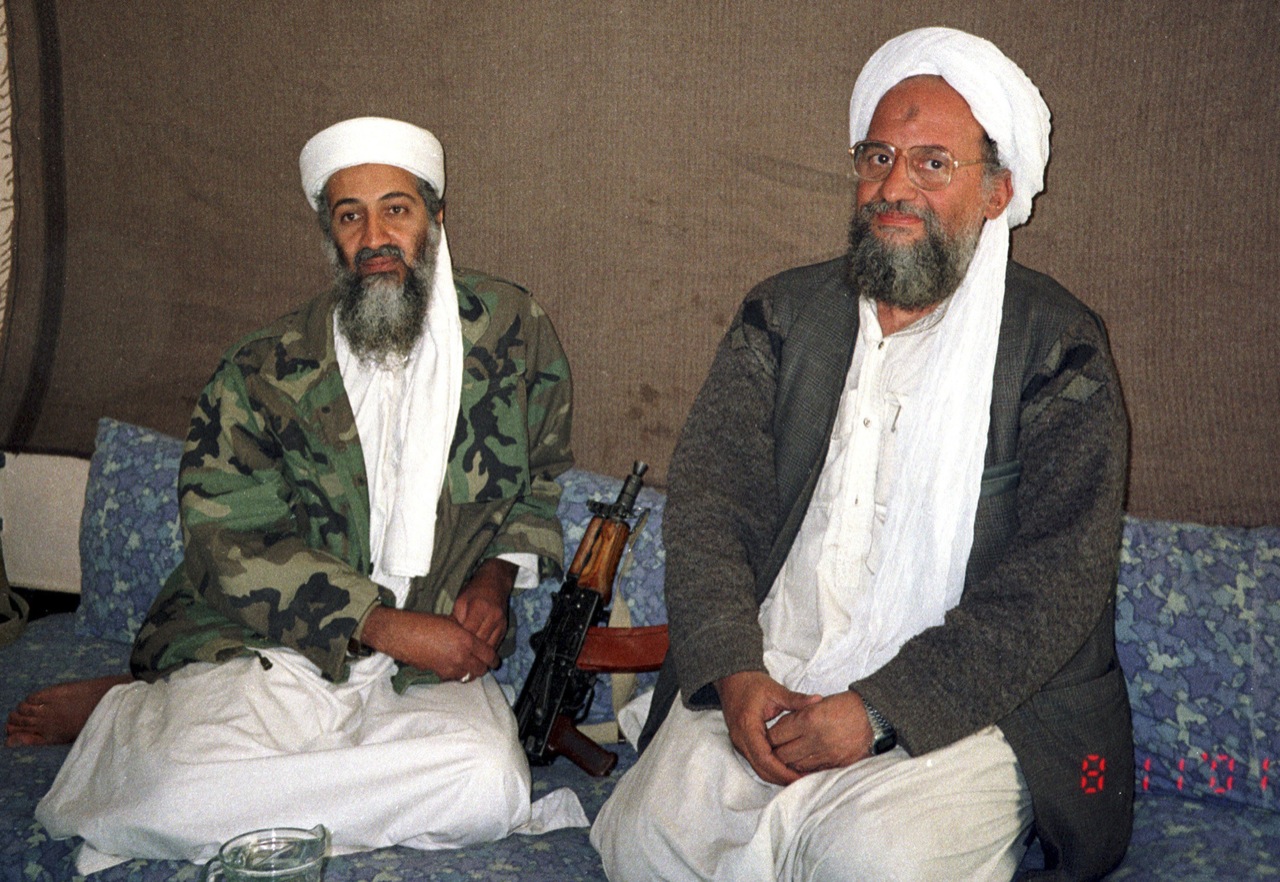
Osama bin Laden (L) and Ayman az-Zawahiri (R)

Osama bin Laden (L) and Ayman az-Zawahiri (R)

The myth that Saddam Hussein’s regime had nothing to do with al-Qaeda is persistent. Stephen Hayes’ book, The Connection, ably debunks this notion. There are some additional details that one can add to this. Continue reading

Does Iran Support The Islamic State?

By Kyle Orton (@KyleWOrton) on May 26, 2015

Qassem Suleimani, Iran's spymaster, believed in some MidEast conspiracy theories to control ISIS

Qassem Suleimani, Iran’s spymaster, believed in some Mid-East conspiracy theories to control ISIS

In 2010, Farzad Farhangian, an Iranian diplomat based in Belgium, defected to Norway. Farhangian has now emerged with the extraordinary accusation that the Islamic Republic of Iran is controlling the Islamic State (ISIS) and using it as part of Tehran’s war against the Gulf States, especially Saudi Arabia. Farhangian’s accusations are lurid and (literally) incredible, but the question of Iran’s role in ISIS’ creation and growth, and Iran’s manipulation of ISIS to further its own ends, is one well worth asking. Continue reading

The Islamic State’s Strategy Is Working, Its Enemies Are Failing

By Kyle Orton (@KyleWOrton) on May 23, 2015

1

To hear President Obama tell it, his announced program to defeat the Islamic State (ISIS), which began with airstrikes into Iraq last August that were extended into Syria in September, is working, albeit with some tactical setbacks. The implication is that the setbacks of the U.S.-led anti-ISIS campaign are not strategic.

As J.M. Berger phrased it:

In the Washington vernacular, the act of Being Strategic implies a near mystical quality of superior thinking possessed by some, and clearly lacking amongst the vulgarians of the world—heedless brutes such as ISIL. Tactics are short-term ploys, easy to dismiss. Strategy is for winners.

Unfortunately, this soothing view is almost exactly wrong: it is the United States that is relying on various short-term methods—commando raids into the Syrian desert, for example—while ISIS has a long-term goal fixed in mind and is working assiduously to achieve it. The U.S.-led Coalition is losing, in short, and ISIS is winning. Continue reading

Raids in Syria Can’t Defeat the Islamic State If Obama Continues Alignment with Iran

By Kyle Orton (@KyleWOrton) on May 16, 2015

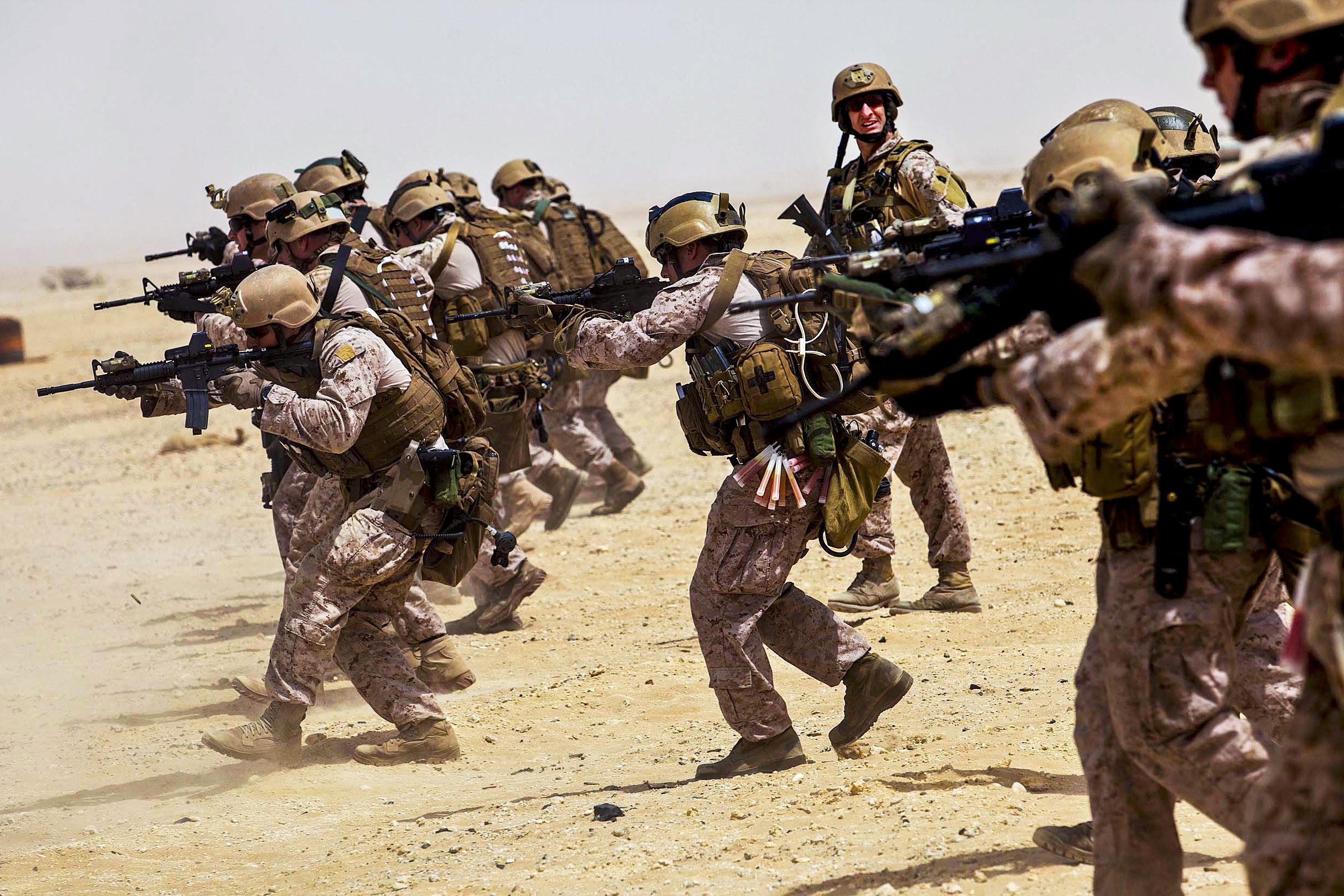
26th Marine Expeditionary Unit (MEU) Maritime Raid Force Marines fire M4 Carbines while conducting a marksmanship training exercise at a range in Qatar, April 22, 2013. Eagle Resolve is an annual multilateral exercise designed to enhance regional cooperative defense efforts of the Gulf Cooperation Council nations and U.S. Central Command. The 26th MEU is deployed to the 5th Fleet area of operations aboard the Kearsarge Amphibious Ready Group. The 26th MEU operates continuously across the globe, providing the president and unified combatant commanders with a forward-deployed, sea-based quick reaction force. The MEU is a Marine Air-Ground Task Force capable of conducting amphibious operations, crisis response and limited contingency operations. (U.S. Marine Corps photo by Cpl. Christopher Q. Stone, 26th MEU Combat Camera/Released)

Last night the United States launched a commando raid into al-Amr in Deir Ezzor in eastern Syria. According to the White House statement, Abu Sayyaf (real name: Fathi ben Awn ben Jildi Murad al-Tunisi), a senior Islamic State (ISIS) commander “overseeing … illicit oil and gas operations,” was killed, and his wife, Umm Sayyaf, was taken into American custody and is being held in Iraq. The Sayyaf couple had been holding a young Yazidi woman as a slave and she has now been freed.

Unfortunately, this American raid is a tactical success amid a strategic failure—and a tactical success likely to be used to obscure the strategic failure of the U.S. anti-ISIS campaign. Even in the narrowest humanitarian terms: if the freedom of this one Yazidi girl is used to perpetuate a policy that leaves many more Yazidi girls in bondage then it is a failure. Continue reading

Book Review: The Muslim Discovery of Europe (1982) by Bernard Lewis

By Kyle Orton (@KyleWOrton) on May 7, 2015

1

With the triumph of relativism and the current economic woes of the West, the sense that Western civilization is unique and in some respects—to use an old-fashioned word—better than the alternatives, and worth defending and exporting, is waning. But Bernard Lewis’ The Muslim Discovery of Europe suggests a longer view in which Europe, while containing all the faults of previous civilizations, has been one of the few to begin the process of correcting those faults, and has corrected many more than any other civilization.

One feature of European civilization that stands out as unique is curiosity. Continue reading

Obama’s Iran Deal Increases Nukes, Terrorism, and Instability

By Kyle Orton (@KyleWOrton) on April 28, 2015

1

The key thing to understand about the Joint Comprehensive Plan of Action (JCPOA), the nuclear accord announced on April 2 between the P5+1 and Iran, is that it does not exist. The British Foreign Secretary Philip Hammond said at one point, “We envisage being able to deliver a narrative,” adding that this might not be written and—these being forgiving times—Iran’s narrative need not match the West’s. In other words, nothing was signed or agreed to. This is the reason for the wild discrepancies between the American and Iranian JCPOA “factsheets”: both are drawing from a rolling text that is ostensibly to lead to a “final” or “comprehensive” deal and spinning it to their own respective advantage. The administration has as much as said so with its mantra that “nothing is agreed until everything is agreed”.

The purpose of the announcement of the JCPOA therefore was, charitably, to “build political momentum toward a final agreement“. Less charitably it was intended to “demonstrate progress in order to fend off congressional action,” as Obama’s former nuclear adviser Gary Samore put it. In that at least it was successful. Continue reading

How Saddam Hussein Islamized Iraq

By Kyle Orton (@KyleWOrton) on April 20, 2015
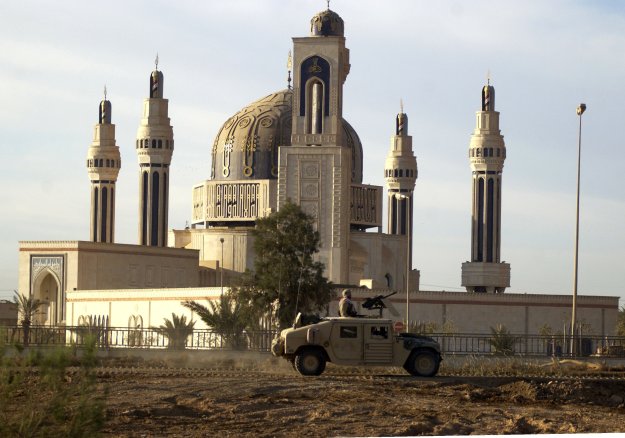
Umm al-Qura (Mother of All Cities) Mosque, built by Saddam to commemorate his

Umm al-Qura (Mother of All Cities) Mosque, built by Saddam to commemorate his “victory” in the 1991 Gulf War

In December, I wrote a post, “Iraq Is Still Suffering The Effects Of Saddam Hussein’s Islamist Regime,” which was a review/analysis of an academic paper by Samuel Helfont that pointed out that the Saddam Hussein regime had, since the 1980s, used Islamists, including al-Qaeda, as part of its foreign policy. I critiqued the paper a little for having said it would not comment on Saddam’s internal policy with the Islamists, while in fact the paper hinted that Saddam remained hostile to mixing religion and politics. I noted that the evidence does not support this: Saddam’s regime adopted overt theocratic trappings before the end.

There were two kinds of pushback to the idea that Saddam’s regime was Islamist. Predictably, one critique was related to the controversy over the way the Gulf War that Saddam started in 1990 was ended; opponents of the 2003 invasion of Iraq are heavily invested in the Saddam-as-secularist narrative, often coupled with the “Bush lied” hysteria—in this case about a connection between the Saddam regime and al-Qaeda—to say that the invasion empowered a previously, officially-repressed Islamism in Iraq. This simply is not borne out by the evidence. There was also pushback from some Iraqis. But this too was predictable: as I outlined in that post, drawing on Ali Allawi’s book on post-Saddam Iraq, one of the reasons so many people with no agenda get the Islamist aspect of the Saddam regime wrong is that when they turn to what they believe is the best primary source—namely the Iraqis in the West—they encounter a source that for various reasons is actually several decades out-of-date.

Buttressing my initial argument is a 2011 paper, “From Militant Secularism to Islamism: The Iraqi Ba’th Regime 1968-2003,” in which Amatzia Baram provides evidence from Iraqi internal documents and tapes of Cabinet meetings captured after the fall of Baghdad to show that Saddam’s regime had formed an alliance with Islamists in the mid-1980s for use in its foreign policy, and from a bit later in the 1980s had begun steps toward Islamizing Iraq internally. Continue reading

An Update On The Anti-Assad Imam Killed In London

By Kyle Orton (@KyleWOrton) on April 13, 2015

Abdul Hadi Arwani

Abdul Hadi Arwani

In Brent, northwest London, in the evening of April 12, a 46-year-old man was arrested as part of the ongoing investigation into the April 7 murder of the Syrian-born imam, Abdul Hadi Arwani, a long-time opponent of the Syrian regime of Bashar al-Assad.

Writing about the murder of Arwani last week, I noted that the available evidence suggested the motivations of the murderer(s) could be:

  • Financial: related to Arwani’s business dealings as the owner of his construction company
  • Other local or personal
  • Far-Right anti-Muslim
  • Intra-Islamist: Arwani had been the director at the Salafist An-Noor Mosque and was himself clearly an Islamist, but Arwani was against the Islamic State (ISIS), for example, which might have made him enemies among some congregants
  • Agents of the Assad regime, conceivably with the complicity of Iran and Russia

Those options still stand, but some important updates over the weekend have helped alter the relative likelihood of each. Continue reading

Who Killed The Anti-Assad Imam In London?

By Kyle Orton (@KyleWOrton) on April 9, 2015

Abdul Hadi Arwani

Abdul Hadi Arwani

Abdul Hadi Arwani, a Syrian-born imam, was found shot dead in his car on Tuesday in Wembley, northwest London. The British police are still refusing to officially name Arwani, but his friends and supporters have done so. Arwani leaves behind six children.

There are many possibilities for who killed Arwani. As the manager of a construction firm, it could be a deal gone wrong. The involvement of anti-terrorism police in the investigation into Arwani’s murder could indicate a far-Right anti-Muslim assailant. However, a source close to the investigation said that Arwani was struck down in an operation that had all the hallmarks of a “State-sponsored assassination“. To find that the long arm of Bashar al-Assad’s mukhabarat had caught up with Arwani would hardly be a surprise. Continue reading