By Kyle Orton (@KyleWOrton) on 13 June 2020

Ghanima (war spoils) captured by Islamic State in Sabha, Libya [Al-Naba 181, 9 May 2019]
By Kyle Orton (@KyleWOrton) on 13 June 2020
Ghanima (war spoils) captured by Islamic State in Sabha, Libya [Al-Naba 181, 9 May 2019]
By Kyle Orton (@KyleWOrton) on 12 June 2020

Ismail Nazlikul (Kasim Engin) [image source]
By Kyle Orton (@KyleWOrton) on 11 June 2020
France announced last Friday that its forces in Mali had killed Abd al-Malek Drukdel (Abu Musab Abd al-Wadud), the emir of Al-Qaeda in the Islamic Maghreb (AQIM), which covers the North Africa and Sahel areas. Paris has sometimes been unreliable on these matters, but the United States independently confirmed Drukdel was gone, as have sources within AQIM. The French also announced that on 19 May they had arrested Mohamed Mrabat, a veteran jihadist and member of the Islamic State in the Greater Sahara (ISGS). Continue readingBy Kyle Orton (@KyleWOrton) on 29 May 2020

Last night the State Department’s Rewards for Justice Program announced that it would pay $3 million for information leading to the capture or killing of Muhammad Khadr Musa Ramadan, described as “a senior leader of and key propagandist for the Islamic State”. Continue reading
By Kyle Orton (@KyleWOrton) on 28 May 2020
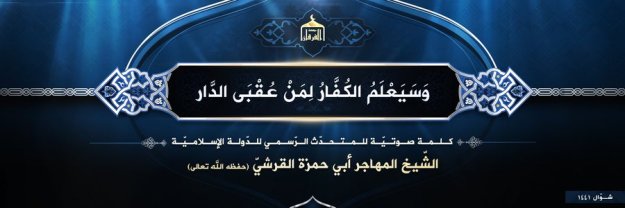
After trailing the release yesterday, an audio statement from the Islamic State (IS) spokesman, Abu Hamza al-Qurayshi, was published by Al-Furqan Foundation today. It is entitled, “And the Disbelievers Will Know Who Gets the Good End”, i.e. heaven. The title is taken from a sura of the Qur’an [Ra’d (13):42]. The speech gloated about the damage the coronavirus has done to the West, presenting it as God’s revenge for the Coalition dislodging IS from the cities it had occupied in Iraq, Syria, Libya, and elsewhere. There is the usual focus on anti-IS Sunnis in Iraq and Syria, who are warned that the U.S. is pulling back, thus those who bet on the U.S. for protection need to reassess or they will be killed. The two most significant parts of the speech are: (1) its focus on IS’s expansion in Africa, a visible fact for some time now, and the competition with Al-Qaeda in that area; and (2) the closing few minutes where Abu Hamza agitates against Qatar, a state that IS has never bothered with before in its messaging.
Continue reading
By Kyle Orton (@KyleWOrton) on 26 May 2020

Islamic State Wilayat al-Anbar, October 2017
This morning, the Iraqi government announced that Moataz Numan al-Jaburi (Haji Tayseer), a senior member of the Islamic State (IS), had been killed in Deir Ezzor in eastern Syria by an airstrike from the U.S.-led Coalition, utilising intelligence supplied by Iraq’s Counter-Terrorism Service (CTS, Jihaz Mukafahat al-Irhab). Continue reading
By Kyle Orton (@KyleWOrton) on 26 May 2020

Early in his new book, Your Sons Are At Your Service: Tunisia’s Missionaries of Jihad, The Washington Institute’s Aaron Zelin quotes a pair of sociologists who note that ‘where theories are plentiful … ideas are vacuous’. The book is in many ways the antithesis of this approach. It is not without theoretical content; where social movement theory arises as a means of understanding jihadism, say, the author gives an overview of the literature to contextualise it for the reader. But the general approach is historical, empirical, and detail-rich, so that by the time Zelin summarises his findings in the various sections there can be no doubt about the evidentiary basis. Continue reading
By Kyle Orton (@KyleWOrton) on 23 May 2020
There is now, with various caveats, a general agreement that the Islamic State (IS) is on the upswing—in Iraq, particularly, but also in the Badiya, the desert regions of eastern Syria, and more recently in the south of Syria around Deraa. Still, there have been some recent notable gains against the terrorist group. Continue reading
By Kyle Orton (@KyleWOrton) on 6 April 2020
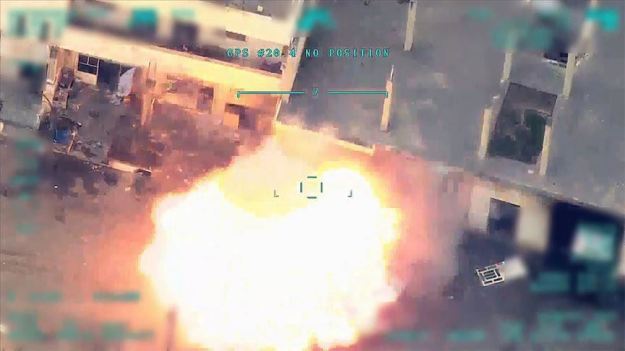
The first quarter of 2020 saw a serious escalation of combat in Syria, albeit without much alteration in the political trends, and the arrival of the novel coronavirus (COVID-19) has exacerbated a fraught situation. Continue reading
By Kyle Orton (@KyleWOrton) on 22 February 2020
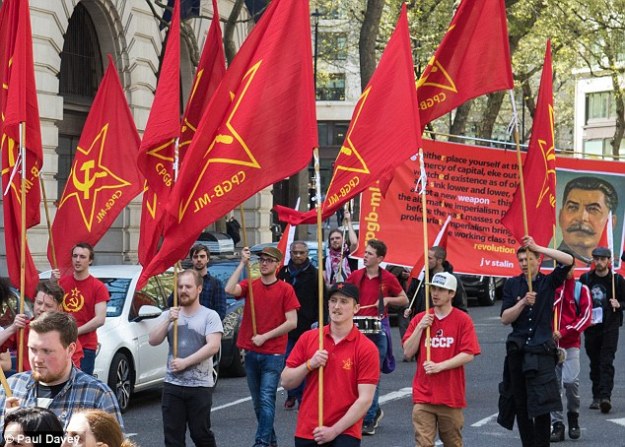
Communist Party of Great Britain (Marxist–Leninist) (CPGB-ML) carrying banners and Stalin postsers at a May Day parade // May 2016
Jeremy Corbyn has been dogged throughout his time as leader of the British Labour Party by his associates. Having Seumas Milne, a believing Stalinist and general conspiracy theorist, as his spin-doctor and primary strategist is actually among the least disgraceful things about Corbyn. Corbyn was, despite later attempts at obfuscation, a vocal supporter of the Provisional Irish Republican Army (PIRA). Corbyn was paid £20,000 for pro-Iranian propaganda by the clerical regime. He laid a wreath honouring Black September, the deniable unit of the Palestine Liberation Organisation (PLO) responsible inter alia for the mutilation and murder of Israeli athletes at Munich in 1972. Then there was Fidel Castro, HAMAS, Hizballah, and on and on.
Thus, when it was revealed, two years ago this month, that Corbyn supplied political and other intelligence to the secret police of Communist Czechoslovakia, it was unsurprising. Corbyn was known to have supported the Soviet side in the Cold War, from Castro’s Cuba to the Sandinistas in Nicaragua; had he known of Soviet support to PIRA, it would not have turned him against them. So, it was all taken very much in stride. Putting aside the lament that it should have been a bigger scandal that the Leader of the Opposition was once an “operational contact” for the Soviet Bloc, it was an interesting look at how the Soviet Union, through its satellite states, sought to cultivate sympathisers and exert influence in Britain—and how little is known, even now, about the scale and success of such things.
Somebody who could have shed more light on this was Reuben Falber, a senior official of the Communist Party of Great Britain (CPGB) and its key liaison with the KGB. When he died on 29 April 2006, he took most of his secrets with him. Still, what is known of Falber’s career gives some insight and such insights are by no means all retrospective. Continue reading


 Kyle Orton's Blog