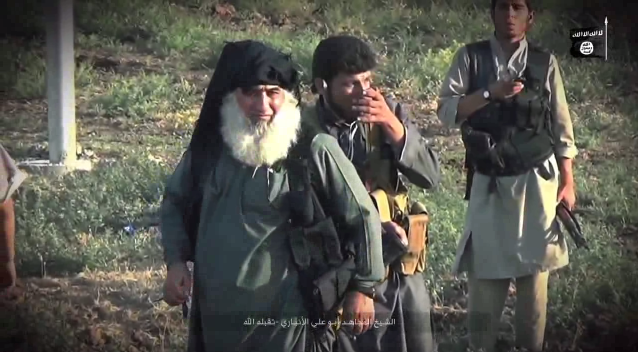
Tag Archives: Abd al-Rahman al-Qaduli

Looking At the Islamic State’s Past, Seeing its Future

By Kyle Orton (@KyleWOrton) on August 27, 2016
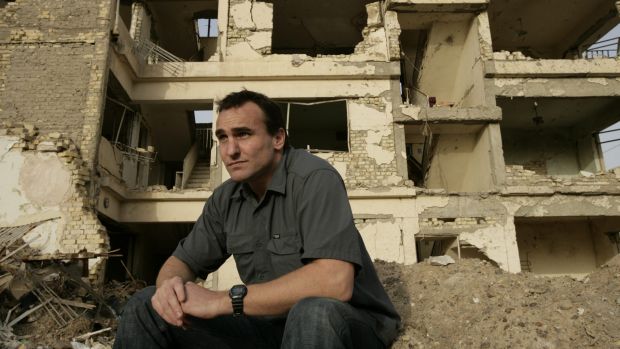
Michael Ware

Michael Ware

Only the Dead documents the experience of Michael Ware, an Australian journalist who arrived in Iraq in early 2003 and spent eleven months-per-year there for seven years. Ware made contact soon after the fall of Saddam Hussein with those resisting the new order, at a time when the Americans were struggling to map such forces.

Ware established communication with the more nationalist-Islamist forces. Once in that milieu, the globalist jihadists, who were working in the shadows, a small, foreign-dominated force towards which even many insurgents were guarded, found him. The leader of the jihadists, Ahmad al-Khalayleh, became something of an obsession for Ware as he stepped onto the world stage with his gruesome tactics as Abu Musab al-Zarqawi. Zarqawi, the “Shaykh of the Slaughters,” would found an organization that became a movement and then burst Iraq’s frontiers, known to us now as the Islamic State (IS).

In tracking Zarqawi and his men, Ware presents some incredible footage and gives some snapshots from the fascinating days, whose effects we are all still feeling, when the Iraqi insurgency was taking root. Continue reading
The Intellectual Roots of the Islamic State

By Kyle Orton (@KyleWOrton) on August 15, 2016

Published at The Wall Street Journal

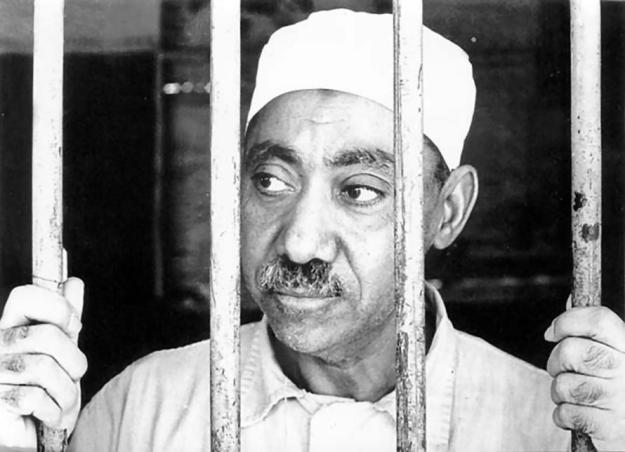
Sayyid Qutb

Sayyid Qutb

Why did Prohibition in America fail? The Pakistani Islamic scholar Abul Ala Mawdudi argued that it was because the law “required people to accept human rather divine reasoning.” What was needed was a harsh and absolute divine mandate to root out evils like alcohol. As the Ottoman empire was being swept away and national-independence movements were about to overrun the Muslim world, men like Mawdudi began articulating a new ideology that would meld medieval and modern concepts. That ideology, Salafi-jihadism, now represents one of the West’s greatest security challenges. Continue reading

Governing the Caliphate: Profiles of Islamic State Leaders

By Kyle Orton (@KyleWOrton) on July 29, 2016

A new report by me for the Henry Jackson Society (accessible here) is out today. It looks at those governing the statelet held by the Islamic State in parts of Syria and Iraq, and those who are orchestrating IS’s foreign terrorist attacks, including in Europe. The wave of attacks over Ramadan has been described as a “lone wolf” epidemic by many, but IS is coordinating this mayhem through its Amn al-Kharji, foreign intelligence service, and the report looks at who staffs this institution and the dangers of writing-off these attacks as the work of lone radicals with no connection to each other or IS.  Continue reading

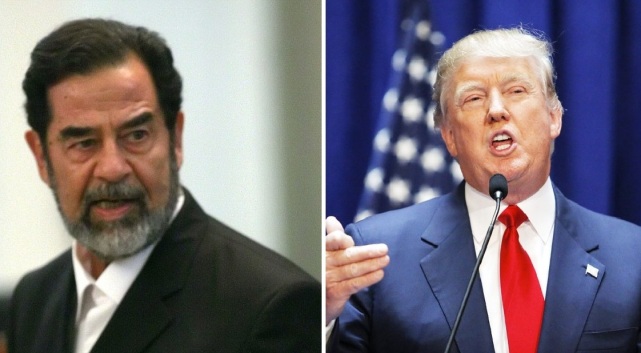
Donald Trump is Wrong (Again): Saddam Hussein Supported Terrorism

By Kyle Orton (@KyleWOrton) on July 6, 2016

Last night Donald Trump unburdened himself of the view that Saddam Hussein was an efficient anti-terrorist operator. It is a statement Trump has made before, and it is one of such staggering ignorance—yet one which has such wide sympathy—that it seemed worth examining the multiple ways in which it was wrong. Continue reading

Sectarian Provocations in Fallujah Undermine the Offensive Against the Islamic State

By Kyle Orton (@KyleWOrton) on June 13, 2016

Published at The New Arab.

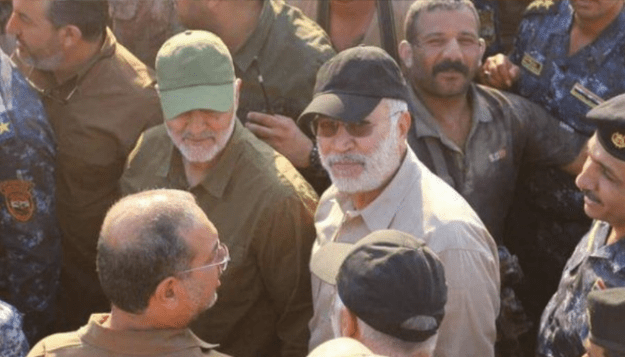
Qassem Suleimani and Jamal Ebrahimi (Abu Mahdi al-Muhandis) touring a battlefront in Fallujah

Qassem Suleimani and Jamal Ebrahimi (Abu Mahdi al-Muhandis) touring a battlefront in Fallujah

The Iraqi government announced an operation to clear the Islamic State (IS) out of Fallujah on the evening of 22 May. In the intervening three weeks, IS have lost numerous villages and towns around Fallujah and Iraqi counterterrorism forces are said to have entered Fallujah proper in the south.

As the first major city IS took on its way to proclaiming a caliphate in June 2014, the pace of the operation is not the most troubling element. What is disturbing—and what may ultimately undo any military success against IS—is the overtly sectarian nature of the offensive, led not by professional troops loyal to Baghdad, but by militias loyal to Iran and the extremist ideology of Tehran’s clerical regime. Continue reading

Is the Islamic State About to Kill Itself?

By Kyle Orton (@KyleWOrton) on June 7, 2016

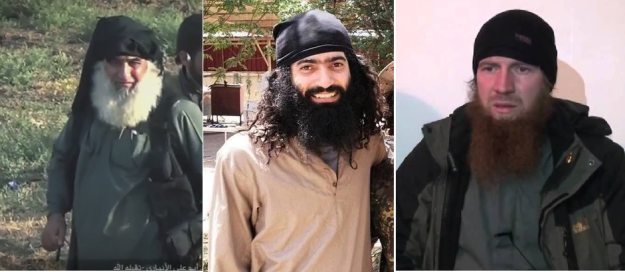
Abd al-Rahman al-Qaduli, Amr al-Absi, Tarkhan Batirashvili

Abd al-Rahman al-Qaduli, Amr al-Absi, Tarkhan Batirashvili

The Associated Press reported on Sunday that after a senior Islamic State (IS) commander was struck down by the international coalition in March it set off a witch-hunt inside the organization that led to the killing of thirty-eight IS jihadists at the hands of their own leaders. By AP’s account, IS is now consumed with internal suspicion. The story has some problems, however. Continue reading

Saddam Hussein Prepared the Ground for the Islamic State

By Kyle Orton (@KyleWOrton) on April 26, 2016

This essay, written to tie together my work on the relationship between the Saddam Hussein regime and the Islamic State, was completed last summer and submitted to an outlet, where it entered a form of development hell. After giving up on that option late last year, the opportunity arose to get a shorter version published in The New York Times in December. But I procrastinated too long over what to do with the full essay and a recent change in my work situation means I no longer have the bandwidth to go through the process of finding it a new home, so here it is.

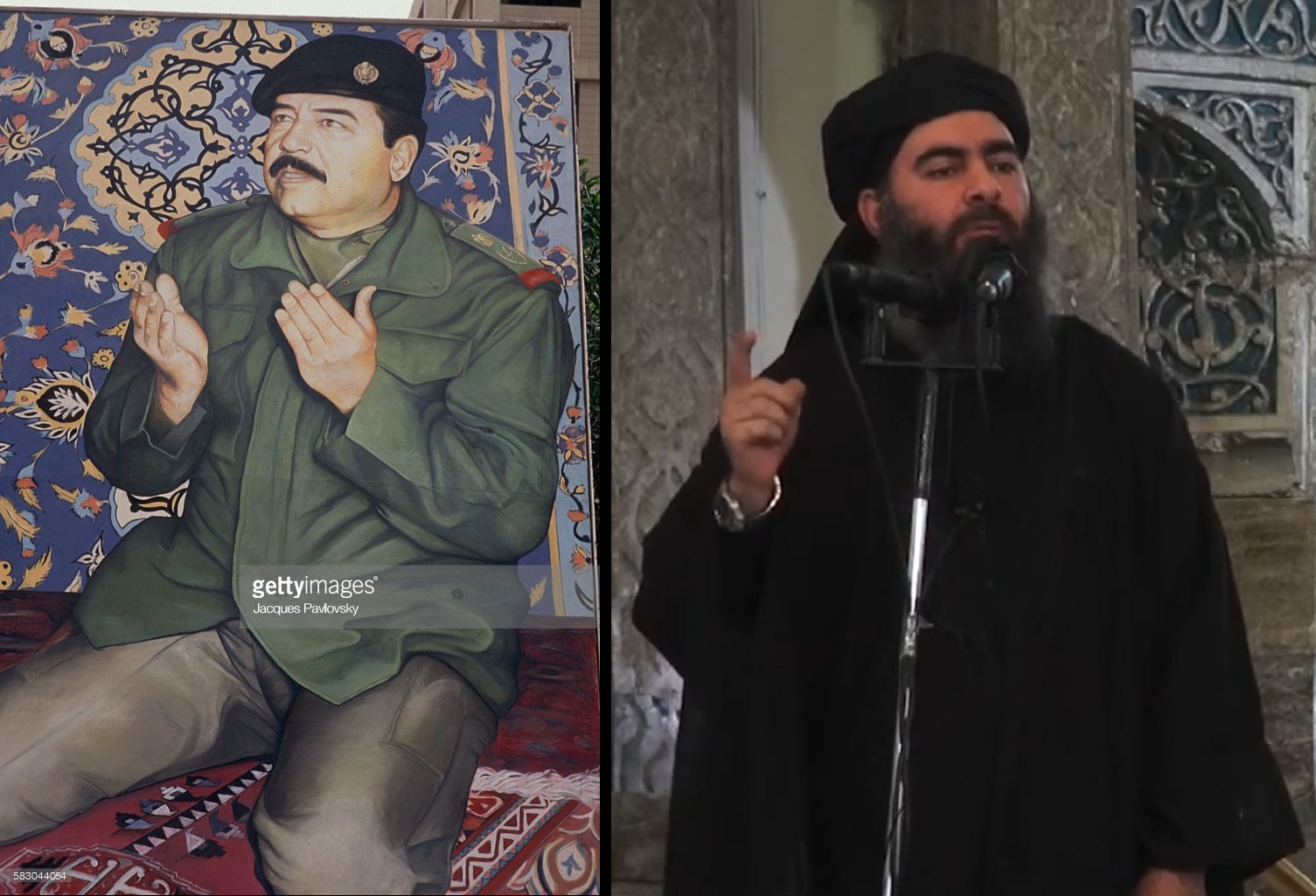
“Abu-Bakr al Baghdadi is a product of the last decade of Saddam’s reign,” argues Amatzia Baram, a scholar of Iraq. He is correct in at least three ways. First, in its last decade in power, the Iraqi Ba’ath regime transformed into an Islamist government, cultivating a more religious, sectarian population on which the Islamic State (ISIS) could draw. Part of Saddam Hussein’s “Faith Campaign” also involved outreach to Islamist terrorists, including al-Qaeda, which meant that the synthesis of Ba’athism and Salafism that fused into the Iraqi insurgency after the fall of Saddam was already well advanced by the time the Anglo-American forces arrived in Baghdad in 2003. Second, the ISIS leadership and military planning and logistics is substantially reliant on the intellectual capital grown in the military and intelligence services of the Saddam regime. And finally, the smuggling networks on which ISIS relies, among the tribes and across the borders of Iraq’s neighbours, for the movement of men and materiel, are directly inherited from the networks erected by the Saddam regime in its closing decade to evade the sanctions. The advantages of being the successor to the Saddam regime make ISIS a more formidable challenge than previous Salafi-jihadist groups, and one that is likely to be with us for some time.

Continue reading

Obituary: Abd al-Rahman Mustafa al-Qaduli (Abu Ali al-Anbari)

By Kyle Orton (@KyleWOrton) on March 25, 2016

1

Abd al-Rahman al-Qaduli (Abu Ali al-Anbari) in an Islamic State video in May 2016

United States Secretary of Defense Ashton Carter announced this morning that he believed Abd al-Rahman Mustafa al-Qaduli, a senior leader of the Islamic State (IS), had been killed in a U.S. raid into Syria earlier this week. Al-Qaduli was “serving as a finance minister” and had been “responsible for some external affairs and plots,” said Carter. America is “systematically eliminating ISIL’s cabinet,” Carter went on, noting the alleged killing of Tarkhan Batirashvili (Abu Umar al-Shishani) two weeks ago, adding that al-Qaduli’s removal will “hamper” IS in conducting operations inside and outside its caliphate. Continue reading

The Islamic State: Between Al-Qaeda and Saddam Hussein

By Kyle Orton (@KyleWOrton) on September 22, 2015

Abu Musab az-Zarqawi

Abu Musab al-Zarqawi

In August 2015’s Perspectives on Terrorism, Truls Tønnessen writes about the evolution of the leadership of what is now the Islamic State (I.S.) from its origins in al-Qaeda in Iraq (AQI) under the heading, “Heirs of Zarqawi or Saddam?” Tonnessen makes the obvious point that AQI’s leadership was largely comprised of foreign Salafi-jihadists with al-Qaeda histories, while I.S. is led by Iraqis, most of them former (Saddam) regime elements (FREs). But Tonnessen’s argument that I.S.’s leaders had not been AQI members is mistaken (they had), which erodes his arguments that AQI’s influence diminished over time as I.S. formed from various mergers, and that this diminution of influence came about because I.S.’s post-2010 leadership purged the veteran AQI elements within I.S. (I.S.’s leaders are veteran AQI elements.) The main difference between AQI’s leaders and I.S.’s is that AQI’s leaders had background connections to al-Qaeda Central (AQC) networks, and I.S.’s largely do not. While Tonnessen sees Jabhat al-Nusra as linked to these shifting dynamics, this argument does not stack up. Ultimately, Tonnessen’s contention that I.S.’s leaders are more heirs of Saddam than Zarqawi fails in the terms Tonnessen presents it. Continue reading