Tag Archives: Abdurrahman al-Qaduli

A Turncoat Still Loved By the Islamic State: Manaf al-Rawi

By Kyle Orton (@KyleWOrton) on January 29, 2017
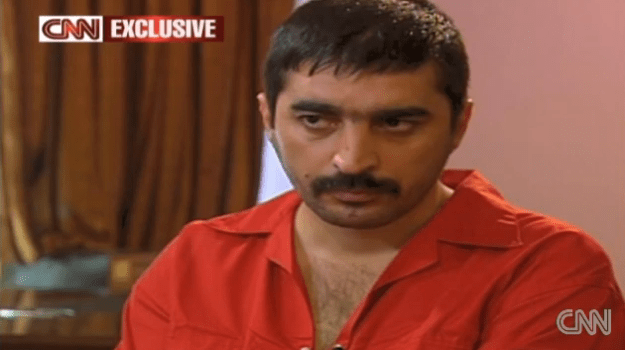
Manaf al-Rawi

Manaf al-Rawi

Manaf Abdul Rahim al-Rawi was the leader of operations in Baghdad for the Islamic State of Iraq (ISI), the predecessor to the Islamic State (IS), between 2008 and his arrest in 2010. Al-Rawi had been with IS from its earliest days and his arrest in 2004 only advanced him through the ranks as he networked in prison. Upon release and assumption of the post of wali (governor) of Baghdad, al-Rawi was responsible for some of the worst atrocities in 2009 and 2010 in that city. Al-Rawi was executed in prison in 2013. Continue reading
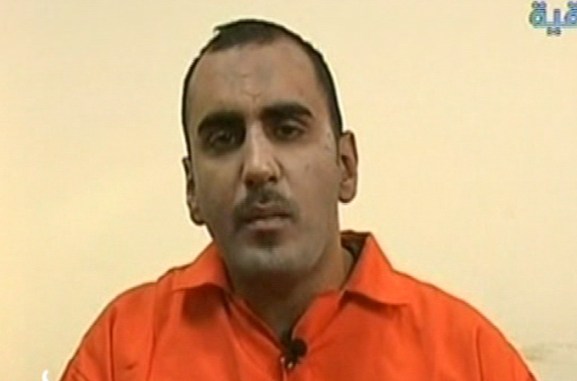
Profile of Hudayfa al-Batawi, Former Islamic State Emir of Baghdad

By Kyle Orton (@KyleWOrton) on January 29, 2017

hudayfa-al-batawi-1

Hudayfa al-Batawi was among the Iraqis who joined the Islamic State (IS) movement early after the fall of Saddam Husayn, having been a long-time Salafist extremist. Al-Batawi rose through the ranks and became the emir of Baghdad, involved in some of the worst attacks in that city in 2009 and 2010. Arrested in late 2010, al-Batawi was killed in a prison riot in 2011. Continue reading

Abdallah Najem al-Jawari: A Key Early Leader of the Islamic State

By Kyle Orton (@KyleWOrton) on January 28, 2017

1

Abdallah Najem al-Jawari (Abu Azzam al-Iraqi) was something like the Islamic State (IS) movement’s first Finance Minister and a senior regional official, first in his native Anbar—he was from Fallujah—and later in Baghdad. Joining the group quickly after the collapse of the Saddam Husayn regime, al-Jawari was killed in 2005. Al-Jawari remains among those commemorated by IS as founders who set the stage for the current rise of “the State”.
Continue reading

The Islamic State’s Official Biography of the Caliph’s Deputy

By Kyle Orton (@KyleWOrton) on December 18, 2016

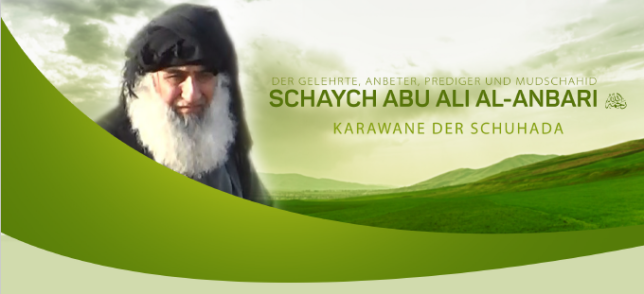
Obituary for Abdurrahman al-Qaduli in the German version of Rumiya, 11 November 2016

Obituary for Abdurrahman al-Qaduli in the German version of Rumiya, 11 November 2016

The forty-first edition of the Islamic State’s newsletter, al-Naba, released within the territory of the caliphate on 30 July 2016 and released online on 2 August, and the forty-third edition (released 13 and 16 August), contained a two-part obituary for Abd al-Rahman al-Qaduli (Abu Ali al-Anbari), the caliph’s deputy when he was killed on 24 March. The obituaries, entitled, “The Devout Scholar and Mujahid Preacher: Shaykh Abu Ali al-Anbari”,[1] make clear that al-Qaduli was one of the most consequential jihadists in the history of the Islamic State movement. Below is a translation, with some interesting and/or important sections highlighted in bold. The biography resolves some long-standing mysteries, and some of the claims are dubious in light of other evidence we have: these issues, and other points of context and explanation, are in the footnotes. The subheadings are mine, added to signpost the narrative and break it up into more manageable chunks.
Continue reading

The Islamic State’s Media Apparatus and its New Spokesman

Originally published at The Henry Jackson Society.

By Kyle Orton (@KyleWOrton) on December 16, 2016

1

The Islamic State (IS) has named a new official spokesman, Abu Hassan al-Muhajir. Abu Hassan is the fourth man to hold the position of spokesman within the IS movement, and the third since it declared statehood in 2006. Very little is known about Abu Hassan but assessing the history of IS’s media enterprise offers some hints about his profile. In this regard, a new paper by Dr. Craig Whiteside of the International Centre for Counter Terrorism Terrorism is instructive. Looking forward, examining Abu Hassan’s inaugural speech offers some clues about the direction IS’s messaging and behaviour will take now as its statelet shrinks under pressure from the U.S.-led Coalition. Continue reading

The End of the Beginning for the Islamic State in Libya

By Kyle Orton (@KyleWOrton) on December 7, 2016

The “capital” of the Islamic State (IS) in Libya, Sirte, has fallen to pro-government militias. “Our forces have total control of Sirte,” claimed one spokesman on Monday. “Islamic State’s rule over Sirte is now over,” said another. That was slightly premature, though it does appear that the city fell entirely around mid-afternoon yesterday. Regardless, it is clear that IS’s hold on Sirte is soon to be at an end. Positive as this development is, it is what happens after IS’s grip on urban areas is broken that will determine the durability of this victory. IS will remain a disruptive force for some time no matter what happens next, and for that reason it is important to continue military operations in pursuit of IS in its rural sanctuaries. But IS is a symptom of Libya’s political problems, not their cause. Without a government that solves some of those original problems, and has the legitimacy and capacity to keep IS out, the group will rise again. Continue reading

Al-Qaeda Explains its Split with the Islamic State

By Kyle Orton (@KyleWOrton) on December 6, 2016

1

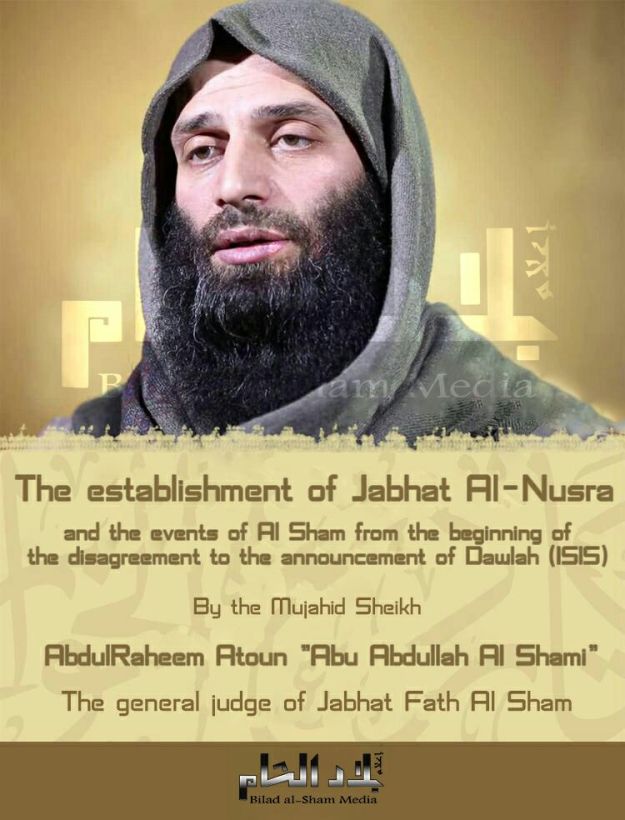
On 20 November 2016, Jabhat Fatah al-Sham (JFS), al-Qaeda’s rebranded presence in Syria, published its first official account of how JFS, previously known as Jabhat al-Nusra, split from its parent organization, the group we now know as the Islamic State (IS). The statement was composed by Abd al-Rahim Atun (Abu Abdullah al-Shami), identified as the General Judge of JFS. It is apparently drawn from the book, “Under the Shade of the Tree of Jihad” (p. 177-194), and the post was entitled, “The Establishment of Jabhat al-Nusra and the Events of al-Sham [Syria] from the Beginning of the Disagreement to the Announcement of al-Dawla [the State]”. On 27 November, Bilad al-Sham Media released an English language version of this statement, which is reproduced below with some editions for spelling, grammar, and so on, and some especially notable sections bolded. Continue reading

Defeating the Islamic State for Good

Originally published at The Henry Jackson Society

By Kyle Orton (@KyleWOrton) on December 2, 2016

Islamic State fortifications in Deir Ezzor (from an IS video, 11 July 2016)

The Islamic State (IS) is nominally under attack now in its twin capitals, Mosul in Iraq and Raqqa in Syria. This is necessary task, of course, but, as I’ve written repeatedly over the last few months, clearing IS from its urban centres is not sufficient. IS lost its overt urban holdings once before and nonetheless rebuilt in the deserts between 2008 and 2013, rising again to seize increasingly-large tracts of territory that were eventually declared a caliphate. IS was able to do this because of the success of its long-term method of war-making, and political changes in Baghdad—toward greater sectarianism and authoritarianism—that gave it more space to manoeuvre. The flaws in the strategy and partners the U.S.-led international Coalition have chosen to eliminate IS are creating a situation in which what will be called “victory” is really the resetting of the cycle. More evidence of this has recently come to the fore. Continue reading

Activist Group Lists Ten Most Important Islamic State Leaders Killed

Originally published at The Henry Jackson Society

By Kyle Orton (@KyleWOrton) on October 22, 2016

Coalition airstrikes in Mosul (source)

The activist group, Raqqa is Being Slaughtered Silently (RBSS), which works against the Islamic State (IS) in its Syrian capital, published a list on Thursday on Twitter of the eleven “most important” IS leaders who have been killed in Raqqa Province. Continue reading

Coalition Prepares the Ground for Mosul Offensive


By Kyle Orton (@KyleWOrton) on October 9, 2016

U.S.-led Coalition airstrikes against the Islamic State (AFP)

Raqqa is Being Slaughtered Silently (RBSS) is an activist group working from within the capital of the Islamic State (or so-called capital of the so-called Islamic State, if you prefer) to bring news to the outside world of the horrors therein. For this they have paid a heavy price. On 22 September, RBSS published a list on Twitter of eighteen Islamic State (IS) operatives who had been killed by the U.S.-led Coalition between 20 August and 21 September 2016. This list, presented below with some notes and context, shows the preparations being made for the rapidly-approaching offensive on IS’s Iraqi capital. Continue reading