By Kyle Orton (@KyleWOrton) on 12 May 2025
By Kyle Orton (@KyleWOrton) on 22 November 2021
The Islamic State movement published an 87-page book, “Informing Mankind of the Birth of the Islamic State” or “Informing the People of the Birth of the Islamic State” (I’lam al-Anam bi-Milad Dawlat al-Islam), on 7 January 2007. The document was released by Al-Furqan Media Foundation, the central Islamic State propaganda institution, and first appeared on the World News Network website. A rough translation of the book appears below.
By Kyle Orton (@KyleWOrton) on 8 May 2021
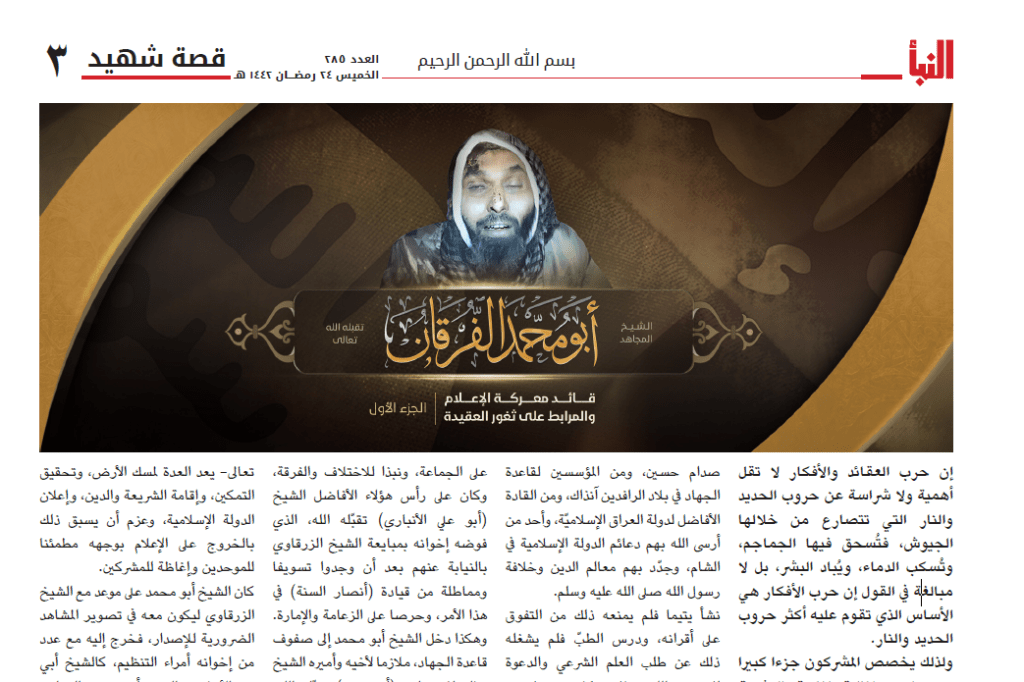
Wael al-Ta’i (Abu Muhammad al-Furqan), Al-Naba 285, p. 3
The 285th edition of Al-Naba, the weekly newsletter of the Islamic State (IS), released on 6 May, had a biography of Abu Muhammad al-Furqan, one of the most important IS leaders, the head of its Central Media Department and its operational ruler when he was killed in September 2016. Continue reading
By Kyle Orton (@KyleWOrton) on 5 March 2021
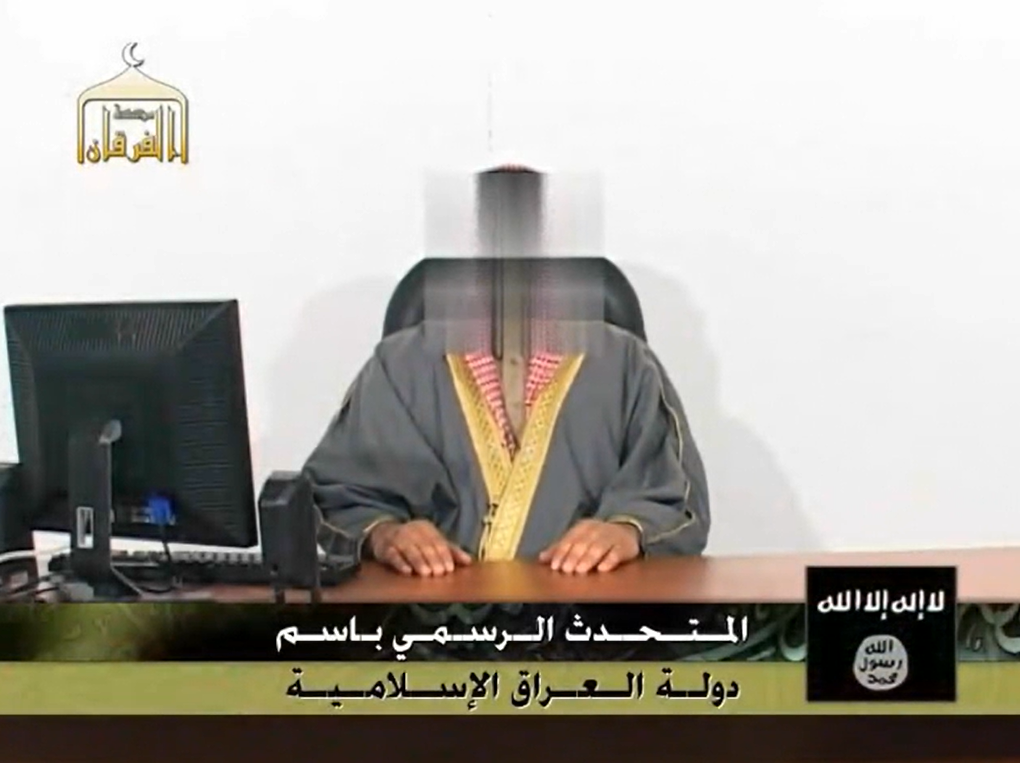
On 19 April 2007, seven months after the Islamic State (IS) movement declared its “State”, the official spokesman, Muharib al-Jaburi, announced the first “cabinet” for this “state”, appointing leaders for various “ministries”. Unusually for IS in this era, the speech was delivered as a video address—albeit (as can be seen) with Muharib’s face blurred out—rather than as an audio address. The reason for this was clearly to push back against the criticism of the IS movement that its leader could not be the “caliph” of all the Muslims, which at this stage IS was not overtly claiming, while being faceless and nameless, known only by his kunya.
By Kyle Orton (@KyleWOrton) on 17 March 2018
A statement attributed to Abu Maysara al-Iraqi, the official spokesman of Al-Qaeda in Mesopotamia (AQM), was released on 15 January 2006 that announced AQM was being merged with five other Salafi insurgent groups to create the Mujahideen Shura Council (al-Majlis Shura al-Mujahideen). A translation of the statement is produced below.
By Kyle Orton (@KyleWOrton) on 16 March 2018

The predecessor organization to the Islamic State (IS), the Islamic State in Iraq (ISI), used to run a “Prominent Martyrs” or “Distinguished Martyrs” series: essentially obituaries for important members of the IS movement. In the forty-sixth edition, on 18 August 2010, ISI profiled Abu Maysara al-Iraqi, the first official spokesman and the deputy of the Media Department until he was killed in 2006. A translation of Abu Maysara’s biography was issued by Ansar al-Mujahideen forum and is reproduced below with some minor editions for transliteration and some interesting points highlighted in bold. Continue reading
Originally published at The Henry Jackson Society.
By Kyle Orton (@KyleWOrton) on December 16, 2016
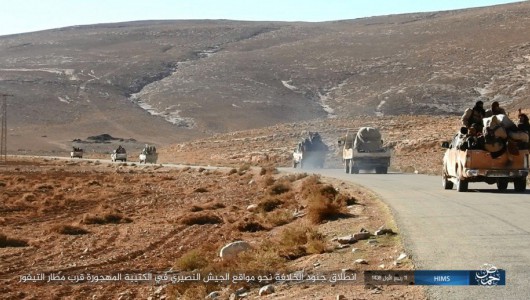
The Islamic State (IS) has named a new official spokesman, Abu Hassan al-Muhajir. Abu Hassan is the fourth man to hold the position of spokesman within the IS movement, and the third since it declared statehood in 2006. Very little is known about Abu Hassan but assessing the history of IS’s media enterprise offers some hints about his profile. In this regard, a new paper by Dr. Craig Whiteside of the International Centre for Counter Terrorism Terrorism is instructive. Looking forward, examining Abu Hassan’s inaugural speech offers some clues about the direction IS’s messaging and behaviour will take now as its statelet shrinks under pressure from the U.S.-led Coalition. Continue reading
By Kyle Orton (@KyleWOrton) on October 9, 2016
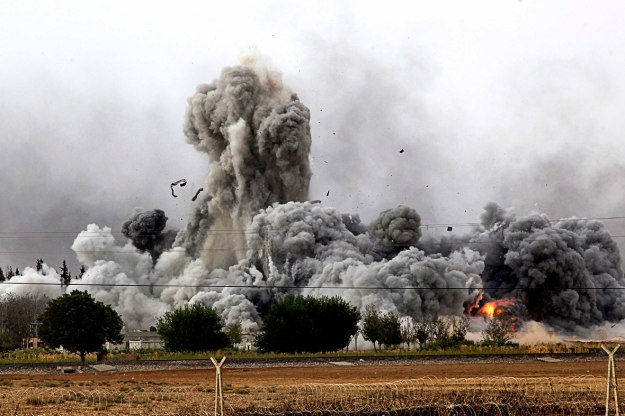
U.S.-led Coalition airstrikes against the Islamic State (AFP)
Raqqa is Being Slaughtered Silently (RBSS) is an activist group working from within the capital of the Islamic State (or so-called capital of the so-called Islamic State, if you prefer) to bring news to the outside world of the horrors therein. For this they have paid a heavy price. On 22 September, RBSS published a list on Twitter of eighteen Islamic State (IS) operatives who had been killed by the U.S.-led Coalition between 20 August and 21 September 2016. This list, presented below with some notes and context, shows the preparations being made for the rapidly-approaching offensive on IS’s Iraqi capital. Continue reading
By Kyle Orton (@KyleWOrton) on September 22, 2015

Abu Musab al-Zarqawi
In August 2015’s Perspectives on Terrorism, Truls Tønnessen writes about the evolution of the leadership of what is now the Islamic State (I.S.) from its origins in al-Qaeda in Iraq (AQI) under the heading, “Heirs of Zarqawi or Saddam?” Tonnessen makes the obvious point that AQI’s leadership was largely comprised of foreign Salafi-jihadists with al-Qaeda histories, while I.S. is led by Iraqis, most of them former (Saddam) regime elements (FREs). But Tonnessen’s argument that I.S.’s leaders had not been AQI members is mistaken (they had), which erodes his arguments that AQI’s influence diminished over time as I.S. formed from various mergers, and that this diminution of influence came about because I.S.’s post-2010 leadership purged the veteran AQI elements within I.S. (I.S.’s leaders are veteran AQI elements.) The main difference between AQI’s leaders and I.S.’s is that AQI’s leaders had background connections to al-Qaeda Central (AQC) networks, and I.S.’s largely do not. While Tonnessen sees Jabhat al-Nusra as linked to these shifting dynamics, this argument does not stack up. Ultimately, Tonnessen’s contention that I.S.’s leaders are more heirs of Saddam than Zarqawi fails in the terms Tonnessen presents it. Continue reading
 Kyle Orton's Blog