By Kyle Orton (@KyleWOrton) on 31 July 2023

By Kyle Orton (@KyleWOrton) on 4 September 2022

Christian homes burned by the Islamic State in the Ituri region of the Democratic Republic of the Congo || Al-Naba 352, p. 5
By Kyle Orton (@KyleWOrton) on 16 August 2022
By Kyle Orton (@KyleWOrton) on 22 July 2022
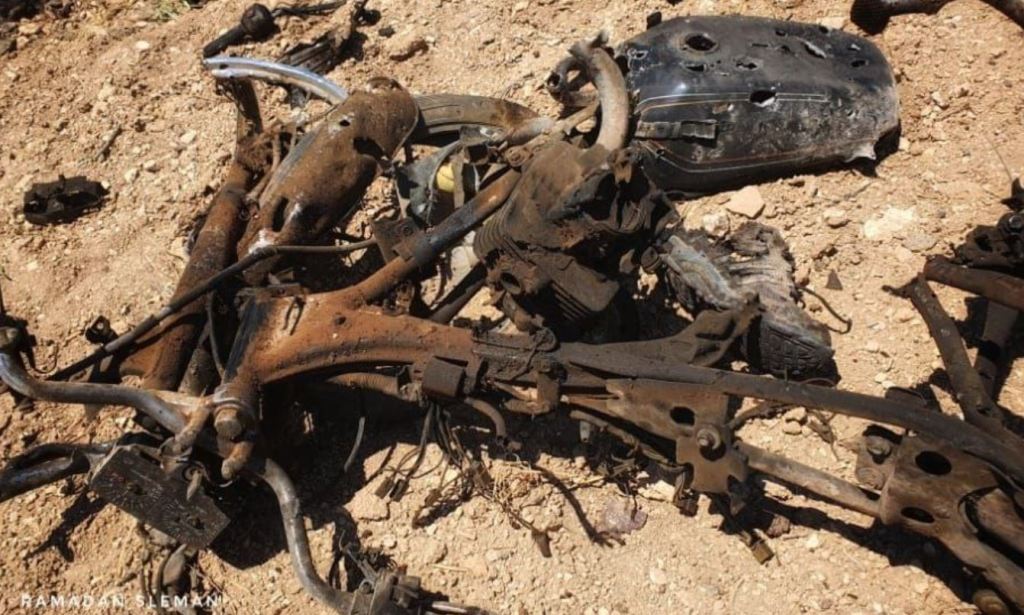
The United States announced on 12 July that it had killed the Islamic State’s (ISIS) governor of Syria in a drone strike in the village of Galtan in the Jinderes district of the north-western Syrian province of Efrin on the border with Turkey. The U.S. Central Command (CENTCOM) statement identified the slain man as “Maher al-Agal”, though a more precise transliteration is Maher al-Aqal (ماهر العقال). Riding on the motorcycle alongside Al-Aqal when he was killed was a “senior ISIS official” with whom he was “closely associated”. This ISIS official was “seriously injured during the strike”, CENTCOM notes, adding that the Jinderes strike caused no civilian casualties. Continue reading
By Kyle Orton (@KyleWOrton) on 15 March 2022
By Kyle Orton (@KyleWOrton) on 3 February 2022
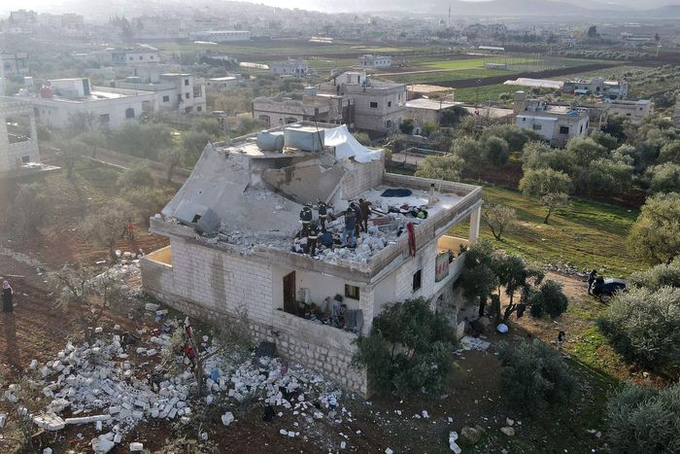
The compound where Islamic State leader Amir Muhammad al-Mawla killed himself, 3 February 2021 || Image taken from social media
By Kyle Orton (@KyleWOrton) on 22 January 2022

Islamic State car bombing against Al-Sinaa prison in Syria, 20 January 2022 [image source]
By Kyle Orton (@KyleWOrton) on 26 November 2021
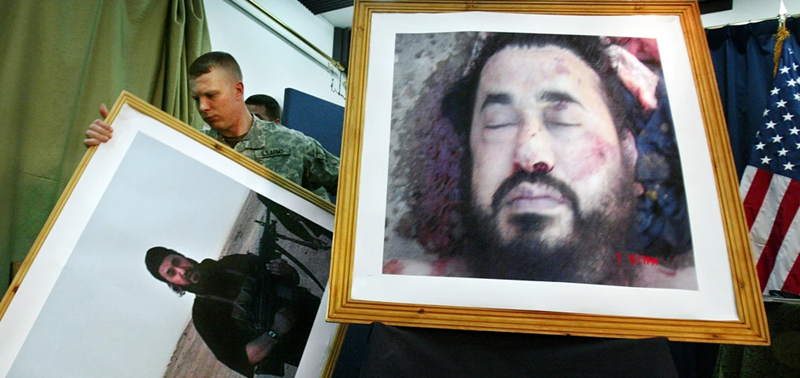
After the founder of the Islamic State movement, Ahmad al-Khalayleh, the infamous Abu Musab al-Zarqawi, was killed on 7 June 2006, an open letter eulogising him was posted by his wife, known only as Umm Muhammad (“the Mother of Muhammad”). The letter dates, it seems, to 6 July 2006, about a month after Zarqawi’s demise.[1] The content is mostly boilerplate: celebrating “the Shaykh of the Slaughterers” for terrorising the Americans and others who wanted constitutional government in Iraq,[2] venomous sectarian incitement against Shi’is, declaring that jihadist victory is near and cannot be derailed by the “martyrdom” of one leader. What is perhaps most notable when reading the letter at this distance is, firstly, that it was published by an Al-Qaeda media outlet, and, secondly, how much space is devoted to praising Usama bin Laden, and declaring the undying fealty of Zarqawi and his men to Bin Laden. Because, of course, the IS movement was at this time nominally a subordinate component of Bin Laden’s network named Al-Qaeda in Mesopotamia (AQM). The Zarqawists’ overt breach with Al-Qaeda still eight years in the future.
Continue reading