Tag Archives: al-Qaeda

Raqqa Doesn’t Want to Be Liberated By the West’s Partners

By Kyle Orton (@KyleWOrton) on 30 May 2017

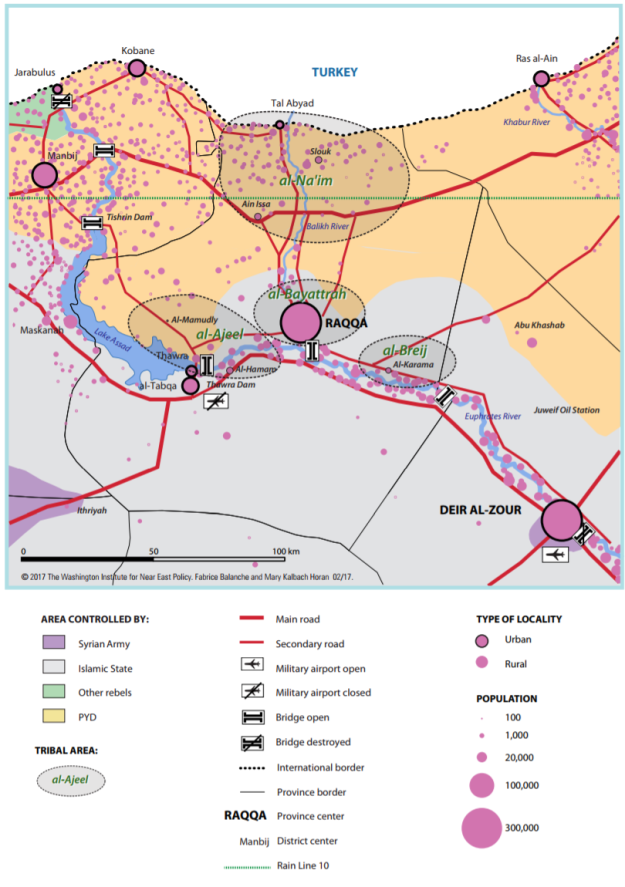
Map of the tribes around Raqqa city (source: WINEP report)

We are now on the eve of the operation to evict the Islamic State (IS) from its Syrian capital, Raqqa, and, as expected, the United States will partner with the Syrian Democratic Forces (SDF), the front-group for the Democratic Union Party (PYD) and its armed wing, the People’s Protection Units (YPG), which President Donald Trump’s administration has committed to directly arming.

Many of the doubts voiced about this course relate to Turkey, since the PYD/YPG is—despite continued efforts to obfuscate the fact—the Syrian department of the Kurdistan Workers’ Party (PKK), the premier internal security threat to Turkey for many decades. The discussion then tends to fall into one of two grooves. Continue reading

Coalition on the Verge of Repeating the Mistakes of the Past Against the Islamic State

This article was published at BICOM

By Kyle Orton (@KyleWOrton) on 16 May 2017

Within the next month, the Islamic State (IS) will likely lose its grip on its Iraqi capital, Mosul, and the operation to drive it from its Syrian capital, Raqqa, will begin. The destruction of IS’s caliphate, however, is not even close to the end of the road for the movement, not least because of the manner in which it is being accomplished.

At its core the IS movement is waging a revolutionary war, and as Craig Whiteside, a fellow with The International Centre for Counter-Terrorism has explained, this means that the focus is on legitimacy. Military victories come and go but if IS is, over the long-term, gaining acceptance—whether from support, resignation, or fear—among the population it hopes to govern (the Sunni Arabs), then it is winning. It is for this reason that IS tries to embed political victories within its military defeats. Continue reading

Al-Qaeda Calls for Foreign Attacks, Prioritizes Jews and Americans

By Kyle Orton (@KyleWOrton) on 14 May 2017

The son of al-Qaeda’s founder, Hamza Usama bin Ladin, released a speech on 13 May 2017, “Advice for Martyrdom-Seekers in the West”. The speech took the form of a ten-minute video released by As-Sahab, which was noticeably better in quality than al-Qaeda’s recent produce. The video opened by praising Sayyid Nusayr, and then included picture tributes in the background as Hamza spoke to some past jihadist attackers: Nidal Malik Hasan, Ramzi Yusef, Arid Uka, Ayman Hasan, Sulayman Khater, Mohammed Bouyeri. Michael Adebolajo, Michael Adebowale, and Mevlut Mert Altintas. An English translation of the speech is posted below, with some explanatory notes added and key sections highlighted in bold. Continue reading

Al-Qaeda in Syria Declare War on Rebels Taking Part in the Astana Process

By Kyle Orton (@KyleWOrton) on 10 May 2017

1

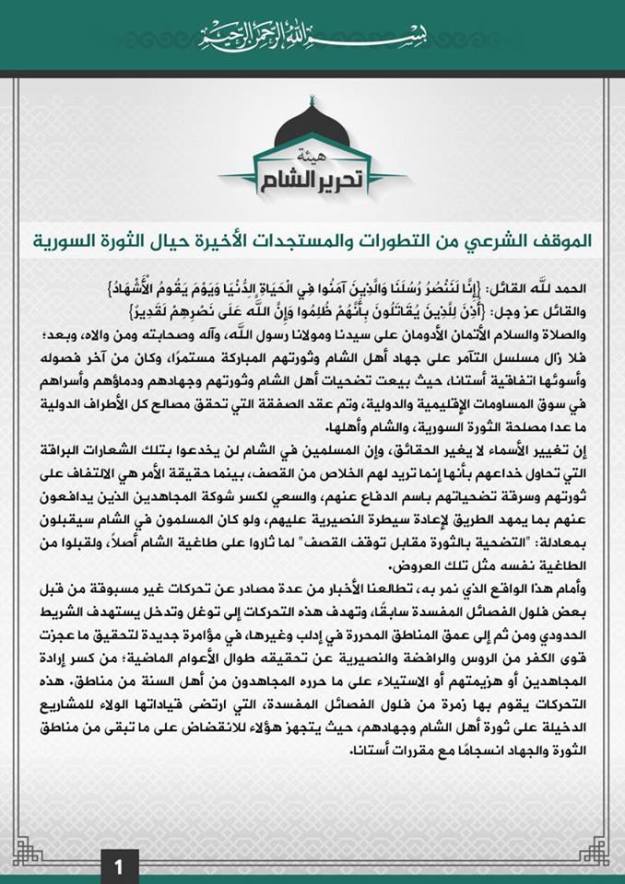
In response to the recent rounds of the Russian-organized “peace” talks in Astana, Hay’at Tahrir al-Sham (HTS), al-Qaeda’s restructured presence in Syria, put out a statement through its Fatwa Council on 9 May 2017, “The legal position concerning the latest events and developments facing the Syrian revolution”. HTS’s fatwa was a declaration of war against all parts of the rebellion participating in the Astana conferences, which HTS labelled a conspiracy to defeat the revolution and secure Bashar al-Assad in power. The statement is clearly intended against the mainstream rebellion, which operates under the colours of the Free Syrian Army (FSA) and has shown signs of coalescing into an anti-HTS alliance. HTS’s paranoia about the rebels being repurposed against it has led to previous “pre-emptive” attacks that might well have precipitated the very thing it feared. Perhaps most interesting, however, is HTS saying that it would treat as an enemy actors who “allow [the Astana-compliant factions] to work under their banner”. The reference here is to Ahrar al-Sham, a heretofore close ally of HTS, its key enabler in infiltrating and co-opting large sections of the northern insurgency, which in January sheltered various groups that survived the first wave of HTS attacks to prevent their destruction. The statement was translated by al-Maqalaat and is reproduced below with some editions in transliteration and the key sections highlighted in bold.
Continue reading

The Problems With the West’s Partners Against the Islamic State

By Kyle Orton (@KyleWOrton) on 10 May 2017

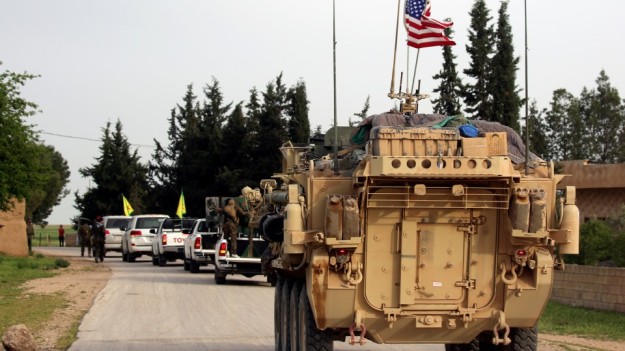
U.S. troops patrolling with the YPG/PKK in the village of Darbasiyah, northern Syria, on the border with Turkey, 28 April 2017

The United States has tried to engage in Syria almost solely in a counter-terrorism capacity, against Daesh (IS) and—in a recently-escalating campaign—against al Qaeda. The narrowness of the focus on jihadist terrorists led to the US disregarding wider political dynamics in the war in Syria—and to a degree in Iraq, too—and partnering with forces that over the long term will undo even this narrow mission.

The announcement yesterday that President Donald Trump will now arm the Kurdish People’s Protection Units (YPG) to expel Daesh from its Syrian capital, Raqqa, is the end-point of this policy, setting up a very dangerous medium- and long-term situation that will redound to the benefit of terrorists. Continue reading

Al-Qaeda in Syria Condemn Jaysh al-Islam for East Ghuta Infighting

By Kyle Orton (@KyleWOrton) on 4 May 2017

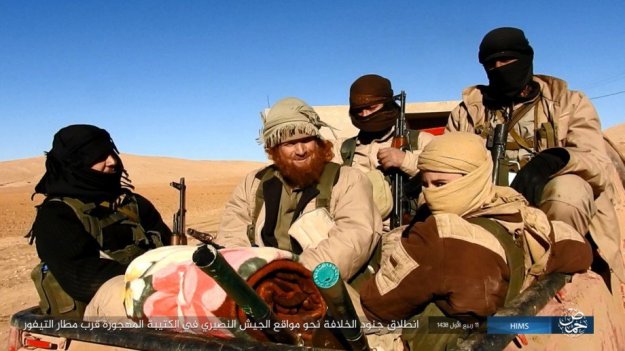
HTS statement on Jaysh al-Islam, 4 May 2017

Hay’at Tahrir al-Sham (HTS), the restructured al-Qaeda branch in Syria, put out a statement today on the intra-insurgent clashes that began on 28 April in the besieged enclave of East Ghuta, the suburbs east of Damascus, between Jaysh al-Islam on one side and HTS and Faylaq al-Rahman on the other. An old al-Qaeda hand, Maysar al-Jiburi (Abu Mariya al-Qahtani), has already commented on this. Now HTS’s General Shari’a Council has released a statement “concerning the ongoing events in Eastern Ghuta”. The statement, translated by al-Maqalaat, is posted below. Continue reading

Al-Qaeda Aligned Jihadist in Syria Condemns Rebel Group Jaysh al-Islam

By Kyle Orton (@KyleWOrton) on 2 May 2017

Maysar al-Jiburi (Abu Mariya al-Qahtani), on Twitter as @alghreeb, is an Iraqi and long-time operative of the Islamic State (IS), who was sent into Syria to set up IS’s secret wing, Jabhat al-Nusra, in 2011. After al-Nusra split with IS and became al-Qaeda’s official branch in Syria, Maysar remained with al-Nusra and was its deputy until the summer of 2014, when the Deir Ezzor branch of al-Nusra that Maysar led was destroyed as IS poured resources captured in Mosul over the border. Since then, Maysar has been—with Saleh al-Hamawi, another member of the advance party that founded al-Nusra—a kind of dissident, formally expelled from al-Nusra, and more recently has set to work spreading his influence in the Turkish-occupied zone of northern Syria, notably through the Ahrar al-Sharqiya group. With the various moves to rebrand and restructure al-Qaeda in Syria under the banner of Hay’at Tahrir al-Sham (HTS), Maysar has been drawn back into the fold to a degree.

Maysar has now released an essay, “Exposing the Backstabbers Within the Ranks,” condemning Jaysh al-Islam for its attacks on HTS in the East Ghouta area of Damascus beginning on 28 April. Intra-insurgent fighting in the besieged enclave a year ago allowed the coalition of states and militias supporting the Bashar al-Assad regime to considerably shrink the enclave and put it on the path to almost certain defeat. Maysar lays particular blame on Samir al-Kaka (Abu Abd al-Rahman al-Kaka; sometimes transliterated al-Kaakeh), a senior cleric of JAI, for issuing rulings licensing this conduct and compares JAI to IS. Maysar also asks, rhetorically, where the condemnations of JAI are from bodies like the Syrian Islamic Council, given how strongly they responded in January when al-Nusra attacked rebel factions as it laid the groundwork for the HTS merger. Masyar’s essay is reproduced below. Continue reading

Jihadi Clerics Dispute Legitimacy of Hay’at Tahrir al-Sham

By Kyle Orton (@KyleWOrton) on 30 April 2017

Abu Mahmud al-Filistini (@battar2812) is a London-based jihadi cleric, one of those to whom al-Qaeda’s loyalists look for guidance. An essay by Abu Mahmud, “An Indispensable Though Imperfect Unity,” has been put out defending Hay’at Tahrir al-Sham (HTS), the restructured al-Qaeda presence in Syria. Abu Mahmud writes mostly against those who are attacking HTS “from the Right,” the jihadists who believe that the rebranding and merging with groups of distinctly imperfect jihadi-salafist credentials like Harakat Nooradeen al-Zengi is a betrayal of the cause. Abu Mahmud writes specifically and harshly against Issam al-Barqawi (Abu Muhammad al-Maqdisi), the Jordan-based cleric who is the leading light of the part of the jihadi world that did not go over to the Islamic State, without ever naming him. The essay is reproduced below with some interesting and/or important parts highlighted in bold, and some notes added. Continue reading

PKK and Propaganda

By Kyle Orton (@KyleWOrton) on 29 April 2017

Ilham Ahmed

The West’s Syria policy is beginning to unravel of its own contradictions.

The Turkish government launched airstrikes against the positions of the Kurdistan Workers’ Party (PKK) in north-eastern Syria and the Sinjar area of north-western Iraq in the early hours of 25 April. There were international ramifications to this because the PKK in Syria, which operates politically under the name of the Democratic Union Party (PYD) and militarily as the People’s Defence Units (YPG), is the main partner of the U.S.-led Coalition against the Islamic State (IS). Turkey has protested the U.S. engaging the YPG/PKK so deeply and exclusively as its anti-IS partner, being displeased at the U.S.’s uncritical (public) stance toward the YPG, even after the YPG violated U.S.-brokered agreements on its operational theatres and used Russian airstrikes to attack Turkey- and CIA-backed rebels.

In response to Turkey’s anti-PKK operations this week, The Washington Post has hosted an op-ed by Ilham Ahmed, identified as “a co-president of the Democratic Council of Syria”. Continue reading

France Presents Evidence Assad Committed Chemical Weapons Atrocity

By Kyle Orton (@KyleWOrton) on 26 April 2017

The French government has released its assessment of the 4 April chemical weapons attack in Syria, and “independently and categorically confirms that sarin was used”. France “deployed the required resources to obtain its own samples,” the report notes, and “collected biomedical and environmental samples and munitions and pieces of munitions” from this attack site and several prior. Continue reading