By Kyle Orton (@KyleWOrton) on 24 January 2024

By Kyle Orton (@KyleWOrton) on 3 September 2022
By Kyle Orton (@KyleWOrton) on October 23, 2020
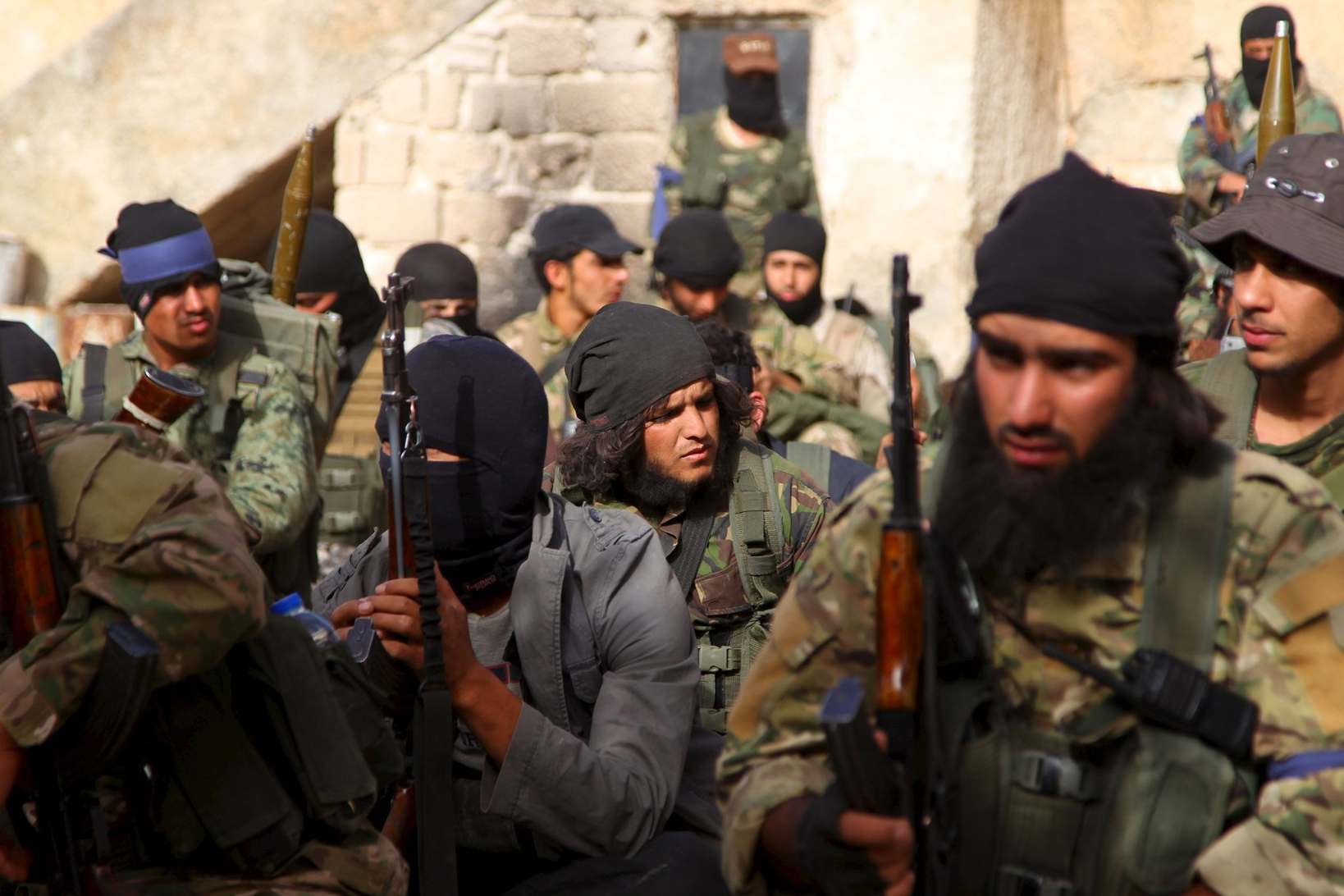
A chapter about Islamism in Syria I wrote for the American Foreign Policy Council’s (AFPC) ‘World Almanac of Islamism’ was published today. Do check it out, and the broader site, which is a great, accessible resource. The format of the website necessitated that the chapter as I submitted it was edited, condensed, and split up to fill out the various categories. In case it is of any interest, the original version of the chapter is reproduced below.
By Kyle Orton (@KyleWOrton) on 21 February 2020
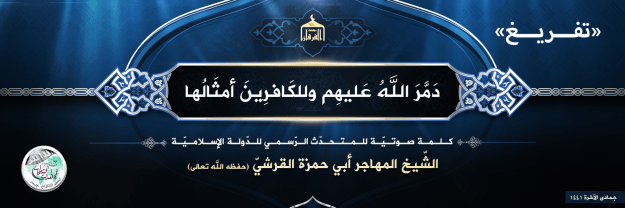
The Islamic State’s (IS) spokesman, Abu Hamza al-Qurayshi, gave his second speech on 27 January 2020. The speech was entitled, “Allah Destroyed Everything Over Them, and for the Kafireen is Something Comparable”, by IS’s official English translation. The title is drawn from the Qur’an, the Surah of Muhammad (47), verse 10. The verse can be rendered as, “God Destroyed Them Completely, and a Similar Fate Awaits the Disbelievers”. Below is a copy of the transcript of Abu Hamza’s speech, with some editions for transliteration and translation, and some interesting sections highlighted in bold. Continue reading
By Kyle Orton (@KyleWOrton) on 19 October 2018
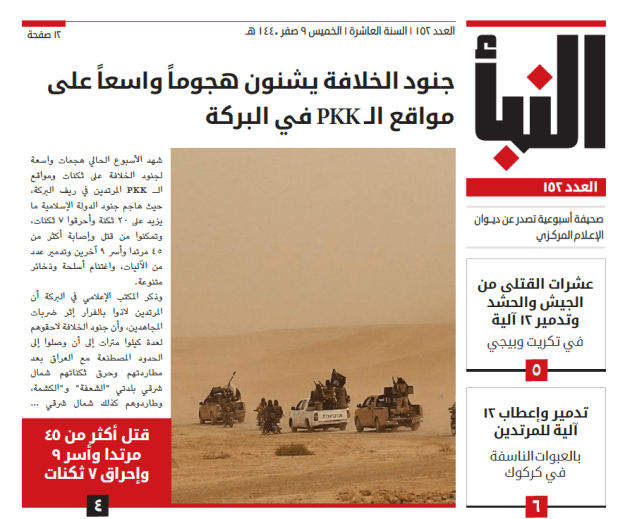
The Islamic State (IS) released the 152nd edition of Al-Naba, its weekly newsletter, on 18 October. Continue reading
By Kyle Orton (@KyleWOrton) on 25 May 2018
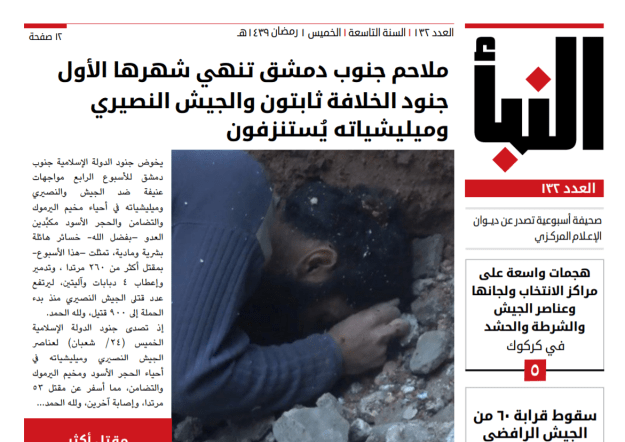
Al-Naba 132
The Islamic State released the 132nd edition of Al-Naba, its newsletter, on 18 May. Continue reading
By Kyle Orton (@KyleWOrton) on 4 May 2018
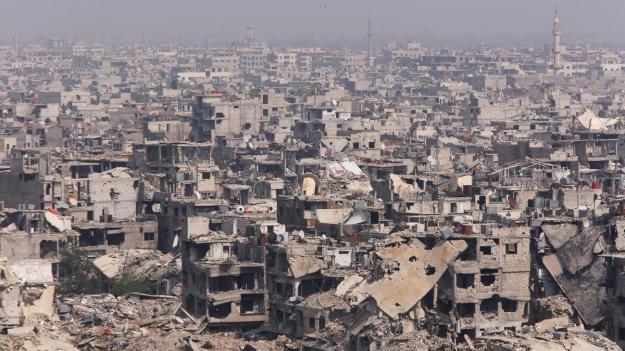
Devastation in Yarmuk refugee camp for Palestinians in Syria, 28 April 2018 (image credit: Omar Sanadiki, Reuters)
The 130th edition of Al-Naba, the Islamic State’s (IS) newsletter, was published on 4 May 2018. The main story on the first page was, “For the Second Week, Soldiers of the Caliphate in Southern Damascus Inflict Heavy Losses on the Nusayri Army”, and this continued on page 4.
Nusayri refers to the Alawi sect from which Syrian ruler Bashar al-Asad hails and is part of IS’s sectarian framing of its war. The story covers the fighting between the pro-Asad forces[1] and IS in the southern areas of the Syrian capital around al-Qadam, al-Hajar al-Aswad, Tadamun, and the Yarmuk Camp for Palestinian refugees.
For the Asad regime, this battle is the culmination of its consistent strategy, which it has on several occasions spelled out, to eliminate all opposition that is acceptable to local populations and the international community so that it can draw on their support, passive and active, in its war against the insurgency. Continue reading
By Kyle Orton (@KyleWOrton) on 28 April 2018
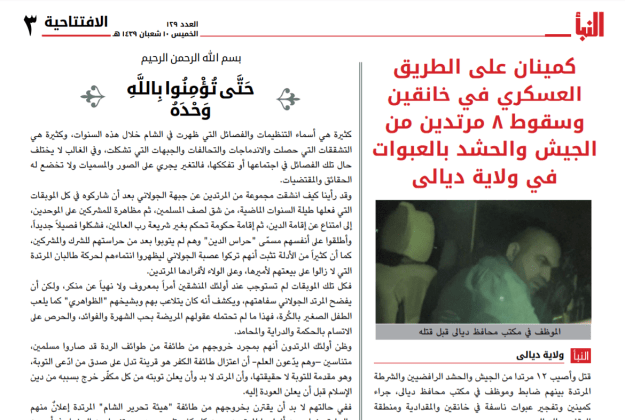
Al-Naba 129, page 3
The 129th issue of Al-Naba, the Islamic State’s newsletter, contained an article on page 3 that made takfir (excommunication) against Tandheem Hurras al-Deen (The Organization for the Guardians of the Religion or the Religious Guardians’ Organization), al-Qaeda’s new, if unofficial, branch in Syria. A rough translation of the article is reproduced below. Continue reading
By Kyle Orton (@KyleWOrton) on December 9, 2016
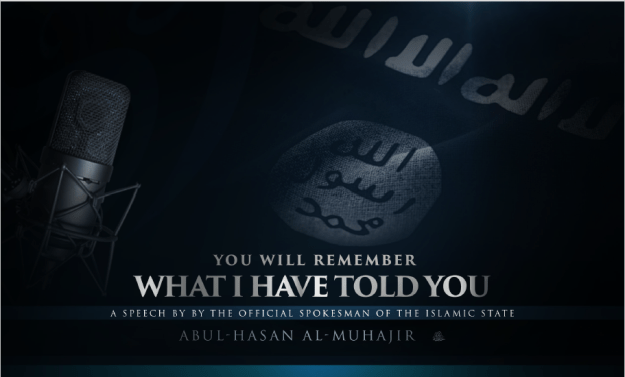
Taha Subhi Falaha (Abu Muhammad al-Adnani) was killed near al-Bab in northern Syria on 30 August in an airstrike by the U.S.-led Coalition. One of Falaha’s roles was the Islamic State’s official spokesman. On 5 December, IS announced that it has a new spokesman, Abu Hassan al-Muhajir, and he gave an inaugural speech. That speech, entitled, “You Will Remember What I Have Told You,” was printed in the fourth issue of Rumiyah on 7 December. Rumiyah seems to have replaced the English-language Dabiq magazine—probably because the village of Dabiq has been lost. The speech is reproduced below with some editions for spelling, some additions for explanation, and some especially notable sections highlighted in bold.
Continue reading
By Kyle Orton (@KyleWOrton) on November 4, 2016
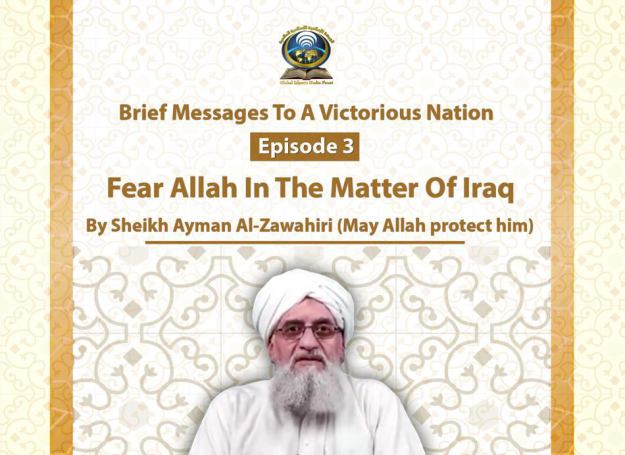
Al-Qaeda’s leader, Ayman al-Zawahiri, gave a speech on August 25, 2016, entitled, “Fear Allah in the Matter of Iraq” (or “Fear Allah in Iraq”). Released by al-Qaeda’s As-Sahab Media Foundation, the speech is the third installment of the “Brief Messages To A Victorious Nation” (or “Brief Messages To A Victorious Umma”) series. A translation of the speech was released by Al-Muwahideen Media, a pro-Qaeda channel, last month and is reproduced below with some editions in transliteration and important sections highlighted in bold. Continue reading

 Kyle Orton's Blog