Tag Archives: Amr al-Absi

Activist Group Lists Ten Most Important Islamic State Leaders Killed

Originally published at The Henry Jackson Society

By Kyle Orton (@KyleWOrton) on October 22, 2016

Coalition airstrikes in Mosul (source)

The activist group, Raqqa is Being Slaughtered Silently (RBSS), which works against the Islamic State (IS) in its Syrian capital, published a list on Thursday on Twitter of the eleven “most important” IS leaders who have been killed in Raqqa Province. Continue reading

Islamic State’s Propaganda Chief Killed in Syria

By Kyle Orton (@KyleWOrton) on September 18, 2016

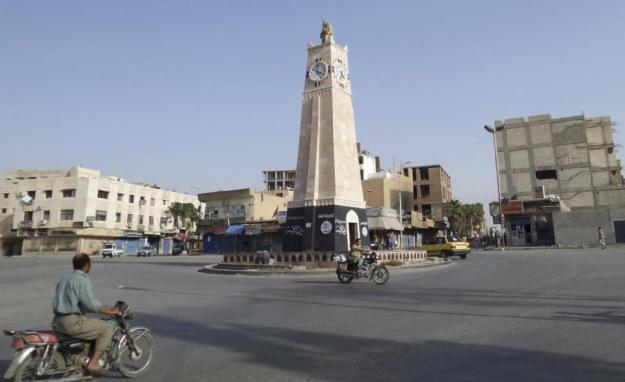
Raqqa

Raqqa

The Coalition announced on Friday that it had killed Wael al-Fayad, more fully Wael Adil Hasan Salman al-Fayad, also known as Wael al-Rawi, Dr. Wael, and Abu Muhammad al-Furqan, a reference no doubt to al-Furqan Media, IS’s oldest and most important propaganda organ, which al-Fayad controlled. The head of IS’s Media Council, thus a key member of the group’s propaganda output, al-Fayad was a member of its Shura Council. The obscurity of his name is likely a testament to his seniority and importance within IS. [UPDATE: This turned out to be correct, though Abu Muhammad’s real name was Wael al-Ta’i, as IS revealed in May 2021, and he had also used the names “Ahmad al-Ta’i”, the media emir appointed in “the State’s” second cabinet back in 2009, and “Abu Ubayda Abd al-Hakim”, the mysterious senior IS operative who made a series of media “appearances” in 2011 and signed several captured letters addressed from IS-centre to the wilayats after 2014]
Continue reading

The End of the Islamic State by Christmas?

By Kyle Orton (@KyleWOrton) on September 5, 2016

1

Last week it was reported by The Daily Beast that United States defence and political leaders believe they can at least begin the operation to remove the Islamic State (IS) from its Iraqi capital, Mosul, before President Barack Obama leaves office on 20 January 2017. This seems unlikely. More to the point, if it is true it is highly dangerous, both in the short-term and especially over the long-term. Continue reading

Profile of the Islamic State Caliph: Abu Bakr al-Baghdadi

By Kyle Orton (@KyleWOrton) on August 7, 2016

This post is drawn from a recent report I published profiling the leadership of the Islamic State.

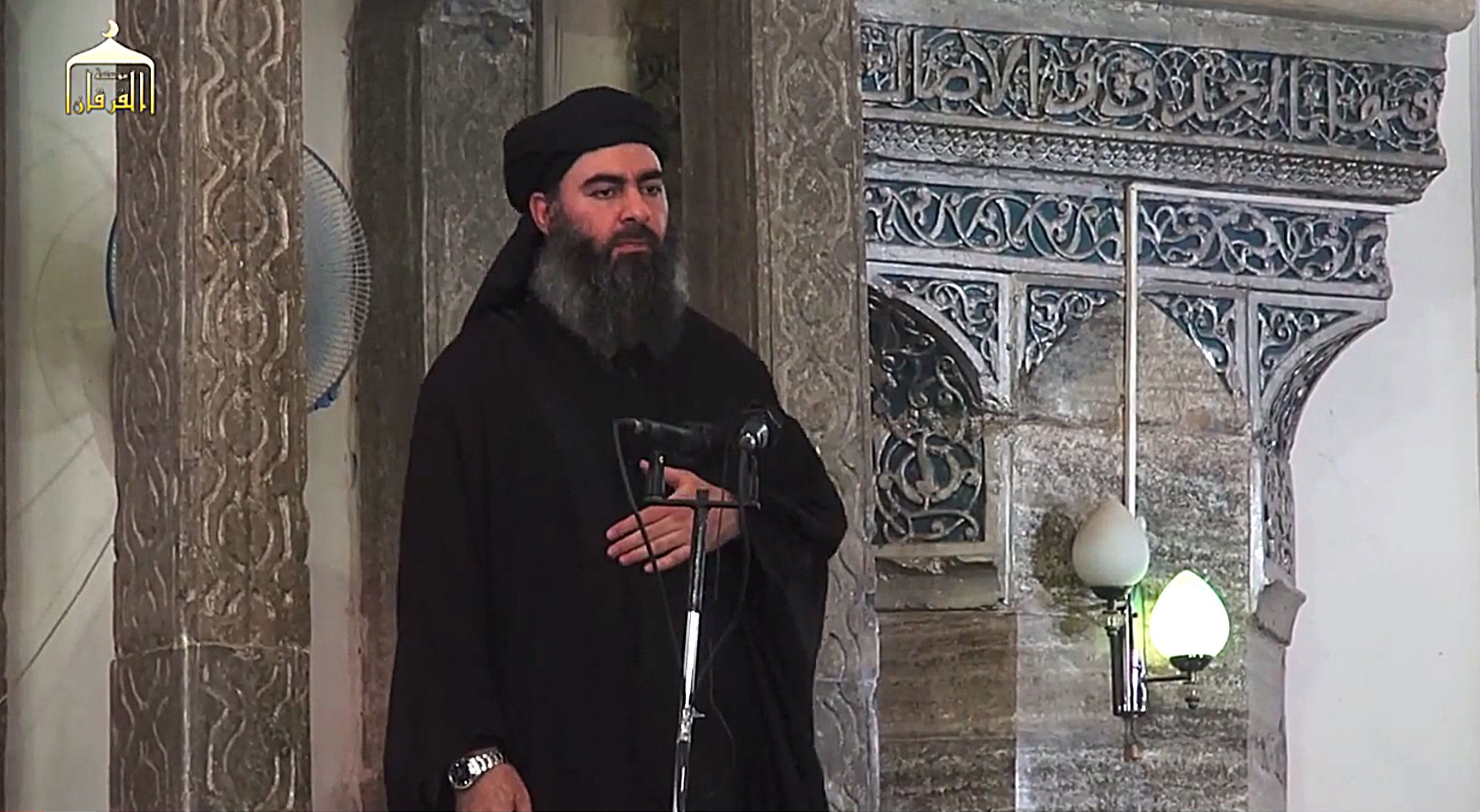
The leader of the Islamic State (IS) since 2010 has been Abu Bakr al-Baghdadi, previously known as Abu Dua or Abu Awad, and his real name—acknowledged by IS itself since the declaration of the so-called Caliphate in 2014—is Ibrahim Awwad Ibrahim Ali Muhammad al-Badri al-Samarrai.

Continue reading

Is the Islamic State About to Kill Itself?

By Kyle Orton (@KyleWOrton) on June 7, 2016

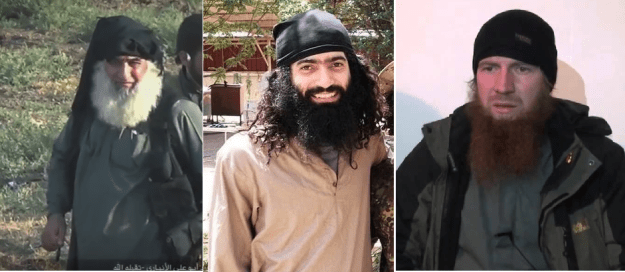
Abd al-Rahman al-Qaduli, Amr al-Absi, Tarkhan Batirashvili

Abd al-Rahman al-Qaduli, Amr al-Absi, Tarkhan Batirashvili

The Associated Press reported on Sunday that after a senior Islamic State (IS) commander was struck down by the international coalition in March it set off a witch-hunt inside the organization that led to the killing of thirty-eight IS jihadists at the hands of their own leaders. By AP’s account, IS is now consumed with internal suspicion. The story has some problems, however. Continue reading

Assad Cannot Keep Europe Safe From the Islamic State

By Kyle Orton (@KyleWOrton) on March 24, 2016

Article published at NOW Lebanon

1

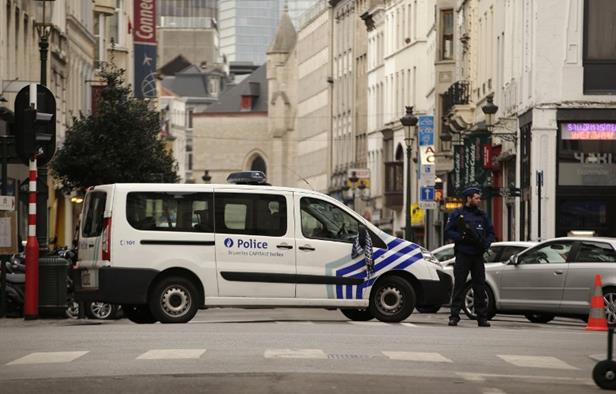
The long arm of the Islamic State (ISIS) has struck again. Tuesday morning, Zaventem airport in Brussels was hit by two suicide bombers and soon after a third man detonated at Maelbeek metro station, not far from the headquarters of the European Union. At least 31 people were slaughtered and around 270 were injured. Belgium has a long history as a hub of global jihadism and some of its citizens were key in forming ISIS’s statelet. In the wake of the attack, as Western governments look for ways to hasten the demise of ISIS, it will likely be said—again—that the quickest way to do that is by striking a devil’s bargain with the regime of Bashar al-Assad in Syria. From Assad’s role in helping ISIS lay its groundwork in Iraq even before the U.S. invasion to Assad’s help, by omission and commission, in nurturing ISIS in the years since the uprising against him began as a means of defeating the opposition to Assad’s deliberate incitement of a sectarian war, there is nothing that could be further from the truth. While Assad remains in power, ISIS will remain alive. Continue reading

Syria: The Revolution at Five

By Kyle Orton (@KyleWOrton) on March 15, 2016

Article published at Left Foot Forward

1

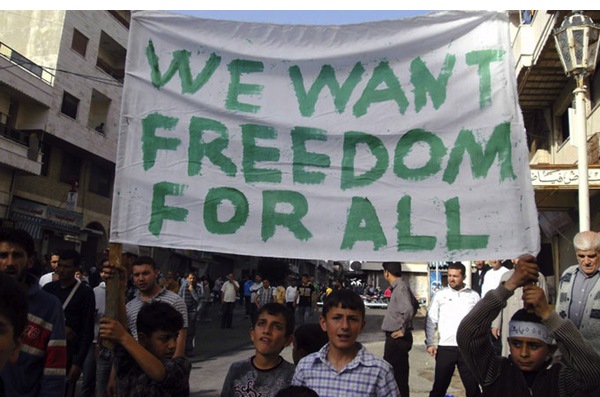
Five years ago today protests broke out in a small town in southern Syria and, carried by social media, spread throughout the country.

For about six months, the Syrian uprising would be mostly peaceful, but inevitably the population fought back as the regime of Bashar al-Assad—aided from the earliest stages by Iran and its Lebanese proxy, Hizballah—widened and intensified its violent crackdown.

In yet another unexpected turn, the last few weeks have seen the revival of this early spirit of the revolution to its strongest point in years. Continue reading

Death of a Caliphate Founder and the Role of Assad

By Kyle Orton (@KyleWOrton) on March 10, 2016

Published at Middle East Eye.
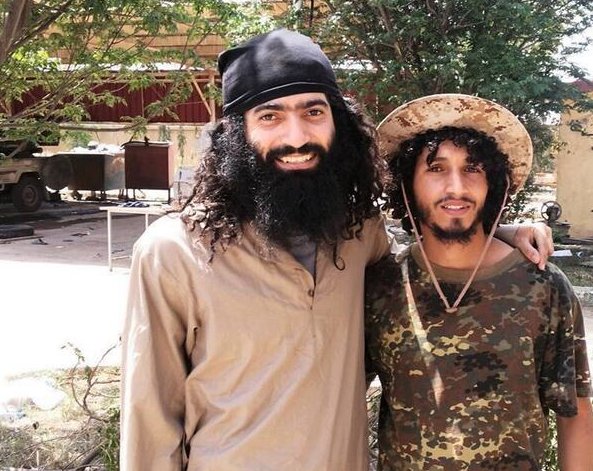
Amr al-Absi on the left

Amr al-Absi on the left

Amr al-Absi, one of the most senior Islamic State (IS) leaders, was killed in an airstrike on 3 March, according to reports on social media and by the SITE Intelligence Group. Al-Absi—better known as Abu Atheer al-Absi or just Abu al-Atheer—exemplified several key dynamics at work in Syria.

Atheer was among the jihadi-Salafists released by the regime of Bashar al-Assad at the beginning of Syria’s uprising in an attempt to make self-fulfilling the regime’s claim that the opposition were terrorists, and was also a seminal figure in making Syria so dangerous for journalists that it allowed Assad and IS to shape the coverage as if Syria was a binary choice between them.

Atheer is among the longstanding ultra-extremists who shape and define IS spiritually, and he was crucial in more concrete terms in IS infiltrating and expanding in Syria, particularly by bringing in foreigners who are among the most ideologically driven category of IS members. Continue reading

The Rise and Fall of Mohammed Emwazi

By Kyle Orton (@KyleWOrton) on January 20, 2016

Emwazi

Emwazi’s eulogy picture in Dabiq

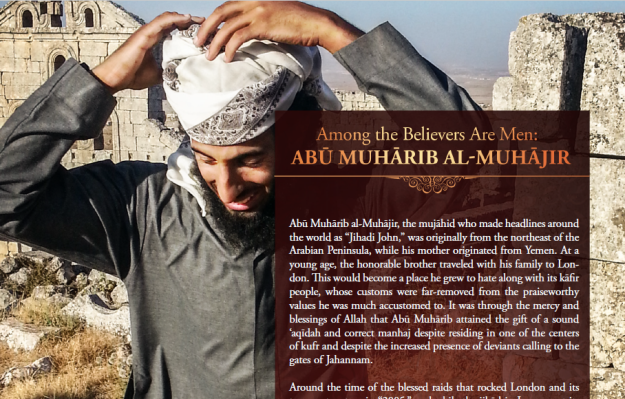
Yesterday, the Islamic State (IS) released their thirteenth issue of Dabiq. Among many things, it contained an admission of death for Mohammed Emwazi (“Jihadi John”). Referred to by his kunya, Abu Muharib al-Muhajir, Dabiq said (pp. 22-23) Emwazi had been hit by an “unmanned drone in the city of ar-Raqqah” on November 12, “destroying the car and killing him instantly.” The biography that Dabiq offered gave some intriguing details, confirming some surmises I had made about Emwazi when his identity was revealed last spring, including his early involvement in an al-Qaeda network in London sending fighters to al-Shabab in Somalia—the thing that brought him to the attention of the security services, confirming that the truth was the inverse of CAGE’s infamous claim that harassment by the MI5 had radicalized Emwazi—and that Emwazi had left Britain to do jihad in Syria in the company of another British citizen. Emwazi was also in the thick of it when IS broke from al-Qaeda and offers an interesting and rare example of a European IS fighter entrusted with an internal security role for the caliphate.
Continue reading

Propaganda and the War Against Independent Media in Syria

By Kyle Orton (@KyleWOrton) on December 29, 2015

In the last month, the Islamic State (IS) has been waging a concerted campaign to shut down all independent sources of information emanating from its statelet. IS’s focus has been on Raqqa is Being Slaughtered Silently (RBSS), an activist group that began in April 2014 in IS’s de facto capital in northern Syria. RBSS has published information—including pictures and videos, much of it via Twitter—on the crimes of the “caliphate”. IS has now murdered at least five RBSS journalists and activists, two of them on foreign soil in Turkey, plus the father of one of RBSS’s founders. (The sixth case, also in Turkey, is more murky.) The suppression of independent media by IS is necessary to allow the group to maintain social control of the areas it rules and to sustain the narrative that it is building utopia on earth, which attracts in the foreign fighters that help IS maintain and expand its territory.
Continue reading