By Kyle Orton (@KyleWOrton) on 9 December 2024
By Kyle Orton (@KyleWOrton) on 8 May 2021
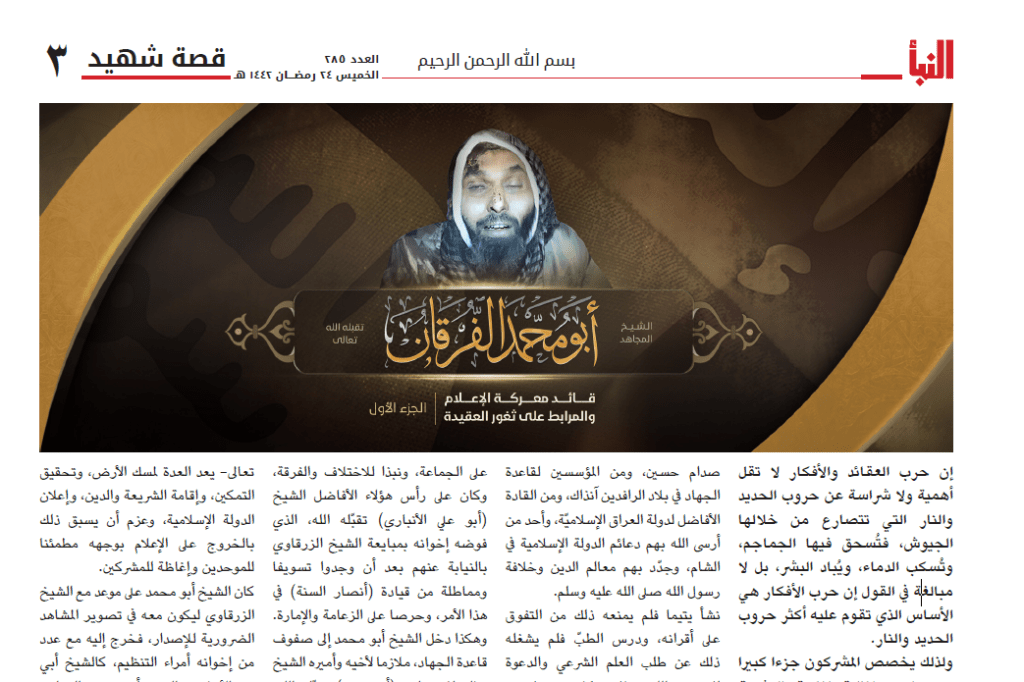
Wael al-Ta’i (Abu Muhammad al-Furqan), Al-Naba 285, p. 3
The 285th edition of Al-Naba, the weekly newsletter of the Islamic State (IS), released on 6 May, had a biography of Abu Muhammad al-Furqan, one of the most important IS leaders, the head of its Central Media Department and its operational ruler when he was killed in September 2016. Continue reading
By Kyle Orton (@KyleWOrton) on 10 November 2019
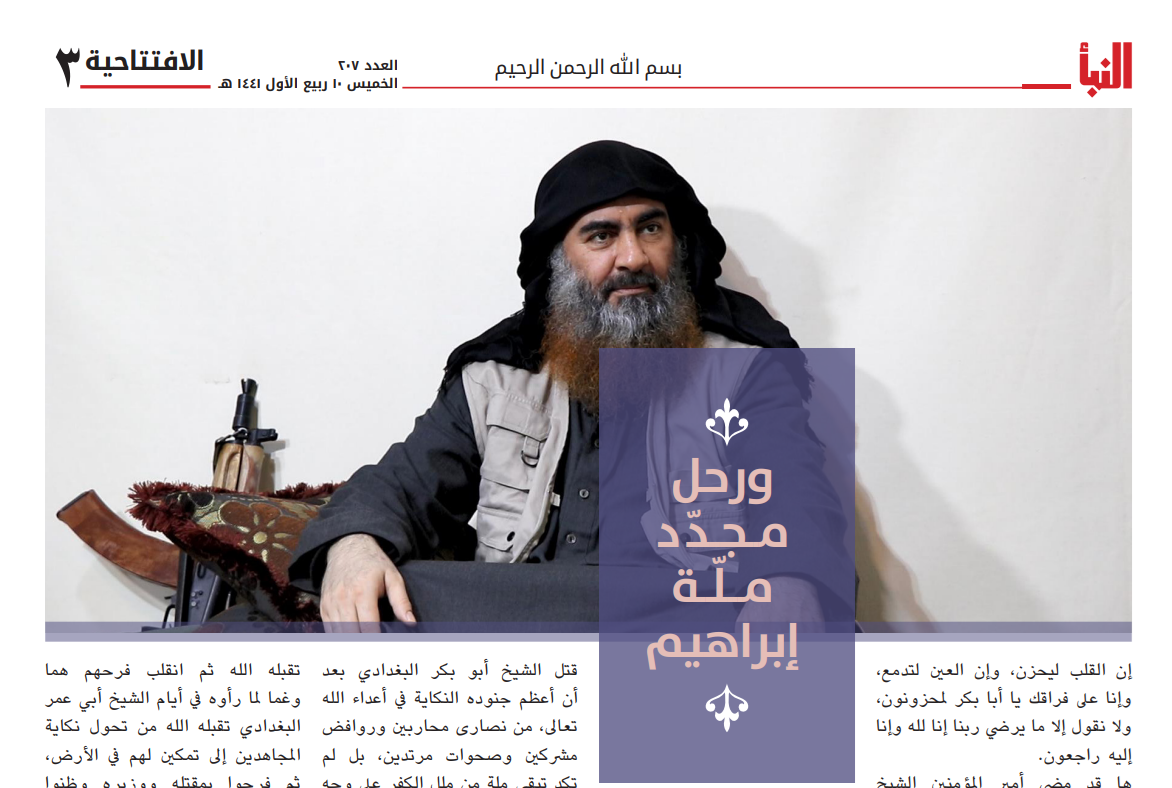
The 207th edition of Al-Naba, the weekly newsletter of the Islamic State (IS), published on 7 November 2019, devotes its main editorial to Ibrahim al-Badri (Abu Bakr al-Baghdadi), the first “Caliph” when the “Caliphate” was declared in June 2014, who was killed on 27 October 2019.
By Kyle Orton (@KyleWOrton) on 29 April 2019
This article was originally published at European Eye on Radicalization
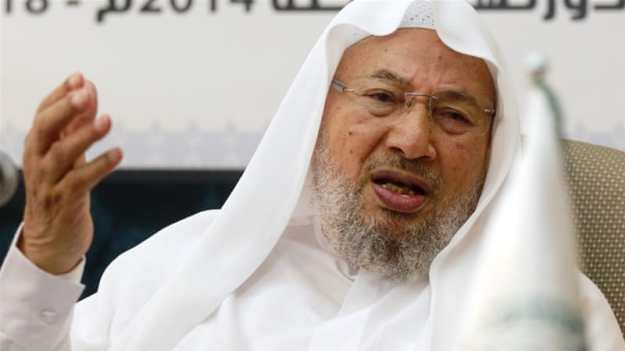
In the wake of the horrific bombings by the Islamic State (ISIS) in Sri Lanka on Eastern Sunday, which killed 250 people, an image has circulated purporting to show a terrorist connected to the attack in the company of the Qatar-based cleric of the Muslim Brotherhood, Yusuf al-Qaradawi. In fact, the image shows no such thing. But Al-Qaradawi’s influence in creating the ideology that motivates Islamist terrorists cannot be doubted. Continue reading
Published at The Arab Weekly
By Kyle Orton (@KyleWOrton) on 28 April 2019
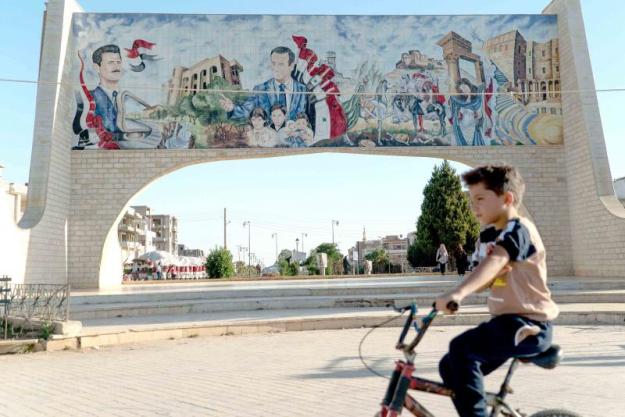
A young boy rides his bicycle in Deraa // AFP
In military terms, the fall of Daraa, in south-western Syria, to Iranian and regime forces last July eliminated the last insurgent-held pocket not dominated by jihadists. Politically, it had profound effects, demonstrating American disengagement and Israel’s misperceptions of the Syrian landscape, particularly Russia’s role in it.
Recent signs of renewed insurgency in Daraa, however, underline how far from over Syria’s war is and how badly the West has mishandled the crisis. Continue reading
By Kyle Orton (@KyleWOrton) on 4 July 2018
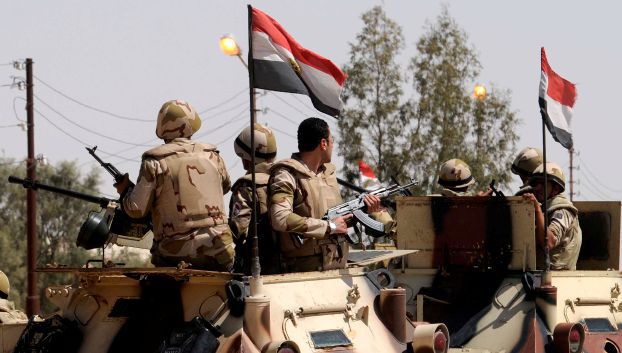
Egyptian soldiers in the Sinai (image source)
Five years on from the military coup d’etat in Egypt that brought to power Abdel Fattah el Sisi, the problems of the country—political, economic, demographic, security—remain as intractable as ever. Indeed, in many cases, the problems are worse than before. Among the problems that are noticeably worse now than in 2013 is security, specifically the Islamic State (Daesh) insurgency in the Sinai. Continue reading
By Kyle Orton (@KyleWOrton) on 7 March 2018
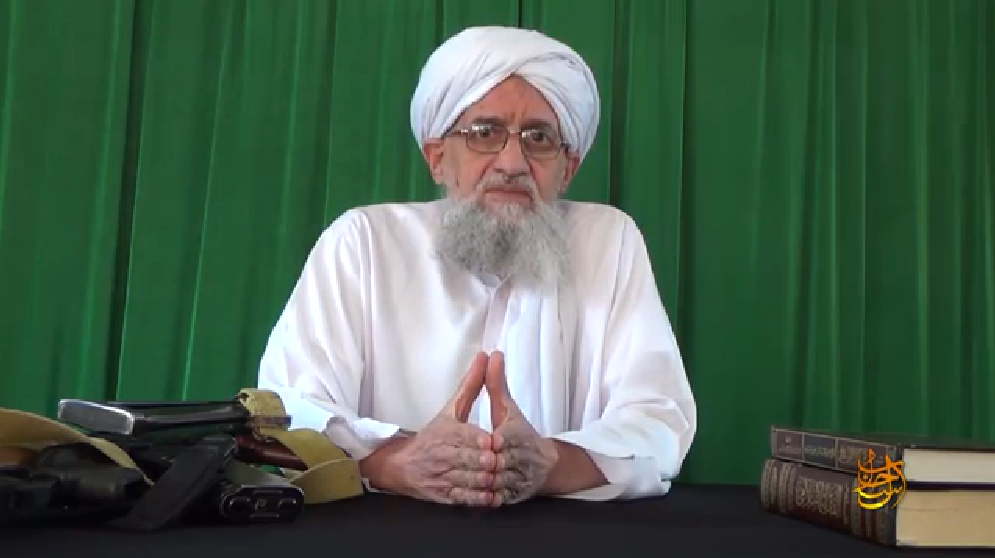
Ayman al-Zawahiri during speech on 6 March 2018 (screen grab)
Al-Qaeda’s leader, Ayman al-Zawahiri, gave a nine-minute speech on 6 March 2018, entitled, “France Has Returned Oh Descendants of the Lions”. The essential message is that European “invaders” are back in the Maghreb, the Muslim-majority states west of Egypt (those states to the east are referred to as the Mashriq), either directly or through local regimes that adhere to the foreigners’ program, political and economic. Al-Zawahiri condemns the post-“Arab Spring” governments that have sought stability by compromise between the revolutionary movements that ousted the dictatorships and the old elites. For al-Zawahiri, the only just solution one achieved by a violent, jihadist campaign that sweeps the old order out entirely. An English transcript of the speech was released by al-Qaeda’s As-Sahab Media, and is reproduced below. Continue reading
By Kyle Orton (@KyleWOrton) on 28 January 2018
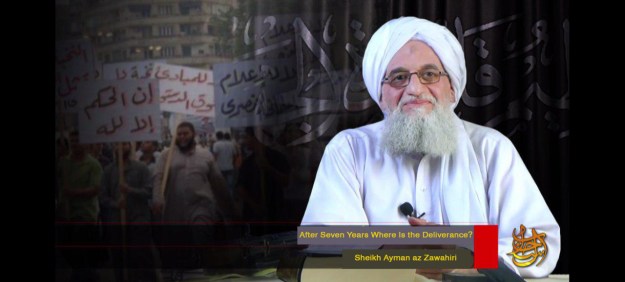
Al-Qaeda’s leader, Ayman al-Zawahiri, made a speech on 26 January 2018, entitled, “After Seven Years Where Is the Deliverance?” The speech built the case that the “Arab spring” uprisings failed because they tried to make changes within the framework of the nation-state, to be incremental, and to make accommodations with the fallen regimes, rather than radical “purification” by launching coordinated jihadist revolutions that respected no frontier, violently uprooted the old order, and implemented the shari’a. An English transcript of the speech was released by al-Qaeda’s As-Sahab Media station and is reproduced below. Continue reading

 Kyle Orton's Blog