By Kyle Orton (@KyleWOrton) on 20 June 2023

By Kyle Orton (@KyleWOrton) on 15 November 2020

Al-Naba 260, page 10
The Islamic State (IS) put out the 260th edition of its newsletter, Al-Naba, on 13 November. Much of the focus was on IS’s war with its jihadi rival, Al-Qaeda, in northern and western Africa. There are reports of guerrilla operations from elsewhere in Africa, from the Centre (in Iraq and Syria), as well as from Egypt and Afghanistan. IS notably feels secure enough in the strength of its networks to draw attention to its responsibility for several attacks in the Turkish-held areas of northern Syria, and there is a rare report of an attack in Indonesia. Al-Naba 260 also has IS’s response to the U.S. Election. Continue reading
By Kyle Orton (@KyleWOrton) on 11 June 2020
France announced last Friday that its forces in Mali had killed Abd al-Malek Drukdel (Abu Musab Abd al-Wadud), the emir of Al-Qaeda in the Islamic Maghreb (AQIM), which covers the North Africa and Sahel areas. Paris has sometimes been unreliable on these matters, but the United States independently confirmed Drukdel was gone, as have sources within AQIM. The French also announced that on 19 May they had arrested Mohamed Mrabat, a veteran jihadist and member of the Islamic State in the Greater Sahara (ISGS). Continue readingBy Kyle Orton (@KyleWOrton) on 26 May 2020
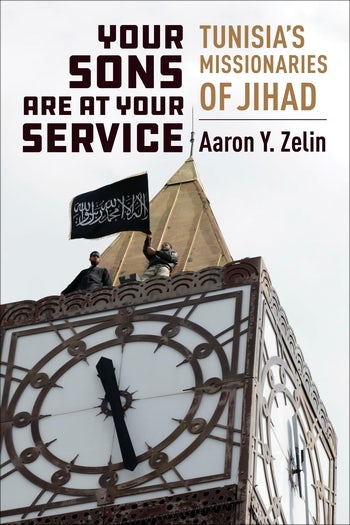
Early in his new book, Your Sons Are At Your Service: Tunisia’s Missionaries of Jihad, The Washington Institute’s Aaron Zelin quotes a pair of sociologists who note that ‘where theories are plentiful … ideas are vacuous’. The book is in many ways the antithesis of this approach. It is not without theoretical content; where social movement theory arises as a means of understanding jihadism, say, the author gives an overview of the literature to contextualise it for the reader. But the general approach is historical, empirical, and detail-rich, so that by the time Zelin summarises his findings in the various sections there can be no doubt about the evidentiary basis. Continue reading
By Kyle Orton (@KyleWOrton) on 8 July 2019
This article was originally published at the European Eye on Radicalization
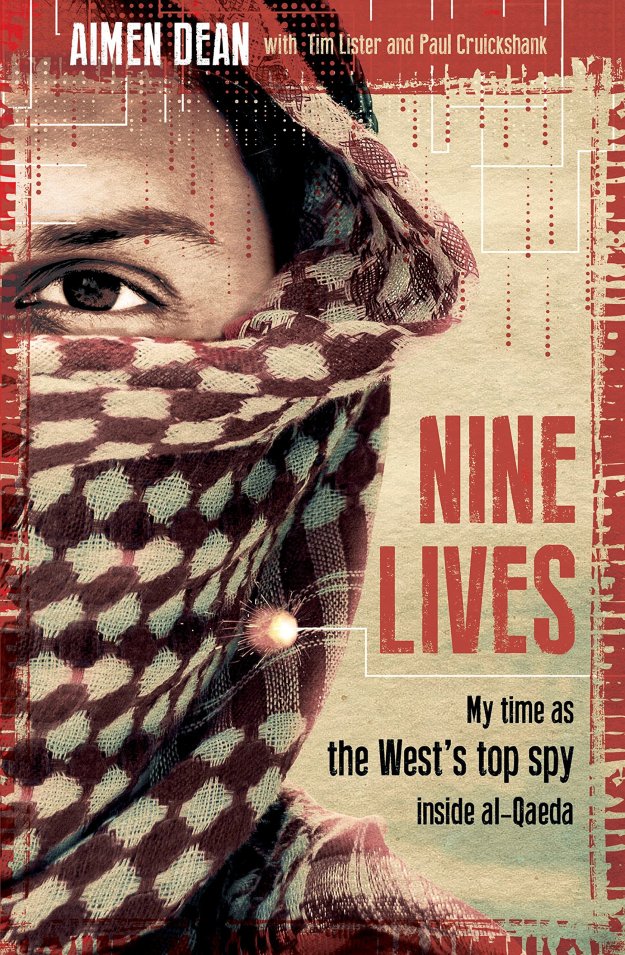
The main issue that Nine Lives has to overcome is the one that has attended Aimen Dean (a pseudonym) since he went public in March 2015 with an interview he gave to the BBC, claiming he had been a British spy within Al-Qaeda between 1998 and 2006. That issue is overcoming the doubts about his story. Nine Lives goes a long way to solving this by bringing in Paul Cruickshank, the editor-in-chief of CTC Sentinel, one of the premier academic resources in the terrorism field, and Tim Lister, a terrorism-focused journalist with CNN, as co-authors. As well as helping structure the book from Dean’s memories, the two co-authors note they had been able to “corroborate key details” that convinced them: “In the years immediately leading up to and following 9/11, Aimen Dean was by far the most important spy the West had inside al-Qaeda”.
Continue readingBy Kyle Orton (@KyleWOrton) on 6 May 2018
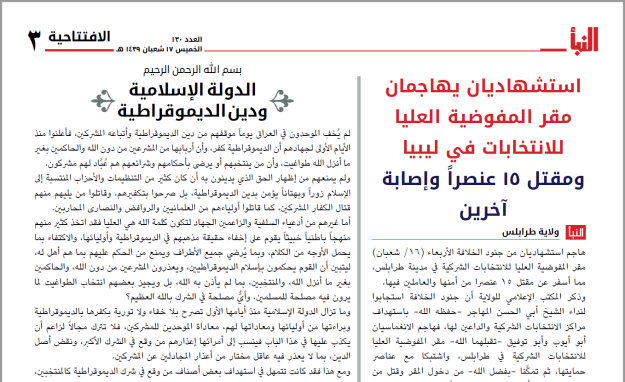
Al-Naba 130, page 3
The 130th edition of Al-Naba, the Islamic State’s (IS) newsletter, was published on 4 May 2018. On page 3, there was an article about IS’s position on democracy, which is reproduced below. Continue reading
By Kyle Orton (@KyleWOrton) on 8 December 2017
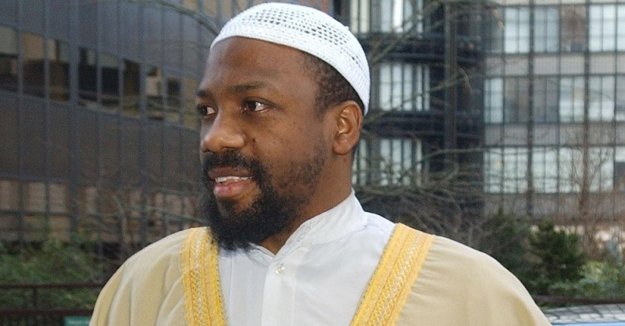
Abdullah al-Faisal
The U.S. Treasury Department sanctioned Abdullah Ibrahim al-Faisal (born: Trevor William Forrest), a Jamaican cleric who supports the Islamic State (IS) on 5 December. This was long overdue. Al-Faisal’s record of disseminating jihadist ideology, and influencing and/or interacting with terrorists, goes back several decades. And since 2014, al-Faisal has been one of IS’s influential English-language propagandist-recruiters. Continue reading
By Kyle Orton (@KyleWOrton) on 20 May 2017
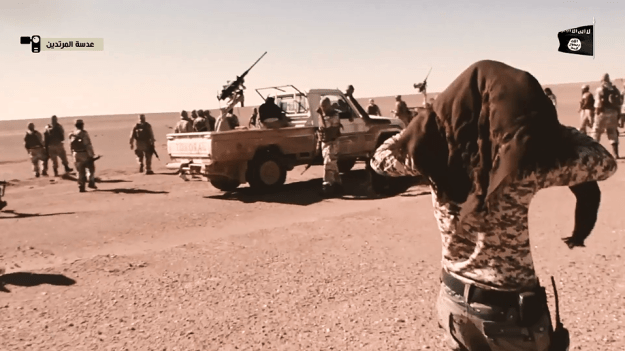
A ruling in the name of the Islamic State’s Delegated Committee, prepared it seems by one of its senior members, Abu Zayd al-Iraqi, was issued on 17 May, expanding the scope of who, within the Muslim community, IS considers a heretic. The memo was addressed to “All Wilayat, Dawawin, and Committees,” and entitled, “That Those Who Perish Would Perish Upon Proof and Those Who Live Would Live Upon Proof”. The wide use of takfir (excommunication) has been one of IS’s most defining and controversial features—even within the jihadist world. This judgment, which comes in the context of a broader centralization of authority—on 14 May a decree banned individual IS fighters from using social media—takes IS into territory akin to the Armed Islamic Group (GIA), which hereticized whole sections of Algeria’s population and began slaughtering them. The text of the ruling was released in English and is reproduced below. Continue reading
Published at The Telegraph
By Kyle Orton (@KyleWOrton) on 21 April 2017
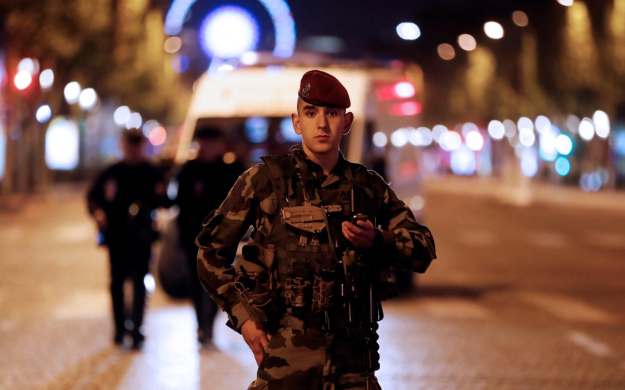
Security forces stand guard after attack in Paris, 20 April 2017 (CREDIT: ETIENNE LAURENT/EPA)
In Paris last night a gunman parked his car, stepped out, and opened fire on a police van outside a Marks & Spencer’s on the Champs Élysées. One policeman was murdered; two were wounded. A female tourist was also injured. The attacker was killed by police as he tried to flee and continue his rampage. Within two hours, the Islamic State (ISIL) had claimed the attack via its Amaq News Agency, and, rather unusually, had named the killer: “Abu Yusuf al-Baljiki”.
It has been widely reported that “Abu Yusuf the Belgian” is really Karim Cheurfi the Frenchman, a 39-year-old imprisoned for fifteen years after being convicted for three counts of attempted murder in 2001. Notably, two of his intended victims were police officers. French media has reported that Cheurfi was briefly arrested on 23 February after expressing an intent to kill law-enforcement officials, but released due to lack of evidence; the Interior Ministry refused to comment. Continue reading


 Kyle Orton's Blog