Tag Archives: Armed Islamic Group

Mohamed Moumou: Islamic State’s Commander of the North

By Kyle Orton (@KyleWOrton) on January 28, 2017

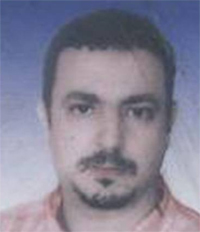
Mohamed Moumou (Abu Qaswara)

Mohamed Moumou (Abu Qaswara)

Mohamed Moumou, better-known as Abu Qaswara, was the Commander of the North for the Islamic State of Iraq (ISI), one of the most powerful military positions in the group, when he was killed by American forces in Mosul on 5 October 2008. Continue reading

Al-Qaeda Leader Focuses on Main Enemies: Saudi Arabia and the Islamic State

By Kyle Orton (@KyleWOrton) on January 13, 2016

1

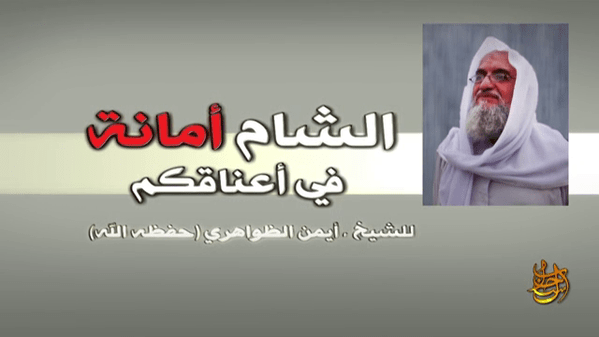
As-Sahab Foundation for Islamic Media Publication, al-Qaeda’s media outlet, produced an English translation of a speech by the organization’s leader, Ayman al-Zawahiri, on 13 January 2016. The speech was entitled, “Syria Is Entrusted Upon Your Necks”. The speech does focus on the West, particularly its de facto alliance with the pro-Assad coalition—namely Russia and Iran—and calls for the Syrian rebellion to unite with al-Qaeda to resist this conspiracy. What is more noticeable, however, is the two enemies on whom Dr. al-Zawahiri really focuses: Saudi Arabia and the Islamic State. The Saudis are accused—not without reason—of having been allied closely to the West and thwarting the jihadist projects at every turn. And al-Zawahiri makes a fierce ideological assault on the Islamic State, comparing them with the Khawarij and the Armed Islamic Group (GIA), whose conduct in Algeria in the 1990s and their justifications for it took Islamist extremism to new depths. The speech is reproduced below with some minor editions, to transliteration and punctuation, and some interesting and important sections highlighted in bold.
Continue reading

Is Le Pouvoir Losing Its Grip on Algeria?

By Kyle Orton (@KyleWOrton) on September 15, 2015

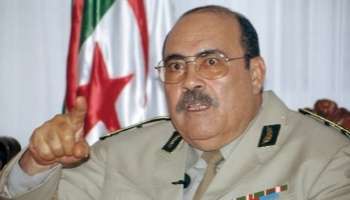
A rare picture of DRS chief Mohamed Mediène (a.k.a. Toufik)

A rare picture of DRS chief Mohamed Mediène (a.k.a. Toufik)

Yesterday, Algeria’s elderly president, Abdelaziz Bouteflika, removed from office Mohamed Mediène (a.k.a. Toufik), the head of DRS (Le Département du Renseignement et de la Sécurité), the spy agency that is the real power behind the throne in Algeria. There is some suggestion this is Bouteflika trying to prepare the way for a civilian government as his time in office—and on the planet—draws to a close. There is little reason to believe, however, that Algeria’s government will be much reformed by Toufik’s departure.
Continue reading

The Long History of Middle Eastern State-Terrorism In Paris

By Kyle Orton (@KyleWOrton) on January 19, 2015

Said Kouachi and Cherif Kouachi

Last week, Lee Smith wrote of the reasons that it was likely that there was a foreign hand, quite probably that of a State, in the attack on Charlie Hebdo and the Jewish deli in Paris. Smith noted that the French believe that the funding and weapons for the attacks came from abroad. Smith pointed to the historical record, in which terrorism in Paris is typically not carried out because of religion—or not directly: it might come from States that see themselves as god’s representatives on earth—or community grievances, but “because you’re getting paid to stage an operation on behalf of a particular cause or regime.” Smith gave three cases, and they seemed worth expanding on. Continue reading

How Dictators Manipulate Jihadists To Defeat The Opposition

By Kyle Orton (@KyleWOrton) on November 9, 2014

Smain Lamari (1941-2007)

Smain Lamari (1941-2007)

This Arab regime claims to be a one-party system but in reality a small Mafia-like cabal of military and intelligence officers have dispensed power for decades. Finally a democratic challenge erupts; people take to the streets demanding first reforms and, when the regime responds with pseudo-reforms and lethal violence, the fall of the government. Eventually the people fight back and an armed struggle breaks out. The regime builds its strategy around provocation, arresting and killing the liberals and democrats, infiltrating the insurgent groups and having the extremists attack the moderates, directing infiltrated groups to commit atrocities that discredit the whole insurgency, and using Iran’s international terrorist networks to lure Salafi-jihadists into the country who can help discredit the opposition’s cause in the eyes of the world. By presenting a binary picture—the regime or a terrorist takeover—the state tries to secure at least tacit support, if not direct intervention, from the West to defeat the insurgency.

No I’m not talking about Syria. This is Algeria. Continue reading

Who Are The Khawarij?

By Kyle Orton (@KyleWOrton) on April 17, 2014

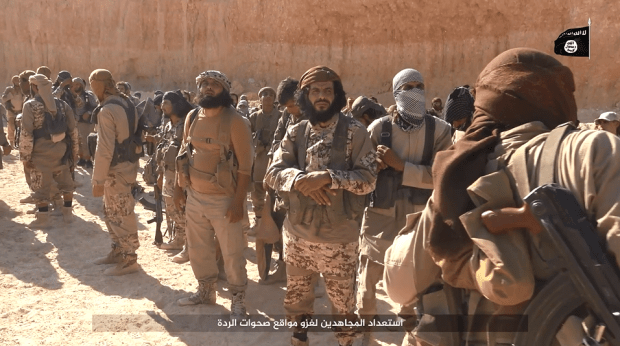
2016-11-10-is-closing-in-on-palmyra-p10

Since the Syrian rebellion went to war with the Islamic State of Iraq and Syria (ISIS) in January, there has been a parallel campaign of political warfare by the rebels and al-Qaeda’s branch in Syria, Jabhat al-Nusra, to delegitimize ISIS. This has often taken the form of referring to ISIS as Kharijites or the Khawarij.

This Khawarij are an ancient sect who broke from the Rashidun (Rightly-Guided) Caliphate in the name of righteous revolt in 658, and continued their campaign against the caliphate—by then in the hands of the Umayyads—for a century and more. Regarded as perhaps the first terrorists in Islamdom (by another definition it would be the Nizaris, a.k.a. “The Assassins”), the connotations of the Khawarij label are extremism and deviance, particularly a tendency to excommunicate (make takfir against) Muslims not only for sins that do not merit excommunication, but simply for reasons of political exclusivism. Continue reading

Algeria’s ‘Years of Blood’: Not Quite What They Seem

By Kyle Orton (@KyleWOrton) on March 21, 2014
1

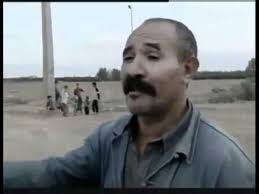
Antar Zouabri, who became leader of the GIA in the summer of 1996

In December 1991, the Algerian government—the military regime in power since the French were expelled—gave in to public pressure, which had already turned sanguinary, and allowed an election. It was quite clear that the Islamic Salvation Front (FIS), a fundamentalist party, would emerge victorious. To forestall the institution of a theocracy, in January 1992, the military launched a coup and shut down the final rounds of the election. A civil war erupted in which the jihadists sought to overpower the secular, if dictatorial, government. By the late 1990s, the jihadists’ savagery had meant their campaign had run aground; the vital centre in Algeria swallowed its misgivings and sought shelter behind the State. By 2002, the civil war was declared over: the jihadist revolt had been beaten.

That is the official story.

Continue reading