By Kyle Orton (@KyleWOrton) on 11 August 2022
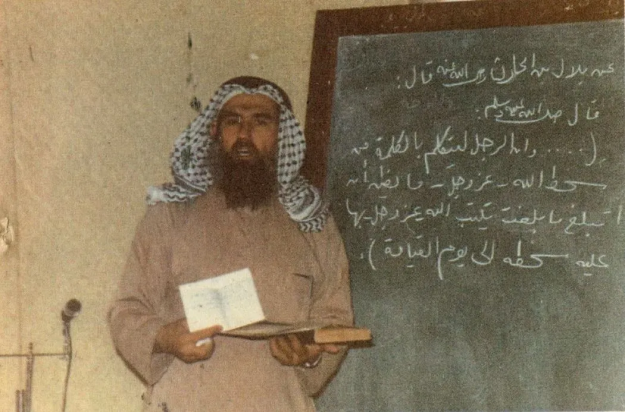
Abdullah Azzam [image source]
By Kyle Orton (@KyleWOrton) on 22 July 2022

The United States announced on 12 July that it had killed the Islamic State’s (ISIS) governor of Syria in a drone strike in the village of Galtan in the Jinderes district of the north-western Syrian province of Efrin on the border with Turkey. The U.S. Central Command (CENTCOM) statement identified the slain man as “Maher al-Agal”, though a more precise transliteration is Maher al-Aqal (ماهر العقال). Riding on the motorcycle alongside Al-Aqal when he was killed was a “senior ISIS official” with whom he was “closely associated”. This ISIS official was “seriously injured during the strike”, CENTCOM notes, adding that the Jinderes strike caused no civilian casualties. Continue reading
By Kyle Orton (@KyleWOrton) on 3 July 2022

An IRA parade in Belfast || Image source
By Kyle Orton (@KyleWOrton) on 18 June 2022
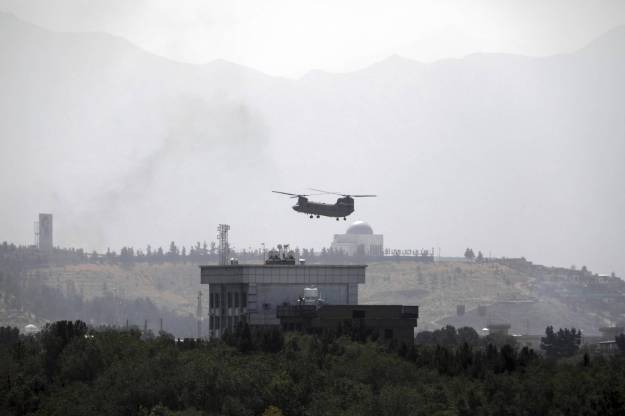
A U.S. helicopter above the American Embassy in Kabul, 15 August 2021 | AP
By Kyle Orton (@KyleWOrton) on 3 February 2022

The compound where Islamic State leader Amir Muhammad al-Mawla killed himself, 3 February 2021 || Image taken from social media
By Kyle Orton (@KyleWOrton) on 15 January 2022
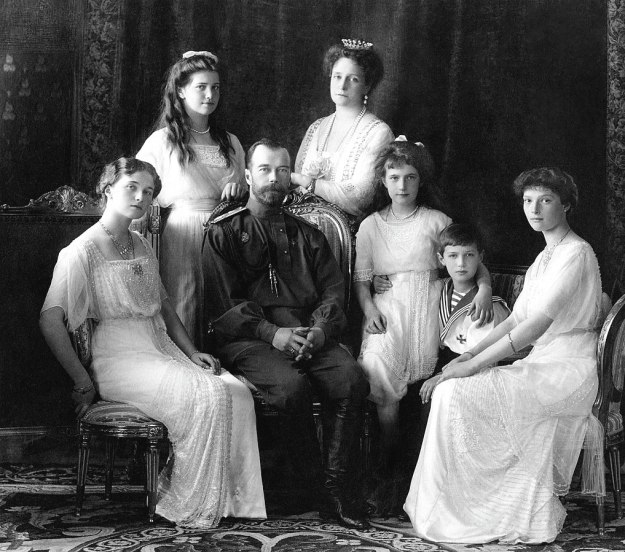
The Russian Imperial Family: Olga, Maria, Nicholas II, Empress Alexandra, Anastasia, Tsesarevich Alexei, and Tatiana. Taken in Crimea, 1913.
By Kyle Orton (@KyleWOrton) on 30 December 2021

Grand Duke Alexander Mikhailovich in exile in France, February 1929
Grand Duke Alexander Mikhailovich (1866-1933), the brother-in-law of Tsar Nicholas II (r. 1894-1917), gives an interesting anecdote in the second volume of his memoirs, Always a Grand Duke, published in the year he died, 1933, showing how the last Russian Emperor conceived of the duties of his office. Continue reading
By Kyle Orton (@KyleWOrton) on 15 December 2021

Tsar Nicholas II and Kaiser Wilhelm II aboard a ship in the Gulf of Finland, 1905
In the early historiography of the Great War, it was accepted that Germany was chiefly responsible, with debates on the margins about the degree of intentionality and premeditation. Of late, however, “It has become fashionable to spread the guilt of the First World War liberally around Europe”, as one prominent historian noted.[1] Some revisionists go even further and try to find another state that is not only equally as culpable as Germany but more so. In this post, I want to, without in any way pretending to be comprehensive, deal with the argument that blames Russia for the 1914-18 War. Continue reading