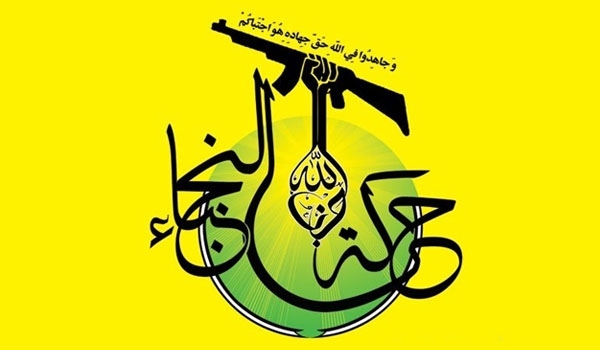
Reuters has published a profile of Harakat Hizballah al-Nujaba (HHN), sometimes simply called Harakat al-Nujaba, a Shi’a militia made up of Iraqi citizens that is loyal to Iran’s Supreme Leader Ali Khamene’i and the revolutionary theocracy’s ideology of absolute wilayat al-faqih (guardianship of the jurist). HHN, which first emerged in the summer of 2013, is one of a web of overlapping Shi’a jihadist groups recruited from Iraq, Afghanistan, Pakistan, and beyond—as far afield as the Ivory Coast—that have been used to spearhead Tehran’s imperial push into the Arab world, particularly the rescue of Bashar al-Asad’s regime in Syria that would otherwise have fallen to a popular rebellion. In recent months, Iran has been raising the profile of HHN. Continue reading →
By recent reports, one could easily come away with the impression that war and instability across the Fertile Crescent are winding down. Predictions about what comes next, always a risky enterprise in the Middle East, are at a point of unique vulnerability. Chaos and violence for some considerable time to come look like a safe bet, though the timing and scale look more uncertain. Nonetheless, certain trendlines are visible, most clearly the emergence of a regional order, abetted by the international coalition’s campaign against the self-proclaimed Islamic State (ISIS), dominated by the Islamic Republic of Iran. Continue reading →
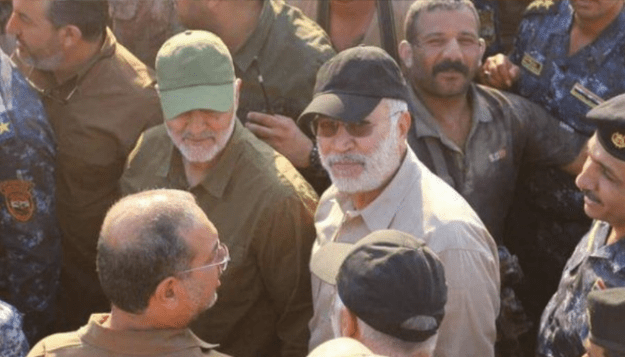
Qassem Suleimani and Jamal Ebrahimi (Abu Mahdi al-Muhandis) touring a battlefront in Fallujah
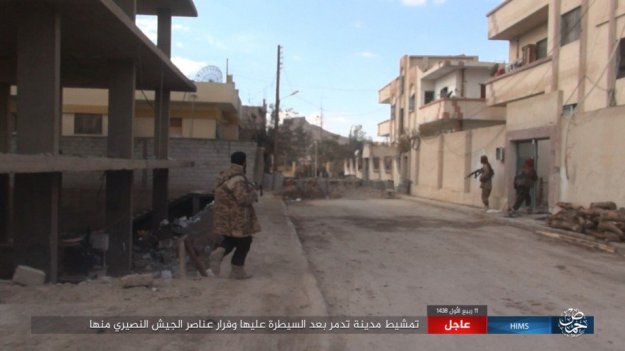
The Iraqi government announced an operation to clear the Islamic State (IS) out of Fallujah on the evening of 22 May. In the intervening three weeks, IS have lost numerous villages and towns around Fallujah and Iraqi counterterrorism forces are said to have entered Fallujah proper in the south.
As the first major city IS took on its way to proclaiming a caliphate in June 2014, the pace of the operation is not the most troubling element. What is disturbing—and what may ultimately undo any military success against IS—is the overtly sectarian nature of the offensive, led not by professional troops loyal to Baghdad, but by militias loyal to Iran and the extremist ideology of Tehran’s clerical regime. Continue reading →
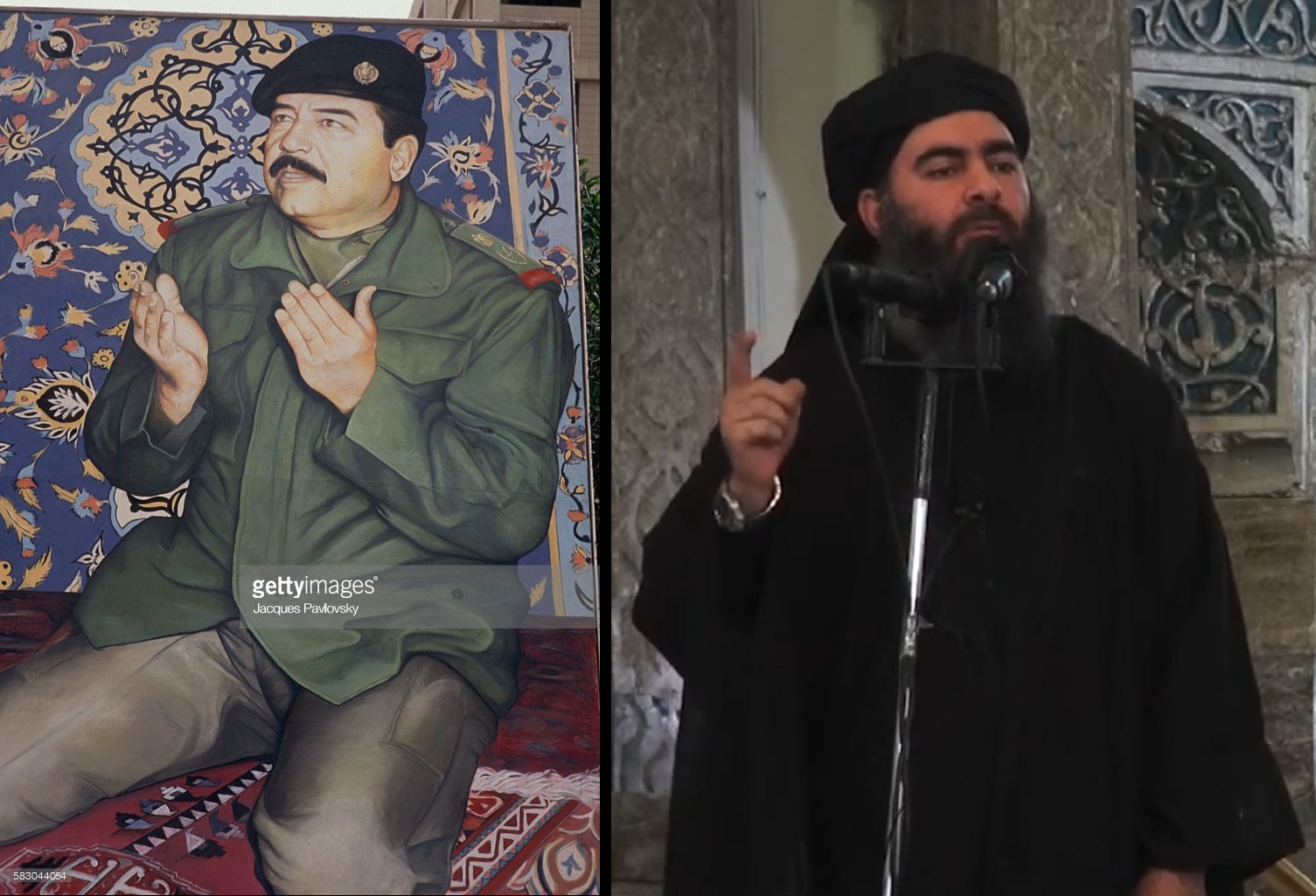
This essay, written to tie together my work on the relationship between the Saddam Hussein regime and the Islamic State, was completed last summer and submitted to an outlet, where it entered a form of development hell. After giving up on that option late last year, the opportunity arose to get a shorter version published in The New York Times in December. But I procrastinated too long over what to do with the full essay and a recent change in my work situation means I no longer have the bandwidth to go through the process of finding it a new home, so here it is.
“Abu-Bakr al Baghdadi is a product of the last decade of Saddam’s reign,” argues Amatzia Baram, a scholar of Iraq. He is correct in at least three ways. First, in its last decade in power, the Iraqi Ba’ath regime transformed into an Islamist government, cultivating a more religious, sectarian population on which the Islamic State (ISIS) could draw. Part of Saddam Hussein’s “Faith Campaign” also involved outreach to Islamist terrorists, including al-Qaeda, which meant that the synthesis of Ba’athism and Salafism that fused into the Iraqi insurgency after the fall of Saddam was already well advanced by the time the Anglo-American forces arrived in Baghdad in 2003. Second, the ISIS leadership and military planning and logistics is substantially reliant on the intellectual capital grown in the military and intelligence services of the Saddam regime. And finally, the smuggling networks on which ISIS relies, among the tribes and across the borders of Iraq’s neighbours, for the movement of men and materiel, are directly inherited from the networks erected by the Saddam regime in its closing decade to evade the sanctions. The advantages of being the successor to the Saddam regime make ISIS a more formidable challenge than previous Salafi-jihadist groups, and one that is likely to be with us for some time.
 Kyle Orton's Blog