By Kyle Orton (@KyleWOrton) on 6 October 2024
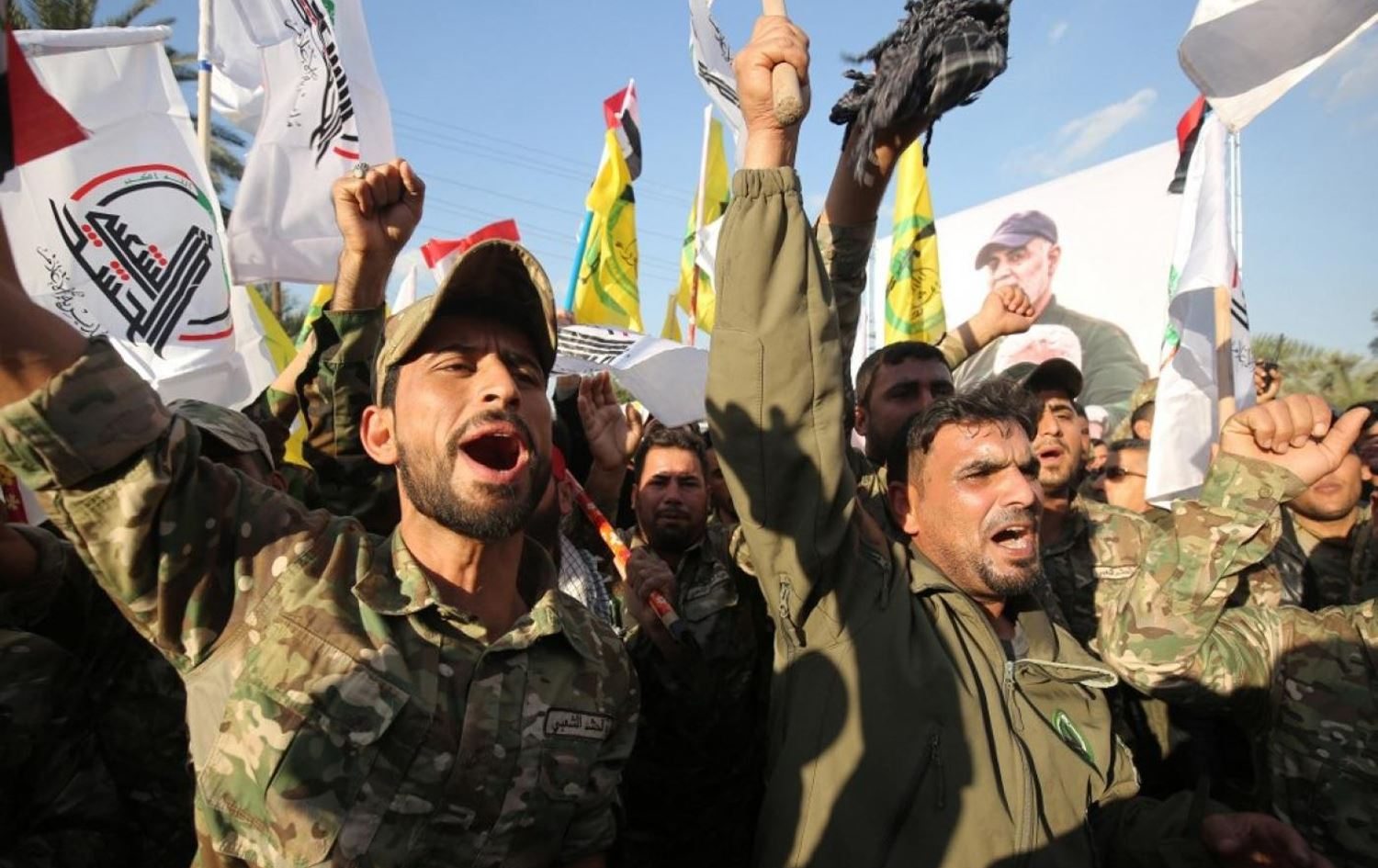
A debate has been ongoing since the emergence of al-Hashd al-Shabi in Iraq in 2014 about the extent of Iran’s control over the militia conglomerate. In truth, there was never really much doubt.
By Kyle Orton (@KyleWOrton) on 6 October 2024
A debate has been ongoing since the emergence of al-Hashd al-Shabi in Iraq in 2014 about the extent of Iran’s control over the militia conglomerate. In truth, there was never really much doubt.
By Kyle Orton (@KyleWOrton) on 9 March 2019
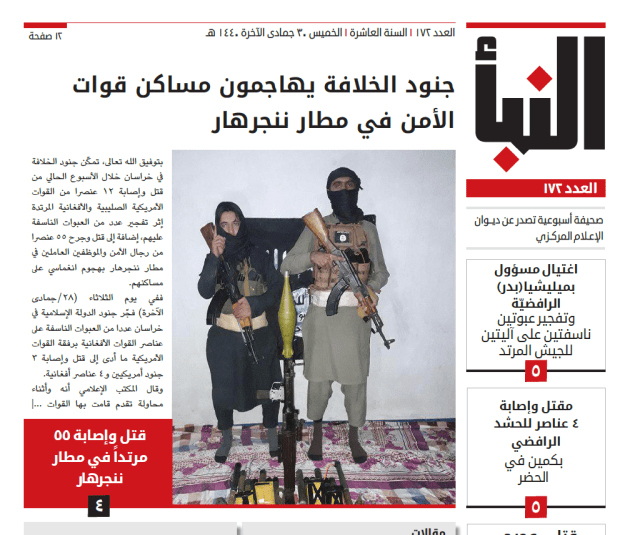
Al-Naba 172 front page
The Islamic State (IS) released the 172nd edition of Al-Naba, its newsletter, on 7 March 2019. Continue reading
By Kyle Orton (@KyleWOrton) on 14 September 2017
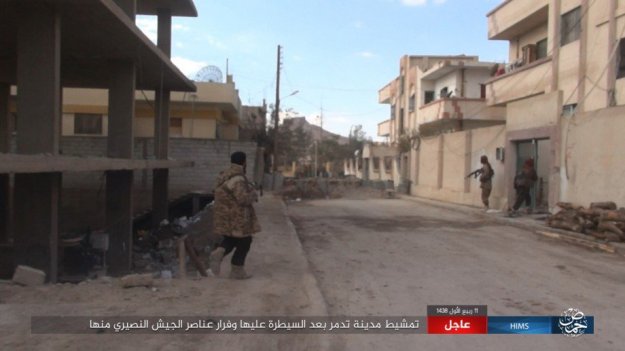
By recent reports, one could easily come away with the impression that war and instability across the Fertile Crescent are winding down. Predictions about what comes next, always a risky enterprise in the Middle East, are at a point of unique vulnerability. Chaos and violence for some considerable time to come look like a safe bet, though the timing and scale look more uncertain. Nonetheless, certain trendlines are visible, most clearly the emergence of a regional order, abetted by the international coalition’s campaign against the self-proclaimed Islamic State (ISIS), dominated by the Islamic Republic of Iran. Continue reading
By Kyle Orton (@KyleWOrton) on June 13, 2016
Published at The New Arab.
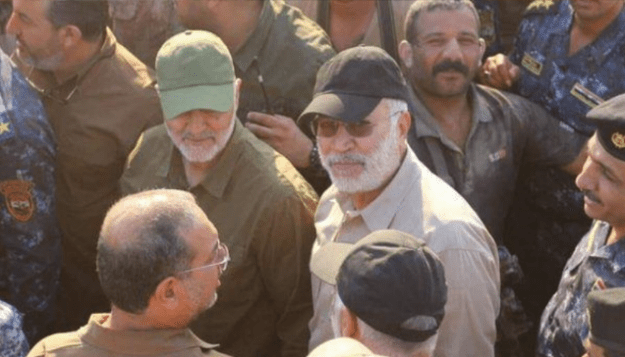
Qassem Suleimani and Jamal Ebrahimi (Abu Mahdi al-Muhandis) touring a battlefront in Fallujah
The Iraqi government announced an operation to clear the Islamic State (IS) out of Fallujah on the evening of 22 May. In the intervening three weeks, IS have lost numerous villages and towns around Fallujah and Iraqi counterterrorism forces are said to have entered Fallujah proper in the south.
As the first major city IS took on its way to proclaiming a caliphate in June 2014, the pace of the operation is not the most troubling element. What is disturbing—and what may ultimately undo any military success against IS—is the overtly sectarian nature of the offensive, led not by professional troops loyal to Baghdad, but by militias loyal to Iran and the extremist ideology of Tehran’s clerical regime. Continue reading
By Kyle Orton (@KyleWOrton) on April 26, 2016
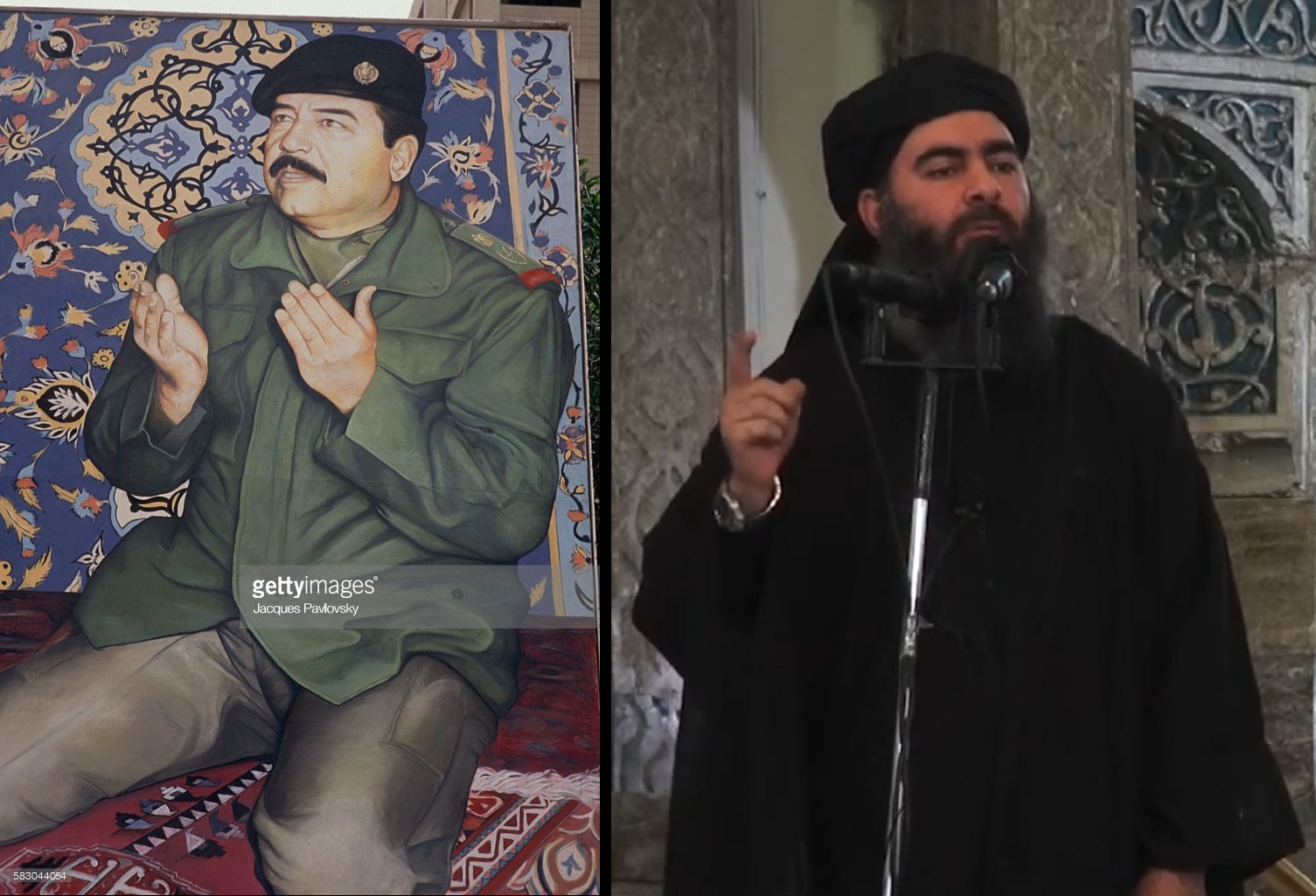
This essay, written to tie together my work on the relationship between the Saddam Hussein regime and the Islamic State, was completed last summer and submitted to an outlet, where it entered a form of development hell. After giving up on that option late last year, the opportunity arose to get a shorter version published in The New York Times in December. But I procrastinated too long over what to do with the full essay and a recent change in my work situation means I no longer have the bandwidth to go through the process of finding it a new home, so here it is.
“Abu-Bakr al Baghdadi is a product of the last decade of Saddam’s reign,” argues Amatzia Baram, a scholar of Iraq. He is correct in at least three ways. First, in its last decade in power, the Iraqi Ba’ath regime transformed into an Islamist government, cultivating a more religious, sectarian population on which the Islamic State (ISIS) could draw. Part of Saddam Hussein’s “Faith Campaign” also involved outreach to Islamist terrorists, including al-Qaeda, which meant that the synthesis of Ba’athism and Salafism that fused into the Iraqi insurgency after the fall of Saddam was already well advanced by the time the Anglo-American forces arrived in Baghdad in 2003. Second, the ISIS leadership and military planning and logistics is substantially reliant on the intellectual capital grown in the military and intelligence services of the Saddam regime. And finally, the smuggling networks on which ISIS relies, among the tribes and across the borders of Iraq’s neighbours, for the movement of men and materiel, are directly inherited from the networks erected by the Saddam regime in its closing decade to evade the sanctions. The advantages of being the successor to the Saddam regime make ISIS a more formidable challenge than previous Salafi-jihadist groups, and one that is likely to be with us for some time.
By Kyle Orton (@KyleWOrton) on May 16, 2015
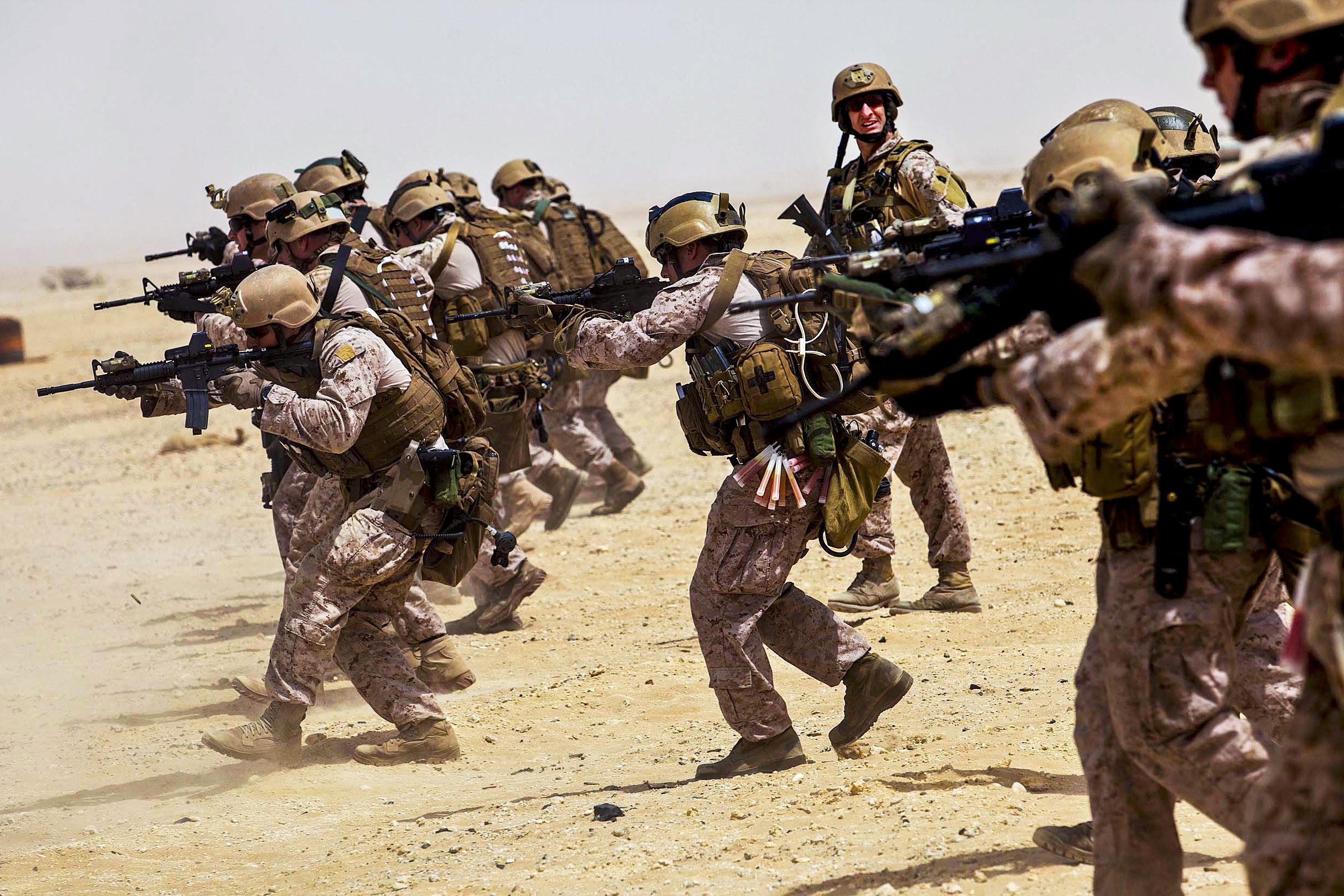
Last night the United States launched a commando raid into al-Amr in Deir Ezzor in eastern Syria. According to the White House statement, Abu Sayyaf (real name: Fathi ben Awn ben Jildi Murad al-Tunisi), a senior Islamic State (ISIS) commander “overseeing … illicit oil and gas operations,” was killed, and his wife, Umm Sayyaf, was taken into American custody and is being held in Iraq. The Sayyaf couple had been holding a young Yazidi woman as a slave and she has now been freed.
Unfortunately, this American raid is a tactical success amid a strategic failure—and a tactical success likely to be used to obscure the strategic failure of the U.S. anti-ISIS campaign. Even in the narrowest humanitarian terms: if the freedom of this one Yazidi girl is used to perpetuate a policy that leaves many more Yazidi girls in bondage then it is a failure. Continue reading
By Kyle Orton (@KyleWOrton) on March 18, 2015
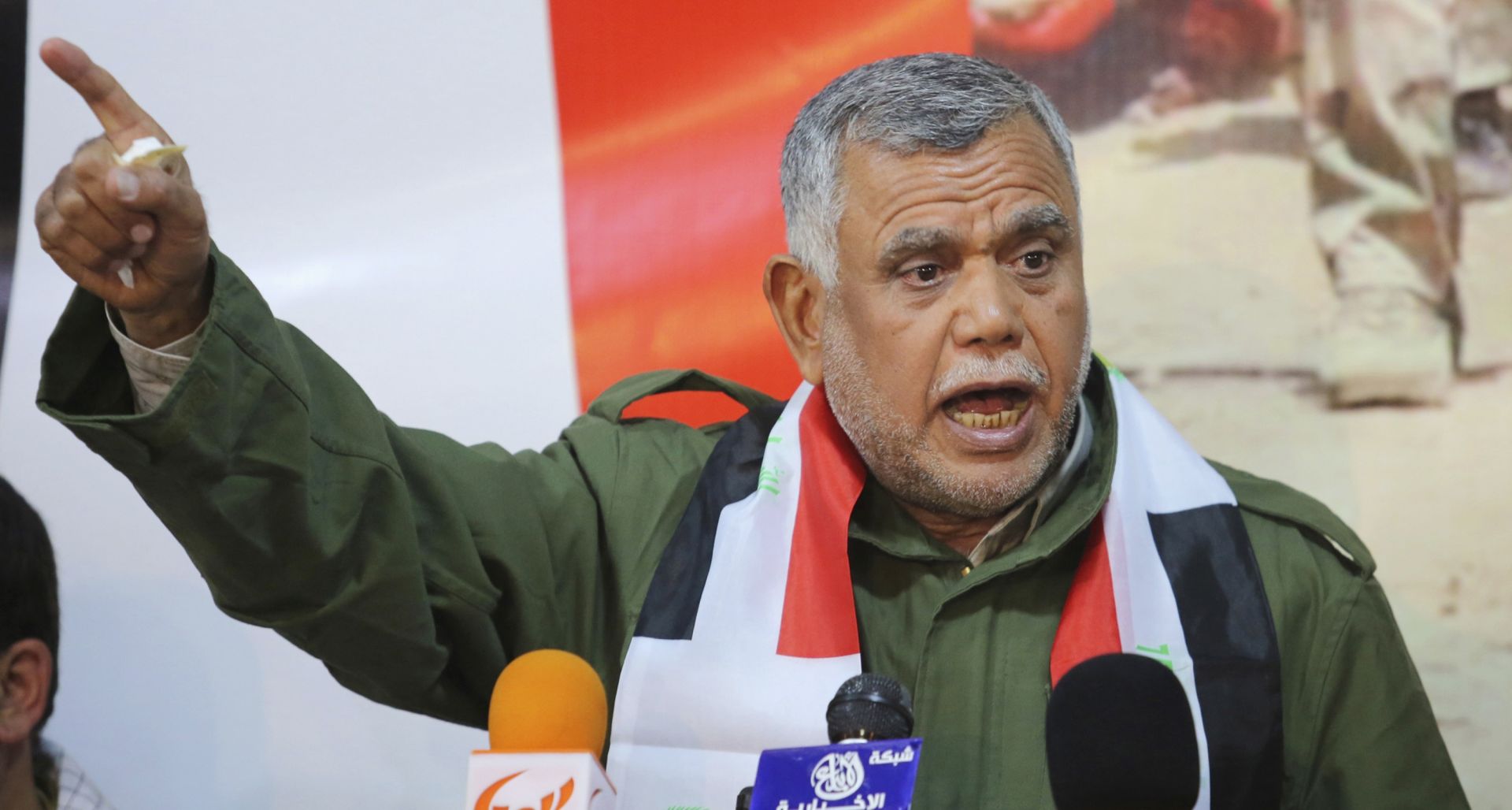
Badr Corp commander Hadi al-Ameri
This morning Human Rights Watch released a report, “After Liberation Came Destruction: Iraqi Militias and the Aftermath of Amerli.”
Amerli is a town of about 25,000 people, mostly Shi’a Turcomen, in the east of Saladin Province, close to Diyala Province, sixty miles from the Iranian border.
The Islamic State (ISIS) invaded Iraq from Syria, conquering Mosul on June 10, 2014, then swept across central Iraq into Diyala. In a situation not dissimilar to the Assad regime’s terror-sieges and ISIS surrounding of the Yazidis on Sinjar Mountain, ISIS imposed a siege on the population of Amerli on June 14.
By the time the Iraqi government forces and Hashd al-Shabi (a.k.a. the Popular Mobilization Units, PMUs), the Shi’ite militias that are largely Iran proxies, broke the siege on August 31, with the help of airstrikes from the American-led Coalition, “at least 15 civilians in Amerli, including newborn infants, had died from lack of food, water or medical treatment, and more than 250 children were suffering from severe malnutrition and dehydration,” HRW reports. On Sept. 1, the militias and Iraqi Security Forces (ISF) entered Amerli. Continue reading
By Kyle Orton (@KyleWOrton) on March 15, 2015

Qassem Suleimani
Iraq’s Prime Minister Haider al-Abadi announced the beginning of an offensive on March 1 to dislodge the Islamic State (ISIS) from Salah ad-Din Province. Abadi announced that this would be led by the Iraqi army and Hashd al-Shabi, known in English as the Popular Mobilization Units (PMUs), the militias composed overwhelmingly of Shi’ites and directed by Iran.
While the offensive seems to be winding down, it is not over. ISIS is out of ad-Dawr/Dour and al-Awja, south of Tikrit, and Albu Ajeel to the east. Al-Alam to the north seems to still be contested. On March 10, ISIS was driven out of al-Qadissiya, a northern district of Tikrit City. On March 11, the anti-ISIS forces entered Tikrit City, “inched closer to the city center … and took up positions in a military hospital, the police academy and the traffic police headquarters … Forces in southern districts took over three palaces erected by former dictator Saddam Hussein”. Continue reading
By Kyle Orton (@KyleWOrton) on February 12, 2015
In watching the Syrian conflict, one of the most extraordinary tendencies of the reporting is the way “foreign fighter” and “jihadist” have become synonymous with the Sunni militants who have descended on that tormented country. This is one among many illusions that will hopefully be ended by Phillip Smyth’s monograph, “The Shiite Jihad in Syria and its Regional Effects“. You should read the whole thing but below are the salient points I took away. Continue reading
By Kyle Orton (@KyleWOrton) on October 27, 2014
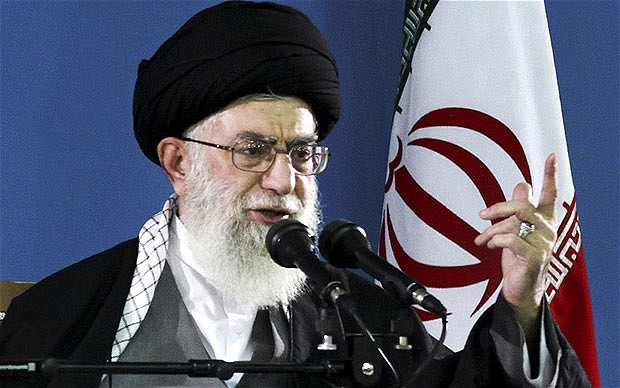
Ali Khamenei
When the next—and supposedly final—round of negotiations over Iran’s nuclear program end next month, there are three possible outcomes:
How did we get here? Continue reading
 Kyle Orton's Blog