By Kyle Orton (@KyleWOrton) on 12 December 2018

© AP Photo / Jim Hollander, Pool
Essay: “Zionism is Making Us Stupid”: The Russian Relationship with Israel from the Soviets to Putin Continue reading
By Kyle Orton (@KyleWOrton) on 12 December 2018
© AP Photo / Jim Hollander, Pool
Essay: “Zionism is Making Us Stupid”: The Russian Relationship with Israel from the Soviets to Putin Continue reading
By Kyle Orton (@KyleWOrton) on 20 November 2018
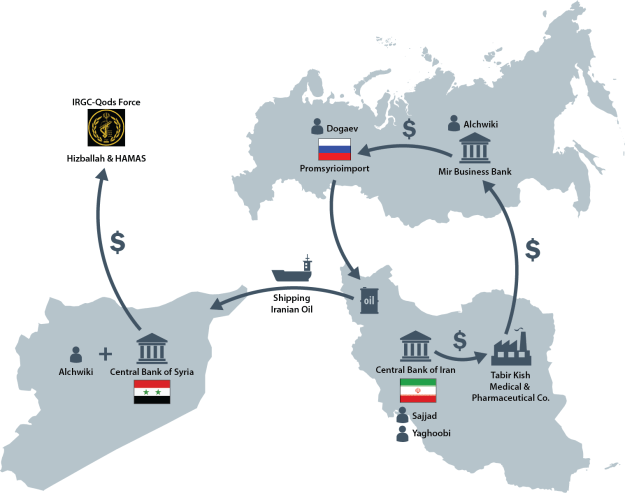
Visual representation of the Alchwiki Network (source: U.S. Treasury)
The United States Treasury Department’s Office of Foreign Assets Control (OFAC) sanctioned ten targets today, targeting an “international network through which the Iranian regime, working with Russian companies, provides millions of barrels of oil to” Bashar al-Assad’s regime in Syria, and “[t]he Assad regime, in turn, facilitates the movement of hundreds of millions of U.S. dollars (USD) to the Islamic Revolutionary Guard Corps-Qods Force (IRGC-QF),” the expeditionary wing of Tehran’s spy-terrorist apparatus, “for onward transfer to HAMAS and Hizballah.” Continue reading
This article was originally published at The Brief
By Kyle Orton (@KyleWOrton) on 26 October 2018

At the beginning of September, New America published a paper, based on recovered al-Qaeda documents, which concluded that there was “no evidence of cooperation” between the terrorist group and the Islamic Republic of Iran. New America’s study lauds itself for taking an approach that “avoids much of the challenge of politicization” in the discussion of Iran’s relationship with al-Qaeda. This is, to put it mildly, questionable.
A narrative gained currency in certain parts of the foreign policy community during the days of the Iraq war, and gained traction since the rise of the Islamic State (IS) in 2014, that Iran can be a partner in the region, at least against (Sunni) terrorism, since Tehran shares this goal with the West. Under President Barack Obama, this notion became policy: the US moved to bring Iran’s revolutionary government in from the cold, to integrate it into the international system. Continue reading
By Kyle Orton (@KyleWOrton) on 5 September 2018
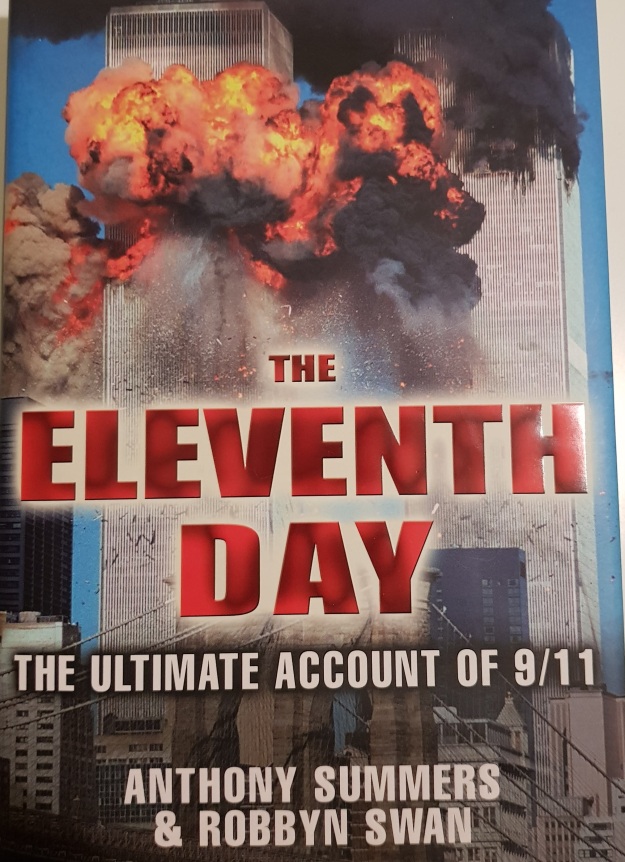
In less than a week, it will be the seventeenth anniversary of al-Qaeda’s “Plane’s Operation”, the assault on the United States. It is a vertiginous enough reflection that many of us have been alive more years since 11 September 2001 than before it, and positively alarming that many of those who will soon move into the government, media, and other leading societal institutions will have been born after an event that still shapes so much of the international scene. As Anthony Summers and Robbyn Swan put it in The Eleventh Day: The Ultimate Account of 9/11 (2011), we are left with “the brief name ‘9/11’,” the context and meaning stripped away all this time later. The book is a useful overview of an event that should always be to some degree fresh in mind, though it is not without its problems in its analytical sections. Continue reading
By Kyle Orton (@KyleWOrton) on 19 August 2018
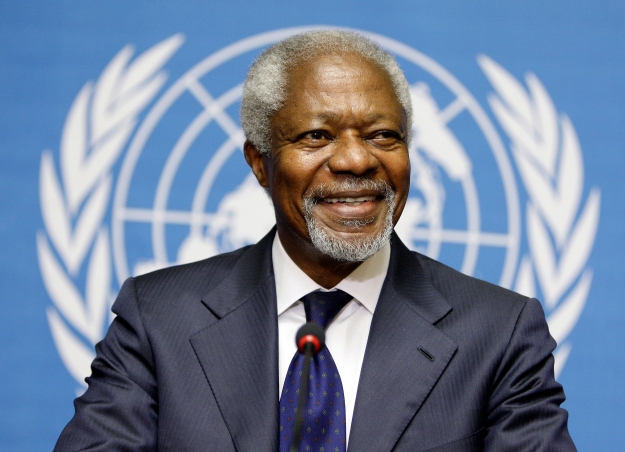
Kofi Annan (picture source)
Kofi Annan, the Secretary-General of the United Nations between 1997 and 2006, died yesterday aged 80. Annan and the U.N. received the Nobel Peace Prize in 2001, and he was credited with “bringing new life to the organization” and emphasising “its obligations with regard to human rights”. The reality was quite different, and Annan’s disastrous record was hardly confined to his time at the helm. Both before (as head of the U.N. peacekeeping department) and after (as U.N. and Arab League envoy to Syria), Annan presided over some of the institution’s worst catastrophes. Continue reading
By Kyle Orton (@KyleWOrton) on 8 December 2017

Abdullah al-Faisal
The U.S. Treasury Department sanctioned Abdullah Ibrahim al-Faisal (born: Trevor William Forrest), a Jamaican cleric who supports the Islamic State (IS) on 5 December. This was long overdue. Al-Faisal’s record of disseminating jihadist ideology, and influencing and/or interacting with terrorists, goes back several decades. And since 2014, al-Faisal has been one of IS’s influential English-language propagandist-recruiters. Continue reading
By Kyle Orton (@KyleWOrton) on 5 August 2017
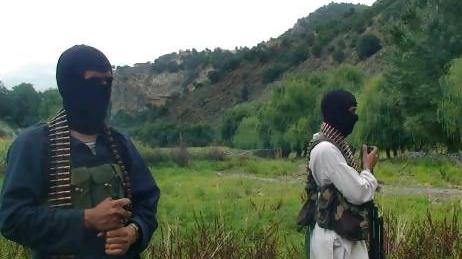
Taliban jihadists (image source)
The New York Times reported on the growing closeness of relations between the governments in Iran and Russia, and the Taliban movement in Afghanistan, something that became especially salient earlier this year and which has been visible for at least two years. Continue reading
By Kyle Orton (@KyleWOrton) on 4 August 2017
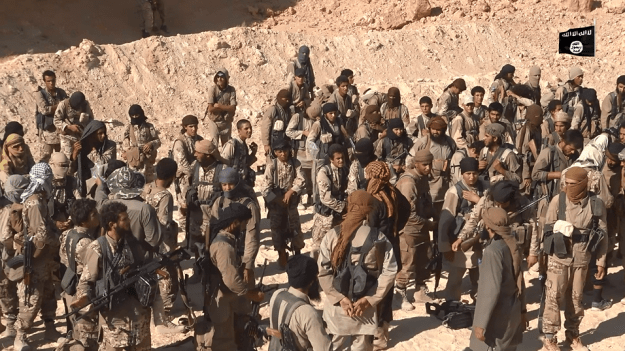
The Coalition announced yesterday that it had killed eight Islamic State (IS) “leaders involved in directing external operations, as well as bomb-making, directed at regional and Western targets”. Continue reading
Published at The Telegraph
By Kyle Orton (@KyleWOrton) on 21 April 2017

Security forces stand guard after attack in Paris, 20 April 2017 (CREDIT: ETIENNE LAURENT/EPA)
In Paris last night a gunman parked his car, stepped out, and opened fire on a police van outside a Marks & Spencer’s on the Champs Élysées. One policeman was murdered; two were wounded. A female tourist was also injured. The attacker was killed by police as he tried to flee and continue his rampage. Within two hours, the Islamic State (ISIL) had claimed the attack via its Amaq News Agency, and, rather unusually, had named the killer: “Abu Yusuf al-Baljiki”.
It has been widely reported that “Abu Yusuf the Belgian” is really Karim Cheurfi the Frenchman, a 39-year-old imprisoned for fifteen years after being convicted for three counts of attempted murder in 2001. Notably, two of his intended victims were police officers. French media has reported that Cheurfi was briefly arrested on 23 February after expressing an intent to kill law-enforcement officials, but released due to lack of evidence; the Interior Ministry refused to comment. Continue reading
Originally published at The Henry Jackson Society
By Kyle Orton (@KyleWOrton) on 9 April 2017

The eighth edition of the Islamic State’s magazine, Rumiyah (Rome), was released on 5 April 2017, and contained an obituary for one of the architects of the magazine itself. Named by his kunyas, Abu Sulayman al-Shami, Abu Sulayman al-Halabi, Abu Maysara al-Shami, and Ahmad Abdul-Badi Abu Samrah, the jihadist referred to is Ahmad Abousamra, a U.S.-Syrian dual citizen. Abousamra is quite possibly the most senior American ever to have been in IS’s ranks, and the Rumiyah article gives a very interesting glimpse more generally of IS’s hierarchy. Continue reading
 Kyle Orton's Blog