Tag Archives: Byzantium

When Did the “Roman” Empire Become the “Byzantine” Empire?

By Kyle Orton (@KyleWOrton) on 12 June 2021

A painting representing the Byzantines use of “Greek fire” to repel the Arab siege of Constantinople, 674-78

The use of the word “Byzantium” for the Eastern Roman Empire is inescapable, though it is best thought of as a term of convenience rather than definition. For one thing, the inhabitants never called themselves “Byzantines”: they always thought of themselves as “Romans”, though using the Greek work “Romaioi”. The easiest way to see the problem is to ask: When did the Byzantine Empire begin? Continue reading

Islamic State Comments on the Gaza War and Escalates in Afghanistan

By Kyle Orton (@KyleWOrton) on 22 May 2021

Al-Naba 287, page three

The last two issues of Al-Naba, the weekly newsletter of the Islamic State (IS), had a number of interesting items, most obviously finally breaking its silence on the latest flare-up between Israel and HAMAS. Continue reading

The Impact of Plague: From Antiquity to the Present

By Kyle Orton (@KyleWOrton) on 21 March 2021

Almost exactly a year ago, the British government announced the first lockdown to counter the effects of the coronavirus pandemic, and around the same time such measures were adopted in almost every other country. With Britain having now vaccinated nearly half the country, including all of the most vulnerable, and Prime Minister Boris Johnson having set out a timetable for the lifting of restrictions, it is possible to think of the post-COVID 19 situation and to wonder about how or if it will be different to what came before. Continue reading

Islam’s Origins Make For An Extraordinary Story, But Not A Miracle

By Kyle Orton (@KyleWOrton) on March 20, 2016

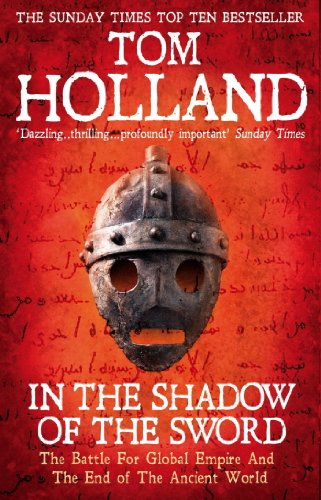
Tom Holland’s In the Shadow of the Sword: The Battle for Global Empire and the End of the Ancient World (2012) is a smooth read, a feat hardly foreordained in a book that exceeds 500 pages in length. Holland writes narratively, giving his interpretation of the most likely scenario of Islam’s origins—and then presents the extended evidence and debates in endnotes for those who wish to dig into the weeds. This has gotten him into trouble among haughtier reviewers for writing “pop history”, which appears to mean an exploration of the past that there is a danger people will want to read.

Continue reading