Tag Archives: Central Intelligence Agency

The CIA and Iraq: Intelligence Failures, Media Successes

By Kyle Orton (@KyleWOrton) on 28 December 2019

In a long article last week, I looked at why the U.S. ran a formal occupation of Iraq for fourteen months after the fall of Saddam Husayn in April 2003, given that there had been an explicit pre-invasion decision not to have an occupation government. The short answer is that the occupation was installed through deception by the State Department, supported by the Central Intelligence Agency (CIA). State and CIA had argued for a protracted occupation in the Situation Room debates in 2002, but President George W. Bush had sided with the Pentagon, which advocated a rapid transfer of power to Iraqis. Having lost in the formal inter-agency process, the State Department succeeded by subversion in getting its way on the ground in Iraq. The disaster this caused in the mismanagement of post-Saddam Iraq was, as the article explained in detail, only the most serious impact of the toxic schism between State/CIA and the Pentagon, a factor whose import is difficult to overstate when examining how the Bush administration functioned. (This feud also at times drew in the Vice President’s Office, which tended to support the Pentagon.)

Continue reading

The Intelligence Value of the Iraqi National Congress

By Kyle Orton (@KyleWOrton) on 27 December 2019

The Iraqi National Congress (INC), the umbrella group for the Iraqi opposition to Saddam Husayn from the 1990s up to 2003, has been immensely controversial, mostly because of its leader, Ahmad Chalabi, against whom the Central Intelligence Agency (CIA) and State Department waged a bitter bureaucratic war, a lot of it in the press, getting into circulation stories of INC trickery—possibly on behalf of Iran—being behind the Bush administration’s decision to invade Iraq.

Continue reading

Why Was There Ever An American Occupation of Iraq?

By Kyle Orton (@KyleWOrton) on 22 December 2019

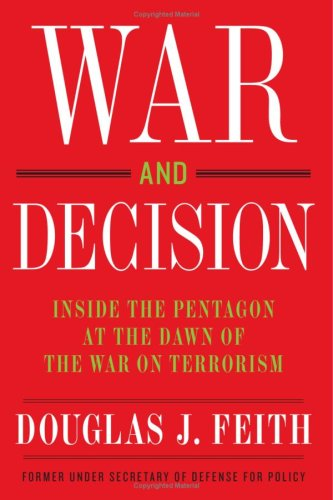
Douglas Feith was the U.S. Under Secretary of Defense for Policy from 2001 to 2005, one of the most senior positions at the Pentagon during one of the most consequential periods in recent history, covering the 11 September 2001 atrocities and early phase of the U.S.-led response. Feith later wrote a highly illuminating memoir, War and Decision: Inside the Pentagon at the Dawn of the War on Terrorism, which tried to drain some of the hysteria out of the public “debate” about the Iraq dimension of the U.S. policy in particular by explaining the internal arguments in the Bush administration leading up to the decision to finish with Saddam Husayn in 2003, and trying to set those arguments in their proper historical context, both in relation to Iraq—where “the war” had begun twelve years earlier—and the altered American threat perceptions in the shadow of 9/11. Unlike a lot of the gossipy tomes that emerged from former officials, Feith’s book is notably light on opinion and contains reams of declassified documents so readers can check his analysis against the source material. One of Feith’s key judgments is that “the chief mistake was maintaining an occupation government in Iraq for over a year”.[1] As Feith explains in great detail in the book, this was never supposed to happen. So how did it?

Continue reading

When Terrorism … Isn’t

By Kyle Orton (@KyleWOrton) on 15 April 2019

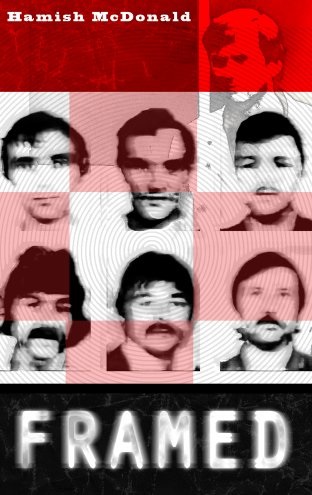
In February 1979, police in south-eastern Australia arrested six people. The suspects were members of the Croatian nationalist scene that agitated against Communist Jugoslavija and they had planned to commit a series of attacks against symbols of Marshal Tito’s regime that could have killed hundreds of Australians. Except they hadn’t, as Hamish McDonald, a journalist with the Sydney Morning Herald, shows in Framed (2012). Despite the “Croatian Six” being convicted for terrorism and spending a decade in prison, the reality of what had happened was nearly the exact opposite—and at least some powerful people in the Australian government knew or suspected as much from the get-go. Continue reading

Who Killed Kennedy?

By Kyle Orton (@KyleWOrton) on 18 September 2018

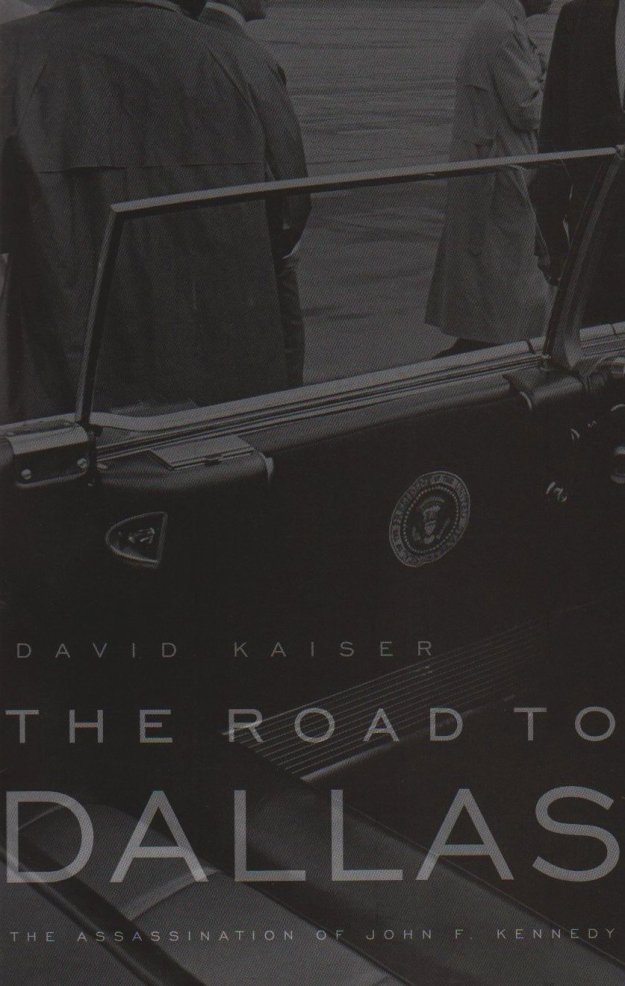
To even pose the question is, for most of us, to be already well-advanced down the road of madness that leads to saying the U.S. federal government murdered President John F. Kennedy. Dr. David Kaiser’s The Road to Dallas (2008) rejects such vast conspiracy theories, as it does the notion of Lee Harvey Oswald as the lone killer. Kaiser instead argues for a more limited conspiracy, led by the mob bosses of mid-20th century America, and originating in the grey-zone where that world met the Cuban exile community and the Central Intelligence Agency’s efforts to bring down Fidel Castro. Continue reading

American Intelligence Acknowledges Anti-ISIS Coalition’s Kurdish Partner is a Terrorist Group

By Kyle Orton (@KyleWOrton) on 27 January 2018

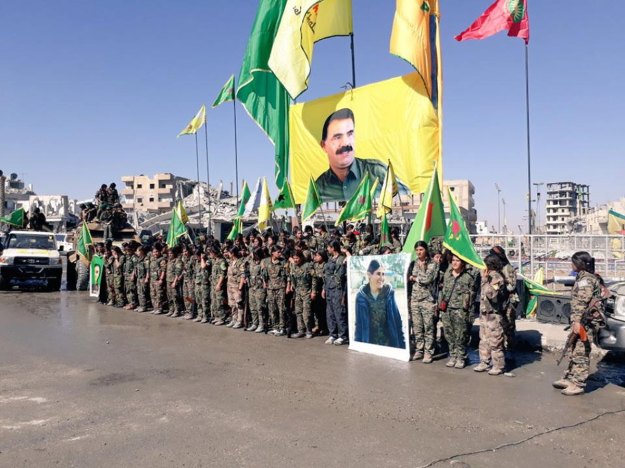
YPG/YPJ fighters raise the banner of the PKK leader Abdullah Ocalan in Raqqa city on 19 October 2017 (YPG Press Office)

The Central Intelligence Agency has publicly recognized that the Kurdish partner force the United States-led Coalition against the Islamic State (IS) has been working with in Syria is a subsidiary of the terrorist-designated Kurdistan Workers’ Party (PKK). Continue reading

When Iran Saved Al-Qaeda

By Kyle Orton (@KyleWOrton) on 24 January 2018

The new book by the investigative journalists Adrian Levy and Catherine Scott-Clark, The Exile: The Flight of Osama bin Laden, charts the career of al-Qaeda’s founder, Osama bin Laden, up to the day he became a household name—11 September 2001—through his downfall in 2011, to the end of 2016, when al-Qaeda was more powerful than ever. It is a thoroughly absorbing account, bringing to light vast tranches of new facts, including many intricate details of how al-Qaeda operated on a human, day-to-day level, and of those states and para-states that shielded the terror network, collaborated with it, and enabled it—and still do.

The gathering of the Bin Laden network in Sudan and then in the Taliban-held areas of Afghanistan in the 1990s is a familiar story, but the splits and debates among the Arab jihadists around Bin Laden, including the opposition of significant numbers of them to the 9/11 massacre, is perhaps less well known. The authors trace out how Bin Laden manipulated his own quasi-institutions to get his way. First, Bin Laden took on the plan of a man, Khalid Shaykh Muhammad (KSM), who was not even a member of al-Qaeda, and then, ahead of the crucial vote, packed the shura (consultation) council with ultra-zealous Egyptians by engineering a merger between al-Qaeda and Islamic Jihad, led by Ayman al-Zawahiri. Continue reading

The Role of Turkey in Syria

By Kyle Orton (@KyleWOrton) on 16 August 2017

Recep Tayyip Erdogan (image source)

The Turkish government has gotten more and more deeply involved in Syria since the uprising began in 2011. But Turkey now finds its original aim, namely the overthrow of Bashar al-Assad’s regime, unattainable, creating tensions with the Syrian armed opposition, its primary lever inside Syria, and there are considerable problems stabilizing the zone of Syria that came under Turkish occupation after Ankara’s direct intervention in 2016. The defeat of Turkey’s primary objective has been accompanied by the rise of further problems, notably the exacerbation of its longest-standing internal security threat, that posed by the Kurdistan Workers’ Party (Partiya Karkerên Kurdistan – PKK), and the generation of new internal threats, from the Islamic State (IS) and potentially from al-Qaeda-linked groups. The options for solving these problems are constrained and unpalatable. Continue reading

Film Review: Snowden (2016)

By Kyle Orton (@KyleWOrton) on November 29, 2016

1

Snowden never, ever recovers from its premise: that Edward Snowden, a super-capable, pure-hearted all-American, found terrible government crimes against the American population while working at the National Security Agency, and was moved to disclose them to the world after being stymied in official channels.

Literally none of that is true. The Snowden revelations found mistakes that were generally cleared up by an efficient and functional bureaucratic oversight mechanism. Snowden did not try to go official channels in the way he described, and the bulk of what Snowden revealed was nothing to do with the privacy of Americans but was related to foreign intelligence, where the legal and practical situation is that everyone hoovers up as much data as they can. The capabilities of the Snowden presented here, personal and professional—to say nothing of Joseph Gordon-Levitt’s Snowden’s motives—would not withstand scrutiny for a single second against the actual historical record. This could be said fairly generally of the whole film. Continue reading

Trump Might Continue Obama’s Dangerous Syria Policy

Originally published at The Henry Jackson Society

By Kyle Orton (@KyleWOrton) on November 24, 2016

There is not yet any clarity with regard what Donald Trump would do about Syria once he becomes President. Virtually everything about the incoming administration is in the “wait and see” phase. Still, on the current evidence, Trump’s Syria policy would appear to be a continuation of President Barack Obama’s policy of prioritizing the threat of the Islamic State (IS) and other non-state Sunni jihadist groups, while effectively aligning with the pro-regime coalition, made up of Russian air power and a ground force led by the Islamic Republic of Iran, stitched together out of the battered remnants of Bashar al-Assad’s army and his sectarian militias, Iranian paramilitary and regular forces, and foreign Shi’a jihadist groups under Iran’s control. The only potential difference is that Trump may formally repudiate the anti-Assad forces. The effect of this would be to destroy the mainstream Syrian opposition and empower al-Qaeda, but it would not bring stability to Syria. There are hints, however, that Trump is recruiting senior officials who will alter this policy. Continue reading