By Kyle Orton (@KyleWOrton) on 19 January 2026
By Kyle Orton (@KyleWOrton) on 7 January 2020
This article was originally published at European Eye on Radicalization
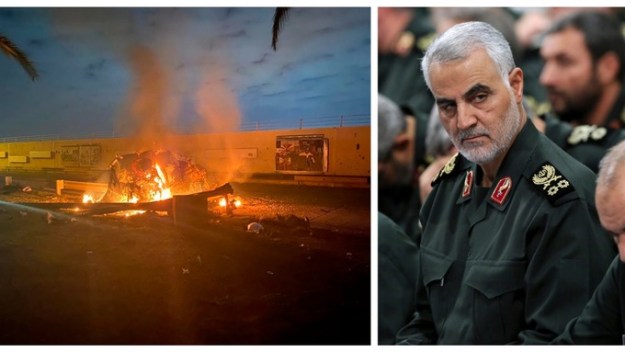
At 1 AM on 3 January, an American drone strike killed the head of Iran’s Quds Force, the division of the Islamic Revolutionary Guards Corps (IRGC) charged with exporting the Islamic revolution, and his Iraqi deputy, Jamal al-Ibrahimi (Abu Mahdi al-Muhandis). Sulaymani was the strategic driver of Iran’s expansionist policy in the Middle East, as well as the orchestrator of its terrorism and assassinations further afield. Unlike with the killing of Al-Qaeda’s Usama bin Laden in 2011 or the Islamic State’s Ibrahim al-Badri (Abu Bakr al-Baghdadi) in October, where the dynamics shifted little, Sulaymani’s death opens up questions about the direction in which the Middle East will now move. Continue reading
By Kyle Orton (@KyleWOrton) on December 7, 2016
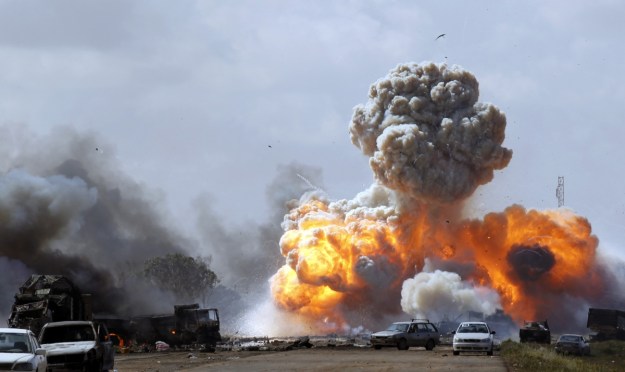
(source)
The “capital” of the Islamic State (IS) in Libya, Sirte, has fallen to pro-government militias. “Our forces have total control of Sirte,” claimed one spokesman on Monday. “Islamic State’s rule over Sirte is now over,” said another. That was slightly premature, though it does appear that the city fell entirely around mid-afternoon yesterday. Regardless, it is clear that IS’s hold on Sirte is soon to be at an end. Positive as this development is, it is what happens after IS’s grip on urban areas is broken that will determine the durability of this victory. IS will remain a disruptive force for some time no matter what happens next, and for that reason it is important to continue military operations in pursuit of IS in its rural sanctuaries. But IS is a symptom of Libya’s political problems, not their cause. Without a government that solves some of those original problems, and has the legitimacy and capacity to keep IS out, the group will rise again. Continue reading
By Kyle Orton (@KyleWOrton) on November 17, 2014

Abby Martin and George Galloway: Both host conspiracy-laden shows on RT
While having lunch on Saturday I got stuck for fifteen minutes in a room where the television was tuned to Russia’s English-language propaganda station, RT, formerly Russia Today. I once saw James Kirchick write that “after 20 minutes of watching RT … I did what any sensible person would do: turned RT off.” I conclude from this that he is a much braver man than I. Continue reading
 Kyle Orton's Blog