Tag Archives: Egypt

Islam’s First Terrorists

By Kyle Orton (@KyleWOrton) on August 24, 20151. The Assassins (book)

Book Review: The Assassins: A Radical Sect in Islam (1967) by Bernard Lewis

This review can be read in six parts: one, two, three, fourfive, and six.

Abstract

The fourth Caliph, Ali, was assassinated during a civil war that his supporters, Shi’atu Ali (Followers of Ali), lost to the Umayyads, who thereafter moved the capital to Damascus. The Shi’a maintained that the Caliphate should have been kept in the Prophet’s family; over time this faction evolved into a sect unto themselves, which largely functioned as an official opposition, maintaining its claim to the Caliphate, but doing little about it. Several ghulat (extremist) Shi’a movements emerged that did challenge the Caliphate. One of them was the Ismailis. Calling themselves the Fatimids, the Ismailis managed to set up a rival Caliphate in Cairo from the mid-tenth century until the early twelfth century that covered most of North Africa and western Syria. A radical splinter of the Ismailis, the Nizaris, broke with the Fatimids in the late eleventh century and for the next century-and-a-half waged a campaign of terror against the Sunni order from bases in Persia and then Syria. In the late thirteenth century the Nizaris were overwhelmed by the Mongols in Persia and by the Egyptian Mameluke dynasty which halted the Mongol invasion in Syria. The Syrian-based branch of the Nizaris became known as the Assassins, and attained legendary status in the West after they murdered several Crusader officials in the Levant. Attention has often turned back to the Assassins in the West when terrorist groups from the Middle East are in the news, but in the contemporary case of the Islamic State (ISIS) the lessons the Nizaris can provide are limited. Continue reading

Islam’s First Terrorists, Part 2

By Kyle Orton (@KyleWOrton) on August 18, 2015

This is the second of a six-part series. For part one, see here

2. Alamut

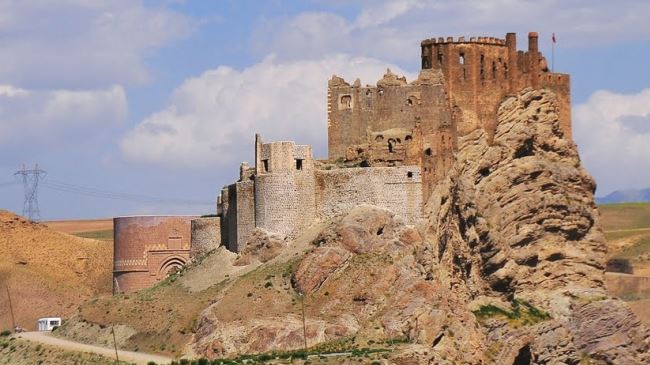
Alamut fortress, northern Iran, the headquarters of the Nizaris

The Origins of the Nizaris in Persia

Hassan-i Sabbah would lead the Nizaris in Persia. Recruited in Rayy, near Tehran, by the chief dawa (missionary) of the Fatimids in 1072, Hassan-i Sabbah went to Egypt between 1078 and 1081, before returning to Iran to proselytize. In 1090, Hassan-i Sabbah won control of the fortress of Alamut in north-west Iran, which would become the headquarters of the Nizaris. Throughout the 1090s, the Nizaris gained control of further castles in Daylam, specifically the Rudbar area; in the southwest of Iran between Khuzestan and Fars; and in the east in Quhistan. Most impressive was the capture of the fortress at Shahdiz, near Isfahan, in 1096-7.

The Daylamis were a notoriously rebellious and hardy people; one of the last to convert to Islam, they were then among the first to assert their independence within it, first politically by forming a separate dynasty and then religiously by converting to Shi’ism. Continue reading

Islam’s First Terrorists, Part 1

By Kyle Orton (@KyleWOrton) on August 17, 20151

Book Review: The Assassins: A Radical Sect in Islam (1967) by Bernard Lewis

Abstract

The fourth Caliph, Ali, was assassinated during a civil war that his supporters, Shi’atu Ali (Followers of Ali), lost to the Umayyads, who thereafter moved the capital to Damascus. The Shi’a maintained that the Caliphate should have been kept in the Prophet’s family; over time this faction evolved into a sect unto themselves, which largely functioned as an official opposition, maintaining its claim to the Caliphate, but doing little about it. Several ghulat (extremist) Shi’a movements emerged that did challenge the Caliphate. One of them was the Ismailis. Calling themselves the Fatimids, the Ismailis managed to set up a rival Caliphate in Cairo from the mid-tenth century until the early twelfth century that covered most of North Africa and western Syria. A radical splinter of the Ismailis, the Nizaris, broke with the Fatimids in the late eleventh century and for the next century-and-a-half waged a campaign of terror against the Sunni order from bases in Persia and then Syria. In the late thirteenth century the Nizaris were overwhelmed by the Mongols in Persia and by the Egyptian Mameluke dynasty which halted the Mongol invasion in Syria. The Syrian-based branch of the Nizaris became known as the Assassins, and attained legendary status in the West after they murdered several Crusader officials in the Levant. Attention has often turned back to the Assassins in the West when terrorist groups from the Middle East are in the news, but in the contemporary case of the Islamic State (ISIS) the lessons the Nizaris can provide are limited. Continue reading

The Islamic State’s Strategy Is Working, Its Enemies Are Failing

By Kyle Orton (@KyleWOrton) on May 23, 2015

1

To hear President Obama tell it, his announced program to defeat the Islamic State (ISIS), which began with airstrikes into Iraq last August that were extended into Syria in September, is working, albeit with some tactical setbacks. The implication is that the setbacks of the U.S.-led anti-ISIS campaign are not strategic.

As J.M. Berger phrased it:

In the Washington vernacular, the act of Being Strategic implies a near mystical quality of superior thinking possessed by some, and clearly lacking amongst the vulgarians of the world—heedless brutes such as ISIL. Tactics are short-term ploys, easy to dismiss. Strategy is for winners.

Unfortunately, this soothing view is almost exactly wrong: it is the United States that is relying on various short-term methods—commando raids into the Syrian desert, for example—while ISIS has a long-term goal fixed in mind and is working assiduously to achieve it. The U.S.-led Coalition is losing, in short, and ISIS is winning. Continue reading

Obama’s Iran Deal Increases Nukes, Terrorism, and Instability

By Kyle Orton (@KyleWOrton) on April 28, 2015

1

The key thing to understand about the Joint Comprehensive Plan of Action (JCPOA), the nuclear accord announced on April 2 between the P5+1 and Iran, is that it does not exist. The British Foreign Secretary Philip Hammond said at one point, “We envisage being able to deliver a narrative,” adding that this might not be written and—these being forgiving times—Iran’s narrative need not match the West’s. In other words, nothing was signed or agreed to. This is the reason for the wild discrepancies between the American and Iranian JCPOA “factsheets”: both are drawing from a rolling text that is ostensibly to lead to a “final” or “comprehensive” deal and spinning it to their own respective advantage. The administration has as much as said so with its mantra that “nothing is agreed until everything is agreed”.

The purpose of the announcement of the JCPOA therefore was, charitably, to “build political momentum toward a final agreement“. Less charitably it was intended to “demonstrate progress in order to fend off congressional action,” as Obama’s former nuclear adviser Gary Samore put it. In that at least it was successful. Continue reading

Why The West Should Support The Saudi-Led Intervention In Yemen

By Kyle Orton (@KyleWOrton) on April 11, 2015

1

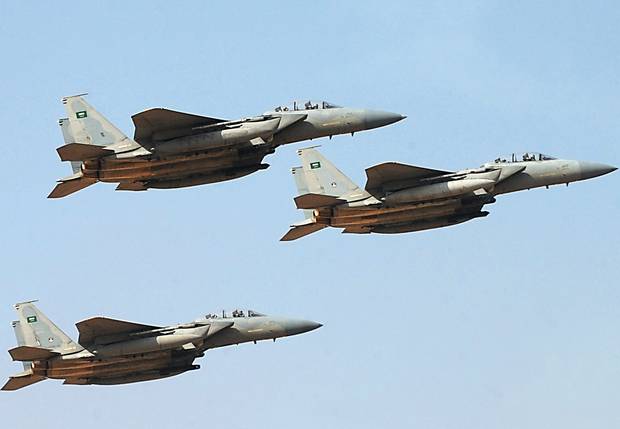
In The Independent of April 10, Daniel Wickham wrote in opposition to the campaign of airstrikes, led by Saudi Arabia, against the Iran-backed Houthi militia in Yemen, which has overthrown the government in that country and is now marching on the port city of Aden where the remnants of the fallen regime reside. Wickham notes that the Houthis have behaved abominably since they took the capital, Sanaa, including the “use of torture and extreme violence to suppress dissent,” still “two wrongs do not make a right” and the Saudi-led Operation DECISIVE STORM is “very clearly wrong.” I think this is mistaken. Continue reading

The Islamic State, Libya, and Interventionism

By Kyle Orton (@KyleWOrton) on February 19, 2015

Rebels with Qaddafi's

Rebels with Qaddafi’s “golden gun”

Yesterday morning in Libya, it was announced that militias from Misrata were moving into Sirte to combat the Islamic State (I.S.). The militias preparing to fight I.S. are drawn from Libya Dawn, the Islamist coalition that ousted the internationally-recognised government in August 2014. Continue reading

Obama’s National Security Strategy

By Kyle Orton (@KyleWOrton) on February 14, 2015

1

The National Security Strategy is never a riveting read, and the NSS put out by the Obama administration on Feb. 6, only their second (the last in May 2010), was no exception. “Strategic patience” was the mantra with which this NSS was launched, to fairly wide derision as a rationalisation of the last six years of hesitancy and retrenchment. It was a criticism with some basis in fact. Continue reading

The Islamic State Creates Foreign “Provinces”

By Kyle Orton (@KyleWOrton) on December 6, 2014

Abu Bakr al-Baghdadi gave his eighth speech[1] since becoming the leader of the Islamic State (ISIS), entitled, “Even if the Disbelievers Despise Such”, on November 13, 2014. The speech was notable for two things. First, it taunted the American-led coalition about the lack of success their campaign has had against ISIS since it began in June and was extended into Syria in September, and invited the U.S. and other Western states to deploy ground troops. Secondly, the speech accepted the pledges of allegiance from groups outside Syria and Iraq for the first time, from Saudi Arabia, Yemen, Egypt, Libya, and Algeria. In Saudi Arabia and Yemen, the groups that have joined ISIS are unknown. In Egypt, the group is Ansar Bayt al-Maqdis (The Partisans of Jerusalem). In Libya, the group is al-Majlis Shura Shabab al-Islam (The Islamic Youth Consultation Council). And in Algeria the group is Jund al-Khalifa (Soldiers of the Caliphate). These areas will now become wilaya (provinces) of the caliphate, al-Baghdadi says, and ISIS will send a governor to oversee them. An English transcript of the speech was produced by ISIS and is reproduced below with important sections highlighted in bold. Continue reading

Has Hillary Clinton Become A Hawk?

By Kyle Orton (@KyleWOrton) on September 21, 2014

The next American President?

The next American President?

Last month, Jeffrey Goldberg at The Atlantic published an interview with Hillary Clinton. At 8,000 words it can be off-putting to plough through, but I have now finally got around to it, and it is rather interesting. The interview focusses on the three areas where President Obama’s foreign policy has so conspicuously failed—Syria, Iran, and Israel—and also includes sections on Egypt and Libya, where the administration’s failure has been somewhat less in the news. Continue reading