Tag Archives: faith campaign

The Riddle of Haji Bakr

By Kyle Orton (@KyleWOrton) on November 10, 2015
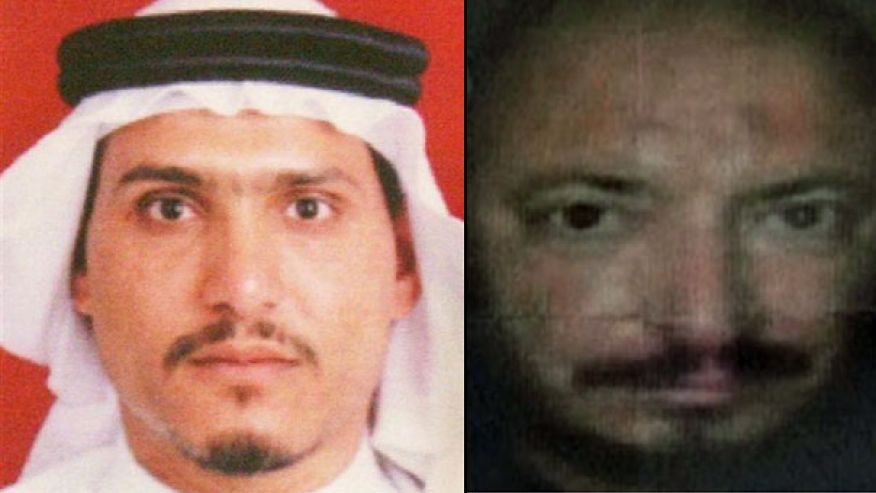
Samir al-Khlifawi (Haji Bakr): in Saddam's army, in American prison, as a commander of the Islamic State

Samir al-Khlifawi (Haji Bakr): in Saddam’s intelligence service, in American prison, as a commander of the Islamic State

In the last few months I’ve increasingly focussed on the former (Saddam) regime elements (FREs) within the Islamic State (IS). There’s now an entire section on this blog about it, and Aaron Zelin over at Jihadology recently gave me time to elaborate in a podcast.

In studying this topic there is one inescapable name: Samir Abd Muhammad al-Khlifawi, better-known by his pseudonym Haji Bakr, and sometimes by his kunya, Abu Bakr al-Iraqi. Al-Khlifawi is a former colonel in an elite intelligence unit of the Saddam Hussein regime—focussed on air defence at Habbaniya airbase, though what exactly that entails is murky. Al-Khlifawi was also apparently involved in weapons development.

Al-Khlifawi came to international attention in April when Christoph Reuter published an article in Der Spiegel naming al-Khlifawi as the “architect” of IS’s expansion into Syria, and the man who had been “pulling the strings at IS for years.” Continue reading

Kamel Sachet and Islamism in Saddam’s Security Forces

1Book Review: The Weight of a Mustard Seed: The Intimate Life of an Iraqi Family During Thirty Years of Tyranny (2009) by Wendell Steavenson

By Kyle Orton
(@KyleWOrton) on October 24, 2015

Wendell Steavenson’s The Weight of a Mustard Seed—the title drawn from a verse of the Qur’an about the difference between attaining heaven and hell—comprises five years of research about Kamel Sachet Aziz al-Janabi, one of Saddam Hussein’s favourite and most senior generals.

Born in 1947, Kamel Sachet joined the Iraqi police straight from school in the mid-1960s and joined the army in 1975. Sachet was soon in the Special Forces, training in mountain warfare in Germany in 1978, taking part in joint exercises with Iranian Special Forces during the time of the Shah—learning Farsi along the way—and then being part of the Iraqi Special Forces advanced party sent to invade Iran after Ruhollah Khomeini’s takeover. Sachet would later be part of the elite forces sent to secure Saddam’s occupation of Kuwait. After Saddam was evicted from Kuwait, Sachet, who had been slipping deeper and deeper into religious zeal from the early 1980s, was made governor of Maysan where he ran a de facto Salafi commune. Sachet was eventually removed from this post by regime internal intrigue, and was moved to a job in the office of the president. For reasons never definitively established, Sachet was murdered on Saddam Hussein’s orders on the first day of Operation DESERT FOX in December 1998.

Kamel Sachet’s story is an interesting one for what it says about the Saddam regime’s changing attitude toward Islamism as it ran its course, reversing the hard-secular outlook that prevailed at varying degrees of intensity from the late 1960s to the early 1980s, and transforming into an Islamist State in the last fifteen years of the regime. Continue reading

Saddam, Sanctions, and Religious Solace in Iraq

By Kyle Orton (@KyleWOrton) on October 18, 2015

Mural of Saddam Hussein at prayer on Al-Kadhimiya Mosque

Mural of Saddam Hussein at prayer on Al-Kadhimiya Mosque

In the 1990s, the combination of the sanctions and Saddam Hussein’s predatory regime debauched Iraq, ushering in a period of chaos, scarcity, and corruption as the regime gradually broke down. With a religious revival already underway, the population turned to faith for succour, and the regime encouraged this in a way that—in the wake of the brutal repression of the Shi’a rebellion after the first part of the Gulf War—hardened sectarian identities. The security services were deeply affected by the Saddam regime’s Islamization and the Salafists exploited their newfound freedom, and the regime’s increasing lack of capacity, to plot a future after Saddam. By 2003, these various organized Islamist strains, part in and part out of the regime, stood ready to succeed Saddam and had a more zealous and sectarian population to draw on. Saddam had set the stage for the emergence of something like the Islamic State long before Coalition troops invaded Iraq. Continue reading

Saddam’s Faith Campaign and the Islamic State

By Kyle Orton (@KyleWOrton) on September 28, 2015

A version of this article was published at NOW Lebanon and syndicated at Business Insider

1

American intelligence analysts have been pressured into giving a more positive assessment of the progress of the war against the Islamic State (ISIS), it has been reported, confirming what was obvious to everyone not subject to influence from the White House: the anti-ISIS campaign is failing. To devise an effective strategy involves understanding where ISIS came from, and that involves examining the Saddam Hussein regime.

Saddam is commonly regarded as the quintessential secularist, and he was initially. But over its last fifteen years the Saddam regime Islamized, effectively creating a religious movement under Saddam’s leadership, giving additional space and power to the non-governmental Salafi Trend, and hardening the sectarian differences in Iraq—paving the way for something like ISIS in its aftermath. Continue reading

The Islamic State: Between Al-Qaeda and Saddam Hussein

By Kyle Orton (@KyleWOrton) on September 22, 2015

Abu Musab az-Zarqawi

Abu Musab al-Zarqawi

In August 2015’s Perspectives on Terrorism, Truls Tønnessen writes about the evolution of the leadership of what is now the Islamic State (I.S.) from its origins in al-Qaeda in Iraq (AQI) under the heading, “Heirs of Zarqawi or Saddam?” Tonnessen makes the obvious point that AQI’s leadership was largely comprised of foreign Salafi-jihadists with al-Qaeda histories, while I.S. is led by Iraqis, most of them former (Saddam) regime elements (FREs). But Tonnessen’s argument that I.S.’s leaders had not been AQI members is mistaken (they had), which erodes his arguments that AQI’s influence diminished over time as I.S. formed from various mergers, and that this diminution of influence came about because I.S.’s post-2010 leadership purged the veteran AQI elements within I.S. (I.S.’s leaders are veteran AQI elements.) The main difference between AQI’s leaders and I.S.’s is that AQI’s leaders had background connections to al-Qaeda Central (AQC) networks, and I.S.’s largely do not. While Tonnessen sees Jabhat al-Nusra as linked to these shifting dynamics, this argument does not stack up. Ultimately, Tonnessen’s contention that I.S.’s leaders are more heirs of Saddam than Zarqawi fails in the terms Tonnessen presents it. Continue reading

Did Saddam Hussein Become A Religious Believer?

By Kyle Orton (@KyleWOrton) on September 12, 2015

Saddam Hussein prays at a mosque in Samarra, March 12, 1998 (AP Photo)

Saddam Hussein prays at a mosque in Samarra, March 12, 1998 (AP Photo)

It should be stated up front that the question posed in the headline is, strictly speaking, unanswerable: only Saddam Hussein could ever answer that question, and even then any out-loud answer given by Saddam could be untrue in any number of directions, for any number of reasons. Still, from the available evidence it does seem Saddam had some kind of “born-again” experience.

Of crucial importance, however, is that while Saddam’s actual beliefs had a significant impact in providing some of the colour and shape to the Faith Campaign, even if one believes Saddam remained a secularist and Islamized his regime as a wholly cynical means of shoring-up support, this is completely irrelevant to the effect this Islamization had. Saddam put in place a governmental administration that created a religious movement, which brought men to a faith they otherwise would not have had, and in combination with the increased sectarianism fostered by Saddam’s regime, this prepared the ground for al-Qaeda and its offshoots like the Islamic State (ISIS) in the aftermath of the regime. Continue reading

A Case Study of the Islamic State as the Saddam Regime’s Afterlife: The Fedayeen Saddam

By Kyle Orton (@KyleWOrton) on August 31, 2015

Published at Baghdad Invest

Fedayeen Saddam

Saddam Hussein created the Fedayeen Saddam in 1994 as a paramilitary Praetorian unit. The Fedayeen were initially charged with protecting the regime from a repeat of the revolts that followed Saddam’s eviction from Kuwait by acting as a pre-emptive counter-insurgency force. Over time this internal security mission became increasingly about enforcing the Islamic law. Saddam had begun Islamizing his regime in the late 1980s, and intensified this in the early 1990s, attempting to create a synthesis of Ba’athism and Salafism to buttress his legitimacy. Saddam had begun Islamizing his foreign policy as early as 1982-83, making alliances with all manner of Islamist terrorists, thousands of whom came to Iraq for training in the 1990s, where they attended camps run by the Fedayeen. In the Fedayeen—connected to the global Islamist terrorist movement, combining elements of Ba’athism with an increasingly-stern Salafism—is a microcosm of the Saddam regime’s mutation into the Islamic State (ISIS). Continue reading

A Response to Criticism: Why the Ex-Saddamists in the Islamic State Matter

By Kyle Orton (@KyleWOrton) on August 10, 2015

Abu Ayyub al-Masri and Abu Omar al-Baghdadi: ISIS's co-leaders, 2006-10

Abu Ayyub al-Masri and Abu Omar al-Baghdadi: ISIS’s co-leaders, 2006-10

In the Jerusalem Post on Sunday, Seth Frantzman wrote in opposition to the idea that the ex-military-intelligence officials of the Saddam Hussein regime had contributed significantly to the success of the Islamic State (ISIS) in taking over large swathes of Syria and Iraq. Much of what Frantzman says, about the overestimation of ISIS and Iran’s growing Imperium pushing Sunnis into ISIS’s camp, is unarguable, but he is in error about the time-frame of the ex-Saddamists’ migration into ISIS and underestimates their impact. Continue reading

Islamic State: The Afterlife of Saddam Hussein’s Regime

By Kyle Orton (@KyleWOrton) on July 4, 2015

Published at Baghdad Invest

1

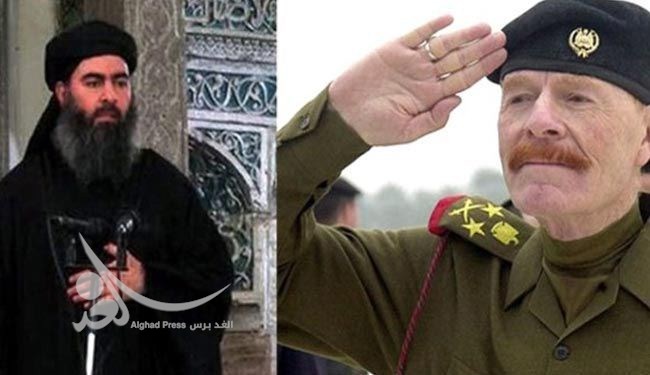
Izzat Ibrahim ad-Douri, Saddam Hussein’s long-time deputy, was reported dead (again) on April 17. An audio message on May 15 disproved this. Douri was the implementer of the Saddam regime’s Islamization program in its later years and a key architect of the insurgency after the regime was overthrown, which helped pave the way for the Islamic State (ISIS). ISIS has now turned on Douri and his associates, but ISIS could not have risen to its current stature without Douri’s help. Continue reading

Saddam and the Taliban

By Kyle Orton (@KyleWOrton) on June 29, 2015

Alleged photograph of Mullah Omar. Other photos are very rare

Alleged photograph of Mullah Omar. Other photos are very rare

In examining the Saddam Hussein regime’s long relationship with al-Qaeda, a noticeable sub-theme is the connections the Saddam regime had with the Taliban theocracy in Afghanistan. The evidence accumulated suggests that Saddam’s policies in his later years, namely the Islamization of his own regime and instrumentalization of Islamists in foreign policy, included welcoming relations with the Taliban. Continue reading