Tag Archives: Gulbuddin Hekmatyar

Iran and Russia Are Using the Taliban Against the West

By Kyle Orton (@KyleWOrton) on 5 August 2017

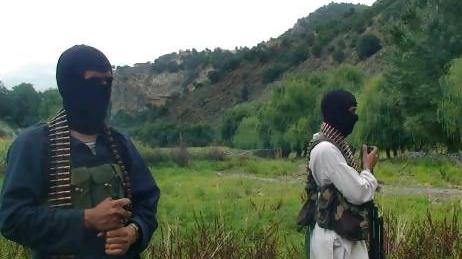
Taliban jihadists (image source)

The New York Times reported on the growing closeness of relations between the governments in Iran and Russia, and the Taliban movement in Afghanistan, something that became especially salient earlier this year and which has been visible for at least two years. Continue reading

Russia and Iran Use Terrorism Against Western Interests

By Kyle Orton (@KyleWOrton) on 25 April 2017

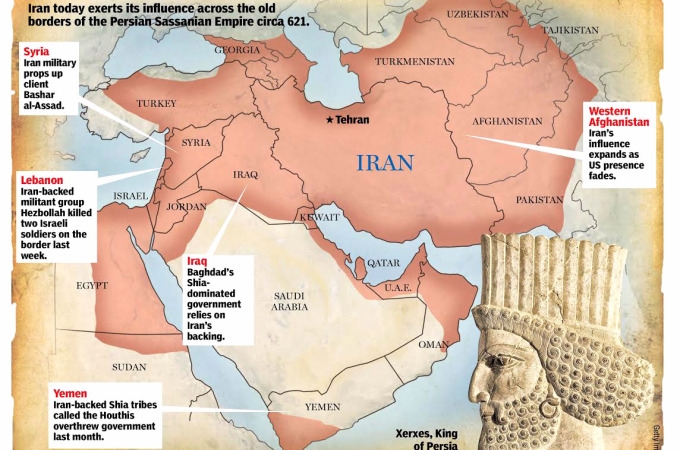
The evidence is mounting that Vladimir Putin’s government supports the Taliban as a means of thwarting NATO interests in Afghanistan. Russia has long manipulated terrorists, internally and abroad, to suit its policy aims, but as Moscow solidifies its relationship with the Iranian revolution the Russian policy, particularly in Syria, has become something more like a conventional alliance—not least because those who run Tehran’s foreign policy and the clerical regime’s most powerful assets are themselves terrorists. Continue reading

The Dangers of Emptying Guantanamo

By Kyle Orton (@KyleWOrton) on August 17, 2016
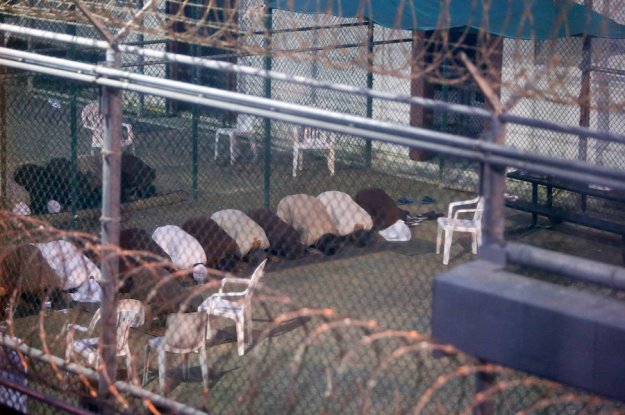
It was announced on 15 August that fifteen more inmates from the Guantanamo Bay detention facility have transferred, twelve Yemenis and three Afghans, to the United Arab Emirates, the largest individual release of the Obama administration. The U.A.E. also took in five “lower-level” Yemeni detainees in November. The Emirates had previously taken in just one—Abdullah al-Hamiri, in 2008—but President Obama leveraged this deal with the Gulf states at the May 2015 meeting when the Khaleejis were deeply concerned about the then-impending Iran nuclear deal, and in exchange for security reassurances, Obama extracted further concessions.

One reason why so many jihadists have been released to the U.A.E., other than having a similar language and culture, is because the U.A.E. has a competent security apparatus to monitor these people. Those released last November were kept in “a custodial rehabilitation program“—a version of house-arrest, basically. The conditions this time around are less clear.

What is clear is just how dangerous the operatives who are being let out of the Guantanamo detention facility are. Every single one of them has been assessed as posing a “high” risk to America, her interests, and her allies. Continue reading

Leaving Afghanistan to Iran Won’t Bring Stability—nor Keep ISIS Out

By Kyle Orton (@KyleWOrton) on August 26, 2015

Published at National Review

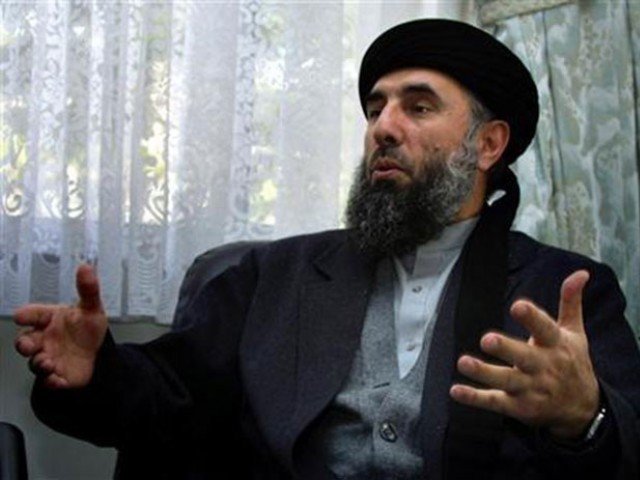
Gulbuddin Hekmatyar, one of the three major insurgent leaders in Afghanistan, a close ally of Iran

Gulbuddin Hekmatyar, one of the three major insurgent leaders in Afghanistan, a close ally of Iran

The admission by the Taliban on July 30 that its leader, Mullah Muhammad Omar, had died was widely seen as good news for the Islamic State (ISIS) against its jihadist competitors. But while ISIS’s growing power in Afghanistan over the last year has garnered significant attention, the rise of Iran’s influence in the country has been less noted. Worse, in the light of the nuclear agreement with the U.S., Iran’s expanded influence is held by some observers to be a stability-promoting development. This is a dangerous fantasy that has already been falsified in the Fertile Crescent, where the synergetic growth of Iran and ISIS promotes chaos and radicalism—to the advantage of both and the disadvantage of the forces of moderation and order. Continue reading

Saddam and the Taliban

By Kyle Orton (@KyleWOrton) on June 29, 2015

Alleged photograph of Mullah Omar. Other photos are very rare

Alleged photograph of Mullah Omar. Other photos are very rare

In examining the Saddam Hussein regime’s long relationship with al-Qaeda, a noticeable sub-theme is the connections the Saddam regime had with the Taliban theocracy in Afghanistan. The evidence accumulated suggests that Saddam’s policies in his later years, namely the Islamization of his own regime and instrumentalization of Islamists in foreign policy, included welcoming relations with the Taliban. Continue reading

America’s Silent Partnership With Iran And The Contest For Middle Eastern Order: Part Four

By Kyle Orton (@KyleWOrton) on February 10, 2015

1

This is the fourth of a four-part series looking at the United States’ increasingly-evident de facto alliance with Iran in the region. The first part looked at the way this policy has developed since President Obama took office and how it has been applied in Iraq; the second part looked at the policy’s application in Syria; the third part looked at its application in Lebanon, Afghanistan, and Yemen; and this part is a conclusion. Continue reading

America’s Silent Partnership With Iran And The Contest For Middle Eastern Order: Part Three

By Kyle Orton (@KyleWOrton) on February 3, 2015

1

This is the third of a four-part series looking at the United States’ increasingly-evident de facto alliance with Iran in the region. This first part looked at the way this policy has developed since President Obama took office and how it has been applied in Iraq. The second part looked at the policy’s application in Syria; this part will look at its application in Lebanon, Afghanistan, and Yemen; and part four will be a conclusion. Continue reading

Snatching Defeat From the Jaws of Victory

By Kyle Orton (@KyleWOrton) on August 9, 2014

Released on December 21, 2007, twenty-eight years to the month after the Soviet Union launched Operation STORM 333, decapitating the Afghan government and plunging the country into a decade-long war, Charlie Wilson’s War tells a story centred on Representative Charles Wilson of Texas (Tom Hanks), a conservative Democrat, Joanne Herring (Julia Roberts), a Right-wing Christian socialite in Houston who has taken the Afghans to her bosom because of her hatred for communism, and Gust Avrakotos (Philip Seymour Hoffman), a blue-collar case officer at the CIA who is the epitome of the adage that one can get anything done in Washington so long as one does not care who gets the credit. Between them they cajole Congress into moving its appropriations from $5 million to $500 million, which will be matched dollar-for-dollar by the Saudis, to help the Afghan resistance combat the Red Army’s occupation of their country. Continue reading