By Kyle Orton (@KyleWOrton) on November 25, 2015

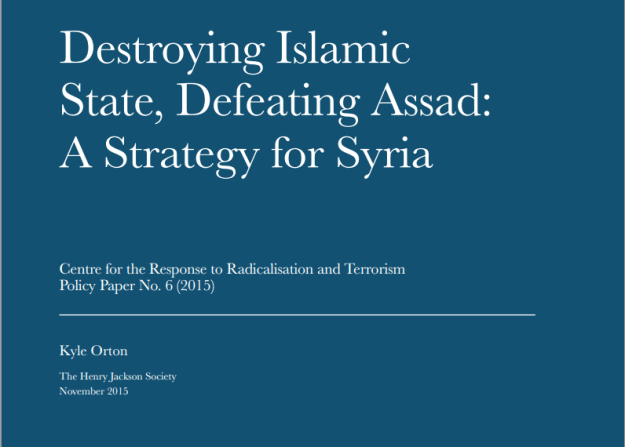
Today, my first report with The Henry Jackson Society was published: “Destroying Islamic State, Defeating Assad: A Strategy for Syria“. Continue reading
By Kyle Orton (@KyleWOrton) on November 25, 2015

Today, my first report with The Henry Jackson Society was published: “Destroying Islamic State, Defeating Assad: A Strategy for Syria“. Continue reading
By Kyle Orton (@KyleWOrton) on November 22, 2015

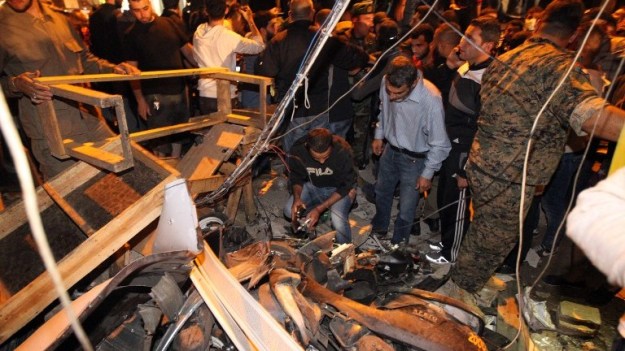
In Burj al-Barajna, a district of southern Beirut adjacent to Hizballah’s headquarters in Dahiya, at about 18:00 on 12 November 2015, a standing motorcycle laden with explosives was blown up outside a Shi’a mosque as a crowd of worshippers left after evening prayers. This was followed quickly by a suicide bomber blowing himself up among the crowd of Shi’a worshippers. A second suicide bomber blew himself up near a bakery, less than 500 yards away. Continue reading
By Kyle Orton (@KyleWOrton) on September 18, 2015

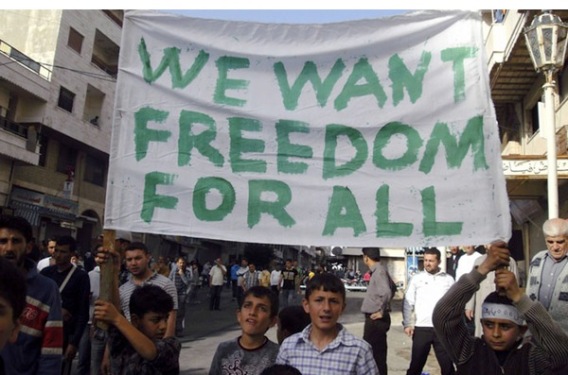
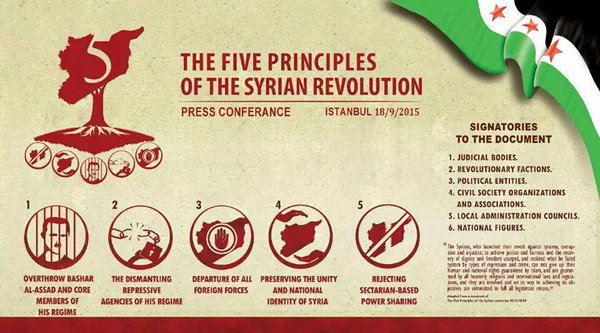
After a meeting of the Syrian Islamic Council, a statement was published today, “The Five Principles Document of the Syrian Revolution,” which explained the baseline demands of the insurrectionary forces in Syria in any process to end the war. The principles included the removal of Syrian ruler Bashar al-Assad, disbanding the intelligence apparatus that has carried out the massacres and repression, and the expulsion of all foreign terrorists, including the Islamic State and the legion of Shi’a jihadists that the Iranian government has flooded into Syria to save the Assad regime. Continue reading
By Kyle Orton (@KyleWOrton) on August 26, 2015
On Sunday the British Embassy in Iran was reopened after four years of closure. The British government’s decision is consistent with two emerging trends: the United States using the nuclear accord to facilitate détente with Iran, and European States falling into line with this policy and beginning to compete to enter the emerging Iranian market.
The British Embassy in Tehran was closed in November 2011 after ‘protesters’—a regime-orchestrated mob—stormed the building, ostensibly in protest against sanctions. The regime claimed helplessness in the face of angry demonstrators.
But it is worth remembering that when Iranian citizens take to the streets in a manner the regime actually disapproves of, it mobilises its security forces to murder them, and imprison them en masse in facilities where they are, male and female, raped as a form of punishment and torture. Continue reading
By Kyle Orton (@KyleWOrton) on July 17, 2015
Published at The Independent
With all the leaks and the numerous “interim” deals, the nuclear deal—the Joint Comprehensive Plan of Action (JCPOA)—made with Iran on July 14 contained few surprises. The deal makes Iran a threshold nuclear-weapons regime for its duration and smooths the path to an overt nuclear-weapons capacity afterward. In the meantime, it has given Iran extra resources for the export of terrorism. And that’s just if Iran keeps the deal. Continue reading
By Kyle Orton (@KyleWOrton) July 13, 2015
President Obama gave a speech on Monday about the progress of the United States-led military campaign against the Islamic State (ISIS) in which he said that America would “do more to train and equip the moderate opposition in Syria.” This is a promise that has been made repeatedly made and repeatedly broken. The President’s strategy of détente with Clerical Iran has given Syria to Tehran as a sphere of influence—which precludes the U.S. building up a viable alternative to both ISIS and the murderous Assad regime, which has been effectively under Iran’s control since late 2012. Continue reading
By Kyle Orton (@KyleWOrton) on July 6, 2015
The United States and Iran are seemingly days from signing an agreement on Iran’s nuclear program that has been brought about by a series of American concessions. If the deal is signed on the present terms it will effectively dismantle the sanctions against Iran and the international legal regime that recognizes the Iranian regime as an outlaw, will leave Iran on the threshold of nuclear weapons, and will provide legitimacy for, and billions of dollars toward, Iranian hegemony in the Middle East.
By Kyle Orton (@KyleWOrton) on May 26, 2015
In 2010, Farzad Farhangian, an Iranian diplomat based in Belgium, defected to Norway. Farhangian has now emerged with the extraordinary accusation that the Islamic Republic of Iran is controlling the Islamic State (ISIS) and using it as part of Tehran’s war against the Gulf States, especially Saudi Arabia. Farhangian’s accusations are lurid and (literally) incredible, but the question of Iran’s role in ISIS’ creation and growth, and Iran’s manipulation of ISIS to further its own ends, is one well worth asking. Continue reading
By Kyle Orton (@KyleWOrton) on May 20, 2015
In a report on the internal divisions in the Assad regime and the passing of Syria’s sovereignty to Iran by Ruth Sherlock in The Sunday Telegraph on May 17, there was this stunning sentence: “Perhaps a third of all Alawite males of military age have been killed in the civil war.” This is a startling thought.
To determine if this figure for the proportion of Alawis killed is plausible it is necessary to know how many Alawis there were in Syria at the outset of the war, and how many people have been killed during the war. Continue reading
By Kyle Orton (@KyleWOrton) on May 12, 2015
President Obama invited the leaders of the Gulf Cooperation Council (GCC) to a meeting at Camp David on Thursday to clear the air as the President looks to finalize his nuclear deal with Iran. But on Sunday, Saudi King Salman said he was not attending, and soon after the Bahraini monarch followed. The only Gulf leaders in attendance will be the Emirs of Qatar and Kuwait. Since leaders do not just have other things to do when they are scheduled for a private meeting with the President of the United States, this can be taken as a pointed snub to President Obama, and no amount of administration spin about Salman’s absence having nothing to do with political substance will change that. Continue reading