By Kyle Orton (@KyleWOrton) on 18 June 2022
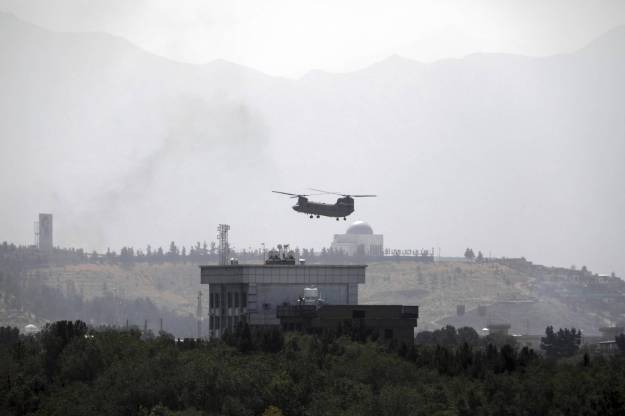
A U.S. helicopter above the American Embassy in Kabul, 15 August 2021 | AP
By Kyle Orton (@KyleWOrton) on 18 June 2022
A U.S. helicopter above the American Embassy in Kabul, 15 August 2021 | AP
By Kyle Orton (@KyleWOrton) on 31 March 2022
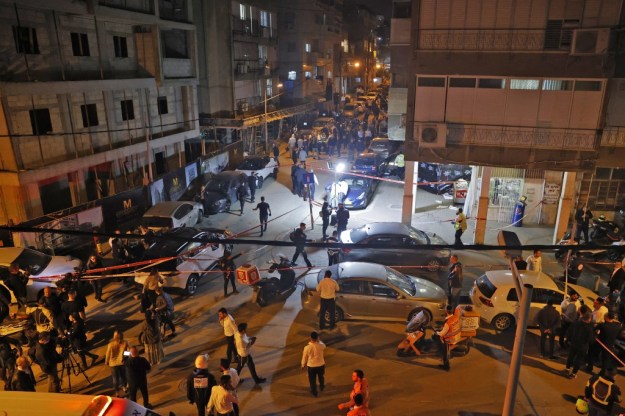
Israeli security forces reacting to the terrorist attack in Bnei Brak near Tel Aviv, 29 March 2022 || Photo by JACK GUEZ / AFP
Israeli Prime Minister Naftali Bennett has said his country is “facing a new wave of terrorism” after five attacks in the last ten days have killed eleven people. The Islamic State (IS) has effectively admitted to carrying out two of the atrocities, the first time in five years the terrorist group has carried out attacks in the Jewish state. This hiatus, partly a reflection of the fact that, unlike some other Islamist extremists, IS does not make the anti-Israel cause a central plank of its propaganda, also reflects the relatively small inroads IS’s ideology has made to this point among Palestinian and Israeli Arabs. Whether this is now changing is unclear. Continue reading
By Kyle Orton (@KyleWOrton) on 22 February 2022

Kabul, the capital of Afghanistan, fell to jihadists on 15 August 2021, and this has emboldened the jihadist movement across the world, providing it with a morale boost and a model, as well as renewing the terrorist safe haven that incubated 9/11. Continue reading
By Kyle Orton (@KyleWOrton) on 15 December 2021

Tsar Nicholas II and Kaiser Wilhelm II aboard a ship in the Gulf of Finland, 1905
In the early historiography of the Great War, it was accepted that Germany was chiefly responsible, with debates on the margins about the degree of intentionality and premeditation. Of late, however, “It has become fashionable to spread the guilt of the First World War liberally around Europe”, as one prominent historian noted.[1] Some revisionists go even further and try to find another state that is not only equally as culpable as Germany but more so. In this post, I want to, without in any way pretending to be comprehensive, deal with the argument that blames Russia for the 1914-18 War. Continue reading
By Kyle Orton (@KyleWOrton) on 8 December 2021

General Lavr Kornilov, 27 August 1917
The final key event on the road to the Bolshevik takeover of Russia in November 1917 was the “Kornilov Affair” that took place about two months earlier. Alexander Kerensky had become Prime Minister of the Provisional Government in July 1917 and around the same time General Lavr Kornilov had become Commander-in-Chief. A lot of accounts portray the “Kornilov Affair” as a “reactionary” coup attempt by Kornilov against Kerensky. The reality is very nearly the exact opposite. As historian Robert Pipes summarises: “All the available evidence, rather, points to a ‘Kerensky plot’ engineered to discredit the general as the ringleader of an imaginary but widely anticipated counterrevolution, the suppression of which would elevate the Prime Minister to a position of unrivaled popularity and power, enabling him to meet the growing threat from the Bolsheviks.”[1] Continue reading
By Kyle Orton (@KyleWOrton) on 1 November 2021
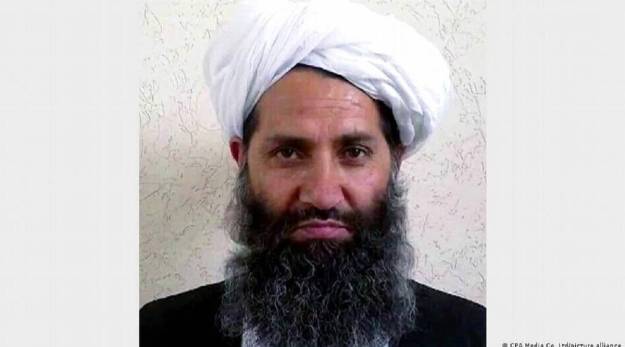
Hibatullah Akhundzada
A ten-minute audio tape attributed to the Taliban’s Supreme Leader Hibatullah Akhundzada appeared on 30 October, the first such communication since the jihadist takeover of Afghanistan in August. Hailed as Akhundzada’s “first public appearance” or his decision to step into “the limelight”, the reality is more complicated. Continue reading
By Kyle Orton (@KyleWOrton) on 22 October 2021
This article was originally published at European Eye on Radicalization

Sami Jassim al-Jaburi (Haji Hamid) | IMAGE SOURCE
Mustafa al-Khadhemi, the Iraqi Prime Minister, announced on the morning of 11 October that the Iraqi National Intelligence Service (INIS) had arrested Sami Jassim al-Jaburi (Haji Hamid), the effective finance emir of the Islamic State (ISIS), in “a complex external operation”. Continue reading
By Kyle Orton (@KyleWOrton) on 7 September 2021

Anti-Taliban fighters watch U.S. airstrikes at Tora Bora, 16 December 2001 || REUTERS/Erik de Castro
The State Department spokesman Ned Price said, on 27 August, “The Taliban and the Haqqani Network are separate entities”. The next day, the Pentagon Press Secretary John Kirby slightly modulated this, having first tried to dismiss the question, by conceding there was “a certain amount of … commingling … there’s a marbling … of Taliban and Haqqani”, before saying he was “pushing back … [on] the relevance of that discussion”.
What these officials were trying to do was two-fold: (1) to refute press reports that U.S. officials in Kabul had shared “a list of names of American citizens, green card holders, and Afghan allies” with the Taliban, amounting to having “put all those Afghans on a kill list”, as one “defense official” put it; and (2) to deny that the U.S. coordination with the Taliban to evacuate people the jihadists wanted to kill—a surreal enough situation—had involved the additional political and legal problems of coordinating with a formally registered Foreign Terrorist Organization (FTO), as the Haqqani Network is. Continue reading
By Kyle Orton (@KyleWOrton) on 1 September 2021
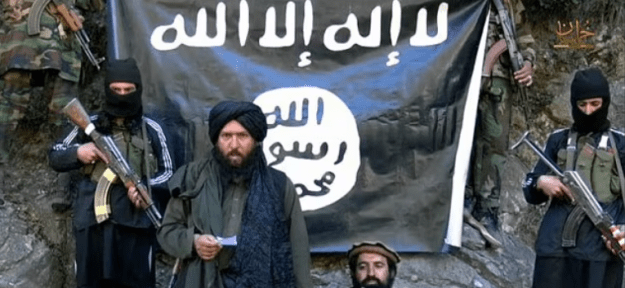
In his speech last night announcing the end of the American presence in Afghanistan and what happens next, Secretary of State Blinken said: “The Taliban seeks international legitimacy and support”, and “the Taliban can do that by meeting commitments and obligations”, which include “counter-terrorism”.
To most people it will seem strange that the Taliban could be regarded as a counter-terrorism partner, and it is. Despite the U.S. never formally listing the Taliban as a Foreign Terrorist Organization (FTO), the Taliban is fully integrated in a jihadist network under the control of Pakistan’s Inter-Services Intelligence (ISI) that includes Al-Qaeda. Continue reading


