Tag Archives: Iran

As Syria’s Opposition Tries To Unite, Prospects For Peace Recede

By Kyle Orton (@KyleWOrton) on December 9, 2015

A version of this article was published at Middle East Eye.

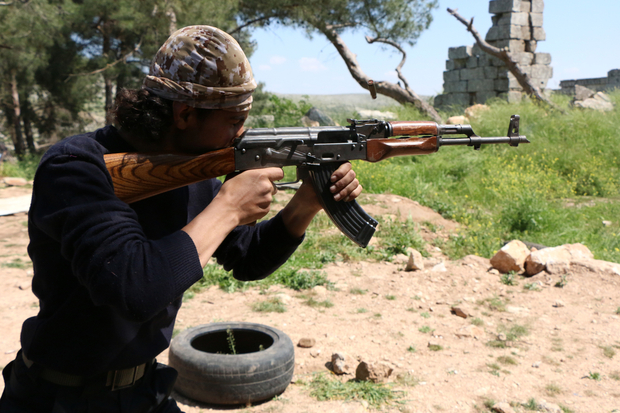
A rebel fighter from the Free Syrian Army's

A rebel fighter from the Free Syrian Army’s “First Battalion” takes part in military training on May 4, 2015, in rebel-held northern Rif Aleppo. (AFP, Baraa al-Halabi)

The Syrian opposition is meeting in Saudi Arabia between December 8 and 10 in an attempt to create a unified structure that can credibly sit across the table from the Bashar al-Assad regime in the internationally-organised peace talks in Vienna, and make a binding commitment on the path forward for Syria. Continue reading

Israel, Al-Qaeda, and The Daily Mail

By Kyle Orton (@KyleWOrton) on December 9, 2015

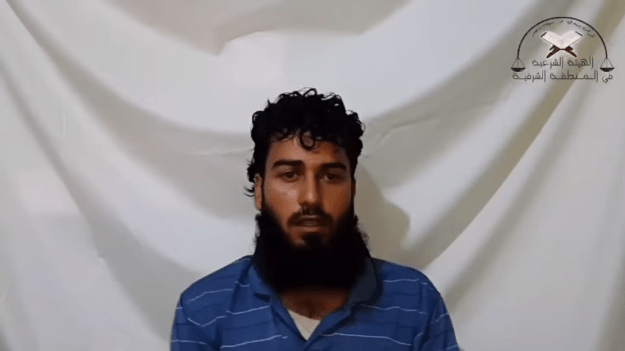
Sharif as-Safouri, a Free Syrian Army commander kidnapped by Jabhat an-Nusra and made to "confess" to receiving support, including weapons, from Israel in an August 2014 video.

Sharif as-Safouri, a Free Syrian Army commander kidnapped by Jabhat an-Nusra and made to “confess” to receiving support, including weapons, from Israel in an August 2014 video.

Last night The Daily Mail reported, after embedding with Israeli commandos, on Jerusalem’s ongoing effort to treat casualties of Syria’s horrific war. The Mail, however, put a spin on this story that not only reflected badly on the Jewish State, but feeds into a narrative cast by Iran and its allies to the effect that Israel is supporting Salafi militancy in Syria, specifically al-Qaeda, a propaganda campaign that has already had deadly consequences. Continue reading

If Assad Is Not Forced Out, ISIS Never Will Be

By Kyle Orton (@KyleWOrton) on December 3, 2015

A version of this article was published at The Independent.

1

Yesterday, the British House of Commons voted 397 to 223 to extend airstrikes against the Islamic State (ISIS) into Syria from Iraq. After the vote in August 2013 against military action to punish Syrian dictator Bashar al-Assad for the massive poison gas attack outside Damascus that killed 1,500 people in a few hours, this is undoubtedly a sign of a recovery in confidence of Britain’s international role, but it is only the beginning. Continue reading

How Assad Funds the Islamic State

By Kyle Orton (@KyleWOrton) on November 29, 2015

George Haswani (AP Photo)

George Haswani (AP Photo)

The United States Treasury Department’s Office of Foreign Assets Control (OFAC) sanctioned four individuals and six entities connected to the regime of Bashar al-Assad on November 25 for helping to transfer Syrian government funds to the Islamic State (IS), and for assisting in Russia-connected schemes to help the Assad regime evade the international sanctions imposed on it. While the sanctions freeze all assets of the individuals and entities that are under U.S. control and ban Americans from transactions with them, the most significant effect of these sanctions is political: the revelation of details about how Assad strengthens the Islamist terrorists he claims to oppose to discredit and destroy the rebellion against his regime. Continue reading

Destroying Islamic State, Defeating Assad: A Strategy for Syria

By Kyle Orton (@KyleWOrton) on November 25, 2015

1

Today, my first report with The Henry Jackson Society was published: “Destroying Islamic State, Defeating Assad: A Strategy for Syria“. Continue reading

Defeating the Islamic State Requires Sunni Allies

By Kyle Orton (@KyleWOrton) on November 20, 2015

Published at Left Foot Forward.

1

In the wake of the atrocity in Paris David Cameron has accelerated the push to extend British airstrikes against the Islamic State (ISIS) beyond Iraq into Syria. As Cameron put it:

It is in Syria, in Raqqa, that [ISIS] has its headquarters and it is from Raqqa that some of the main threats against this country are planned and orchestrated. Raqqa, if you like, is the head of the snake.

There is no doubt that this is so. The British government’s decision to war against ISIS—but only on the Iraqi side of an Iraq-Syria border that ISIS has abolished—makes no sense. This one-handed clapping is especially puzzling because ISIS’s most valued holdings are in Syria. From revenue streams—namely oil fields and populations that can be taxed/extorted—to ideological legitimacy and recruitment tools, such as holding the town of Dabiq where ISIS prophesises End Times will take place, drawing in a large stream of foreign fighters, ISIS’s centre of gravity is in Syria. Continue reading

The Islamic State Can’t Be Defeated Without Fighting it in Syria

By Kyle Orton (@KyleWOrton) on November 3, 2015

Published at Left Foot Forward.

An RAF Tornado fighter jet in Cyprus

An RAF Tornado fighter jet in Cyprus

This morning the House of Commons Foreign Affairs Committee published a report recommending that the British government should not extend its airstrikes campaign against the Islamic State (ISIS) from Iraq to Syria.

The report makes little legal or military sense, but its political objection—that the government’s attempt to defeat ISIS independently of a resolution to the Syrian war is untenable—is exactly right. Unfortunately the report, while very vague, hints that a resolution involves cooperation with the Bashar al-Assad regime and Iran, which cannot work, and actually helps ISIS. Continue reading

Kamel Sachet and Islamism in Saddam’s Security Forces

1Book Review: The Weight of a Mustard Seed: The Intimate Life of an Iraqi Family During Thirty Years of Tyranny (2009) by Wendell Steavenson

By Kyle Orton
(@KyleWOrton) on October 24, 2015

Wendell Steavenson’s The Weight of a Mustard Seed—the title drawn from a verse of the Qur’an about the difference between attaining heaven and hell—comprises five years of research about Kamel Sachet Aziz al-Janabi, one of Saddam Hussein’s favourite and most senior generals.

Born in 1947, Kamel Sachet joined the Iraqi police straight from school in the mid-1960s and joined the army in 1975. Sachet was soon in the Special Forces, training in mountain warfare in Germany in 1978, taking part in joint exercises with Iranian Special Forces during the time of the Shah—learning Farsi along the way—and then being part of the Iraqi Special Forces advanced party sent to invade Iran after Ruhollah Khomeini’s takeover. Sachet would later be part of the elite forces sent to secure Saddam’s occupation of Kuwait. After Saddam was evicted from Kuwait, Sachet, who had been slipping deeper and deeper into religious zeal from the early 1980s, was made governor of Maysan where he ran a de facto Salafi commune. Sachet was eventually removed from this post by regime internal intrigue, and was moved to a job in the office of the president. For reasons never definitively established, Sachet was murdered on Saddam Hussein’s orders on the first day of Operation DESERT FOX in December 1998.

Kamel Sachet’s story is an interesting one for what it says about the Saddam regime’s changing attitude toward Islamism as it ran its course, reversing the hard-secular outlook that prevailed at varying degrees of intensity from the late 1960s to the early 1980s, and transforming into an Islamist State in the last fifteen years of the regime. Continue reading

Why Solely Backing the PYD Against the Islamic State is a Mistake

By Kyle Orton (@KyleWOrton) on October 20, 2015

Published at NOW Lebanon.

1

The Pentagon-run train-and-equip (T&E) program had intended to take Syrian rebels, stop them from being rebels by preventing them from fighting the Assad regime, and repurpose them into an American-directed strike force against the Islamic State (ISIS). Unsurprisingly, there were few takers and the program ended in disaster and humiliation. In the wake of this failure, President Barack Obama has turned away from the Arab rebels and looked to the Syrian Kurds to fight ISIS. This is a strategy that is not only doomed to fail—since Sunni Arabs taking responsibility for their local security is the only way to sustainably defeat ISIS—but would, if implemented, make the ISIS problem worse. A report from Amnesty International this week documenting crimes, including ethnic cleansing, by the armed Kurdish forces against Arabs and Turkmens in northern Syria also provides an occasion to look more closely at a force with a history of regime collaboration, political extremism, and terrorism. Continue reading

Saddam, Sanctions, and Religious Solace in Iraq

By Kyle Orton (@KyleWOrton) on October 18, 2015

Mural of Saddam Hussein at prayer on Al-Kadhimiya Mosque

Mural of Saddam Hussein at prayer on Al-Kadhimiya Mosque

In the 1990s, the combination of the sanctions and Saddam Hussein’s predatory regime debauched Iraq, ushering in a period of chaos, scarcity, and corruption as the regime gradually broke down. With a religious revival already underway, the population turned to faith for succour, and the regime encouraged this in a way that—in the wake of the brutal repression of the Shi’a rebellion after the first part of the Gulf War—hardened sectarian identities. The security services were deeply affected by the Saddam regime’s Islamization and the Salafists exploited their newfound freedom, and the regime’s increasing lack of capacity, to plot a future after Saddam. By 2003, these various organized Islamist strains, part in and part out of the regime, stood ready to succeed Saddam and had a more zealous and sectarian population to draw on. Saddam had set the stage for the emergence of something like the Islamic State long before Coalition troops invaded Iraq. Continue reading