Tag Archives: Iran

Islamic State: The Afterlife of Saddam Hussein’s Regime

By Kyle Orton (@KyleWOrton) on July 4, 2015

Published at Baghdad Invest

1

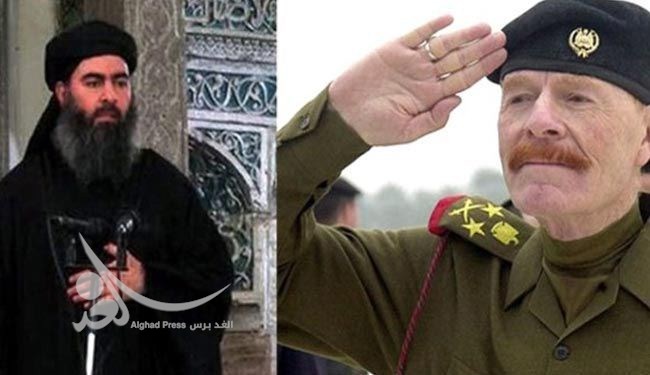
Izzat Ibrahim ad-Douri, Saddam Hussein’s long-time deputy, was reported dead (again) on April 17. An audio message on May 15 disproved this. Douri was the implementer of the Saddam regime’s Islamization program in its later years and a key architect of the insurgency after the regime was overthrown, which helped pave the way for the Islamic State (ISIS). ISIS has now turned on Douri and his associates, but ISIS could not have risen to its current stature without Douri’s help. Continue reading

To Defeat The Islamic State, Get Rid Of Assad First

By Kyle Orton (@KyleWOrton) on July 3, 2015

1

The British government is considering beginning airstrikes into Syria against the Islamic State (ISIS). London is currently engaged in airstrikes against ISIS in Iraq and has troops in the Kurdish areas of northern Iraq training and advising the Peshmerga.

Since ISIS’ territory in Syria is its “most valuable and sustainable,” the case for ignoring a border that ISIS has erased would seem to be a good one.

But no less a figure than the Conservative chair of the defence select committee, Julian Lewis, thinks otherwise:

In 2010 the government wanted to remove Assad without helping al-Qaeda or similar groups that subsequently became Daesh. Now we apparently want to remove Daesh but without helping Assad. These two things are incompatible. It is a choice of evils.

The view that Syria is divided between the Assad dictatorship and ISIS has become commonplace. It is mistaken. Continue reading

Islamic State Spokesman Calls For Immigration to the Caliphate, All Factions To Join

By Kyle Orton (@KyleWOrton) on July 1, 2015

On June 23, 2015, the Islamic State (IS) spokesman Abu Muhammad al-Adnani gave a speech, “O Our People, Respond to the Caller of Allah”. Al-Adnani, noting the coming of Ramadan, called on Muslims to journey to the caliphate, saying that hijra (emigration) in this month—and martyrdom—is the most blessed. Al-Adnani called on Muslims—specifically Iraqi Sunnis and Syrian rebel and Islamist insurgent groups—to unite around IS, which had no theological factions or ethnic distinctions among its membership, being the only pure expression of Islam, ruling by god’s law. Iraqi Sunni militias and Syrian rebels had betrayed the religion by seeking favour from, and even seeking alliance with, Western states. Al-Adnani threatened the town of Haditha, specifically the Jaghayfa clan, that if it surrendered now its repentance would be accepted, but if the town was overrun first then they would be slaughtered. Al-Adnani played heavily on the interlinked themes of anti-Shi’a sectarianism and the spreading influence of Iran and its proxies, repressing Sunnis. The old guard of the jihadi movement—clerics like Abu Muhammad al-Maqdisi and al-Qaeda’s leader Ayman al-Zawahiri (though neither are mentioned by name)—are attacked for not being on the battlefields. Al-Adnani also accepted the allegiance of the Russian-based faction that declared itself under the caliph’s authority, naming the group Wilayat al-Kavkaz. An English transcript of the speech was posted by IS and is reproduced below with some minor editions in transliteration and some interesting sections highlighted in bold. Continue reading

A Postscript on the Relationship Between Saddam Hussein and Al-Qaeda

By Kyle Orton (@KyleWOrton) on June 26, 2015

Osama bin Laden (L) and Ayman az-Zawahiri (R)

Osama bin Laden (L) and Ayman az-Zawahiri (R)

The myth that Saddam Hussein’s regime had nothing to do with al-Qaeda is persistent. Stephen Hayes’ book, The Connection, ably debunks this notion. There are some additional details that one can add to this. Continue reading

A Myth Revisited: “Saddam Hussein Had No Connection To Al-Qaeda”

Book Review: The Connection: How al-Qaeda’s Collaboration With Saddam Hussein Has Endangered America (2004) by Stephen Hayes

By Kyle Orton(@KyleWOrton) on June 21, 2015


More than twelve years after the fall of Saddam Hussein, the conventional wisdom is that Saddam’s regime had no connection with al-Qaeda, and such “evidence” as was adduced was tortured out of Ibn al-Shaykh al-Libi in the Bush administration’s desperation to cobble together a casus belli. But if one puts ideology on hold, and considers the evidence of Stephen Hayes’ The Connection, a rather different picture emerges. Continue reading

The Dangerous Idea That Iran is a Force for Stability in the Middle East

By Kyle Orton (@KyleWOrton) on June 5, 2015 1 In the Guardian this morning, Jonathan Steele has written an article defending President Barack Obama’s Iran policy. Steele allows others to make his points for him, but he contributes to a narrative in which rapprochement with Iran is a worthy policy—even as the President formally denies that the Iran negotiations are about anything other than the nuclear-weapons program. Steele writes:

In Iraq, [Iranian officials] insist, Iran is a force for stability, helping [Iraqi prime minister] Haider al-Abadi’s government militarily while urging it to be more attentive to Sunni concerns—just as Washington is.

This is nonsense. In 2008, after the US ‘surge’, violence in Iraq was down 90 per cent, and the political process had begun to work. This was achieved by separating the Sunni Arab tribes of western Iraq from al-Qaeda in Mesopotamia (AQM), the forerunner to the Islamic State (ISIS).

Continue reading

Does Iran Support The Islamic State?

By Kyle Orton (@KyleWOrton) on May 26, 2015

Qassem Suleimani, Iran's spymaster, believed in some MidEast conspiracy theories to control ISIS

Qassem Suleimani, Iran’s spymaster, believed in some Mid-East conspiracy theories to control ISIS

In 2010, Farzad Farhangian, an Iranian diplomat based in Belgium, defected to Norway. Farhangian has now emerged with the extraordinary accusation that the Islamic Republic of Iran is controlling the Islamic State (ISIS) and using it as part of Tehran’s war against the Gulf States, especially Saudi Arabia. Farhangian’s accusations are lurid and (literally) incredible, but the question of Iran’s role in ISIS’ creation and growth, and Iran’s manipulation of ISIS to further its own ends, is one well worth asking. Continue reading

The Islamic State’s Strategy Is Working, Its Enemies Are Failing

By Kyle Orton (@KyleWOrton) on May 23, 2015

1

To hear President Obama tell it, his announced program to defeat the Islamic State (ISIS), which began with airstrikes into Iraq last August that were extended into Syria in September, is working, albeit with some tactical setbacks. The implication is that the setbacks of the U.S.-led anti-ISIS campaign are not strategic.

As J.M. Berger phrased it:

In the Washington vernacular, the act of Being Strategic implies a near mystical quality of superior thinking possessed by some, and clearly lacking amongst the vulgarians of the world—heedless brutes such as ISIL. Tactics are short-term ploys, easy to dismiss. Strategy is for winners.

Unfortunately, this soothing view is almost exactly wrong: it is the United States that is relying on various short-term methods—commando raids into the Syrian desert, for example—while ISIS has a long-term goal fixed in mind and is working assiduously to achieve it. The U.S.-led Coalition is losing, in short, and ISIS is winning. Continue reading

How Many Alawis Have Been Killed In Syria?

By Kyle Orton (@KyleWOrton) on May 20, 2015

1

In a report on the internal divisions in the Assad regime and the passing of Syria’s sovereignty to Iran by Ruth Sherlock in The Sunday Telegraph on May 17, there was this stunning sentence: “Perhaps a third of all Alawite males of military age have been killed in the civil war.” This is a startling thought.

To determine if this figure for the proportion of Alawis killed is plausible it is necessary to know how many Alawis there were in Syria at the outset of the war, and how many people have been killed during the war. Continue reading

The Gulf States Push Back Against Obama’s Iran Policy

By Kyle Orton (@KyleWOrton) on May 12, 2015

1

President Obama invited the leaders of the Gulf Cooperation Council (GCC) to a meeting at Camp David on Thursday to clear the air as the President looks to finalize his nuclear deal with Iran. But on Sunday, Saudi King Salman said he was not attending, and soon after the Bahraini monarch followed. The only Gulf leaders in attendance will be the Emirs of Qatar and Kuwait. Since leaders do not just have other things to do when they are scheduled for a private meeting with the President of the United States, this can be taken as a pointed snub to President Obama, and no amount of administration spin about Salman’s absence having nothing to do with political substance will change that. Continue reading