Tag Archives: Islamic Revolutionary Guard Corps

The Sieges of Syria

By Kyle Orton (@KyleWOrton) on March 2, 2016
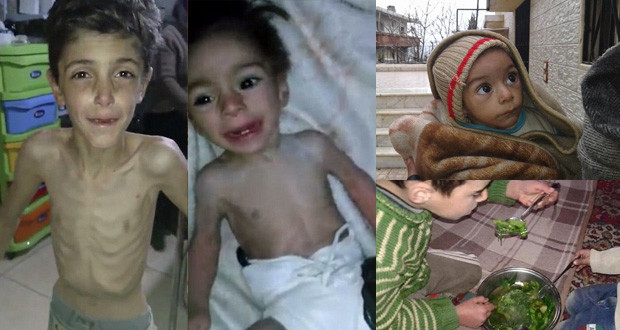
Starving children in Madaya

A website, siegewatch.org, has been set up that tracks the areas under siege in Syria. Siege Watch is a joint project of PAX, an organization that works in conflict zones to foster peace, and The Syria Institute, a non-partisan research centre directed by Valerie Szybala.

At the present time, according to Siege Watch, there are forty-six sieges operating in Syria, forty-three of them (93.5%) imposed by the Assad regime, two (4.5%) imposed by Jaysh al-Fatah, an insurgent coalition that includes Jabhat an-Nusra (al-Qaeda in Syria), and one (2%) by the Islamic State (IS).

Siege Watch also documents the severity of the sieges in three categories. Category one (C1) is the most severe: very little gets in even by smuggling and international aid deliveries are rare if at all; the risk of malnutrition is high. Category two (C2) sieges are porous enough for the black market and/or locals might have some access to locally-grown produce, but prices for basics are extremely high and residents are at “some risk of malnutrition/dehydration”. Category three (C3) sieges require smuggling to get food, but there is a consistent supply, even if home-grown. While risk of malnutrition is low in C3 zones, medical emergencies are likely because of attacks by besieging forces.

All six C1 sieges are imposed by the regime. Thirty category C2 sieges are operating: twenty-nine by the regime and one by IS. The regime is also operating eight C3 sieges and Jaysh al-Fatah is operating two C3 sieges. Continue reading
How Russia and Iran Took Advantage of Syrian Peace Talks to Choke Aleppo

By Kyle Orton (@KyleWOrton) on February 16, 2016

Published at The Independent, submitted February 12.

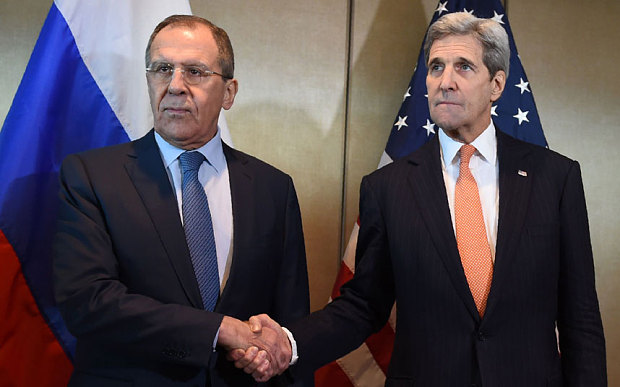
Kerry-Lavrov 'ceasefire'

In the coming days and weeks many people will weep for the fate of Aleppo. Many of these people will also continue to support the nuclear deal, which has facilitated this U.S.-Iran détente and supplied Iran the resources to make war. They will still consider it a triumph of diplomacy over military action—and never be called to account for the obvious contradiction.

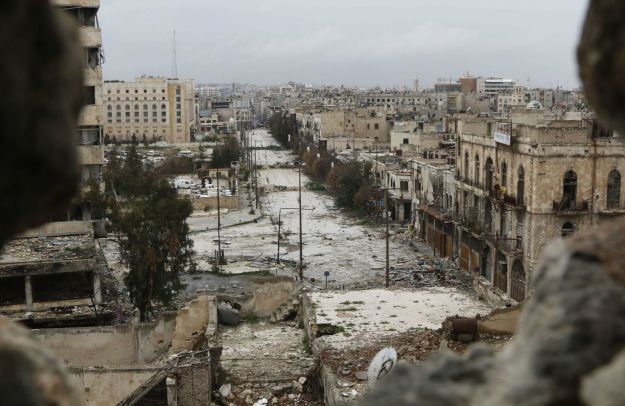
The Geneva III peace process is the most immediate cause for this latest offensive against Aleppo, led on the ground by Iran’s Islamic Revolutionary Guard Corps (IRGC) and its proxies, as well as Russian airstrikes. The regime and Russia have used it as a cover to gain ground. Continue reading

Russia is No Partner Against the Islamic State

By Kyle Orton (@KyleWOrton) on February 12, 2016

1

This morning, Russia ostensibly agreed to help the U.S. impose a ceasefire in Syria within a week—on the way to a negotiated settlement. This could not work right now, even if Russia intended it to. But Russia does not. Russia’s role since intervening in Syria in late September 2015 has been to bolster the regime of Bashar al-Assad and a primary tactic in that overarching strategic aim has been the attempt to destroy all opposition to Assad that the international community could possibly deal with, and to create a binary situation where there is only the regime and jihadi-Salafist terrorists, primarily the Islamic State (IS), and secondarily—in areas where they do not threaten key regime interests—Jabhat an-Nusra (al-Qaeda). Moscow will eventually turn on IS, but in the short-term Russia has engaged in indirect coordination with IS to weaken the rebels and push them out of key strategic areas, notably in eastern Aleppo where Russia bombed rebels out of the way who had been holding IS out for years. On Tuesday, Foreign Policy reported on another aspect of this Russia-IS collaboration that aims to empower the takfiris in the short-term as part of the long-term plan, also supported by Iran, to secure the Assad regime in power. Continue reading

From Bosnia to Guantanamo

By Kyle Orton (@KyleWOrton) on January 23, 2016

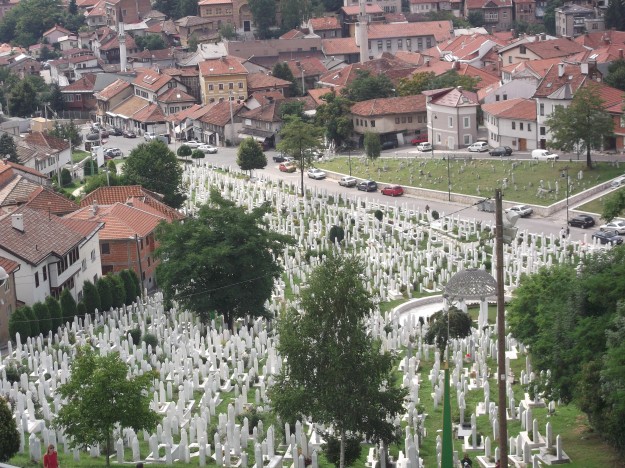
War cemetery in Sarajevo (personal picture, July 2011)

War cemetery in Sarajevo (personal photograph, July 2011)

It was announced on Thursday that Guantanamo inmates Tariq Mahmoud Ahmed as-Sawah and Abd al-Aziz Abduh Abdallah Ali as-Suwaydi had been transferred to Bosnia and Montenegro respectively. Sawah’s path to jihadi-Salafism allows a window into the Bosnian jihad, a much-underestimated factor in shaping al-Qaeda, its offshoots, and the wider jihadist movement. In that story is an examination of the role certain States have played in funding and otherwise helping the jihadists. It also leaves some questions about whether emptying Guantanamo of its dangerous inhabitants is the correct policy.
Continue reading

The Iranian Nuclear Deal and North Korea

By Kyle Orton (@KyleWOrton) on January 18, 2016

1

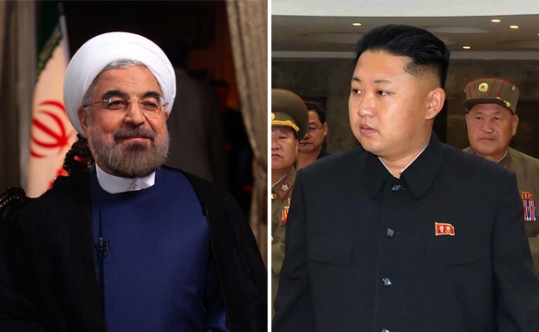
In the last few days, the international sanctions against the Islamic Republic of Iran’s nuclear program were lifted, which will allow Tehran access to $30 billion immediately and more than $100 billion will become available in short order. There are many fears about the uses Iran will put this money to, whether on the nuclear program itself, in aiding Iran’s imperial policy in the region, now proceeding with assistance from Russia, or perhaps exporting terrorism further abroad. An under-examined potential use of this money, highlighted by new sanctions the United States applied to Iran over its ballistic missile program, is to purchase weapons from North Korea. Pyongyang has already conducted what it claims is a hydrogen bomb test this year; fuelled by Iranian money the Hermit Kingdom might yet make more trouble for its neighbours and beyond. Continue reading

In View of Vienna

By Kyle Orton (@KyleWOrton) on December 15, 2015

Published at NOW Lebanon.

1

So the Syrian opposition can unite. Foreign powers have been the major cause of rebel discord. Previous rebel unity initiatives like the Joint Command were pulled apart by the competition between the insurgency’s sponsors—Saudi Arabia and Qatar primarily—and the last rebel umbrella group, the Supreme Military Council, which was identified with Western power, collapsed after President Barack Obama decided not to punish Bashar al-Assad for the massive chemical weapons attack on the population of Ghouta. But under Saudi auspices, an opposition “team” was announced on December 10 after a three-day conference in Riyadh, which includes the political and military opposition and groups with varying ideologies and patrons. This is an achievement. Unfortunately, this team’s task is an impossible one: intended to partake in the Vienna process begun in October, ostensibly to negotiate an end to the war, Syria is not, at present, in a condition where a political agreement can be made and implemented, not least because the Assad regime and its supporters in Iran and Russia have doubled down, and the opposition continues to receive insufficient support to pressure the regime enough to force an agreement. Continue reading

Destroying Islamic State, Defeating Assad: A Strategy for Syria

By Kyle Orton (@KyleWOrton) on November 25, 2015

1

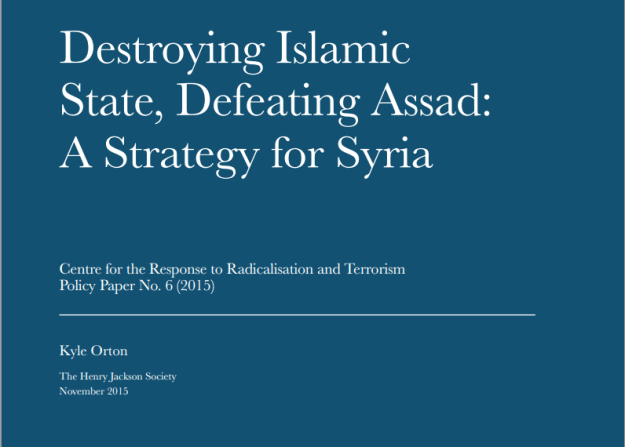
Today, my first report with The Henry Jackson Society was published: “Destroying Islamic State, Defeating Assad: A Strategy for Syria“. Continue reading

Russia Teams Up With Islamic State Against Syria’s Rebels

By Kyle Orton (@KyleWOrton) on October 11, 2015

Devastation of the Ibrahim al-Khalil mosque in Tareeq al Bab after Assad's barrel bombs, Aleppo, April 2015 (source)

Devastation of the Ibrahim al-Khalil mosque in Tareeq al Bab after Assad’s barrel bombs, Aleppo, April 2015 (source)

The main intention of Russia’s intervention in Syria is to prop up the dictatorship of Bashar al-Assad and to do that Russia is seeking to ensure that the Islamic State (I.S.) is the only alternative to Assad’s regime. If the conflict becomes binary—Assad or I.S.—nobody can support I.S., and by default it will be accepted that Assad has to stay; even if international help is not given to put down the insurgency at that point, tacit support and political legitimacy will be extended to Russia’s effort to keep its client regime alive. In service of this mission, Moscow has consistently targeted the moderate rebels and even some non-moderate rebels, while avoiding I.S., in the conscious hope that the rebel positions it destroys will be replaced by I.S. fighters. In northern Syria in the last few days, Russia got its wish in a major way. Continue reading

In Syria, Russia and Iran Reap the Harvest of Obama’s Failed Foreign Policy

By Kyle Orton (@KyleWOrton) and James Snell on October 1, 2015

Published at National Review.

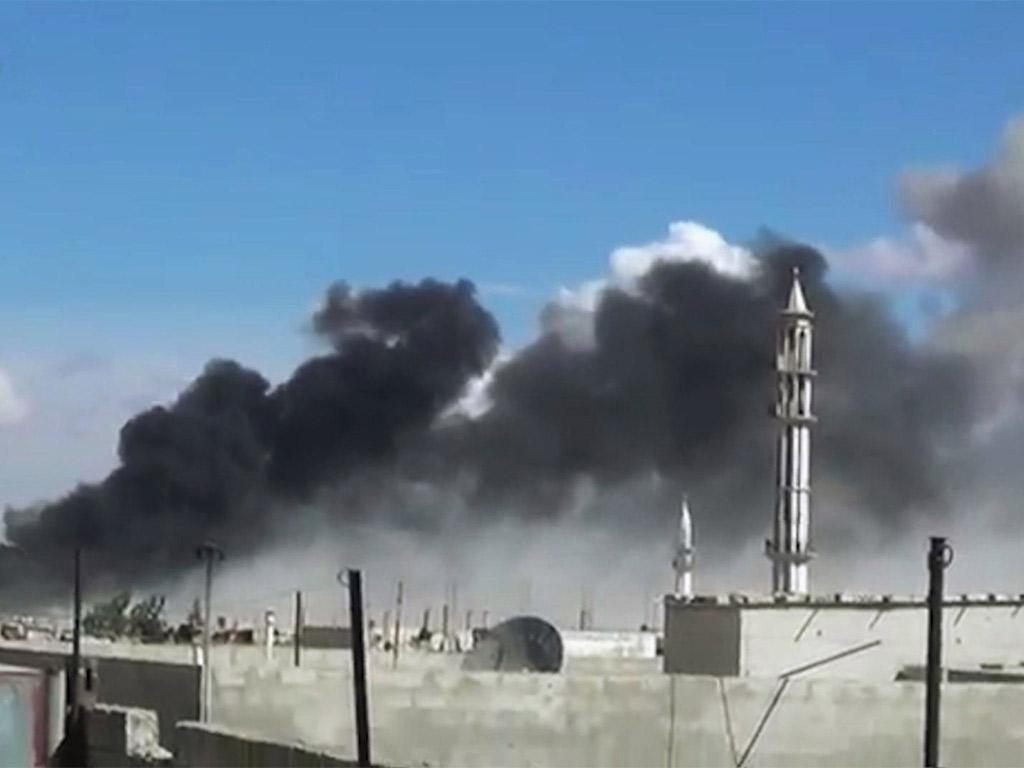
Aftermath of a Russian airstrike against U.S.-supported moderate rebels in Talbiseh, Homs (AP)

Aftermath of a Russian airstrike against U.S.-supported moderate rebels in Talbiseh, Homs (AP)

The situation in Syria could hardly get more desperate. With more than half the population displaced and 300,000 people dead, the civil war in Syria is the greatest humanitarian disaster of our time. But Syria is also a profound challenge to the American-underwritten geopolitical order that aspires toward free institutions and representative rule. As a direct consequence of policies pursued by the Obama administration, Iran and Russia, two enemies of this order, have taken their chance to assert their dominance. Continue reading

A Year Into The War Against The Islamic State, The Coalition Has Little To Show For It

By Kyle Orton (@KyleWOrton) on September 30, 2015

Published at Left Foot Forward

1

A year into the campaign against the Islamic State, the American-led coalition has precious little to show for it. Tactical victories in Kobani, Tikrit and Tel Abyad have been more than offset not only by the negative long-term side-effects of those victories but by direct I.S. military gains in the present—notably the capture of a third provincial capital in Ramadi, the capture of Palmyra and a push into Homs and southern Syria; as well as increasing I.S. infiltration of Idlib, an area cleared entirely of I.S. by a rebel offensive in early 2014. Continue reading