Tag Archives: Islamism

Egypt: Between Dictatorship and Islamism

By Kyle Orton (@KyleWOrton) on 4 July 2018

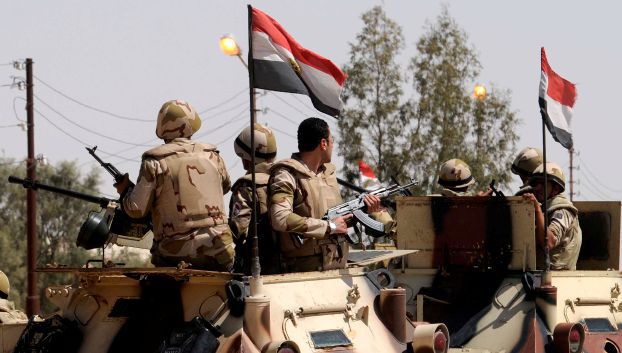
Egyptian soldiers in the Sinai (image source)

Five years on from the military coup d’etat in Egypt that brought to power Abdel Fattah el Sisi, the problems of the country—political, economic, demographic, security—remain as intractable as ever. Indeed, in many cases, the problems are worse than before. Among the problems that are noticeably worse now than in 2013 is security, specifically the Islamic State (Daesh) insurgency in the Sinai. Continue reading

Reviewing the Iraqi Surge and Awakening

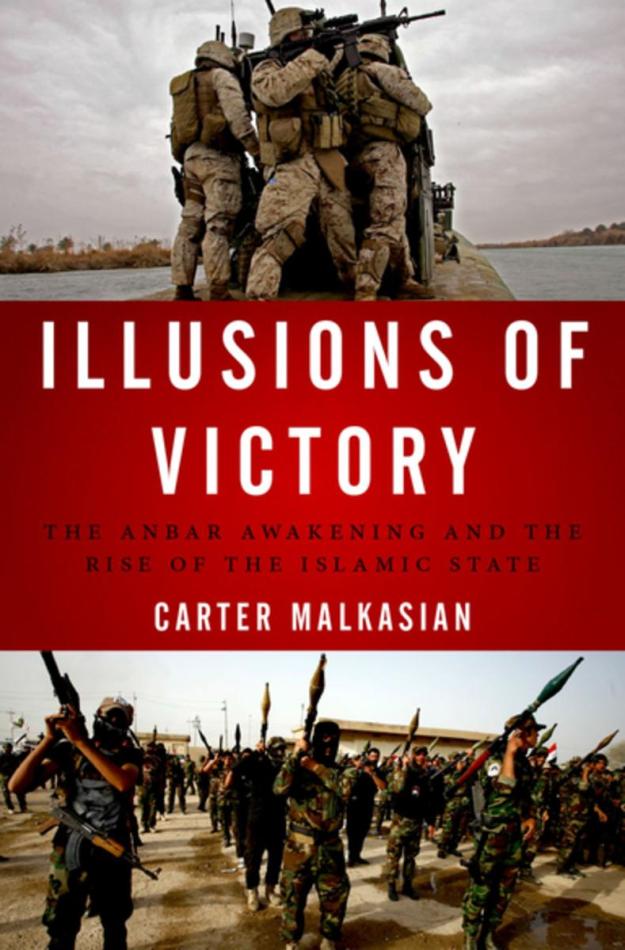
Book Review: Carter Malkasian, ‘Illusions of Victory’, Oxford University Press, 2017. pp. 280.

By Kyle Orton (@KyleWOrton) on 4 July 2018

Carter Malkasian sets out in Illusions of Victory: The Anbar Awakening and the Rise of the Islamic State to upend the conventional understanding of the campaign against the Islamic State (IS) movement, known at the time as al-Qaeda in Iraq (AQI), in Anbar province of western Iraq. Continue reading

Al-Qaeda’s Leader Denounces Israel and the International System

By Kyle Orton (@KyleWOrton) on 13 May 2018

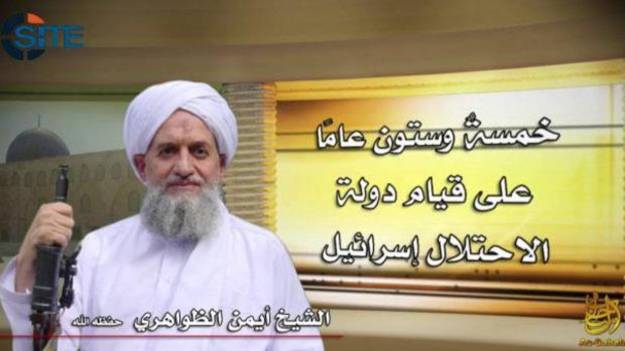
Ayman al-Zawahiri (AFP)

Al-Qaeda’s leader, Ayman al-Zawahiri, released a speech today, the ninth edition of his “Brief Messages To A Victorious Ummah”. A transcript of the speech, entitled “Tel Aviv Is Also the Land of Muslims”, evidently timed for the movement of the U.S. Embassy in Israel tomorrow, was released by al-Qaeda’s As-Sahab Media enterprise and is reproduced below. Continue reading

The Strikes in Syria and America’s Path Forward

A version of this article was published in CapX

By Kyle Orton (@KyleWOrton) and James Snell on 8 May 2018

The Barzeh chemical weapons facility in Damascus, Syria, demolished by U.S. cruise missiles on 14 April 2018 (image source)

The United States and its allies, Britain and France, launched over 100 missiles at the Syrian regime of Bashar al-Assad in the early hours of 14 April. This was retaliation for the regime’s use of poison gas in the town of Douma, east of the capital, Damascus, exactly a week earlier, which massacred at least 43 people and wounded 500 more. The military strikes were an important signal and will likely be some deterrent against the future use of chemical weapons in Syria, but ultimately this was another missed opportunity by the West to meaningfully affect the course of the war. Continue reading

The Announcement of the Mujahideen Shura Council in Iraq

By Kyle Orton (@KyleWOrton) on 17 March 2018

A statement attributed to Abu Maysara al-Iraqi, the official spokesman of Al-Qaeda in Mesopotamia (AQM), was released on 15 January 2006 that announced AQM was being merged with five other Salafi insurgent groups to create the Mujahideen Shura Council (al-Majlis Shura al-Mujahideen). A translation of the statement is produced below.

Continue reading

Profile: First Spokesman of the Islamic State Movement

By Kyle Orton (@KyleWOrton) on 16 March 2018

The predecessor organization to the Islamic State (IS), the Islamic State in Iraq (ISI), used to run a “Prominent Martyrs” or “Distinguished Martyrs” series: essentially obituaries for important members of the IS movement. In the forty-sixth edition, on 18 August 2010, ISI profiled Abu Maysara al-Iraqi, the first official spokesman and the deputy of the Media Department until he was killed in 2006. A translation of Abu Maysara’s biography was issued by Ansar al-Mujahideen forum and is reproduced below with some minor editions for transliteration and some interesting points highlighted in bold. Continue reading

Syria’s Revolution Has Been Overtaken By Outside Powers

By Kyle Orton (@KyleWOrton) on 16 March 2018

Devastation in Aleppo (image source)

This week marks the seventh anniversary of the Syrian revolution. A movement that began with peaceful street protests calling for reform and—after the government responded with lethal violence—the downfall of the dictator, descended into war that has to this point cost the lives of at least 500,000 people and displaced nearly twelve million others—more than half of Syria’s pre-war population.

In any strategic sense the rebellion has been defeated—it is not able to overthrow Bashar al-Assad by force on its own—and its political cause is increasingly strained as the remnants of the armed opposition are increasingly co-opted by external actors, state and non-state. Continue reading

Islamic State Recommends More Gentleness in Dealing With Sinners

By Kyle Orton (@KyleWOrton) on 10 March 2018

1

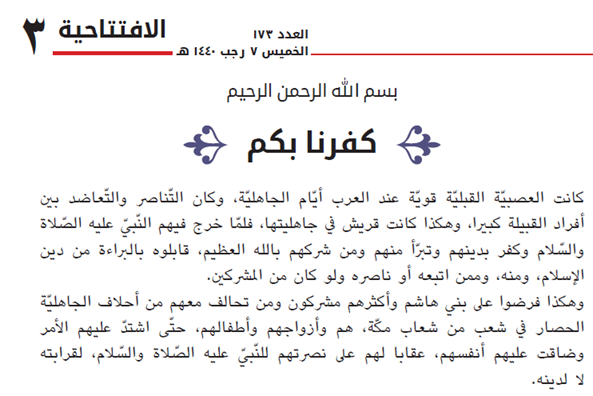
The 122nd edition of Al-Naba, the Islamic State’s weekly newsletter, was released on 9 March 2018 and contained an article, on page 3, suggesting that the use of takfir (excommunication) should be circumscribed. A rough translation is reproduced below. Continue reading

Al-Qaeda Leader Profiles the Founder of the Islamic State

By Kyle Orton (@KyleWOrton) on 28 February 2018

Ahmad al-Khalayleh (Abu Musab al-Zarqawi) [picture via Getty], Muhammad Zaydan (Sayf al-Adel) [picture via Kronos Advisory LLC]

The military leader of al-Qaeda, Muhammad Saladin Zaydan (Sayf al-Adel), wrote a biography for Ahmad al-Khalayleh (Abu Musab al-Zarqawi), the Jordanian jihadist who founded what is now the Islamic State in Taliban Afghanistan in 1999. Zaydan wrote the biography in 2005 while in Iran, under the protection of the Islamic Republic, where he still is. The biography is reproduced below with some interesting and important sections highlighted in bold. Continue reading

Al-Qaeda Continues to Take Advantage of Egypt’s Dictatorship

By Kyle Orton (@KyleWOrton) on 15 February 2018

Al-Qaeda’s leader, Ayman al-Zawahiri, released a speech on 15 February 2018, entitled, “Glad Tidings of Victory To Our People in Egypt”. Al-Zawahiri’s address was the eighth episode of the “Brief Messages To A Victorious Umma (Islamic community or nation)” series. Al-Zawahiri reiterated a theme al-Qaeda has used many times, by referring to the downfall of Muhammad Morsi, the first elected president of Egypt, who was deposed in a military coup d’état in July 2013. Morsi, a member of the Muslim Brotherhood, had taken part in elections and had tried to find a compact with the non-Islamist sections of the Egyptian state and society, including the felul, the remnants of the fallen tyranny, notably in the military, police, bureaucracy, and judiciary, plus the media and business class. It had served Morsi no good: severely constrained in his authority, Morsi’s government unravelled quickly when these forces came together with foreign sponsors for a putsch. The old regime was restored in Egypt, with the support of Western countries, despite being more violent than ever. For al-Qaeda, the lesson of this episode is clear: without a violent revolution that creates tabula rasa, Islamist politics will not get a chance. An English-language transcript of al-Zawahiri’s speech was made available by al-Qaeda’s media apparatus and is reproduced below. Continue reading