By Kyle Orton (@KyleWOrton) on 12 October 2021

Iranian protesters burn an effigy of the Shah outside the American Embassy, 1979 [source]
By Kyle Orton (@KyleWOrton) on 12 October 2021
Iranian protesters burn an effigy of the Shah outside the American Embassy, 1979 [source]
By Kyle Orton (@KyleWOrton) on 20 August 2021

Khalil Haqqani, a senior Taliban leader and simultaneously a leader of Al-Qaeda’s Haqqani Network, leads Friday prayers at the Pul-i-Khishti, the largest mosque in Kabul, 20 August 2021
When the Taliban swept into the capital of Afghanistan on Sunday, little of the coverage focused on Pakistan and yet that was where this victory was made. This is a pattern that has persisted throughout the war. Continue reading
By Kyle Orton (@KyleWOrton) on 22 May 2021

Al-Naba 287, page three
The last two issues of Al-Naba, the weekly newsletter of the Islamic State (IS), had a number of interesting items, most obviously finally breaking its silence on the latest flare-up between Israel and HAMAS. Continue reading
By Kyle Orton (@KyleWOrton) on 8 May 2021

Wael al-Ta’i (Abu Muhammad al-Furqan), Al-Naba 285, p. 3
The 285th edition of Al-Naba, the weekly newsletter of the Islamic State (IS), released on 6 May, had a biography of Abu Muhammad al-Furqan, one of the most important IS leaders, the head of its Central Media Department and its operational ruler when he was killed in September 2016. Continue reading
By Kyle Orton (@KyleWOrton) on 5 April 2021
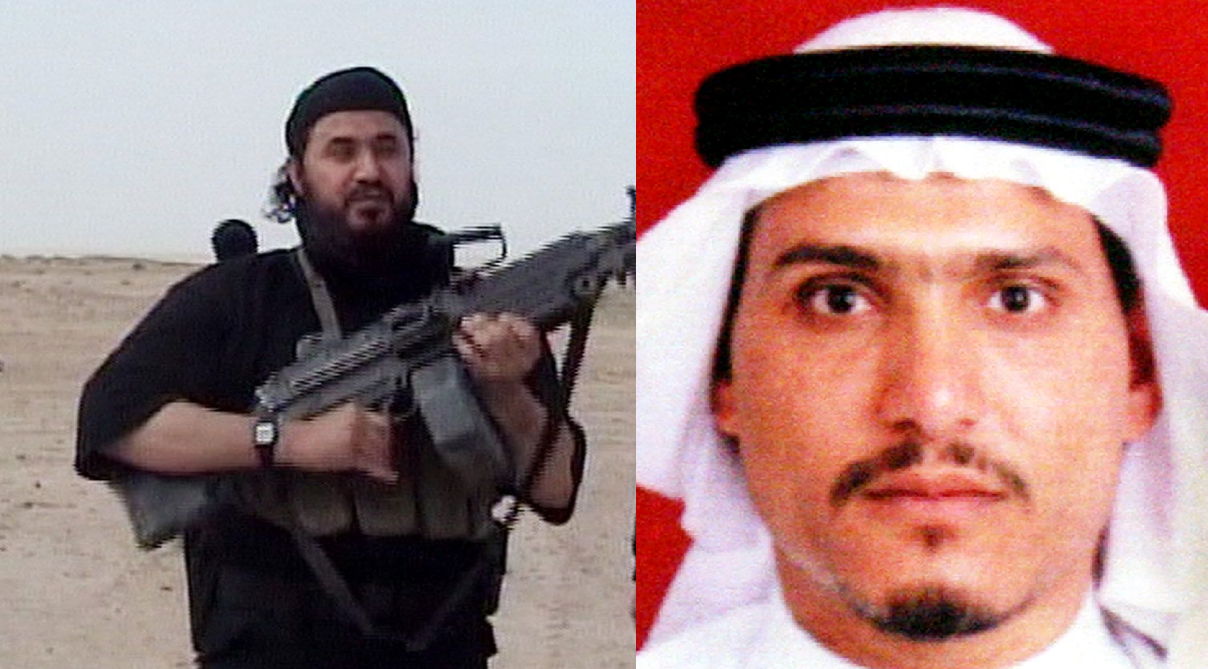
Ahmad al-Khalayleh (Abu Musab al-Zarqawi), the infamous founder of the Islamic State movement, known at the time as Al-Qaeda in Iraq (AQI) and formerly part of the Mujahideen Shura Council (MSC), was killed on 7 June 2006. Zarqawi’s successor was officially announced five days later, in a written statement released on 12 June, as Abu Hamza al-Muhajir, an Egyptian with a long history in and around Al-Qaeda. The next day, 13 June 2006, Abu Hamza gave his first speech as AQI emir, entitled, “The Gathering Will Be Defeated and They Will Turn Their Backs [in Retreat]”, drawn from an ayat of the Qur’an (54:45). The statement and the speech are translated below.
By Kyle Orton (@KyleWOrton) on 17 March 2021
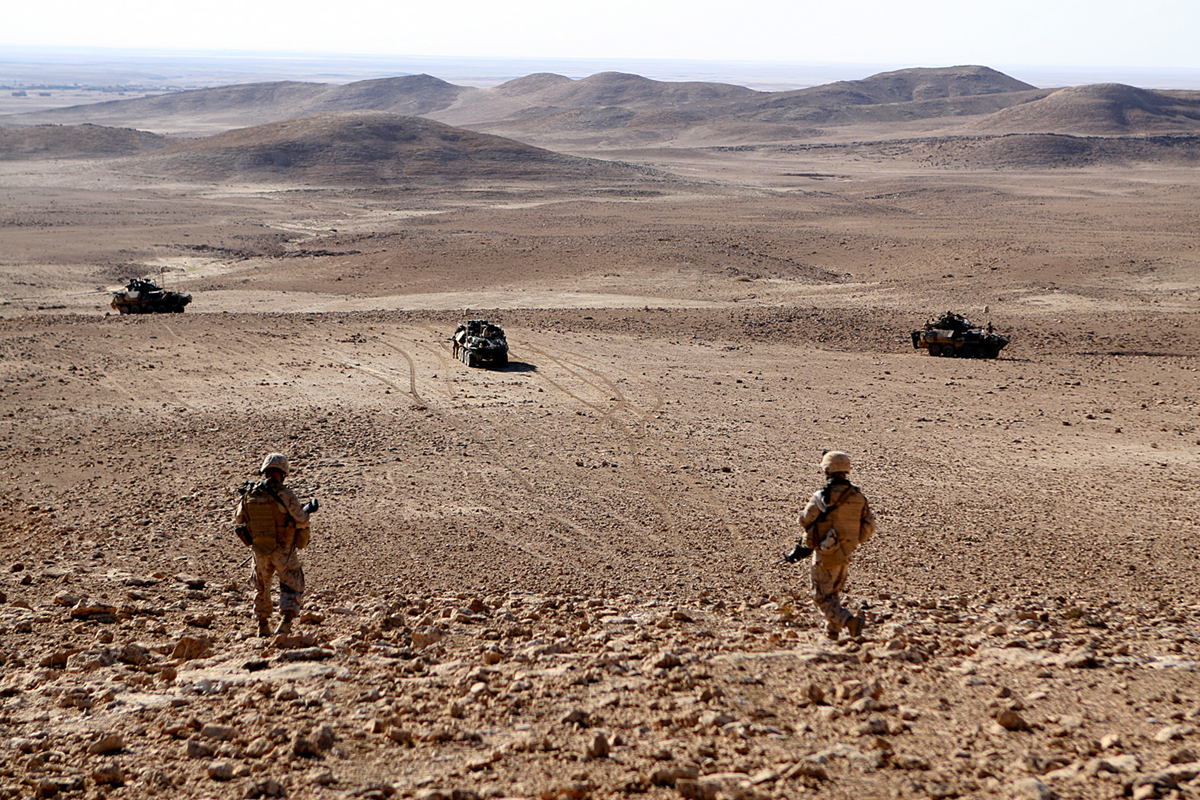
Abu Umar al-Baghdadi, the implied caliph of the Islamic State movement between 2006 and 2010, gave his sixteenth speech on 17 March 2009. The title of the speech was, “Harvest of the Good (The Gathering Will Be Defeated, and They Will Turn Their Backs and Flee)”.[1]
By Kyle Orton (@KyleWOrton) on 2 March 2021
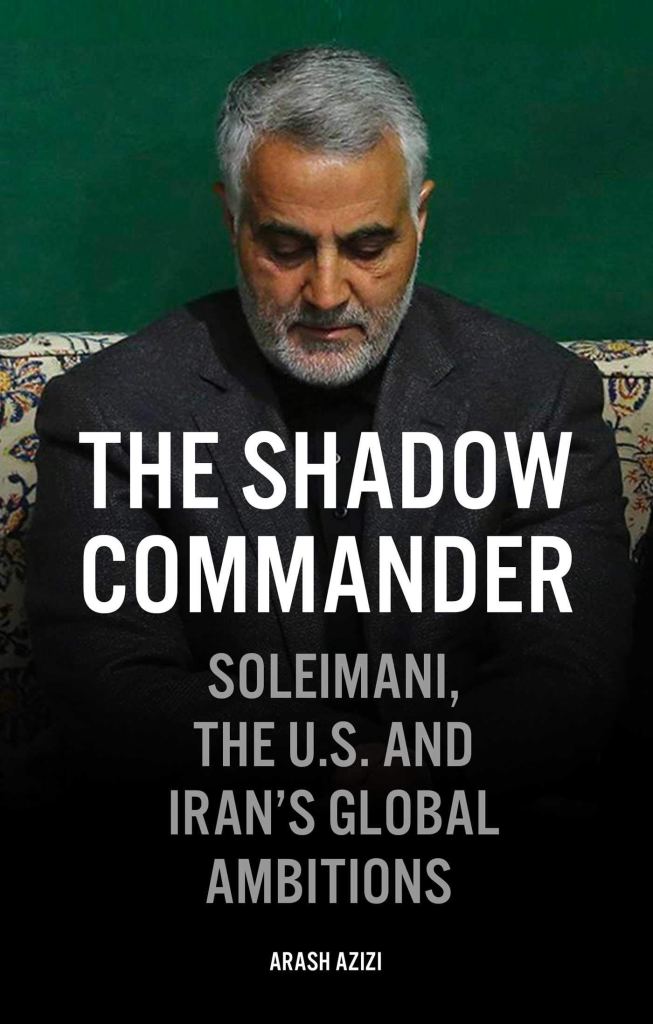
A year ago, U.S. President Donald Trump gave the order to kill Qassem Soleimani, the de facto deputy leader of Iran. Arash Azizi’s The Shadow Commander: Soleimani, the U.S., and Iran’s Global Ambitions is an effort to explain who Soleimani was, how he rose to controlling the lives of millions of people well outside the borders of Iran, and how in the end he was brought down. Continue reading
By Kyle Orton (@KyleWOrton) on 2 November 2020
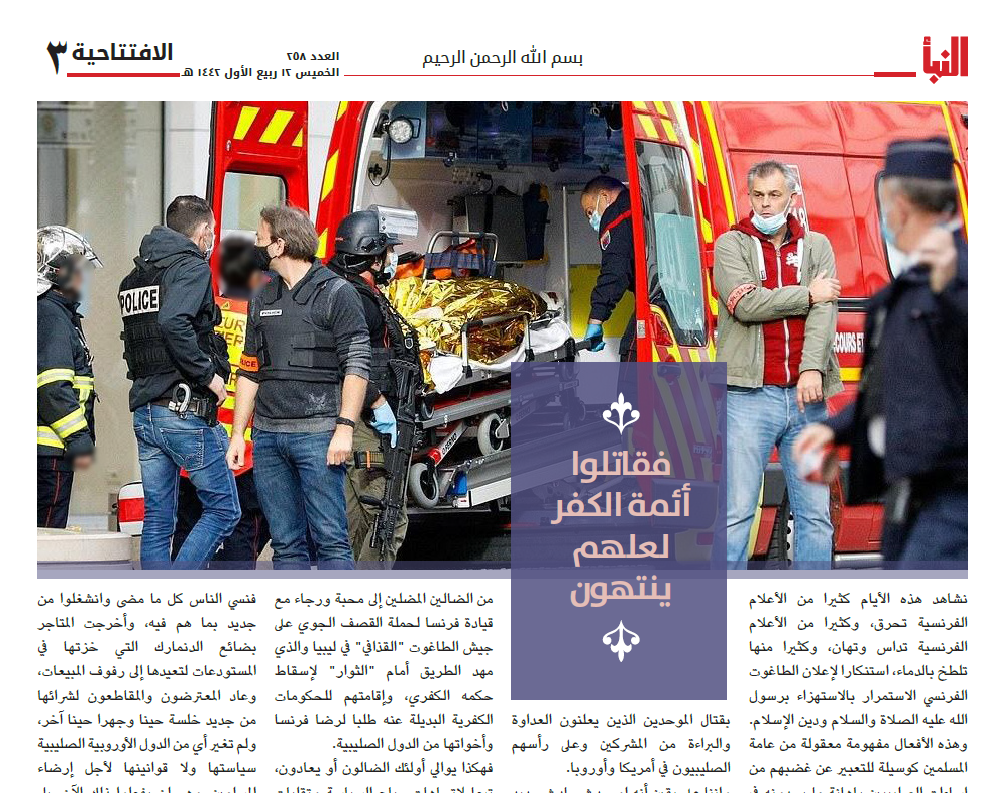
Al-Naba 258, page 3
In the 258th edition of Al-Naba, the Islamic State’s (IS) weekly newsletter, the main editorial on page three is entitled, “Fight the Heads of Disbelief, Perhaps They Will Desist”, and addresses the ongoing and now international dispute after the murder of Samuel Paty, a French schoolteacher, on 16 October. Paty had, after offering those who wanted to leave that opportunity, shown the cartoons from Charlie Hebdo during a class on free speech, and was subsequently beheaded by an Islamist accusing him of blasphemy. In the two weeks since, many Islamist and jihadist groups and individuals, as well as alarming proportions of ordinary Muslims, even in Western countries, have said Paty deserved what he got—albeit at varying levels of openness. A similar message has been transmitted by a number of governments in Muslim-majority countries, notably Turkey and Pakistan, who have effectively blamed France for the atrocity, either citing the French version of secularism (laïcité), racism, or some other grievance. The primary message of IS’s editorial is to declare itself unimpressed with these stances. Continue reading
By Kyle Orton (@KyleWOrton) on October 23, 2020
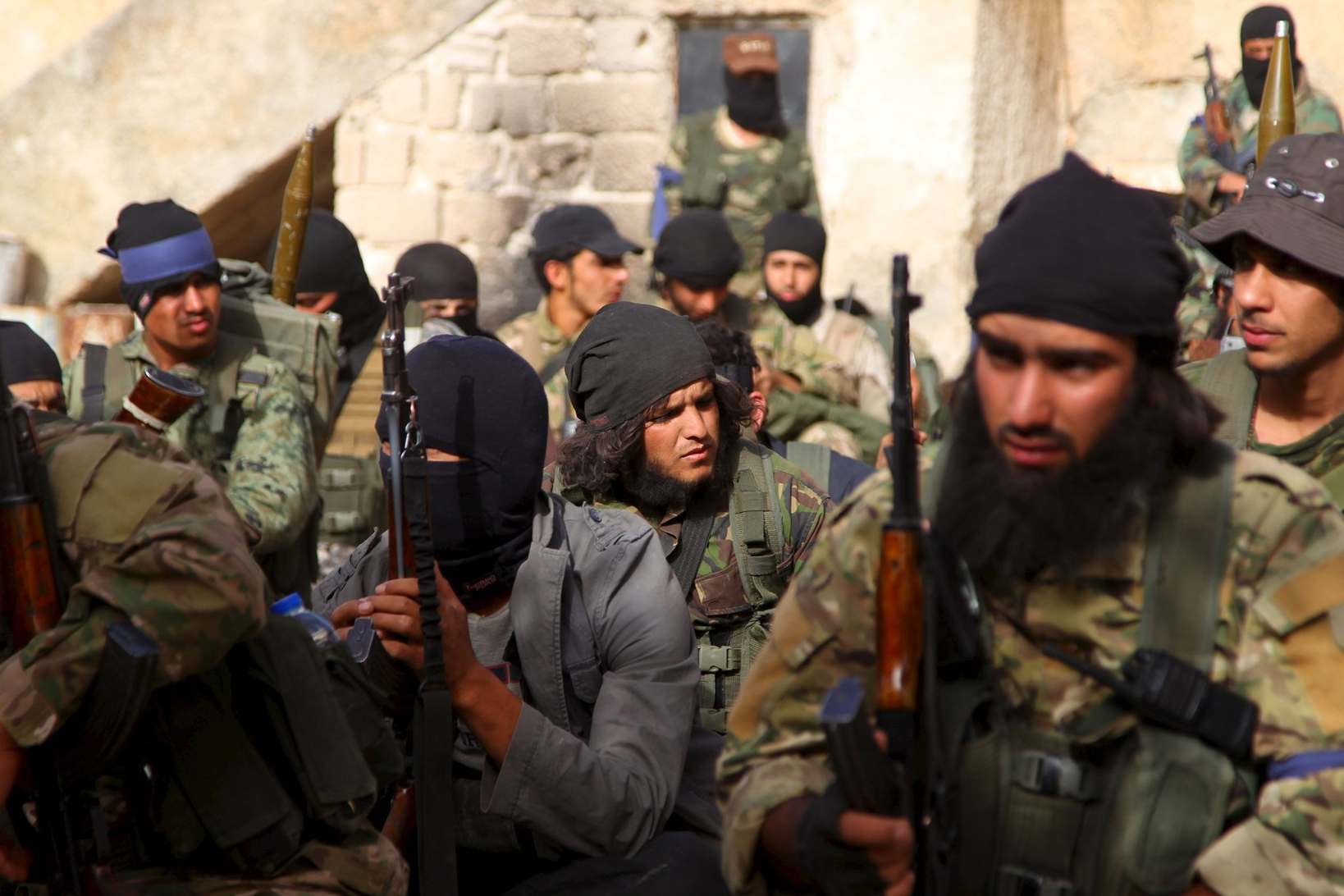
A chapter about Islamism in Syria I wrote for the American Foreign Policy Council’s (AFPC) ‘World Almanac of Islamism’ was published today. Do check it out, and the broader site, which is a great, accessible resource. The format of the website necessitated that the chapter as I submitted it was edited, condensed, and split up to fill out the various categories. In case it is of any interest, the original version of the chapter is reproduced below.
By Kyle Orton (@KyleWOrton) on October 4, 2020
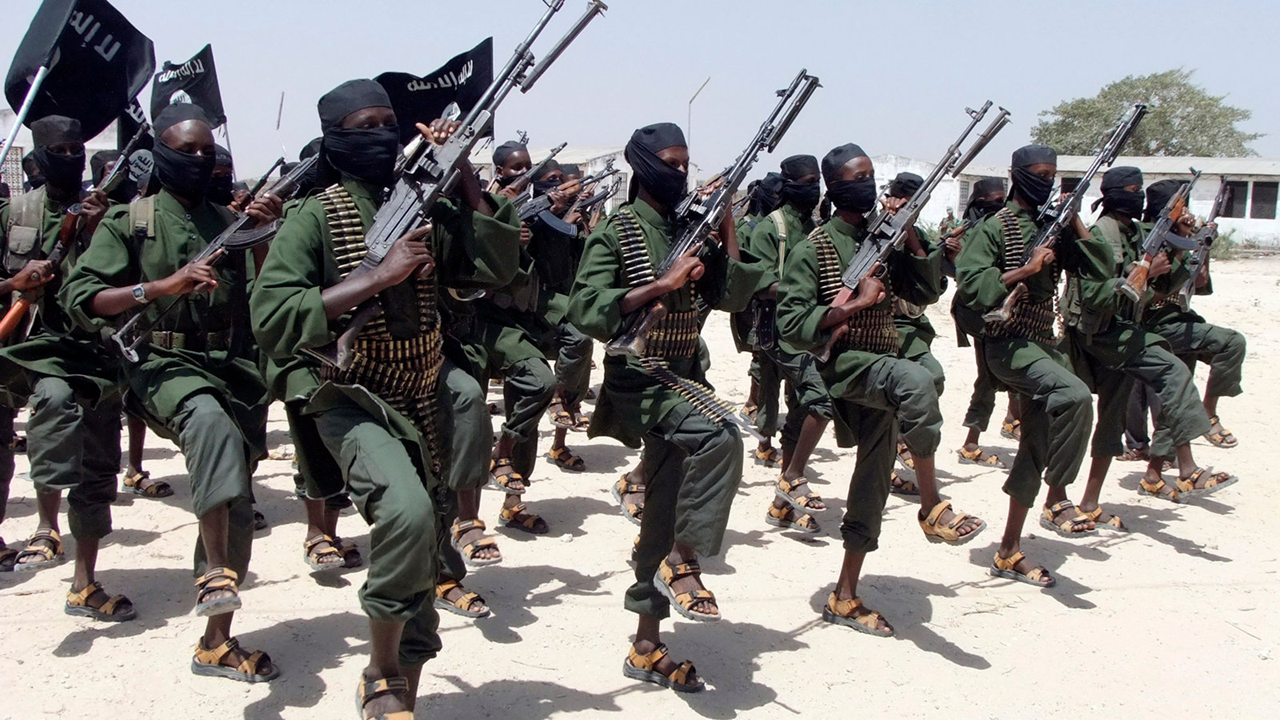
A chapter about Al-Qaeda I wrote for the American Foreign Policy Council’s (AFPC) ‘World Almanac of Islamism’ was published today. Do check it out, and the broader site, which is a great, accessible resource. The format of the website necessitated that the chapter as I submitted it was edited, condensed, and split up to fill out the various categories. In case it is of any interest, the original version of the chapter is reproduced below.
 Kyle Orton's Blog