Published at The Arab Weekly
By Kyle Orton (@KyleWOrton) on 27 January 2019

Israeli Prime Minister Binyamin Netanyahu and Chadian President Idriss Deby meeting in N’Djamena, 20 January 2019 [AFP]
Continue reading
Published at The Arab Weekly
By Kyle Orton (@KyleWOrton) on 27 January 2019
Israeli Prime Minister Binyamin Netanyahu and Chadian President Idriss Deby meeting in N’Djamena, 20 January 2019 [AFP]
By Kyle Orton (@KyleWOrton) on 26 January 2019
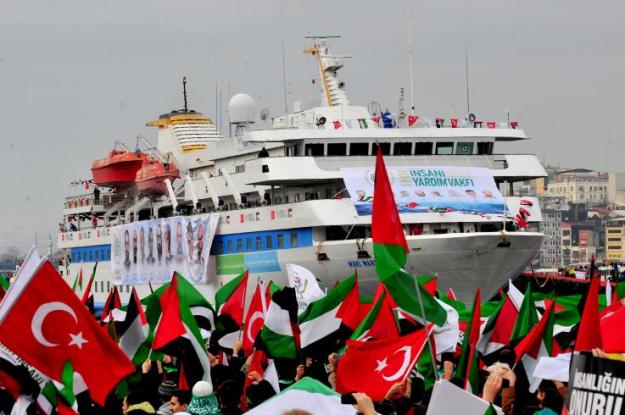
Mavi Marmara arrives at Sarayburnu port as people wave Turkish and Palestinian flags, 26 December 2010 [source]
Published at The Arab Weekly
By Kyle Orton (@KyleWOrton) on 20 January 2019

Satellite pictures before and after Israel’s attack on an Iranian weapons cache in Damascus, January 2019 [source]
By Kyle Orton (@KyleWOrton) on 17 January 2019

Forty years ago yesterday, Muhammad Reza Pahlavi, the Shah (King) of Iran, left his country for the last time as a year-long revolution crested. A month later, the remnants of the Imperial Government collapsed and Grand Ayatollah Ruhollah Khomeini was swept to power after his long exile, establishing the first Islamist regime. Andrew Scott Cooper’s 2016 book, The Fall of Heaven: The Pahlavis and the Final Days of Imperial Iran, charts how this happened. Continue reading
By Kyle Orton (@KyleWOrton) on 12 December 2018

© AP Photo / Jim Hollander, Pool
Essay: “Zionism is Making Us Stupid”: The Russian Relationship with Israel from the Soviets to Putin Continue reading
By Kyle Orton (@KyleWOrton) on 9 December 2018
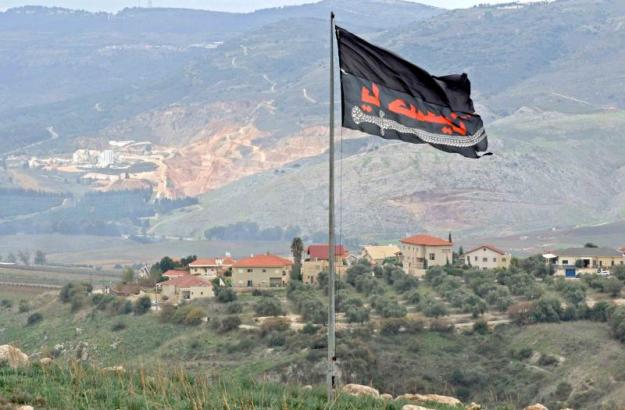
Large black flag with the words “Oh, Husayn” flies near the Lebanon-Israel border (5 December, AFP)
Israel announced an operation to “destroy the threat of the terror tunnels” into northern Israel from Hezbollah, the Levantine branch of Iran’s Islamic Revolutionary Guard Corps (IRGC) in southern Lebanon. Continue reading
By Kyle Orton (@KyleWOrton) on 8 December 2018
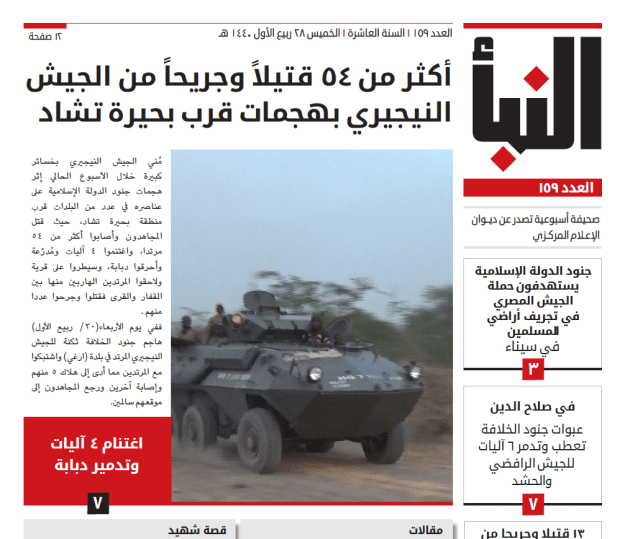
Al-Naba 159
The 159th edition of Al-Naba, the Islamic State’s (IS) newsletter, released on 6 December 2018, had a very interesting story on pages nine and ten about three “repentant officers” (dubat al-tayibeen) from Egypt who joined IS in the Sinai. The two trendlines this story highlighted were: (1) the movement of trained military cadres from the Arab states into IS’s security apparatus, as has been seen with the elements of Saddam Husayn’s fallen regime; and (2) the radicalisation of those Islamists previously prepared to work through the democratic process by the 2013 putsch in Egypt, and the violent crackdown afterwards, which shut down all peaceful paths to change. Al-Qaeda has made this point a staple of its propaganda for some time. Continue reading
By Kyle Orton (@KyleWOrton) on 6 December 2018
This article was originally published at Ahval, headlined, “The Best Bad Outcome for Idlib”

The sun setting over Deraa, in southern Syria, 28 May 2018 (image source)
The Turkey-Russia Sochi Agreement in September won Idlib a reprieve from what had seemed to be an imminent and catastrophic offensive by Syrian President Bashar Assad’s forces and his Russian and Iranian patrons against the last insurgent-held province.
The ceasefire was meant to provide space for Turkey to dismantle the radical insurgents. Instead, those radicals consolidated their dominance in Idlib and the ceasefire has been visibly fraying. How to proceed is a matter of domestic security for the West. Continue reading
Published at The Arab Weekly
By Kyle Orton (@KyleWOrton) on 27 November 2018
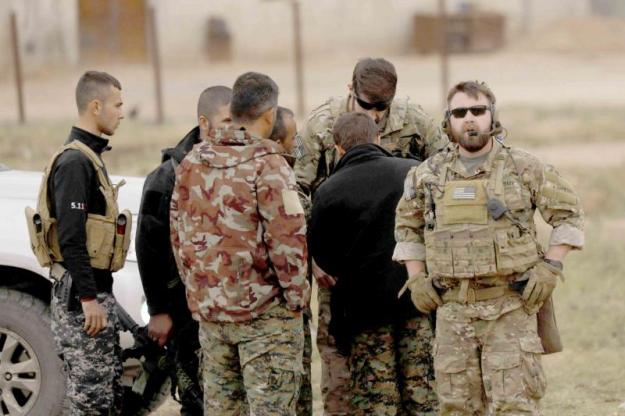
U.S. forces and members of the “Syrian Democratic Forces” (SDF) patrol Al-Darbasiya in northeastern Syria, 4 November 2018. (AFP)
Despite the change of rhetoric between US Presidents Barack Obama and Donald Trump, the United States has continued to lose influence, political and military, in the Middle East to the Iran-Russia axis. Continue reading
By Kyle Orton (@KyleWOrton) on 20 November 2018
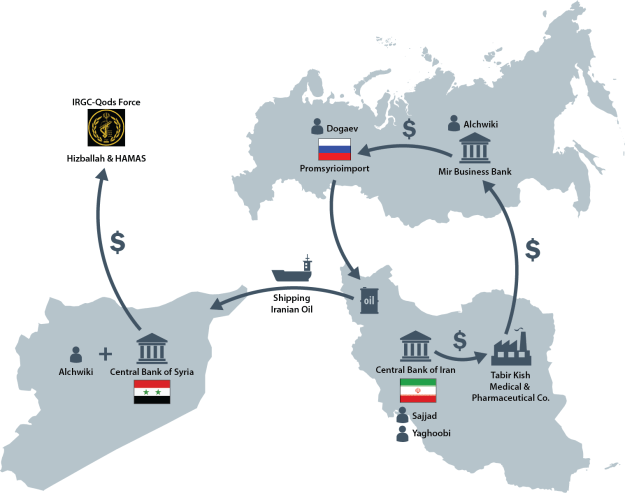
Visual representation of the Alchwiki Network (source: U.S. Treasury)
The United States Treasury Department’s Office of Foreign Assets Control (OFAC) sanctioned ten targets today, targeting an “international network through which the Iranian regime, working with Russian companies, provides millions of barrels of oil to” Bashar al-Assad’s regime in Syria, and “[t]he Assad regime, in turn, facilitates the movement of hundreds of millions of U.S. dollars (USD) to the Islamic Revolutionary Guard Corps-Qods Force (IRGC-QF),” the expeditionary wing of Tehran’s spy-terrorist apparatus, “for onward transfer to HAMAS and Hizballah.” Continue reading

