Tag Archives: Issam al-Barqawi

Al-Qaeda in Syria Denounces America, Claims to Be the Revolution

By Kyle Orton (@KyleWOrton) on March 13, 2017

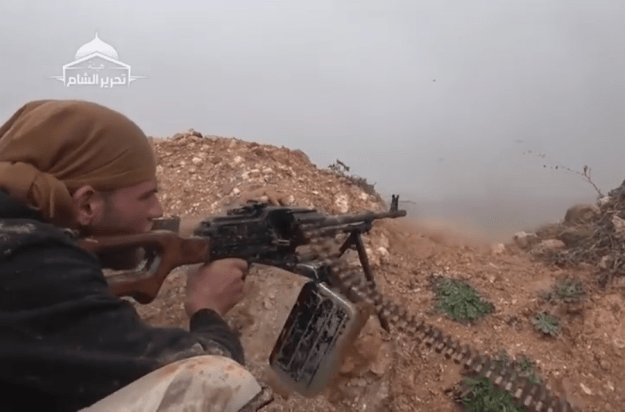
Hay’at Tahrir al-Sham fighter engaging the Assad regime

Michael Ratney, who has been the United States Special Envoy for Syria since July 2015, wrote a public letter , released on 11 March 2017, which labelled all constituent parts of Hay’at Tahrir al-Sham (HTS) as members of al-Qaeda and therefore as terrorists.[1] On 12 March, HTS’s “Administration of Political Affairs”—its newly-minted political office, perhaps evidence of an evolution in HTS’s thinking about an endgame in Syria—issued a statement in reply, which is reproduced below.
Continue reading

When the Islamic State’s Founder Clashed with an Al-Qaeda Cleric

By Kyle Orton (@KyleWOrton) on February 12, 2017

Abu Musab al-Zarqawi [left] and Abu Muhammad al-Maqdisi [right]

Al-Qaeda’s expulsion of the Islamic State (IS) from its ranks three years ago did not come from nowhere. IS had always been problematic and the dispute in the months leading up to the decisive break was far from the first time that Al-Qaeda “central” had clashed with the Iraq-based group. Continue reading

Al-Qaeda Reshapes the Insurgency in Northern Syria

By Kyle Orton (@KyleWOrton) on February 7, 2017

Hay’at Tahrir al-Sham logo

A series of clashes broke out on 19 January between al-Qaeda’s rebranded Syrian branch, Jabhat Fatah al-Sham (JFS), and its heretofore close ally and portal into the Syrian rebellion, Ahrar al-Sham. By 23 January, JFS had expanded its targets, engaging in hostilities with mainstream rebel groups in the “Greater Idlib” area, and specifically trying—and succeeding—in dismantling the positions of Jaysh al-Mujahideen, a moderate group, west of Aleppo. The crisis continued to escalate, forcing many groups to merge with Ahrar al-Sham for protection, until 28 January, when a JFS-led merger was announced under the banner of Hay’at Tahrir al-Sham (HTS), or the Syrian Liberation Committee. HTS announced a ceasefire, and since then individuals and groups—including a significant number from Ahrar—have given allegiance to HTS. This radical reshaping of revolutionary dynamics in northern Syria has undoubtedly created antibodies going forward against al-Qaeda that could be capitalized on by the international community, but the present situation is highly favourable to al-Qaeda. Continue reading

Pro-Al-Qaeda Ideologue on Merging With Non-Jihadi Groups

By Kyle Orton (@KyleWOrton) on February 5, 2017

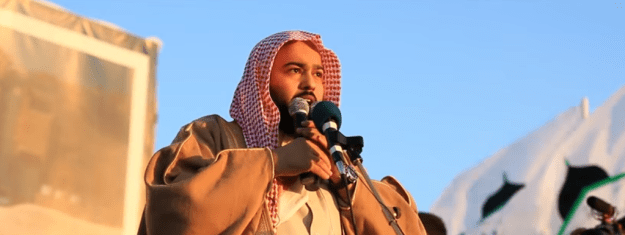
Abdallah al-Muhaysini at a rally for Hay'at Tahrir al-Sham, 3 February 2017

Abdallah al-Muhaysini at a rally for Hay’at Tahrir al-Sham, 3 February 2017

On 28 January, as a part of its long-term strategy of integrating with, and ultimately co-opting, the Syrian rebellion, al-Qaeda shifted ground again and merged into a wider spectrum of insurgent groups, many of them jihadi in character, but many not, united under the banner of Hay’at Tahrir al-Sham (HTS). One of the non-jihadi groups to join HTS was Harakat Nooradeen al-Zengi, which became infamous in July 2016 after it beheaded one of the Bashar al-Assad regime’s child soldiers on video. This has aroused some controversy in jihadi circles, and today a statement by a jihadi ideologue, Abu Mahmud al-Filistini, who lives in London, was circulating explaining why HTS was right to take in al-Zengi. The statement was entitled, “Clearing the Doubts Regarding Nooradeen al-Zengi Uniting with Hay’at Tahrir al-Sham,” and is reproduced below. Continue reading

Assad’s Atrocities Help Al-Qaeda Recruit Westerners

By Kyle Orton (@KyleWOrton) on January 16, 2017

1

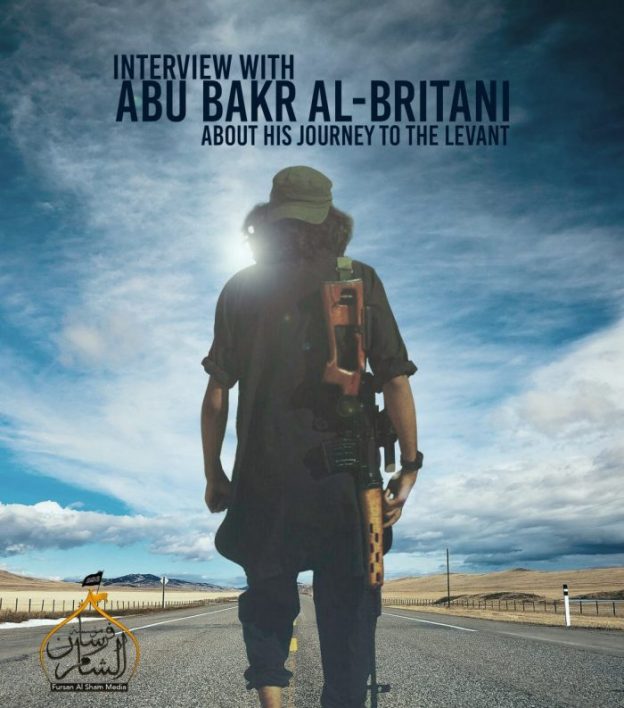
Fursan al-Sham Media was set up in September 2016 as a messaging outlet from inside Syria for the jihadist groups in the insurgency, notably Jabhat Fatah al-Sham (JFS), the rebranded al-Qaeda branch in Syria, and Ahrar al-Sham.[1] On 14 January 2017, Fursan al-Sham Media had an interview with Abu Bakr al-Britani, a British jihadist who had journeyed to Syria and presumably joined JFS. The interview is reproduced below. Continue reading

An Ideological Founder of Islamic State is Killed in Syria

UPDATE: It has subsequently become clear that the “Abu Abdullah al-Muhajir” who was killed in Syria on 18 November 2016 was not Muhammad al-Saghir, who is profiled below. The slain man, like al-Saghir a veteran of the war get the Soviets out of Afghanistan and an Egyptian jihadist with close links to al-Qaeda, also used the kunya “Abu Afghan al-Muhajir”.

By Kyle Orton (@KyleWOrton) on November 20, 2016

Abu Abdallah al-Muhajir (source)

A week ago, it became clear that the air war being waged by the U.S.-led Coalition, which primarily targets the Islamic State (IS), was going to expand its campaign against the leadership of Jabhat Fatah al-Sham (JFS), al-Qaeda’s rebranded branch in Syria. In the evening of 18 November 2016, the Coalition killed Abu Abdullah al-Muhajir, whose real name is Muhammad Ibrahim al-Saghir. Al-Saghir also uses the name Abd al-Rahman al-Ali. This killing would appear to be part of the Coalition’s new effort.

Al-Saghir has a long record as an important jihadi religious ideologue, though his exact relationship with al-Qaeda’s network remains unclear. Al-Saghir’s most lasting contribution to jihadi-salafism is as a key guide to the founder of IS, Ahmad al-Khalayleh. Continue reading

The Mosul Operation and Saddam’s Long Shadow

Originally published at The Henry Jackson Society

By Kyle Orton (@KyleWOrton) on October 28, 2016

Islamic State parade with captured equipment in Mosul, 23 June 2014 . (AP Photo, File)

The offensive to wrest the Iraqi capital of the Islamic State’s (IS) caliphate, Mosul, from the terror organization began on 17 October, led on the ground by Iraqi and Kurdish forces and supported from the air by the U.S.-led Coalition. While progress has been generally steady, IS has been able to mount a series of diversionary attacks, the most significant in Kirkuk City. Among those subsequently arrested for a role in planning the terrorism in Kirkuk is a cousin of Saddam Husayn, a micro-example of the influence of the fallen regime on the current situation in Iraq. Continue reading

Islamic State’s Propaganda Chief Killed in Syria

By Kyle Orton (@KyleWOrton) on September 18, 2016

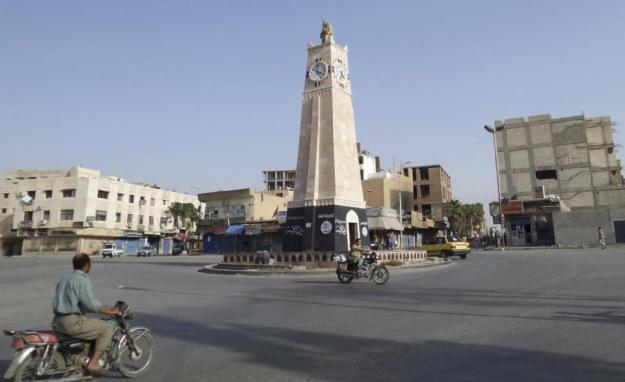
Raqqa

Raqqa

The Coalition announced on Friday that it had killed Wael al-Fayad, more fully Wael Adil Hasan Salman al-Fayad, also known as Wael al-Rawi, Dr. Wael, and Abu Muhammad al-Furqan, a reference no doubt to al-Furqan Media, IS’s oldest and most important propaganda organ, which al-Fayad controlled. The head of IS’s Media Council, thus a key member of the group’s propaganda output, al-Fayad was a member of its Shura Council. The obscurity of his name is likely a testament to his seniority and importance within IS. [UPDATE: This turned out to be correct, though Abu Muhammad’s real name was Wael al-Ta’i, as IS revealed in May 2021, and he had also used the names “Ahmad al-Ta’i”, the media emir appointed in “the State’s” second cabinet back in 2009, and “Abu Ubayda Abd al-Hakim”, the mysterious senior IS operative who made a series of media “appearances” in 2011 and signed several captured letters addressed from IS-centre to the wilayats after 2014]
Continue reading

The Structure of Al-Qaeda

By Kyle Orton (@KyleWOrton) on August 14, 2016

Screenshot of Mostafa Mahamed (Abu Sulayman al-Muhajir) during a video interview, 12 April 2014

Screenshot of Mostafa Mahamed (Abu Sulayman al-Muhajir) during a video interview, 12 April 2014

Mostafa Mahamed (Abu Sulayman al-Muhajir) is an Australian citizen who was born on 14 February 1984 in Port Said, Egypt. Mahamed currently occupies a “senior leadership position” within al-Qaeda in Syria—formerly Jabhat al-Nusra, now Jabhat Fatah al-Sham (JFS)—according to the sanctions levied against him in May by the U.S. Treasury. In an indication of Mahamed’s seniority, he moved from Australia to Syria in late 2012 and within a few months led the mediation efforts between al-Nusra and the then-Islamic State of Iraq and Syria (ISIS), now the Islamic State (IS), that began with a breach in April 2013 and ended with al-Qaeda expelling ISIS from its command structure in February 2014. Mahamed is also one of the public faces of al-Qaeda in Syria, now calling himself the “Director of Foreign Media Relations of JFS”. In this capacity, Mahamed has inter alia recently communicated with CNN to further the narrative that al-Nusra/JFS has “split” with al-Qaeda—something, let it be noted, neither the leader of al-Nusra/JFS nor Mahamed have actually said.

With regard to both the ongoing narrative war between IS and al-Qaeda over what their actual relationship was in the lead-up to the schism and al-Qaeda’s structure—the two things very much interlinked—Mahamed gave a very useful interview on 12 April 2014, about ten weeks before ISIS became IS when it declared its caliphate. Mahamed also touches on other interesting matters, such as those jihadi ideologues al-Nusra/JFS regards as guides, and—small point—al-Qaeda’s continuing claim that IS’s founder, Abu Musab al-Zarqawi would have sided with them. (This is matched on the other side by IS continuing to feature Usama bin Ladin in their propaganda as one of their forebears, while regarding Ayman al-Zawahiri as deviant.)

In watching the video back, I ended up taking notes, which turned into a partial (though fairly substantial) transcript that will perhaps be of use to others as well, so it’s posted below. Continue reading

Islamist Clerics Reject Abu Muhammad al-Maqdisi’s Stance on Islamic State

By Kyle Orton (@KyleWOrton) on August 30, 2015
1

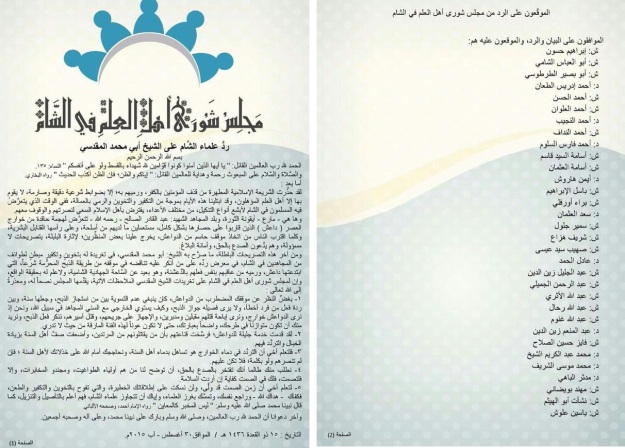
A council of ulema (clerics), some within Syria and some abroad, al-Majlis Shura Ahl al-ilm fil-Sham (Advisory Council of the People of Knowledge in Syria), was formed late last month. Its first statement was to condemn the 25 July assassination of the Faylaq al-Sham commander Mazin al-Qassum by Islamic State (IS) operatives with Jund al-Aqsa, and to demand that all groups clarify their stance on IS and expel IS agents and sympathizers from their ranks. A fatwa early this month said it was permissible to work with Turkey against IS and the Kurdistan Workers’ Party (PKK), which in Syria operates politically under the name of the Democratic Union Party (PYD) and militarily as the People’s Protection Units (YPG).

Among the leading names associated with this new council are three foreign Islamist scholars: Umar al-Hadouchi, a Moroccan jihadi-salafist; Muhammad al-Hassan Ould al-Dedew al-Shinqiti (not to be confused with Abu al-Mundhir al-Shinqiti), a Mauritanian more closely aligned with Sururism than outright jihadism; and Abdallah al-Muhaysini, a Saudi jihadist who is inside Syria and a member of al-Qaeda in everything but name. Prominent Syrians involved include Dr. Ayman al-Harush, associated with Ahrar al-Sham, and another Ahrar member, a shar’i, Mohamed Ayman Aboul-Tout (Abu Abbas al-Shami), who fought against the Assad regime during the revolt in the 1980s as part of the most extreme Islamist splinter from the Muslim Brotherhood, the Fighting Vanguard. There is also the son of Abd al-Karim, an important figure in the Hama branch of the Muslim Brotherhood, Sa’ad al-Uthman; a follower of the ideas of Muhammad Surur that mix Salafism with political agitation, Ahmad al-Salum, and many others.

Majlis Shura Ahl al-ilm fil-Sham put out a statement today, “Response of the Ulema of Sham to Shaykh Abu Muhammad al-Maqdisi”. Al-Maqdisi’s real name is Issam al-Barqawi; he is based in Jordan and is the most influential jihadi-salafist cleric. The Council attacks al-Maqdisi for what they perceive as his softness toward IS. The statement, translated by @nasrshahada, is reproduced below. Continue reading